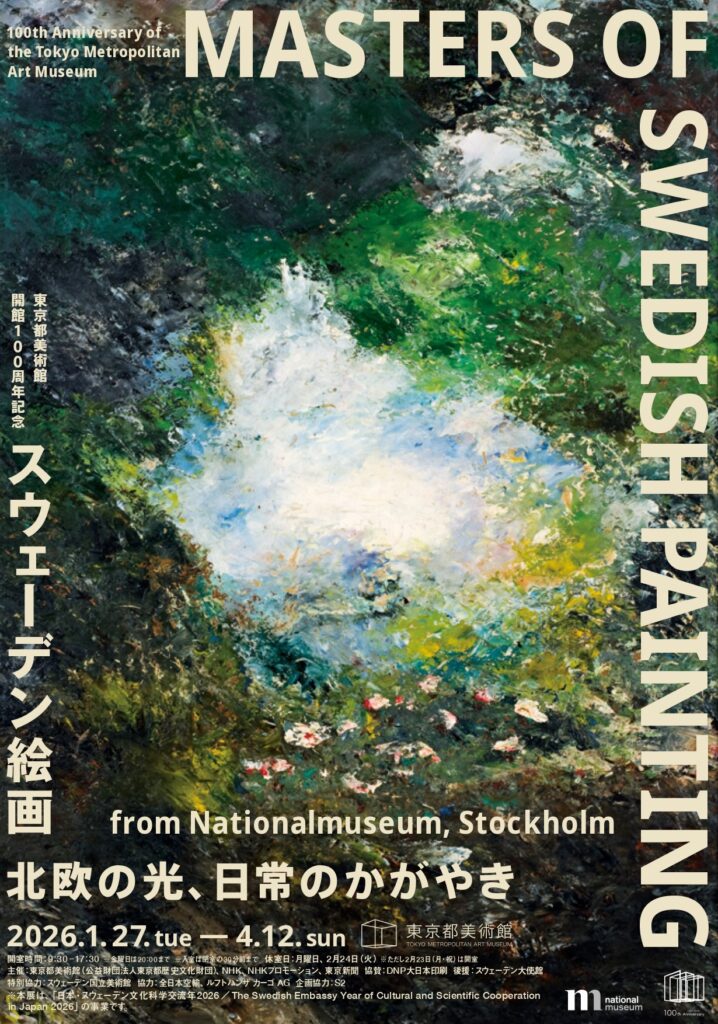
Ticket information has been released for the Tokyo Metropolitan Art Museum’s 100th anniversary exhibition “Swedish Paintings: Nordic Light, Everyday Brilliance”! Discount weekday-only tickets and tickets with original merchandise featuring the “Dala Horse, the symbol of happiness” are also available!

Tokyo Metropolitan Art Museum

The exhibition "Swedish Paintings: Nordic Light, Everyday Brilliance" will be held at the Tokyo Metropolitan Art Museum (Ueno Park, Tokyo) from Tuesday, January 27th to Sunday, April 12th, 2026.
Starting at 10:00 on Friday, November 28th, we will be selling discounted weekday tickets and tickets with original exhibition merchandise. These will be available until stocks run out, so don't miss out!
Weekday-only tickets

❖ [Weekdays only] Advance pair tickets
This is a set of two general advance tickets at a great price.
You can purchase this ticket for 200 yen cheaper than regular advance tickets (600 yen cheaper than purchasing a regular ticket).

Sales price: 4,000 yen (tax included)
Sales period: November 28th (Friday) 10:00 ~ until sold out
Sales location: Available at ARTPASS and other play guides

*This is a set of two general advance tickets ( available only on weekdays ).
* Only one set per person can be purchased.
*This ticket can only be used on weekdays. It can also be used by one person on different dates.

❖ [Weekdays only] Ticket with audio guide
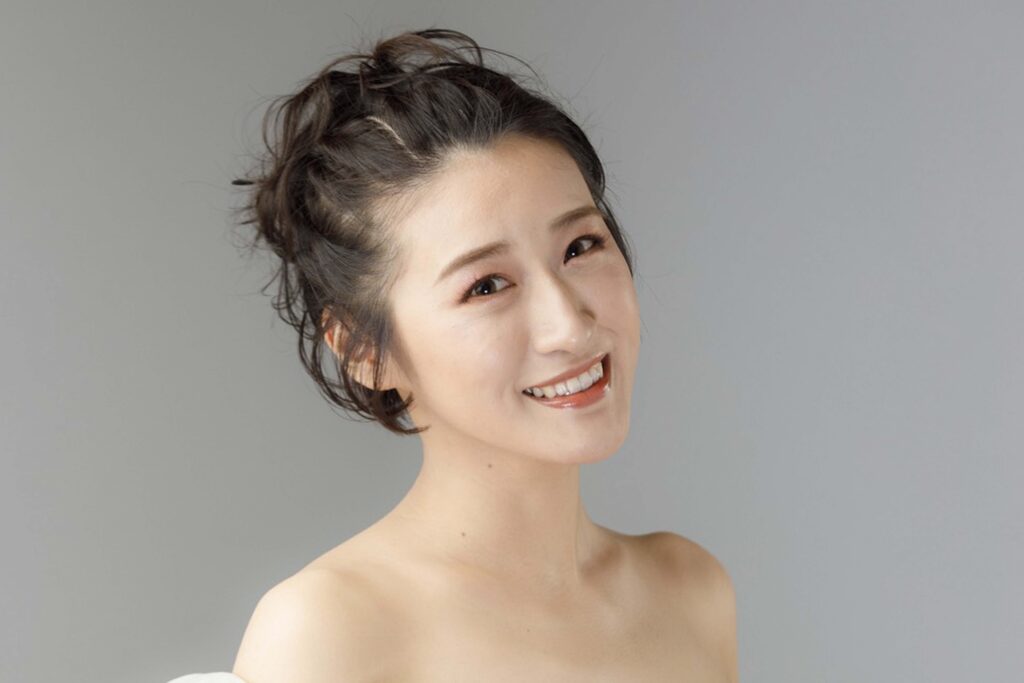
The navigator for the audio guide for this exhibition is JUJU, who has experienced the charm of Nordic items and culture as the MC of the NHK program "The World is Full of Things I Want."
With narration by voice actor Hino Satoshi, we will explore the charm of Swedish paintings!
This is a great value ticket that includes one general advance ticket and one audio guide exchange ticket.
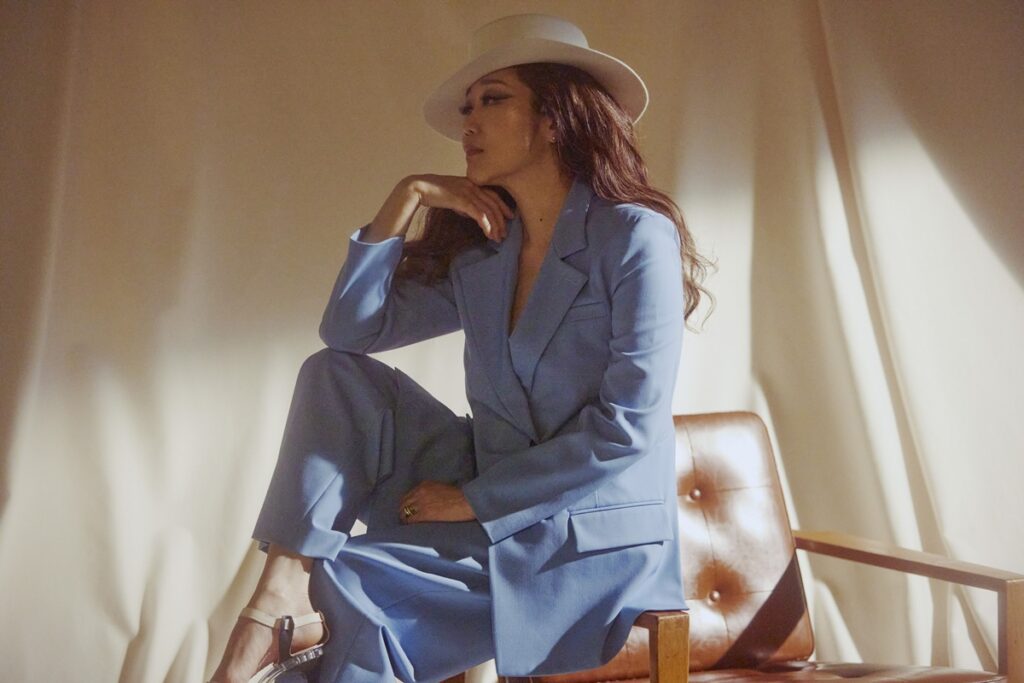
[JUJU profile]
She made her major label debut in 2004. At age 18, she moved to New York, where she experienced a variety of musical cultures, including jazz, hip hop, club music, and soul, and launched her career as a singer. While releasing numerous hits such as "If You Want a Miracle…" and "Yasashisa de Afureru Youni," she has also attracted attention for her life's work of conveying stories through song, singing classics that transcend genres, Japan and the US, and generations, including the Japanese cover album "Request" series and the jazz album "DELICIOUS" series. In spring 2026, she will release the Western cover album "Showa Western Music: Jun Kissa JUJU 'Time Travel' produced by Masataka Matsutoya," and will embark on a nationwide hall tour to promote the album, "Junkissa JUJU 'Time Travel' directed by Masataka Matsutoya," starting in June.

Sales price: 2,700 yen (tax included)
Sales period: November 28th (Friday) 10:00 ~ until sold out
Sales location: Limited sale at Lawson Ticket
*This is a set ticket that includes one general advance ticket and one audio guide exchange ticket ( both valid only on weekdays ).
*Only one ticket can be purchased per person.
*Audio guides will be available for rental at the entrance to the venue only on the days and periods when the exhibition is open. The app version cannot be used.

Goods set ticket

❖Ticket with original sauna hat
Appreciating art is a luxurious time to "harmonize" the mind. This ticket includes an original sauna hat to deepen that "harmonizing" experience. The hat, made from high-quality Imabari towels, is decorated with embroidery of the Dalahäst, a traditional Swedish craft known as the "horse that brings happiness." In Sweden, saunas are called "Bastu," and are said to be an important time to reset the mind and body. Get off to a lucky start in the coming Year of the Horse with the Dalahäst, the horse that brings happiness!

・Unisex (free size)
・Material: Imabari brand, 100% cotton
Antibacterial and deodorizing fabric (SEK mark certified)
・Country of manufacture: Japan

Sales price: 7,000 yen (tax included)
Sales period: November 28th (Friday) 10:00 ~ until sold out
Sales location: Limited sale at Lawson Ticket
*Sales will end once the planned number of tickets is reached.
*The image is for illustrative purposes only and may differ from the actual product.
*The original sauna hat can only be exchanged at the special shop within the venue on the opening days and during the opening hours of this exhibition.
*Available in the limited color (navy) for the goods set ticket.

❖Ticket with original Kewpie costume
This ticket comes with an original costume Kewpie doll dressed in the official Swedish national costume. It features a blue dress, yellow apron, and white hat. It's 100% Swedish! This adorable Kewpie doll is exclusive to this exhibition and is packed with the charm of Sweden.
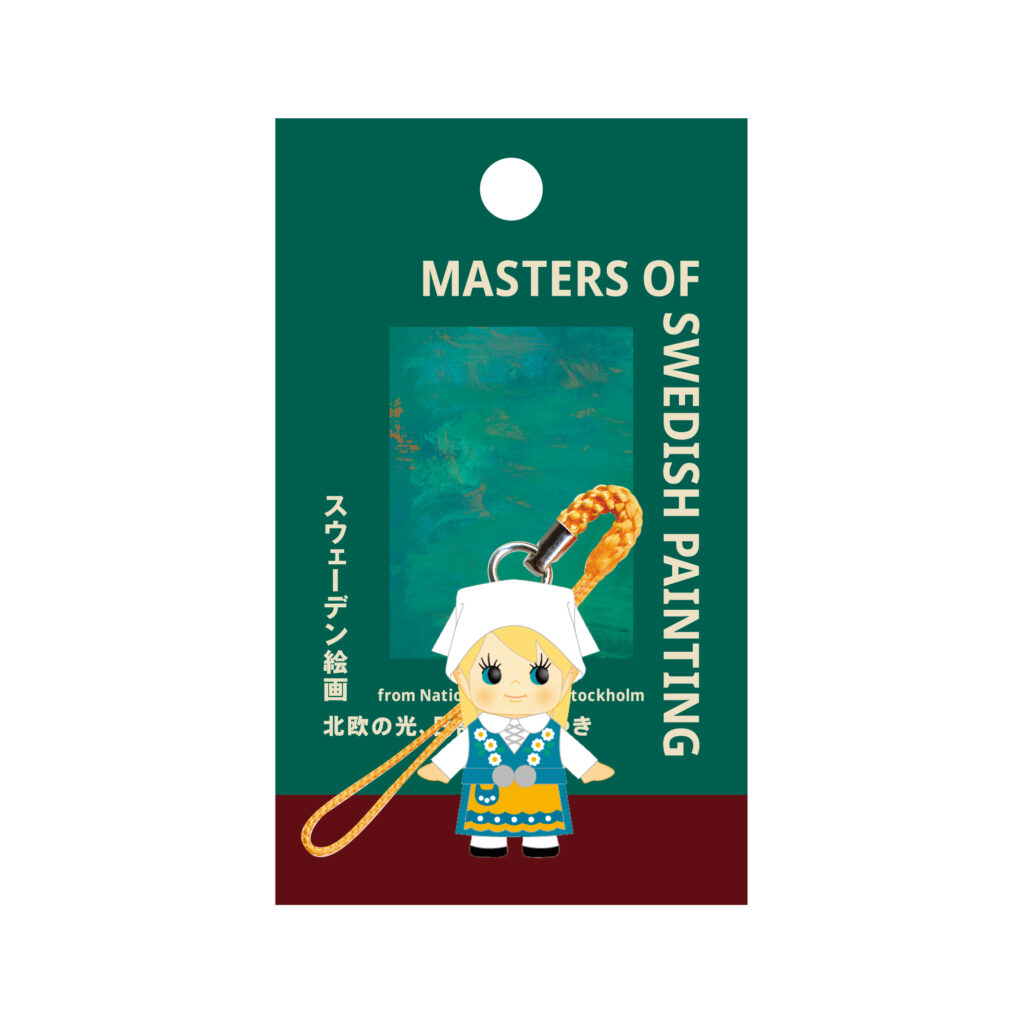
・Body size: Approx. W27 x H36 x D16 mm
Material: Body: ATBC-PVC, Fabric: Polyester
Strap/Polyester, Iron, Brass
・Country of manufacture: Japan

Sales price: 3,200 yen (tax included)
Sales period: November 28th (Friday) 10:00 ~ until sold out
Sales location: Limited sale at Seven Ticket
*Sales will end once the planned number of tickets is reached.
*The image is for illustrative purposes only and may differ from the actual product.
*The original costume Kewpie can only be exchanged at the special shop within the venue on the opening days and during the opening hours of this exhibition.
*The strap color (orange) is available only with the goods set ticket.

How to purchase

●Official ticket ARTPASS

●Electronic ticket "ASOVIEW!"
*When entering, you will need to complete the entry procedure on your smartphone. You will not be able to enter with a printed ticket or a screenshot of the screen.

● Electronic ticket "Sma Ticket"
*When entering, you will need to complete the entry procedure on your smartphone. You will not be able to enter with a printed ticket or a screenshot of the screen.
*To use Smart Ticket, you must install the ePlus app (free). Please check the recommended environment before using.
How to purchase Smart Ticket: https://eplus.jp/sf/guide/spticket

◎If you purchase your ticket at any of the ticket agencies listed below, you will need to get a paper ticket at a convenience store. You will not be able to enter by presenting your payment history or a screenshot of your ticket.
Please check the website of each retailer for fees and sales end dates before purchasing.

Seven Ticket
In-store sales: Seven-Eleven stores (in-store multi-copy machines)
How to purchase in store: http://7ticket.jp/go/i000008

Lawson Ticket
L code: 34607
In-store sales: Loppi machines in Lawson and Ministop stores
How to purchase in store: https://l-tike.com/concert/mevent/?mid=391437

e+ (eplus)
In-store sales: FamilyMart stores (in-store multi-copy machines)
How to purchase in store: https://support-qa.eplus.jp/hc/ja/articles/6638367888665

Ticket Pia
P-Code: 995-747
In-store sales: Seven-Eleven stores (in-store multi-copy machines)
How to purchase in store: https://t.pia.jp/guide/sej-t.jsp

Boo-Woo Ticket

CN Play Guide
In-store sales: FamilyMart stores (in-store multi-copy machines)
How to purchase in store: http://www.cnplayguide.com/familymart/

●Tokyo Metropolitan Art Museum
Advance tickets will be sold at the Tokyo Metropolitan Art Museum Museum Shop.
Regular tickets for the duration of the exhibition will be sold at the ticket counter of Tokyo Metropolitan Art Museum.
During busy times, it may take some time from the time of purchase to the time of entry.

[Exhibition Overview]
Sweden is a country located on the Scandinavian Peninsula in northern Europe. This exhibition is a comprehensive introduction to paintings from the Golden Age of Swedish art, which has been attracting worldwide attention in recent years.
In Sweden, a young generation of artists began studying in France around 1880, and became fascinated with Realism, which portrays humans and nature as they are. When they returned home, they aimed to create art that was uniquely Swedish and reflected the country's identity, portraying nature, the people around them, and the brilliance hidden in everyday life in intimate and emotional expressions.
With the full cooperation of the Nationalmuseum of Sweden, this exhibition explores the uniquely Nordic sensibility of living in harmony with nature through fascinating paintings produced in Sweden from the late 19th century through to the 20th century.

[Event Overview]
Exhibition title: Tokyo Metropolitan Art Museum 100th Anniversary Commemoration: Swedish Paintings: Nordic Light, the Brilliance of Everyday Life
Date: January 27th (Tuesday) – April 12th (Sunday), 2026
Venue: Tokyo Metropolitan Art Museum, Special Exhibition Room
Closed: Mondays, February 24th (Tuesday) *However, open on February 23rd (Monday, national holiday)
Opening hours: 9:30-17:30, until 20:00 on Fridays (last entry 30 minutes before closing)

Organized by: Tokyo Metropolitan Art Museum (Tokyo Metropolitan Foundation for History and Culture), NHK, NHK Promotion, Tokyo Shimbun
Sponsored by: DNP Dai Nippon Printing Supported by: Embassy of Sweden Special cooperation: Nationalmuseum of Sweden
Cooperation: All Nippon Airways, Lufthansa Cargo AG Planning cooperation: S2

Admission fee: Tickets will go on sale on Friday, November 28th
Adults: 2,300 yen (2,100 yen), university and vocational school students: 1,300 yen (1,100 yen), those 65 and over: 1,600 yen (1,400 yen)
Free for those under 18 and high school students
*Prices include tax
*Advance ticket prices in parentheses *Free admission for those with a Physical Disability Certificate, Love Certificate, Rehabilitation Certificate, Mental Disability Health and Welfare Certificate, or Atomic Bomb Survivor Health Certificate, and their accompanying person (up to one person)
*Those under 18, high school students, university/vocational school students, those over 65, and those with various certificates must present proof of their age.
*Free admission for university and vocational school students only on weekdays from January 27th (Tue) to February 20th (Fri).

Inquiries: 050-5541-8600 (Hello Dial)

*The session period, opening hours, and closed days may be subject to change.
Please check the official exhibition website for the latest information.

Official exhibition website: https://swedishpainting2026.jp
Exhibition Official X・Instagram: @swedish2026

[Travel information]
Yamaguchi Prefectural Museum of Art: April 28th (Tue) – June 21st (Sun), 2026 (planned)
Aichi Prefectural Museum of Art: Thursday, July 9th – Sunday, October 4th, 2026 (planned)

*This exhibition is part of the Swedish Embassy Year of Cultural and Scientific Cooperation in Japan 2026.

[Swedish Paintings: Nordic Light, Everyday Sparkle Public Relations Office] Press release


See other exhibition information

A three-year series starting in 2026. Tokyo University of the Arts will hold its first “experience-based exhibition”! “Geidai-style Art Friend – Become a Geidai Student This Summer”

Tokyo University of the Arts University Art Museum

Venue: The University Art Museum, Tokyo University of the Arts
Date: July 24, 2026 (Friday) to September 23, 2026 (Wednesday, holiday)

The University Art Museum, Tokyo University of the Arts (Ueno Park, Tokyo) is pleased to announce that it will be holding the exhibition "Geidai-style Art Friend: Become a Geidai Student This Summer" from Friday, July 24th, 2026 to Wednesday, September 23rd (national holiday).
Tokyo University of the Arts, Japan's only national comprehensive arts university, was founded in 1887 as the Tokyo School of Fine Arts and the Tokyo Music School, and over its 140-year history has been a hub for arts education and research, producing many outstanding artists and researchers. While the university enjoys nationwide recognition, the specific type of university and the type of students who attend it are not widely known, and in recent years interest has been building, as evidenced by the best-selling book "The Last Unexplored Place: Tokyo University of the Arts – The Chaotic Everyday Life of Geniuses" (2016, Shinchosha).

A simulated experience of art education at Tokyo University of the Arts.
This exhibition is part of a series called "Geidai-style Art's Friend," which will be held every summer for three years from 2026 to 2028. Comprised of a variety of themes related to Tokyo University of the Arts, this will be the first attempt to allow visitors to appreciate artworks while experiencing lecture-style exhibitions planned by current professors and lecturers.
The first exhibition in 2026 will focus on the Tokyo University of the Arts collection and approach "art" from various angles, including art history, practical skills, expression, appreciation, materials, preservation and restoration, etc. The venue will also feature workshops that people can easily participate in, and the exhibition is planned to be an easy-to-understand and enjoyable way for people of all ages to "take" "lectures."
Located on the university campus, this museum will provide visitors with the opportunity to virtually experience what it's like to be an art university student and learn about the depth and enjoyment of art.
Tokyo University of the Arts is putting all its efforts into this new exhibition, "Geidai-style Art Friend: Become a Geidai Student This Summer," and the first of these exhibitions will be held in the summer of 2026. We hope you will look forward to it.

[Event Overview]
Exhibition title: Geidai-style Art "Friendship" – Become a Geidai student this summer –
Dates: July 24th (Friday) to September 23rd (Wednesday, national holiday), 2026 *Scheduled
Venue: Tokyo University of the Arts University Art Museum Main Building Exhibition Rooms 1, 2, 3, 4[Ueno Park, Tokyo]
[Location] 12-8 Ueno Koen, Taito-ku, Tokyo 110-0007
Organizers: Tokyo University of the Arts, Yomiuri Shimbun
Inquiries: 050-5541-8600 (Hello Dial)
Tokyo University of the Arts University Art Museum official website: https://museum.geidai.ac.jp
Official website: Under preparation
*Details will be announced on the official website as soon as they are decided.

[Teachers participating in this exhibition] *In alphabetical order
Daigo Ushijima (Intermedia Art Department, Intermedia Art Major)
Yasushi Okada (Cultural Heritage Conservation)
Hiroshi Kumazawa (University Art Museum)
Naoki Sato (Art Studies major, Department of Art)
Keishi Takashima (Japanese Painting Department, Painting Department)
Tomoko Taguchi and Ni Xue (Future Creation and Inheritance Center)
Ryo Furuta (General Supervisor, University Art Museum)
Sunao Maruyama (Design Department, Design Major)
Seiichiro Miida (Painting Department, Oil Painting Major (Printmaking))
Takenori Miyamoto (Oil Painting Department, Painting Department)
Murakami Takashi (University Art Museum)

[Works to be exhibited]


Yuki Ogura, "Path," 1966, Tokyo University of the Arts


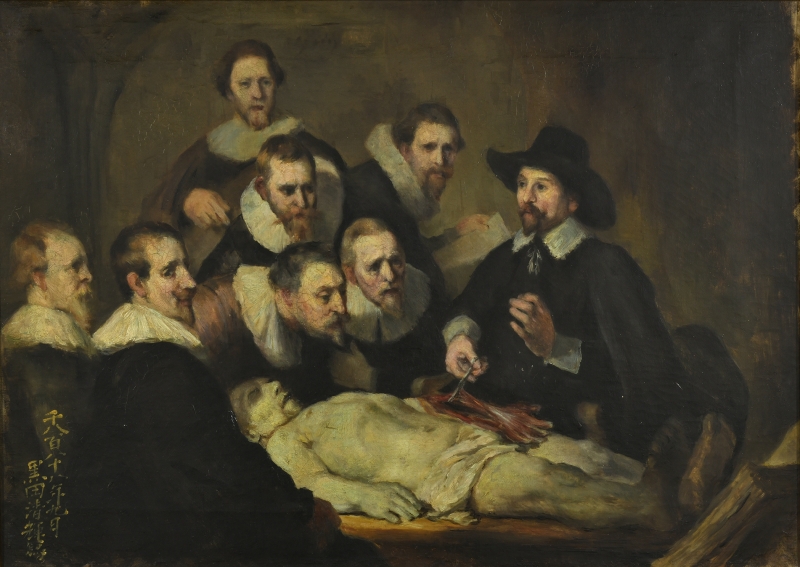
Kuroda Seiki, "Dr. Tulp's Anatomy Lectures," 1888, Tokyo University of the Arts
Original work by Rembrandt van Rijn


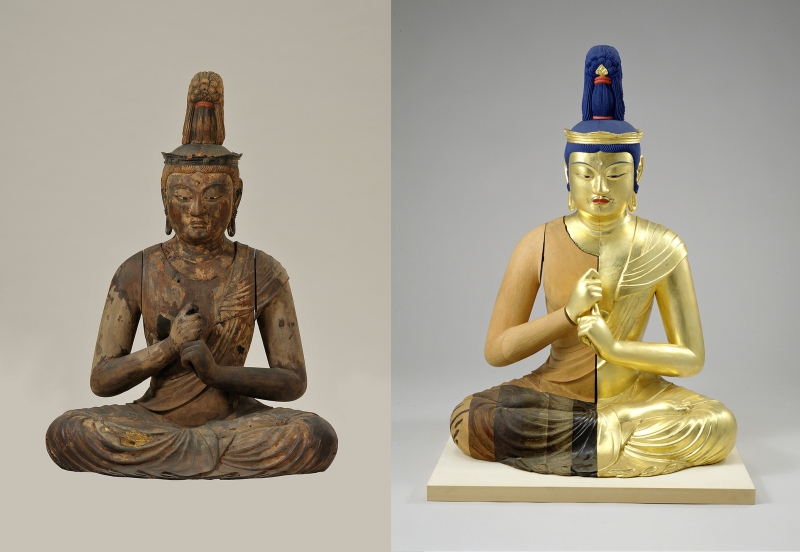
Right) Shintaji, "Study of wood carving techniques using Kaikei's Seated Vairocana Statue," 1987
Tokyo University of the Arts
Left) Kaikei and An'ami "Seated Vairocana" Kamakura period/late 12th century – early 13th century
Tokyo University of the Arts


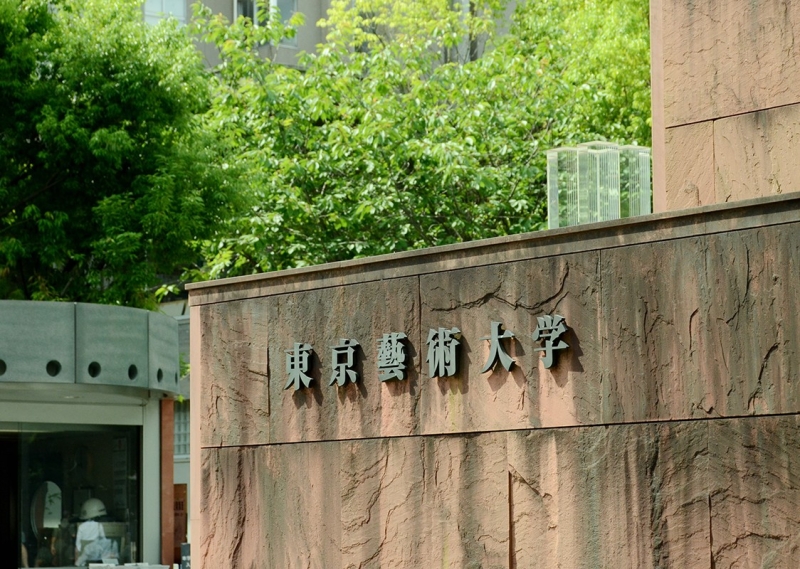
Tokyo University of the Arts (exterior)

[What is Tokyo University of the Arts?]
Tokyo University of the Arts is Japan's only national comprehensive arts university. It was established in May 1949 as a successor to the Tokyo School of Fine Arts (now the Faculty of Fine Arts) and the Tokyo Music School (now the Faculty of Music), both of which were founded in 1887. It comprises two faculties and 10 departments: the Faculty of Fine Arts (Department of Painting, Department of Sculpture, Department of Crafts, Department of Architecture, Department of Art) and the Faculty of Music (Department of Composition, Department of Vocal Music, Department of Instrumental Music, Department of Conducting, Department of Musicology), as well as an affiliated library.
Since then, the university has expanded and reorganized its faculties several times, and currently consists of two faculties and 14 departments: the Faculty of Fine Arts (Department of Painting, Department of Sculpture, Department of Crafts, Department of Design, Department of Architecture, Department of Interdisciplinary Art Expression, Department of Art) and the Faculty of Music (Department of Composition, Department of Vocal Music, Department of Instrumental Music, Department of Conducting, Department of Traditional Japanese Music, Department of Musicology, Department of Musical Environment Creation), as well as facilities such as the affiliated library, university art museum, and performing arts center.
In addition to Ueno Park, the university also has campuses in Toride City, Ibaraki Prefecture, Yokohama City, Kanagawa Prefecture, and Senju, Adachi Ward. For approximately 140 years since its founding, the university has been at the center of art education and research, producing many outstanding artists, researchers, and educators in the arts field.

[From the "Geidai-style Art Friend" Secretariat] Press release


See other exhibition information
Fukuoka-based Christmas Advent to be held for the first time on November 19th at Ueno Park in Tokyo

Fukuoka's Christmas Advent, which has been visited by a total of 12 million people, finally comes to Tokyo

Location: Ueno Park, Hakamagoshi Square
Dates: 2025/11/19 (Wed) – 12/25 (Thu) Opening hours: 11:00-22:30 every day
11/19 (Wed) 18:00 Lighting Ceremony with surprise guest appearance

Official website: https://christmas-advent.jp/ueno/

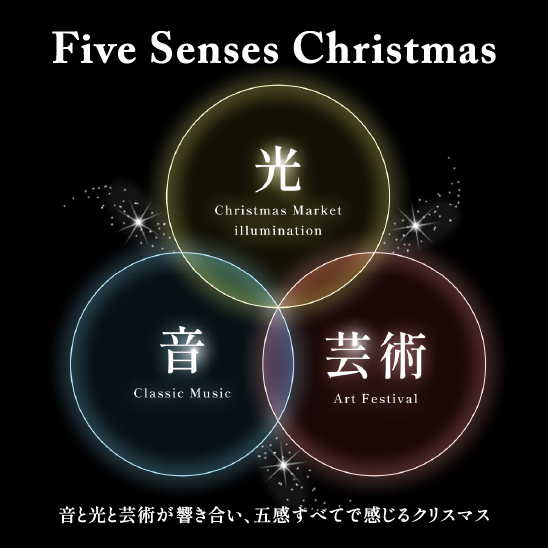
"Christmas Advent," a winter tradition in Fukuoka, kicked off again this year on Saturday, November 1st at various locations across the city. Boasting a cumulative total of approximately 12 million visitors, this event is beloved by people of all ages and nationalities as a "Christmas to enjoy with all five senses" that combines light, music, and art. It will finally be held for the first time on Wednesday, November 19th, 2025, at Hakamagoshi Square in Ueno Onshi Park, Tokyo. The lighting ceremony, which begins at 6:00 PM, will feature the Governor of Fukuoka Prefecture, the Mayor of Taito Ward, the Chairman of the Ueno Tourism Federation, and tenor Kazuma Kudo of the female vocal unit "Luminous," among others, taking to the stage for a spectacular ceremony filled with light and sound.

Date and time: Wednesday, November 19, 2025
Location: Ueno Park, Hakamagoshi Square
Speakers: Fukuoka Prefecture Governor Seitaro Hattori, Taito Ward Mayor Yukio Hattori, Ueno Tourism Association Chairman Nobuhiro Nagaoka, General Producer Takehiro Saeki, and female vocal unit "Luminous" tenor Kazuma Kudo

A Christmas culture woven together with light, sound and art, passing it on to the future

Until now, Christmas events in Japan have mainly been consumer experiences such as "seeing" illuminations and "eating" at markets.
By holding the event in Tokyo, we aim to create an "experiential culture" that will transform the entire city into a theater. Our goal is not an "event" but "culture."
By combining the three pillars of light, sound, and art, people can experience happiness such as love, joy, peace, and hope through their five senses.
This sense of happiness spreads as altruism and empathy, creating a "chain of happiness" throughout the city. By 2030, we aim to become the world's largest Christmas market with 300 stores, surpassing the Christmas market in Stuttgart, Germany (approximately 280 stores). From Fukuoka to Tokyo and the world.
Now, in an age when people seek security and hope, we will deliver the "Happiest Christmas in the World" by wrapping the city in love and light.

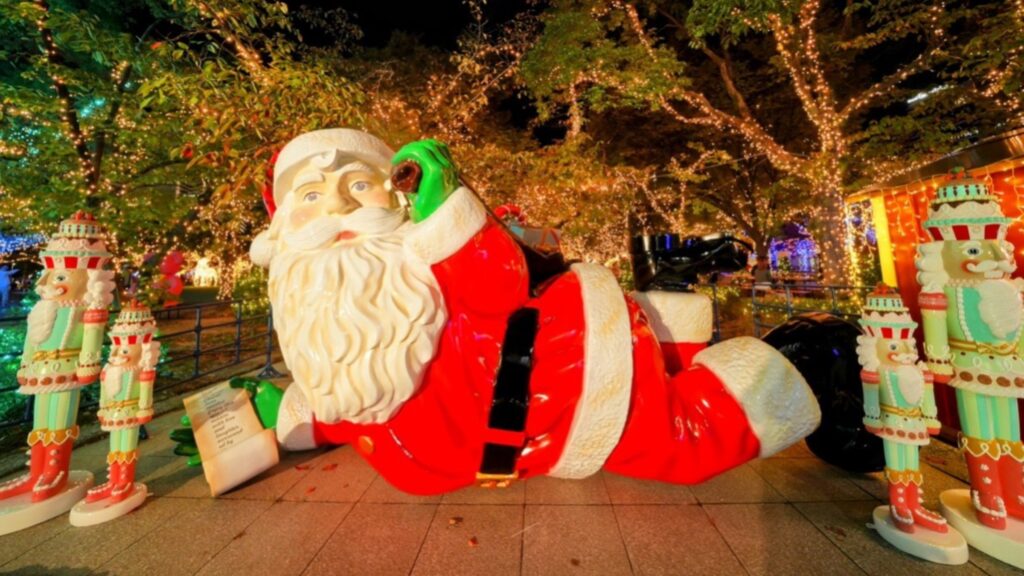
■ Highlights [Light] A huge 5m wide Santa Christmas tree lights up, creating a new winter attraction

Giant Santa Claus, 5 meters wide

Ueno Park is garnering attention as a new spot for Christmas illuminations in Tokyo. At its center will be a giant Santa Claus measuring 5 meters wide and 3 meters tall. Countless illuminations will envelop the trees, transforming the entire park into a fantastical world of light. During the day, Santa, surrounded by the green trees and clear blue sky, welcomes visitors as a photo spot in harmony with nature. At night, the park is completely transformed, with countless lights enveloping it, creating a romantic and fantastical atmosphere. The scenery of Ueno Park changes with the changing seasons, adding a new story to winter Tokyo.

■ Highlights [Sound] Live performances by artists held daily (free)

Luminous
Kazuma Kudo
Rinko Matsubara

A variety of artists will perform on the festival stage every day, creating a special evening of classical and pop music. The opening act will be "Luminous," a female vocal unit with music college alumni. Their vocals, as their name suggests, "emit light," bringing a vibrant color to a range of songs, from classical to pop. Next up will be young tenor Kazuma Kudo, who has won numerous awards at international opera competitions. He will captivate the audience with his clear voice and passionate performance. Starting on Sunday, December 14th, musical actress and singer Rinko Matsubara, who has earned acclaim for her roles in numerous classic musicals, including Eponine in "Les Sérables" and Hélène in "Miss Saigon," will make a special appearance. Her overwhelming expressiveness and clear vocals, cultivated on stage, will deliver a moving moment on a winter night.

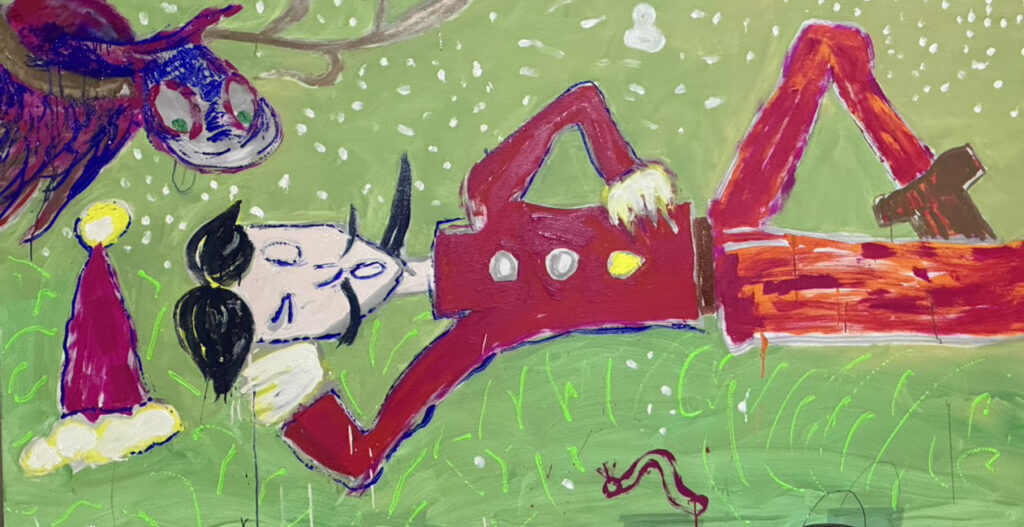
■ Highlights [Art] A huge 6m-wide mural by emerging artist Torigoe Kazuki

A huge mural, measuring 6 meters and 3 meters wide, will be exhibited at the venue. Created by Fukuoka-born artist Kazuki Torigoe, known for his rough brushstrokes and unique technique known as "beyond stroke," the mural will envelop the space with overwhelming energy that stirs the emotions of viewers. It has also attracted attention as a work that inherits the spirit of the avant-garde art movement known as the "Kyushu School."

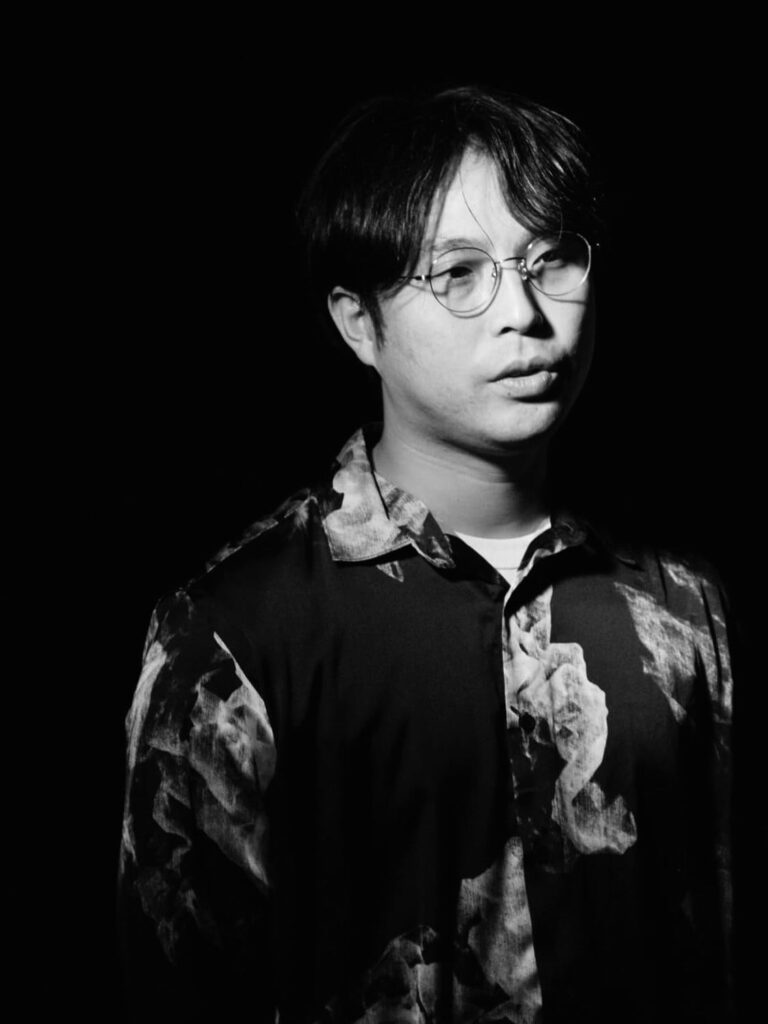
Kazuki Torikoshi
Born in Fukuoka Prefecture in 1986. Graduated from the Kyushu branch of Nippon Designer Gakuin. Known for his abstract expressions that seem to violently wrestle with the canvas. In order to get to the depths of human emotions and existence, he established his own unique technique, "Beyond Stroke," which goes beyond the limits of brushstroke. His intense expressions also evoke the spirit of the "Kyushu-ha" avant-garde art group that was born in Fukuoka.

■Other attractions [food and drink]
Introducing a mug exclusive to Ueno, Tokyo! A lineup of delicious gourmet foods that draws long lines in Fukuoka every year

Tokyo Ueno Limited Edition Mug (From November 28th)

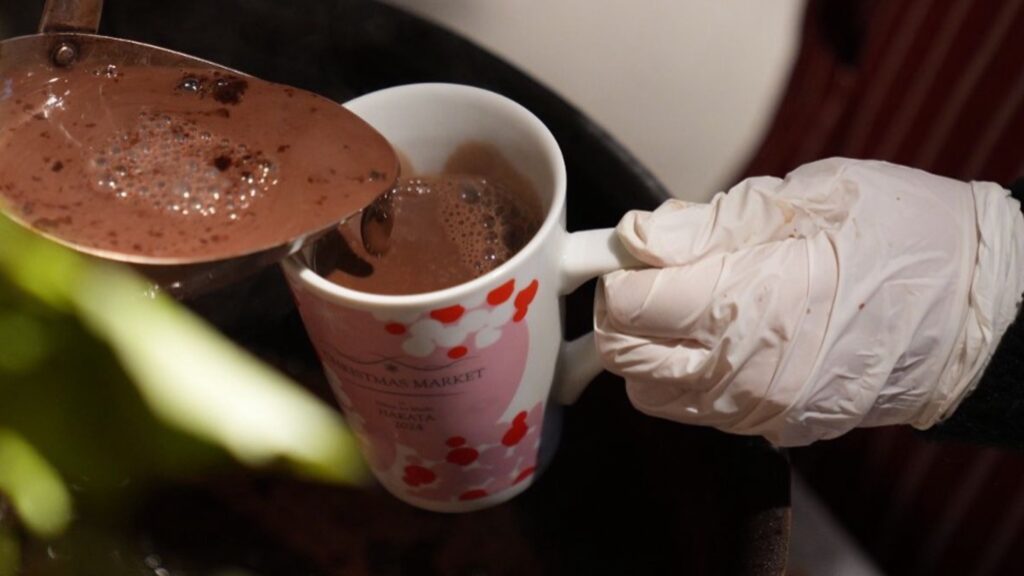
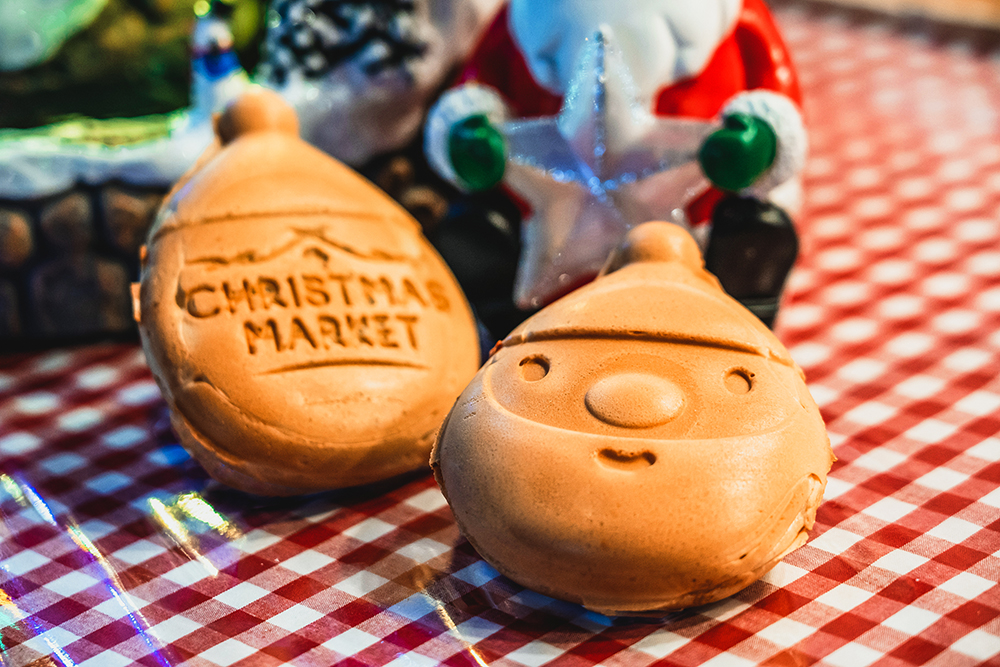
The venue will be decorated with a variety of authentic gourmet foods that will warm your heart. This year, 12 popular Fukuoka restaurants will be gathering in Tokyo, allowing you to enjoy authentic flavors. Highlights include the ningyo-yaki (dumpling) of "San-chan," the official Christmas Advent mascot, which draws a line every year in Fukuoka, and the "Guru-Guru Sausage," made with an exquisite blend of coarsely ground pork, with a crispy skin and fragrant flavor. On cold nights, you can also enjoy rich hot chocolate in a Tokyo-exclusive mug. The melting texture and deep cocoa aroma will gently envelop you in the winter.
*Tokyo limited edition mugs will be on sale from Friday, November 28th

Round and round sausage
Rich hot chocolate served in a Tokyo-exclusive mug
Christmas Advent official character "San-chan" doll

■ Highlights [Merchandise]
Limited-edition winter goods and artisan craft items imported directly from Europe
"Snow globe" and "candle holder"

Snow globe
candle holder

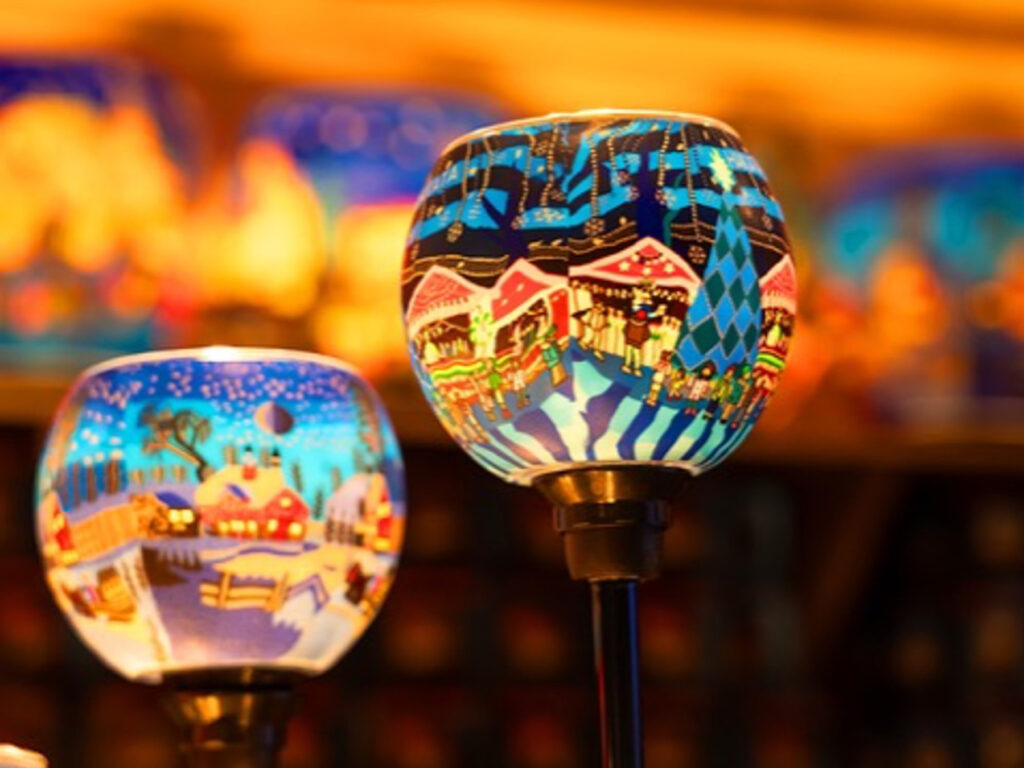
At the venue, you'll also want to check out the craft items that will add color to your winter. One of them is a snow globe made with highly purified water from Austria. Carefully selected for its clear water and delicate snow powder, the slowly falling snow creates a fantastical world. It's a soothing item that captures the essence of winter, and just looking at it will soothe your soul. Also on display will be a clay candle holder crafted using traditional German techniques. This masterpiece of artisanal craftsmanship is made by layering colorful clay to create patterns, and when lit, the image appears. The soft light of the candle will envelop your table or windowsill, creating a warm atmosphere reminiscent of a European winter market. Both are perfect as a treat for yourself or as a gift for a loved one.

■ Operating company overview
Christmas Advent Office
Planning and management: Planning and management: Mr.Weihnachtsmann Co., Ltd.
Christmas Advent 2025 Tokyo Ueno Official Website
https://christmas-advent.jp/ueno/

From the press release of Mr. Weihnachtsmann Co., Ltd.


See other exhibition information

[Ichiyo Memorial Museum] Special Exhibition “Shitaya Ryusenjicho, where Ichiyo lived” Coverage Report. Tracing the turning point in her life that led to her masterpiece “Takekurabe”

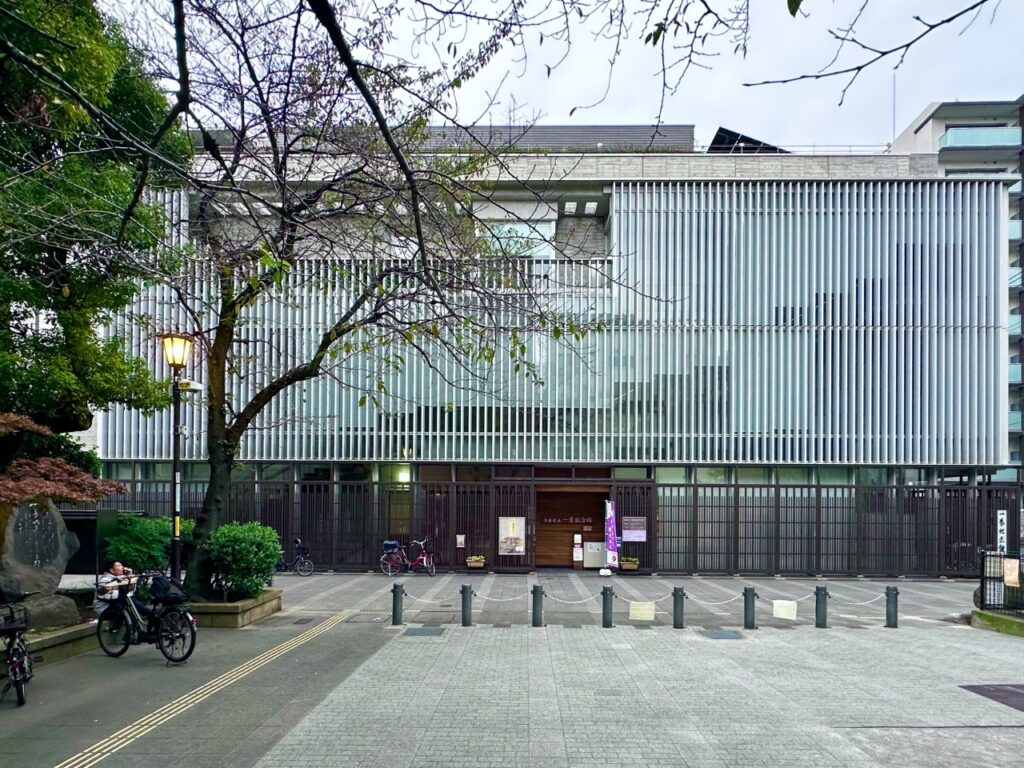
Taito City Ichiyo Memorial Museum


The Taito City Ichiyo Memorial Museum is currently hosting a special exhibition, “Shitaya Ryusenjicho, where Ichiyo lived,” showcasing Ichiyo Higuchi’s life in Shitaya Ryusenjicho (now Ryusen), the setting for her masterpiece, “Takekurabe.” The exhibition will run from Saturday, October 25th to Sunday, December 21st, 2025.

Taito City Ichiyo Memorial Museum
■ Taito City Ichiyo Memorial Museum <br />Thanks to the efforts of volunteers who came together to preserve the literary achievements of Higuchi Ichiyo, an outstanding female writer of the Meiji period, this museum opened in 1961 as Japan’s first literary museum dedicated solely to a female writer. Triggered by Ichiyo’s portrait being chosen to appear on the new 5,000 yen bill, the old, dilapidated building was renovated in 2006. Another highlight is the beautiful design by architect Yanagisawa Takahiko. The museum houses and exhibits a large number of valuable materials that convey Ichiyo’s creative activities and lifestyle, including unfinished manuscripts of “Takekurabe,” as well as letters and waka poem strips.

The experience of living in Shitaya Ryusenjicho that fueled the “Miraculous 14 Months”

Higuchi Ichiyo (real name: Natsu) was born in 1872 (Meiji 5) into a middle-class family. She was gifted from a young age, and at the age of 14 she entered Nakajima Utako’s poetry school, Haginoya, where she studied classical poetry, waka poetry, and calligraphy.

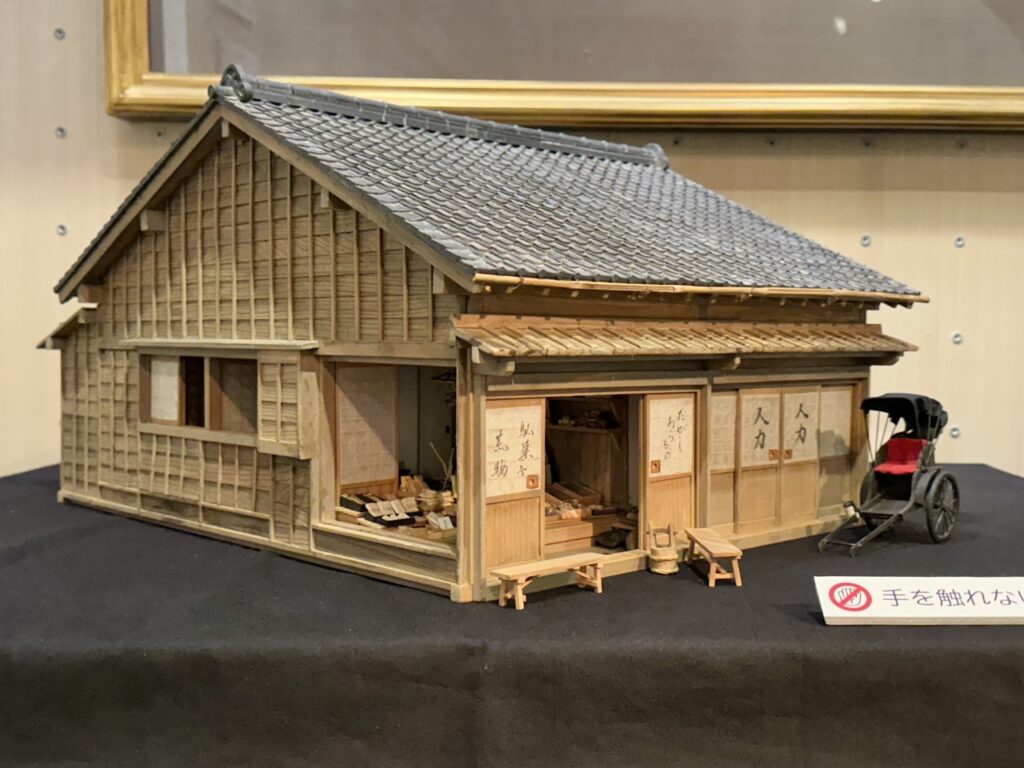
In 1889, his father died of illness, leaving him with a large debt, and at just 17 he was forced to lead a difficult life as head of the household, supporting his mother, Taki, and younger sister, Kuni. He studied under newspaper journalist and author Hanai Tosui, and made his debut as a novelist with “Yamizakura,” published in the literary magazine Musashino in 1892. He tried to support his family with royalties from his writing, but was unable to escape poverty, so in July 1893 he moved from the quiet Hongo Kikusaka-cho to 368-banchi, Shitaya Ryusenji-cho, near the Yoshiwara red-light district, where he opened a general goods and candy store. He experienced the excitement of local annual events such as the Senzoku Inari Festival and Tori no Ichi, and spent his days observing the people coming and going in the red-light district.

In the end, his business did not get on track, and he ended up moving to Fukuyama-cho, Maruyama, Hongo after just over nine months. From there, he devoted himself to writing, publishing a succession of masterpieces, including “Takekurabe,” “Nigorie,” and “Juusanya,” based on his experiences living in Shitaya Ryusenji-cho. These were later described as “14 miraculous months.” He was highly praised by Mori Ogai and Koda Rohan, and received numerous requests to write, but he died of pulmonary tuberculosis in 1896, at the young age of 24.

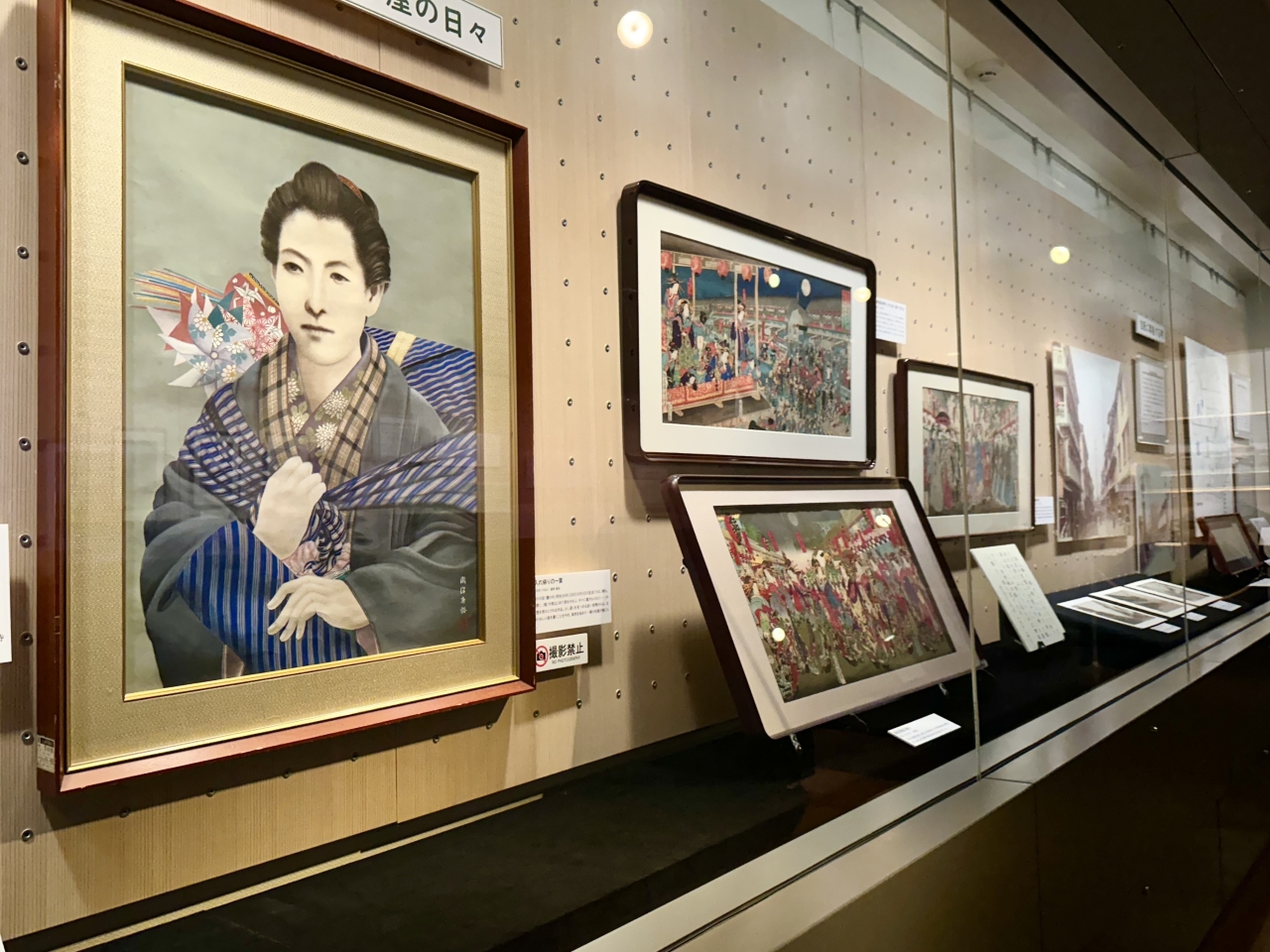
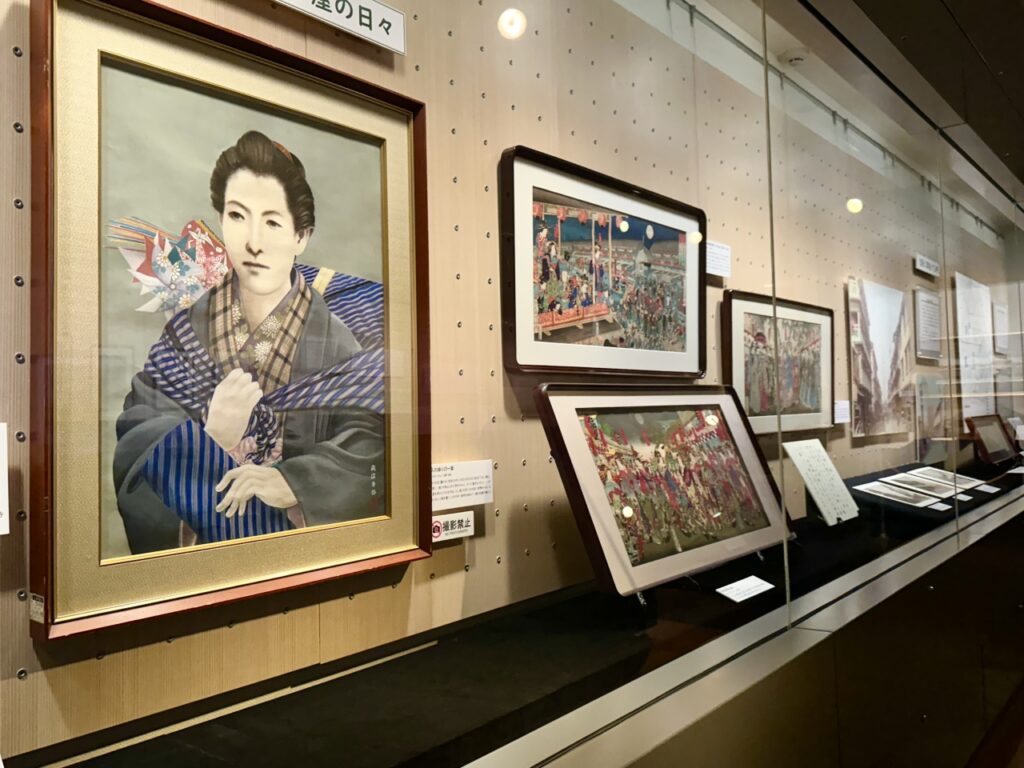
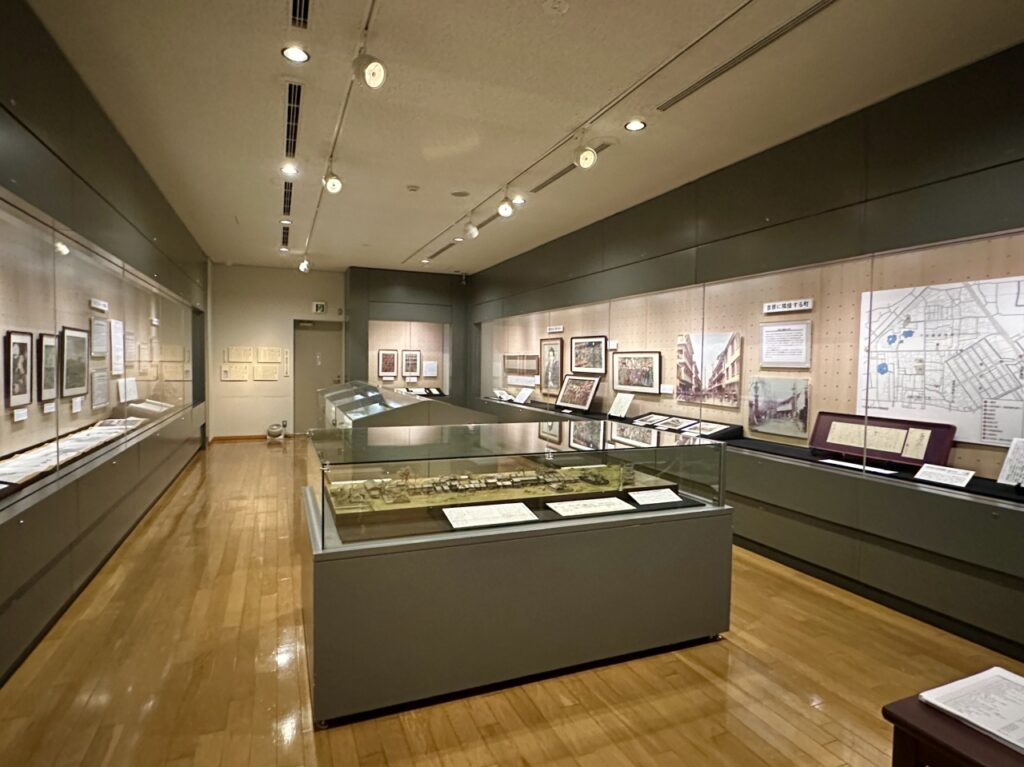
Exhibition view

The special exhibition “Shitaya Ryusenjicho, where Ichiyo lived” introduces the local characteristics of Shitaya Ryusenjicho, the fertile ground for Ichiyo to blossom as a writer, and unravels how she lived there, what she saw, and what she learned.

The poor tenement district where Ichiyo lived

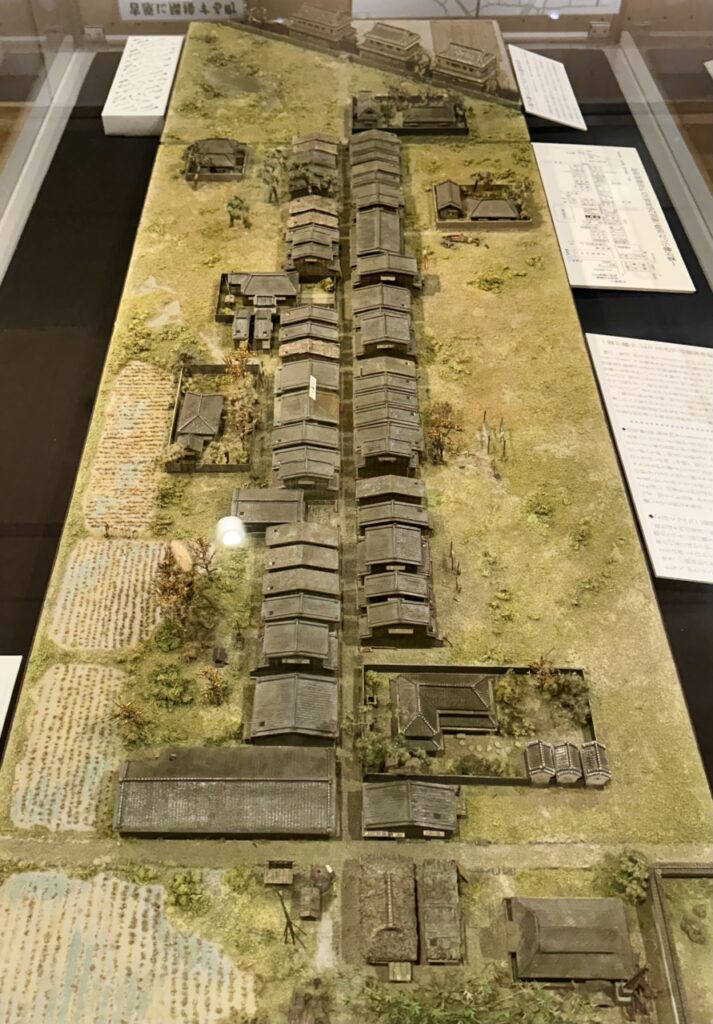
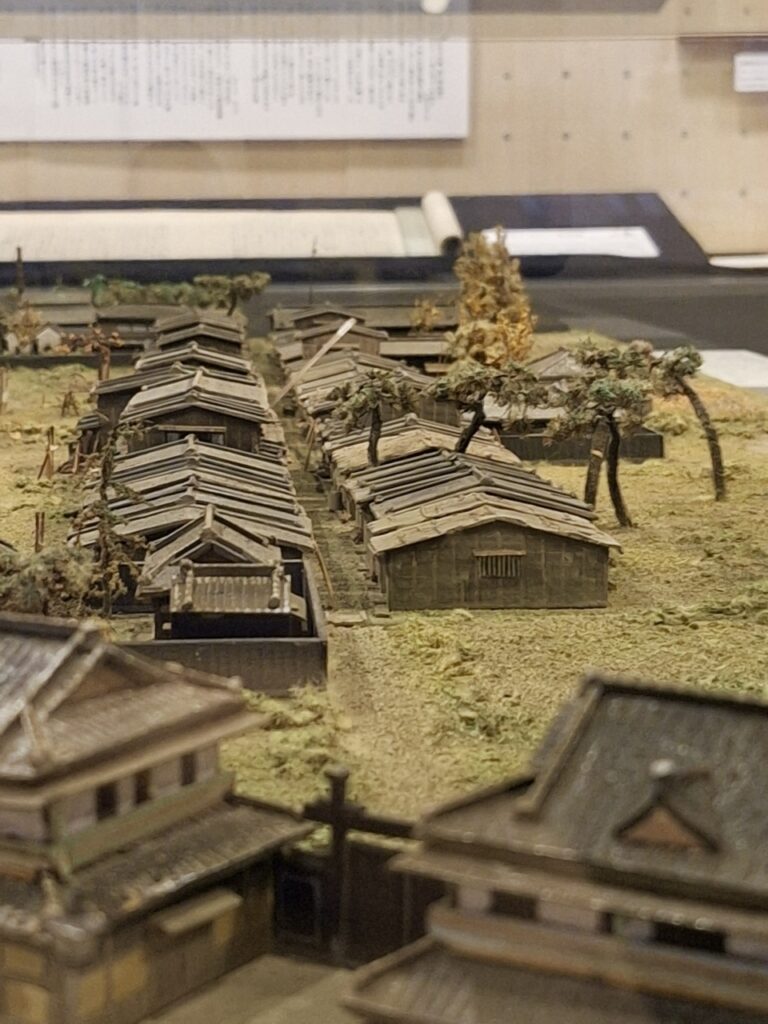
Upon entering the exhibition room, visitors are greeted by a model of Shitaya Ryusenjicho as it was at the time , recreated based on meticulous historical research and interviews. In the center are the two tenement houses where Ichiyo lived, and at the end of Daionji Street (now Chayamachi Street), which stretches straight out from there, you can see the stone wall and emergency gate of Ohaguro-dobu, which marks the boundary with the Yoshiwara red-light district. It is only a few minutes’ walk away.

“Shitaya Ryusenjicho around 1893” (1961) / Researched by Ueshima Kintaro and others
“The lights reflected in the Ohaguro moat made it seem as if they were there, and the constant coming and going of carriages bespeaks an immeasurable prosperity. (Omitted) Turning the corner at Mishima Shrine, there was no visible large building, just a row of ten tenement houses with sagging eaves, numbering 20 houses in total…” (From the beginning of “Takekurabe”)

Modern translation: The commotion of the three-story red-light district, its lights reflected even in the blackened gutters, can be heard clearly. The volume of traffic, morning and evening, suggests the immeasurable prosperity of the area. (Omitted) However, once you turn the corner at Mishima Shrine, there are no large, conspicuous mansions to be seen, but rather a row of ten or twenty row houses with slanting eaves.

■ “This house is on a single road that runs from Shitaya to Yoshihara. Since evening, the sounds of carriages flying by and the light of lights have been heard. It is a sight beyond words.” (From the diary “In the dust”)

This house is located on the only road that leads from Shitaya to Yoshiwara, and in the evenings, the sound of rickshaws echoes and lights flicker here and there. The scene is beyond description.

Daionji Street, which connects Mishima Shrine to the Yoshiwara pleasure district, was a major route taken by rickshaws bound for Yoshiwara. When you look at the model together with Ichiyo’s words, the stark contrast between Yoshiwara’s vibrant lights, the bustling three-story brothels, and the constant traffic, and the shabby tenement district nearby, becomes clear.

Hiroshi Miura, “Ichiyo’s Former Residence in Shitaya Ryusenjicho” In the 1970s, the space next to the two-story tenement house was used as a rickshaw inn.
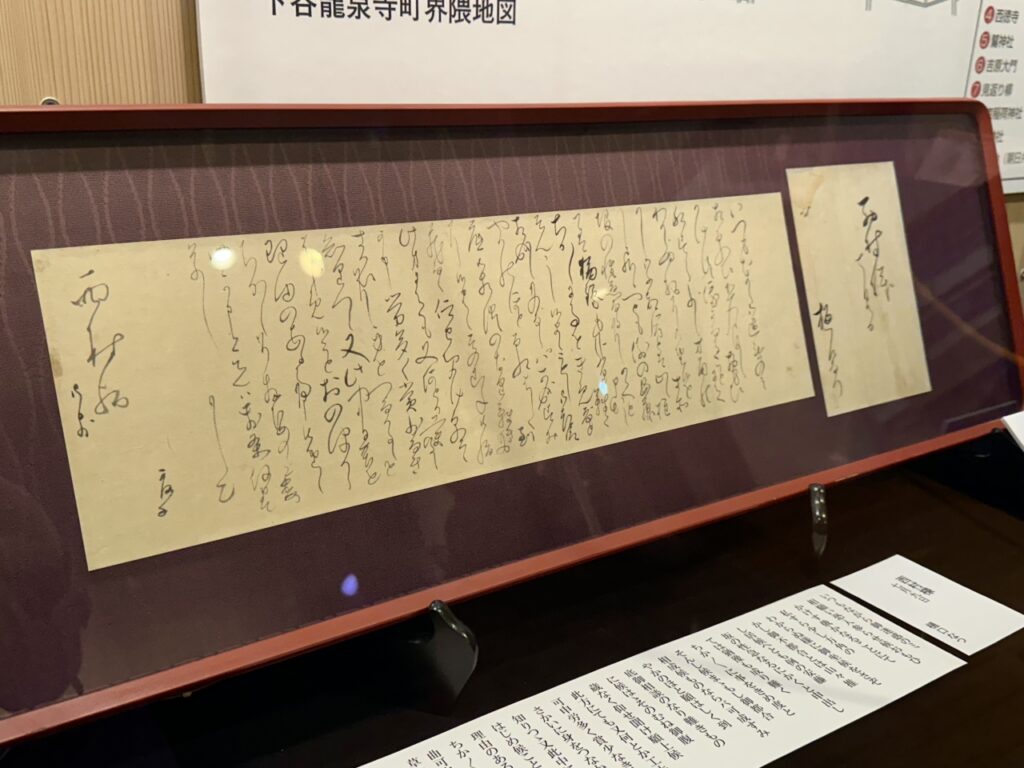
A letter written by Higuchi Ichiyo to Nishimura Sennosuke on July 9, 1893. This is a letter in which Ichiyo inquires about a loan to start a business before moving.

Yoshiwara in the Meiji era – Children are also fascinated by Niwaga

“Takekurabe” is set in the Shitaya Ryusenjicho area and the Yoshiwara red-light district, and is an emotionally rich story that depicts the faint love between Nobuyuki, who will one day become a monk, Midori, who will become a prostitute, and their childhood friend Shotaro, as well as the conflicts they face as they approach adulthood, all set against the backdrop of seasonal events.

The story begins on August 18th, two days before the Senzoku Inari festival, and ends after the Third Bird Festival, around the end of November or early December, which overlaps with the period Ichiyo spent in Shitaya Ryusenji-cho. It is clear that Ichiyo’s own life experiences are heavily reflected in her work, and it is said that many of the characters were modeled after real people.

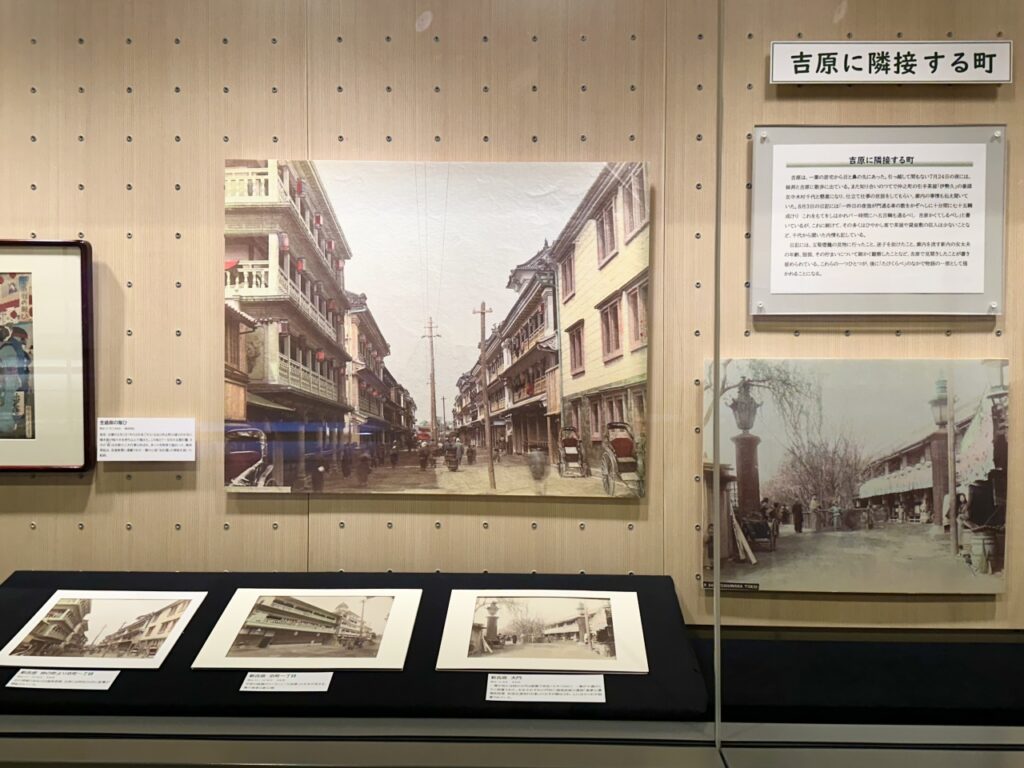
Photographic materials of Yoshiwara during the Meiji period

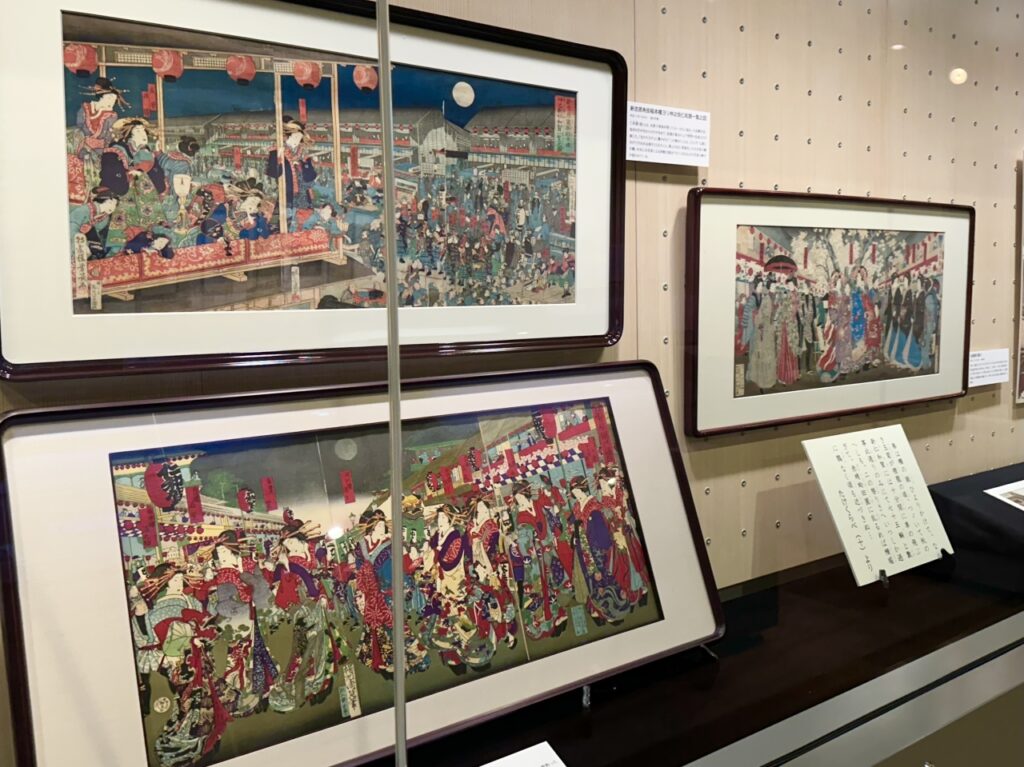
The hustle and bustle can be felt in the nishiki-e print “Nakanomachi Niwaka Iryou No Zu from Inamotoro, Corner Street of Shin-Yoshiwara,” which depicts the autumn Niwaka, an event that also appears in the work. This is an event where geisha perform impromptu plays at street stalls. In Yoshiwara, the spring Nakanomachi cherry blossoms (night cherry blossoms), the summer Tamagiku lanterns, and the autumn Niwaka are all popular as the three major views of Yoshiwara, and Ichiyo beautifully expressed the changing seasons by incorporating these into her work.

Above: Yoshii Ochiai, “Map of the Shin-Yoshiwara Corner Street from Inamotoro to Nakanomachi and Ninwaka,” Meiji 2 (1869)
Bottom: Yoshu Shuen, “The Bustle of New Yoshiwara,” 1879

The story also depicts how the children, who have become completely immersed in the Yoshiwara atmosphere, begin to imitate geisha during the Ninwaka period, and Ichiyo writes with a hint of amazement at how quickly they improve, saying, “Mencius’s mother would be amazed.”It can be said that only Ichiyo, who actually lived in the area, could include such realistic impressions.

Ichiyo not only observed Yoshiwara from the outside, but also visited it herself. She heard about the circumstances of the pleasure quarters from the head maid of the Hikite-chaya teahouse who arranged work for her, viewed the Tamagiku lanterns, and took detailed notes on the age, clothing, and demeanor of the female courtesans performing the Shinnaibushi dance through the pleasure quarters… Each of these interviews would go on to shape the future Takekurabe.

Days of trial and error at a candy store – and sometimes complaining

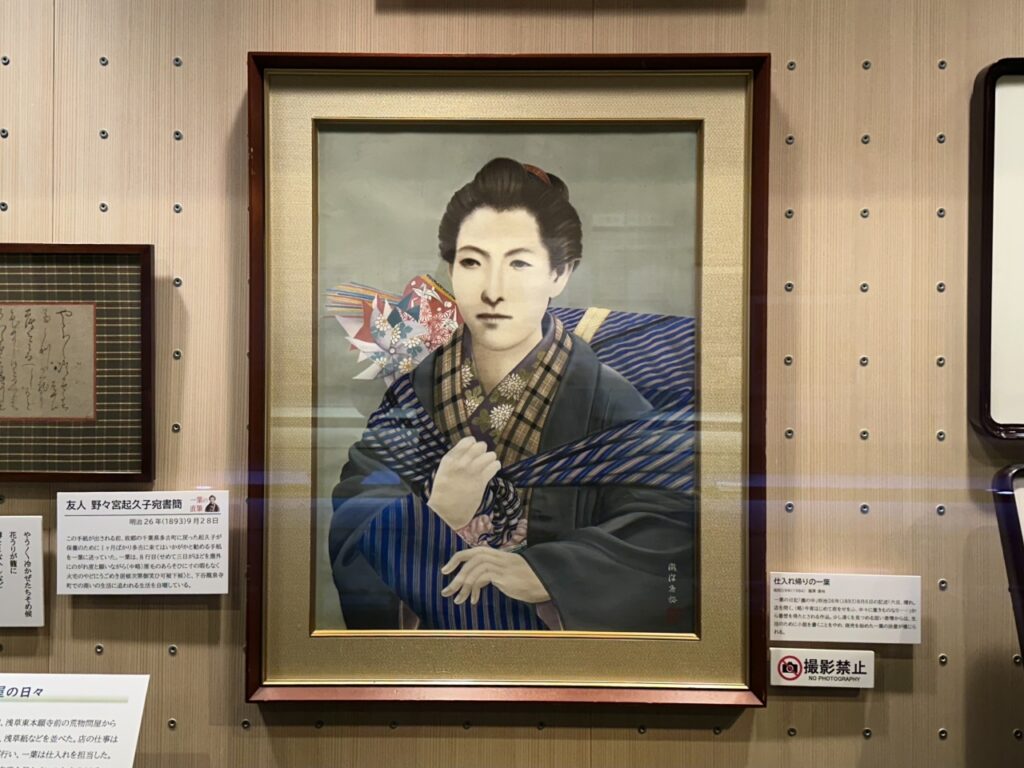
Yasuhiro Takizawa, “A leaf on the way back from purchasing,” 1984

Ichiyo’s striking portrait is said to have been inspired by an entry in her diary “Dust Inside” dated August 6, 1893: “The sixth day, clear skies. I open the shop. (omitted) Tonight I load my first load, and it’s quite heavy…” August 6 was the shop’s opening day, and initially, the shop sold miscellaneous goods such as dusters, soap, scrubbing brushes, and Asakusa paper. Ichiyo soon realized that this alone would not be enough to make a profit, so she turned to a friend’s father, who ran a candy wholesale business, and began selling toys and cheap sweets such as menko, balloons, and illustrated books. She spent her days befriending the children who came to the shop.

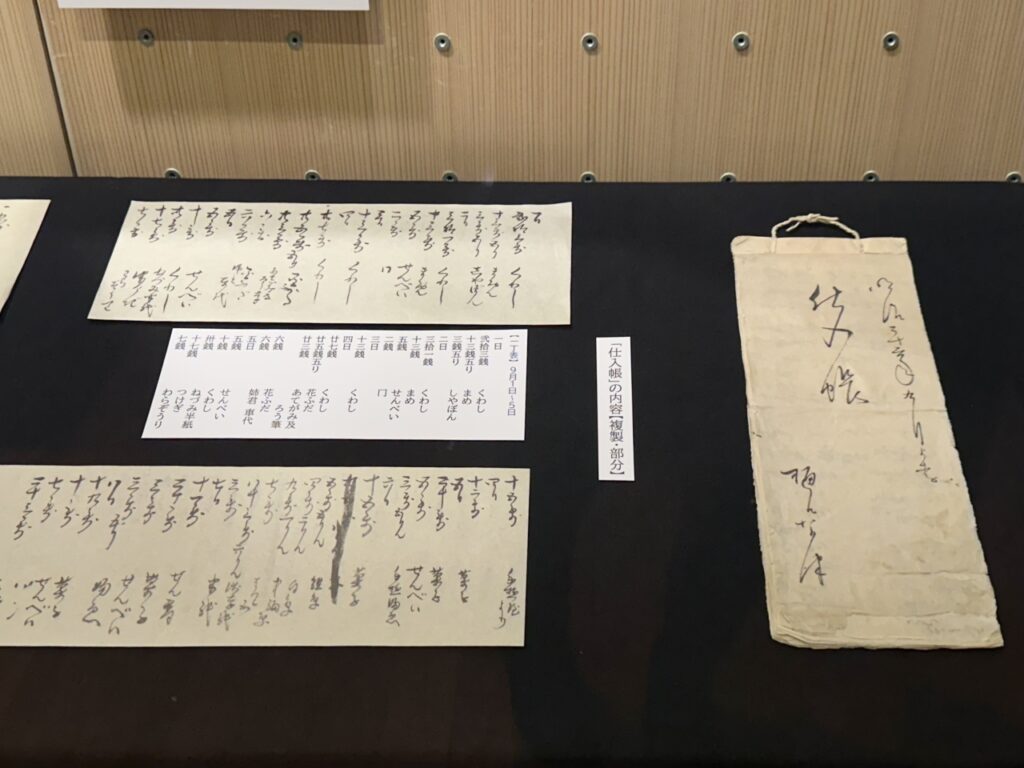
Purchase ledger handwritten by Higuchi Ichiyo, September 1st to November 23rd, 1893 (Meiji 26).

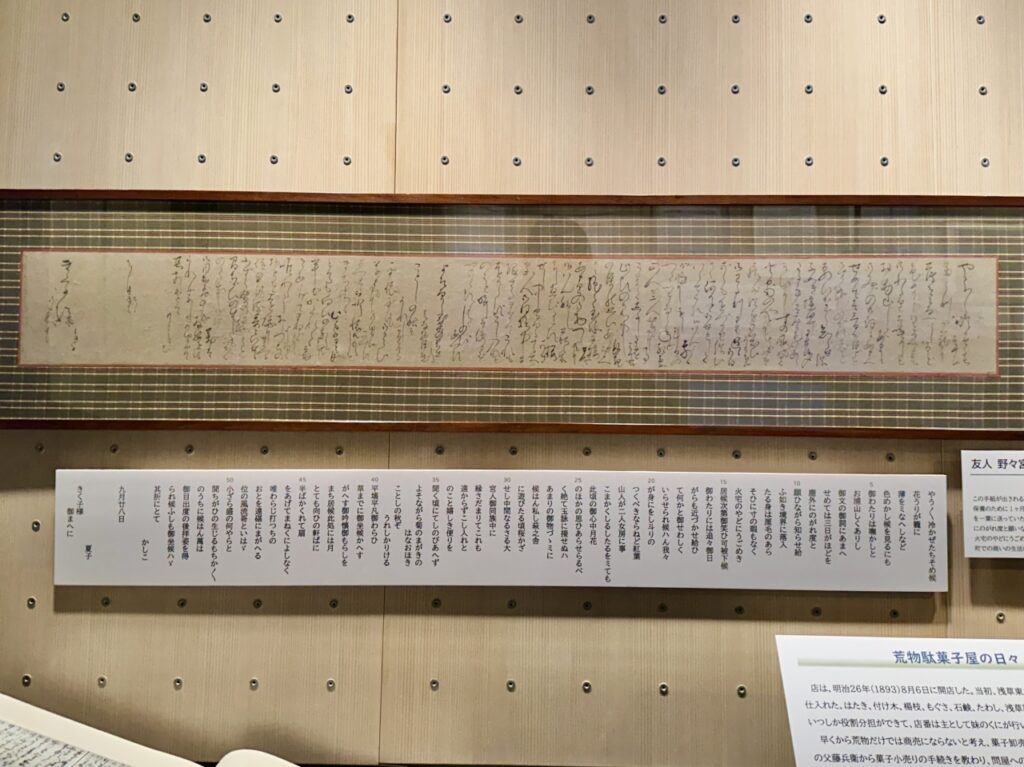
Although Ichiyo was so energetic that she would walk 20km a day in geta or zori sandals in the heat of summer while searching for a new place to live, she found the hectic pace of business difficult to bear, and her letters and diary contain many complaints. For example, when her friend Nonomiya Kikuko invited her to her hometown of Tako Town in Chiba Prefecture for a retreat, Ichiyo wrote:

■ “I hope to escape from the dust for at least three days… but I’m stuck in a burning house, squirming without a moment’s rest, battling the fury of my neighbors, and you’ll laugh at me.”

Modern translation: I wish I could escape from this troublesome world, even if only for three days, but petty problems keep popping up, I have no time for anything, and I struggle in my difficult living conditions. Please make me laugh.

In his reply letter, he wrote about his situation with a hint of self-mockery.
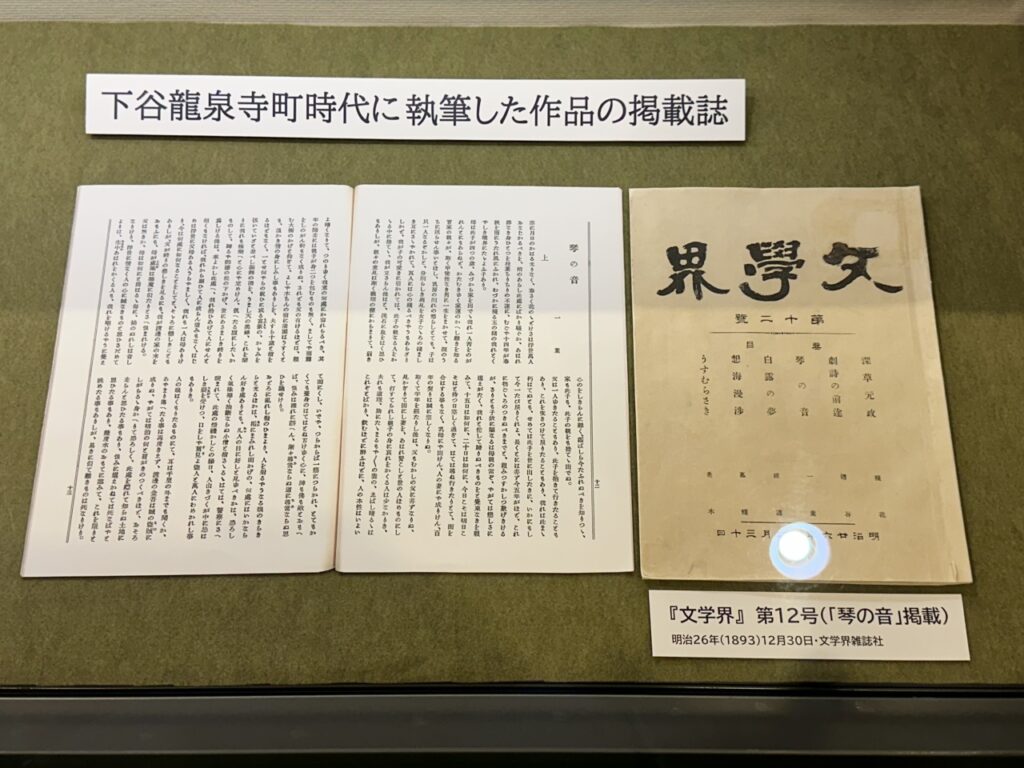
Letter written by Higuchi Ichiyo to Nonomiya Kikuko, September 28, 1893 (Meiji 26)

Despite trying all sorts of help, business worsened when a competitor opened a shop on Chayamachi Street in January of the following year. In the end, he closed the store after just over nine months and moved to his new home in Maruyama Fukuyamacho, Hongo, where he decided to devote himself to writing.

Ichiyo returns to the path of novelist

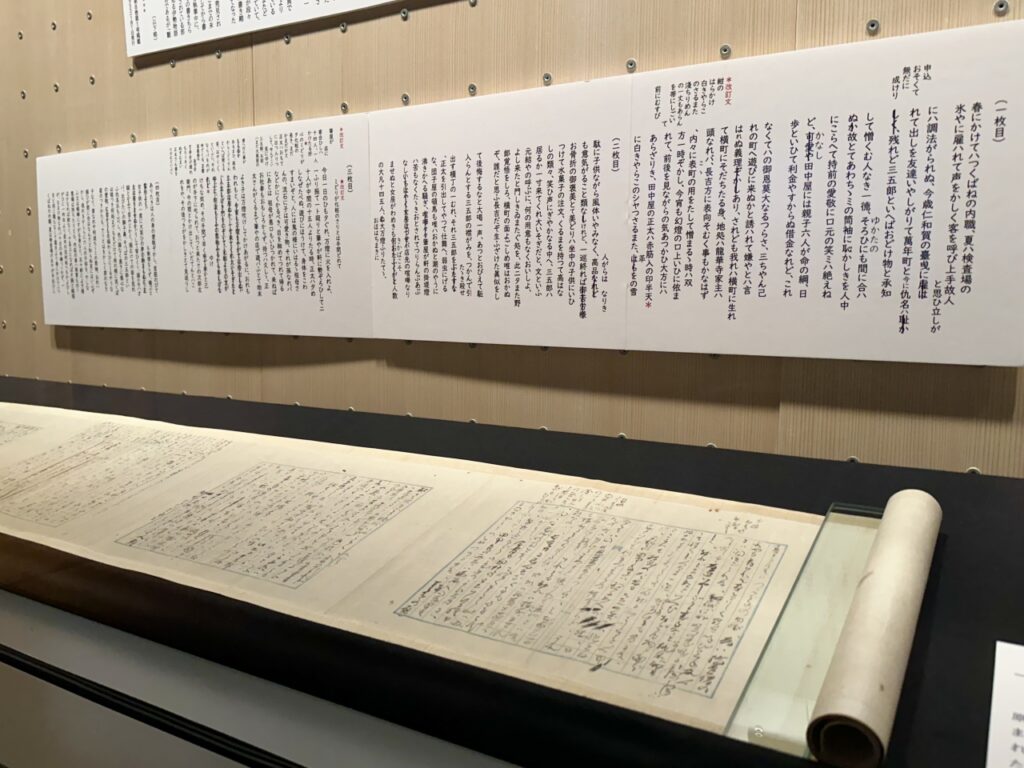
Incidentally, even while Ichiyo was living in Shitaya Ryusenji-cho and had almost completely stopped writing, writers Hoshino Tenchi and Hirata Toki, who had praised her talent for “Umoregi,” continued to patiently persuade her to continue writing despite her hesitation due to her busy schedule. As a result, she was able to publish two works, “Koto no Oto” (The Sound of the Koto) and “Hanagomori” (The Flowering Garden), in the magazine they founded, Bungakukai. This exhibition features an unfinished draft of “Hanagomori,” which shows signs of revision and significant deletions, conveying the pains of the writer, as well as diary entries describing the agonies she experienced while writing “Koto no Oto,” and the magazines in which both works first appeared .
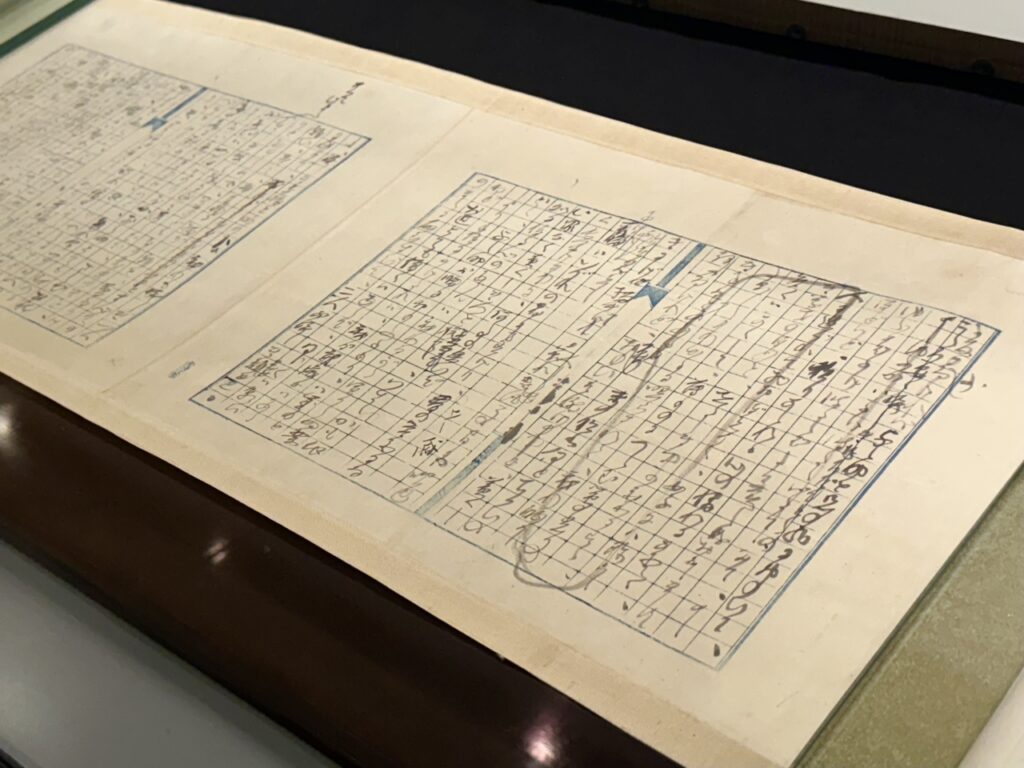
Bungakukai, December issue (featuring “Koto no Oto”), December 30, 1893, Bungakukai Magazine Company
Higuchi Ichiyo’s handwritten novel “Hanagomori” (Flower Gomori), unfinished manuscript, 1894 (Meiji 27)

At the end of the venue , there are materials related to “Takekurabe,” including unfinished drafts, the origami book “Takekurabe Emaki,” and even books containing the manuscripts published in the “Bungei Club” magazine . The unfinished drafts are significantly different in content from the finished versions, so you’re sure to make new discoveries by reading them side by side.

Unfinished draft of the novel “Takekurabe,” 1895
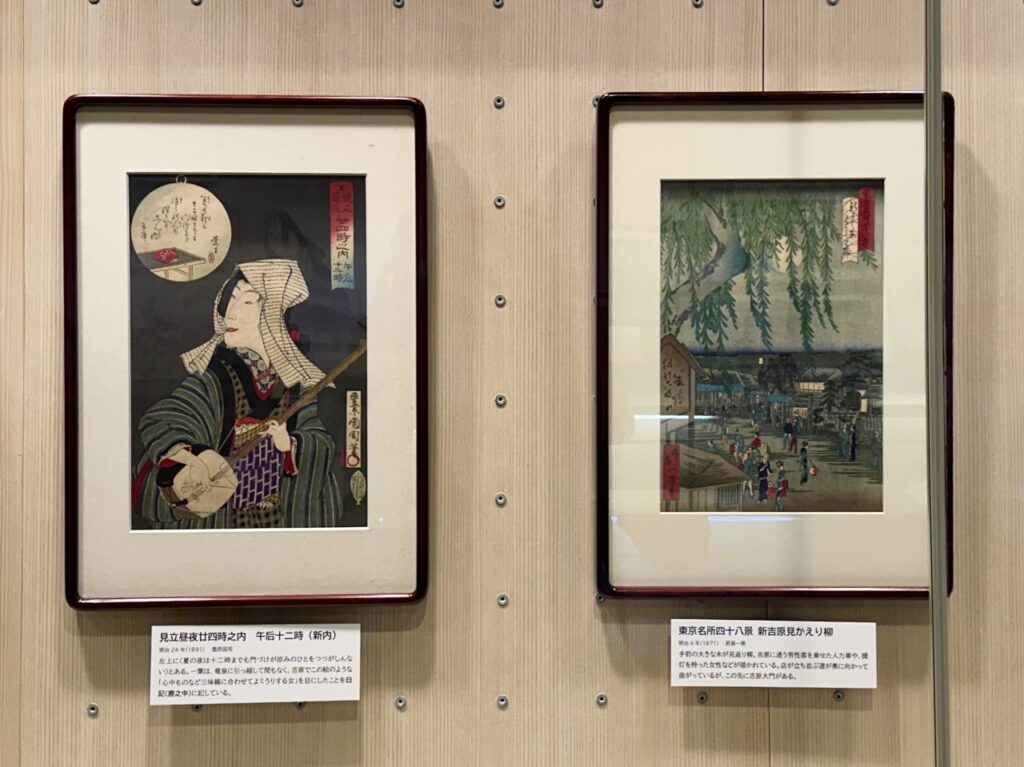
Left: Kunichika Toyohara “Mitate day and night 4 o’clock, 12 o’clock in the afternoon (Shinnai)” 1891
Right: Shosai Ikkei, “Forty-eight Famous Views of Tokyo: Willows Looking Back at Shin-Yoshiwara,” 1891

Ichiyo’s early works featured a fantastical style, including mundane tales of tragic love, but her vivid experiences living in Shitaya Ryusenji-cho led to a more realistic style that sometimes captured harsh realities such as poverty and the plight of women. This exhibition showcases a major turning point in her creative career, which led to her being highly regarded as one of the leading writers of the Meiji period.

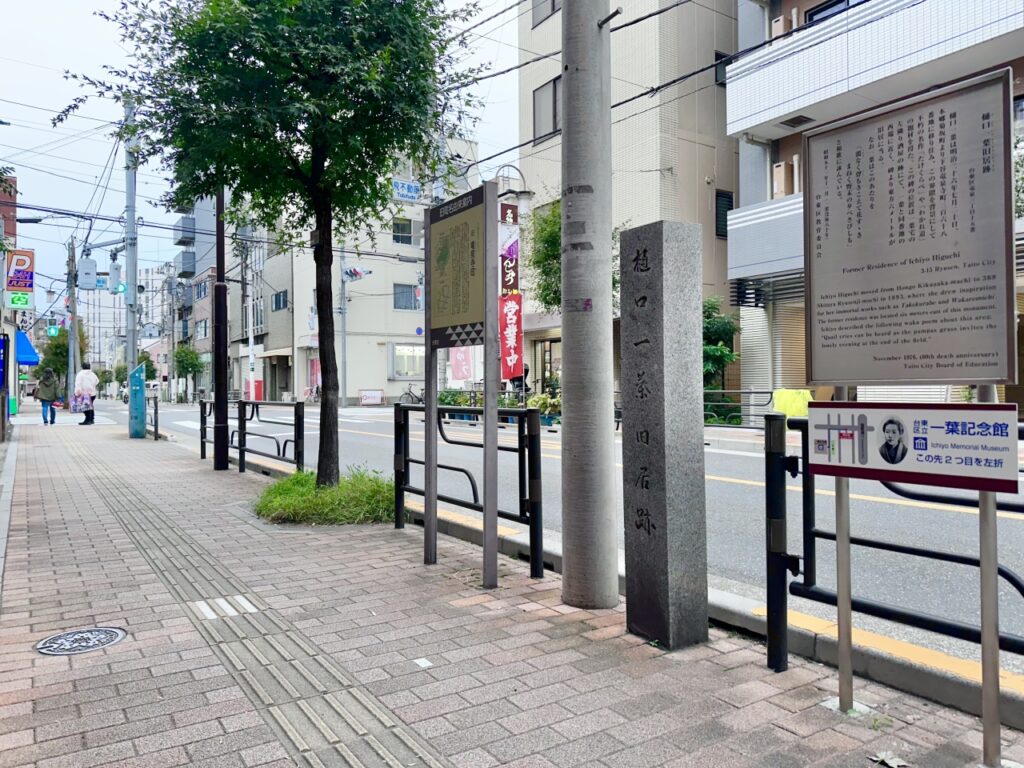
Higuchi Ichiyo Former Residence Monument

Additionally, there is a monument to the former residence of Higuchi Ichiyo on Chayamachi Street, about a two-minute walk from the Ichiyo Memorial Museum. The Ryusen area has changed significantly since Ichiyo lived there due to land readjustment projects as part of the Imperial Capital Reconstruction Plan following the Great Kanto Earthquake, but traces of the “single straight road from Shitaya to Yoshihara” still remain.

If you go east along Chayamachi Street, you will come across a pillar marking the location of the emergency gate to Yoshiwara Ageyamachi. In addition to viewing the special exhibition, why not take the time to imagine what the Yoshiwara pleasure quarter looked like from Ichiyo’s tenement house?

Overview of the special exhibition “Shitaya Ryusenjicho, where Ichiyo lived”

Dates October 25th (Sat) – December 21st (Sun), 2020
venue Taito City Ichiyo Memorial Museum (3-18-4 Ryusen, Taito-ku, Tokyo)
Opening hours 9:00 AM – 4:30 PM (entry until 4:00 PM)
Closed days Every Monday
Admission fee Adults: 300 yen, elementary, junior high and high school students: 100 yen

* Free admission for those with a physical disability certificate, rehabilitation certificate, mental health and welfare certificate, or specific disease medical care recipient certificate, and their caregivers.
*Every Saturday, admission is free for elementary and junior high school students who live or attend school in Taito Ward and their accompanying supervisors.

inquiry Ichiyo Memorial Museum 03-3873-0004
Official website https://www.taitogeibun.net/ichiyo/

*The content of this article is current as of the date of the interview. Please check the official website for the latest information.


View other reports