
Tokyo Metropolitan Art Museum
The Tokyo Metropolitan Art Museum is hosting the first-ever exhibition in Japan showcasing paintings from the Golden Age of Swedish art, which has been gaining global attention in recent years. The exhibition, "Swedish Paintings: Nordic Light, Everyday Brilliance," commemorating the 100th anniversary of the opening of the Tokyo Metropolitan Art Museum, will run from Tuesday, January 27, 2026, to Sunday, April 12, 2026.
*All works shown are owned by the National Museum of Sweden.
Coastlines lined with rocky reefs. Majestic forests and lakes. Lands covered in harsh snow in winter. Traditional culture exemplified by midsummer festivals and a lifestyle of well-being. What we think of as "Swedishness" today was "rediscovered" by Swedish painters from the 1880s to around 1915, known as the Golden Age of Swedish art. With the full cooperation of the Nationalmuseum of Sweden, this exhibition systematically introduces the development of Swedish art during this Golden Age through approximately 80 paintings. It explores the uniquely Nordic sensibility of living a rich life in harmony with nature.
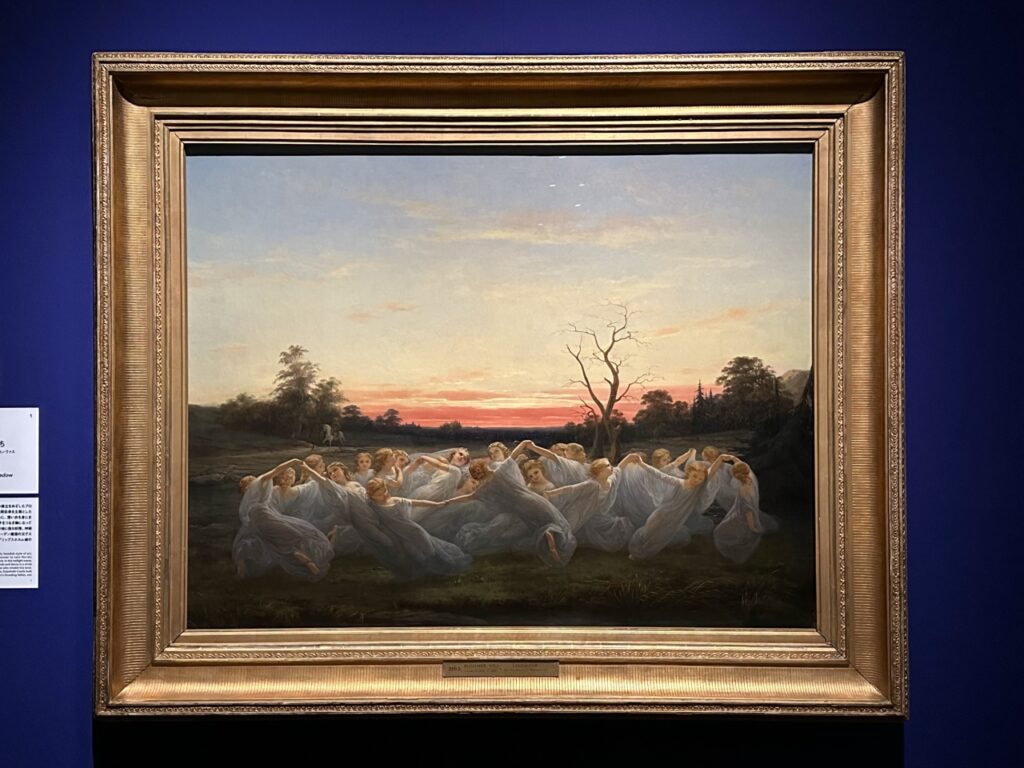
The exhibition is divided into six chapters. Chapter 1, "The Dawn of Modern Swedish Painting," begins with Nils Blommar, who is said to be the first painter to use Nordic mythology and folklore as themes, with the aim of establishing a uniquely Swedish art form.
Sweden was the first Nordic country to establish the Royal Academy of Drawings (later renamed the Royal Academy of Fine Arts) in 1735. Traditional art education was modeled on France, and Sweden's history and mythology were encouraged as important subjects, but by the mid-19th century, Sweden was strongly influenced by the new Romantic ideas that were gaining popularity in France and Germany. In landscape painting in particular, the works of painters from Düsseldorf, Germany, who dramatically depicted the ruggedness and sublimity of nature based on a meticulous view of nature, were seen as models, and many Nordic painters, including those from Sweden, traveled to that city in awe.
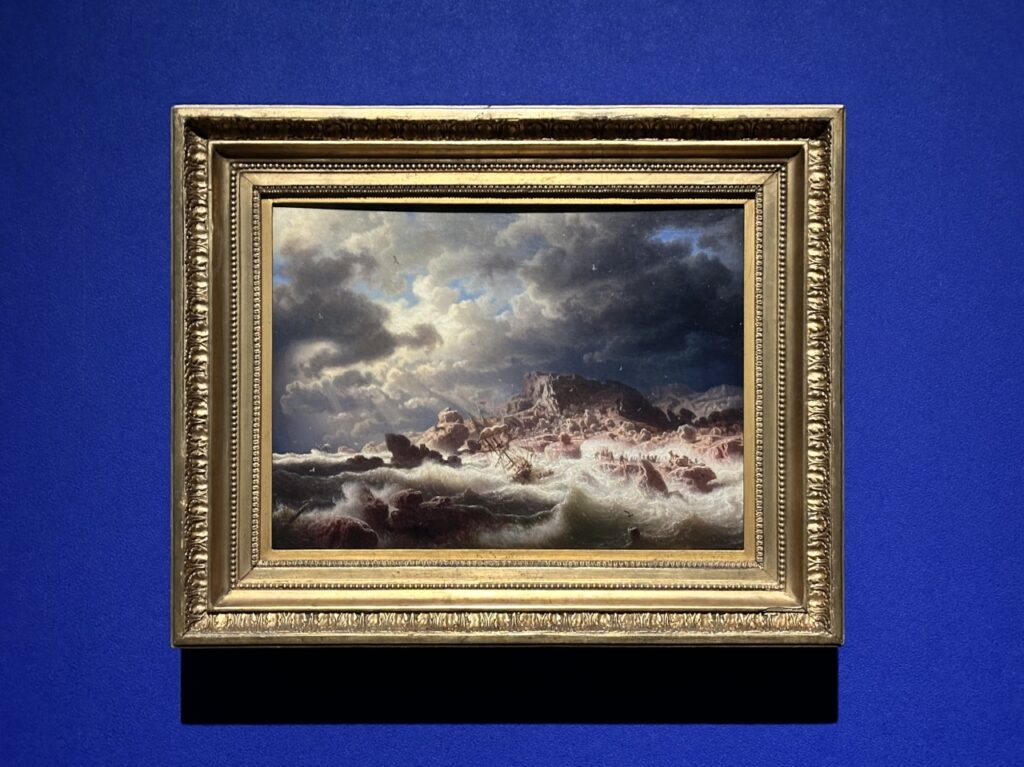
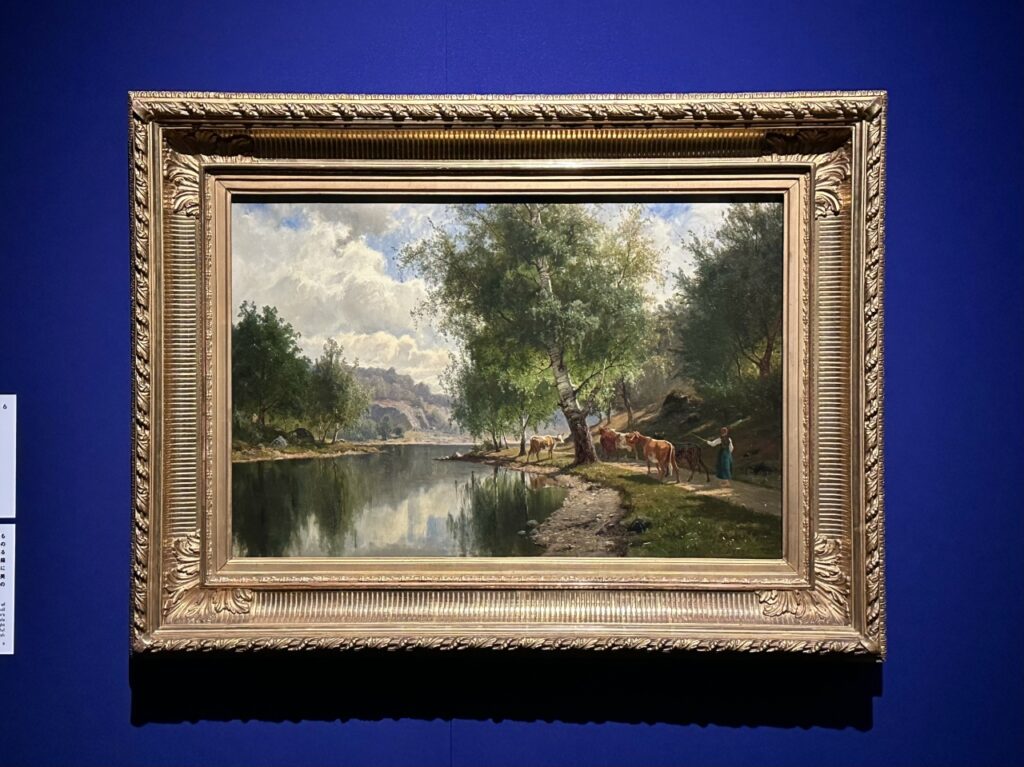
This trend was related to an exhibition of Nordic art held in Stockholm in 1850. Norwegian painters who had studied at the Düsseldorf School exhibited works at the exhibition depicting the lives of Norwegian peasants and the majestic landscapes of the fjords. To Swedish painters, these works appeared to be art that, while clothed in innovative foreign styles of expression, was deeply rooted in the real world of Scandinavia, and this sparked a desire to create a new, indigenous art form in their own country.
In the late 1870s, young Swedish painters, dissatisfied with the Academy's outdated teaching methods, headed to Paris in search of new forms of expression, values, and instruction. At the time in Paris, new forms of expression such as Impressionism, which overturned traditional artistic values, were flourishing, but many Swedish painters instead chose to gravitate towards realism and naturalism, which sought to capture humans and nature in their natural state.
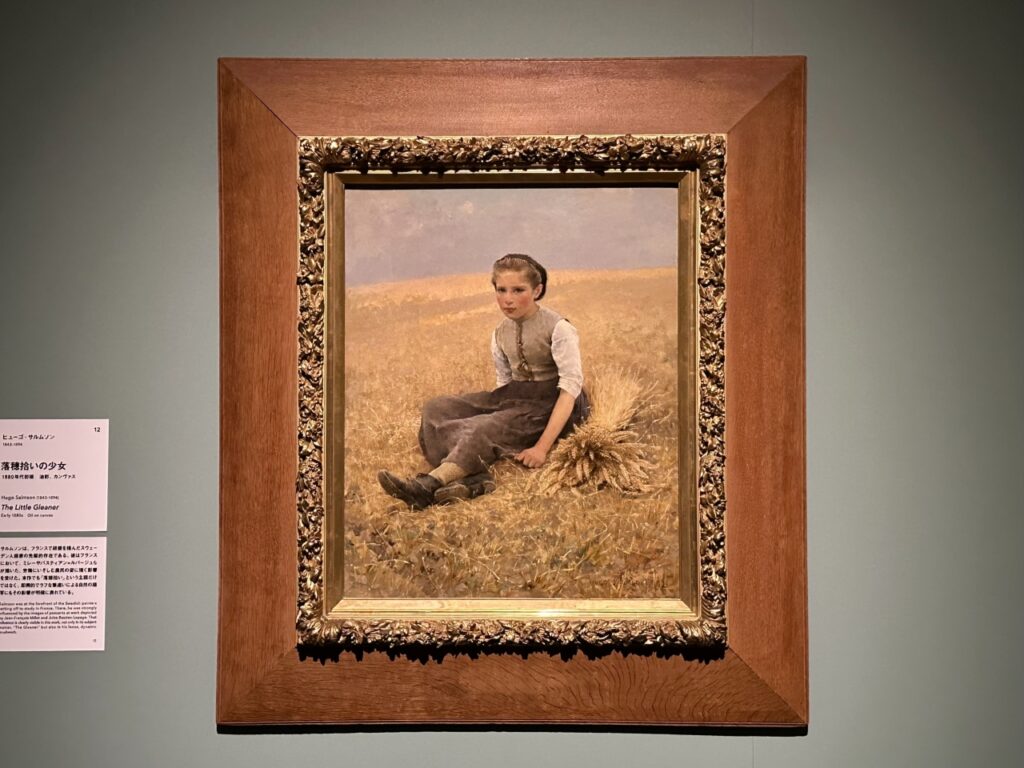
Hugo Salmson (1843-1894), introduced in Chapter 2, "Towards Paris: Encounters with Modern French Painting," was one of the earliest Swedish painters to study in France. He favored the Barbizon School, which focused on peasants at work, as well as the Realist paintings of Jules Bastien-Lepage and Jules Breton. Looking at "The Gleaners," we can see that their influence is evident not only in the subject matter but also in the improvised, rough brushwork used to depict nature.
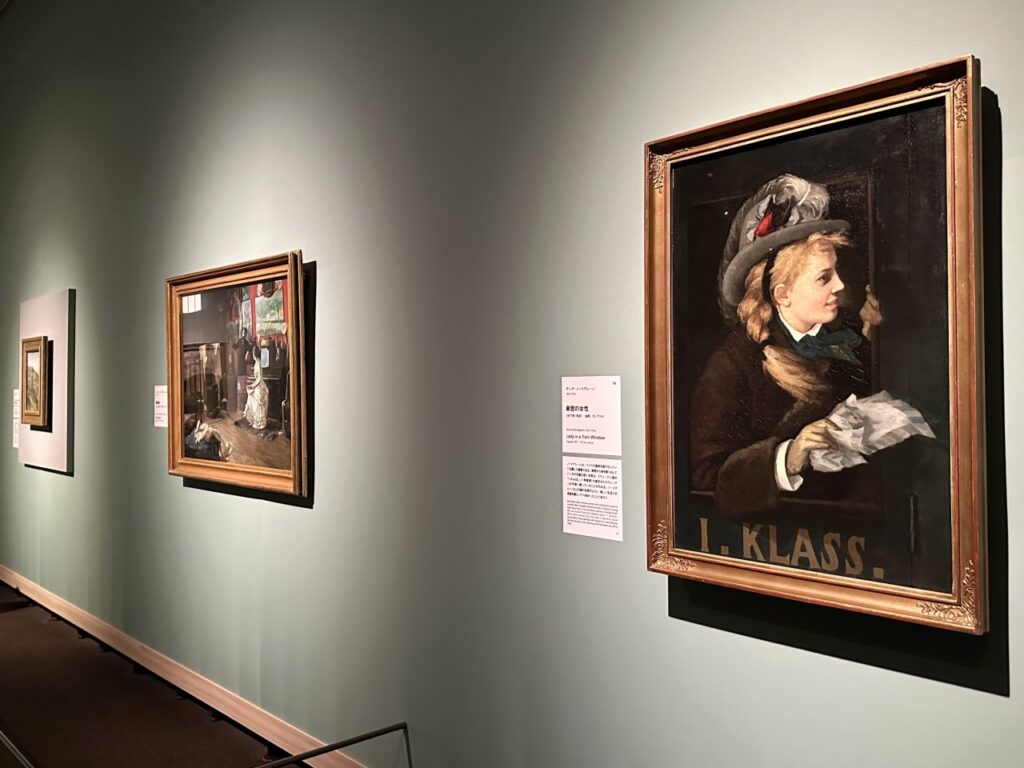
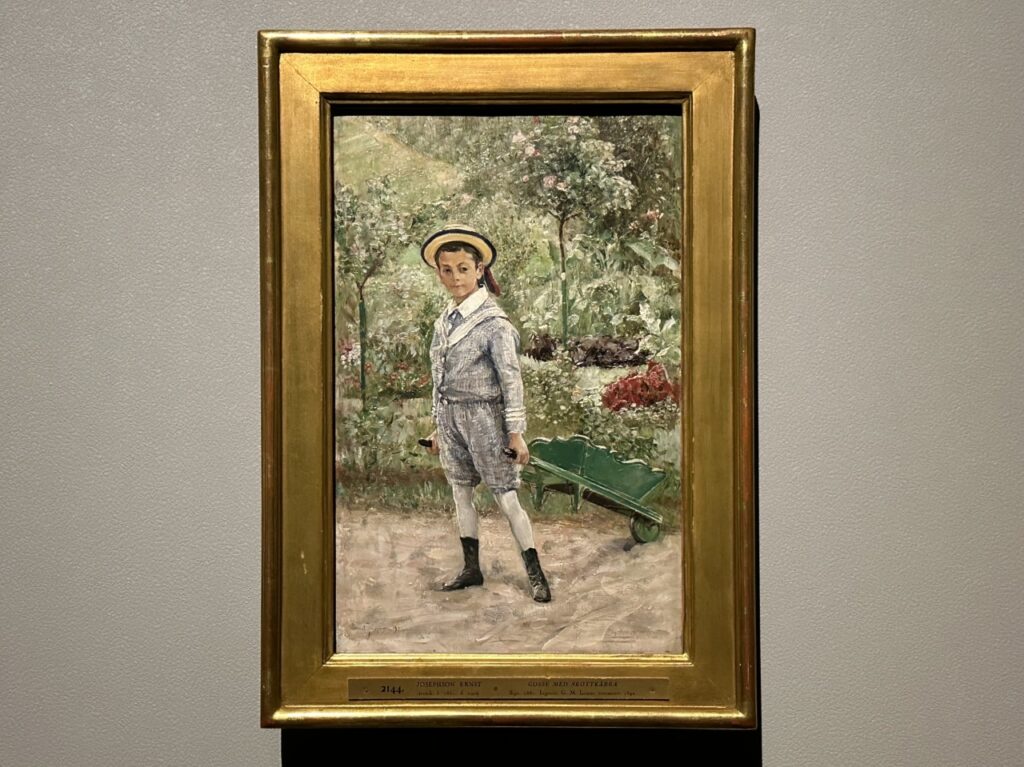
Another painter who came into contact with the plein air movement during his stay in Paris and acquired a style filled with bright, fresh colors and light was Arnold Josephson (1851-1906). In 1885, a group of young artists led by Josephson submitted a statement calling for reform to the outdated Royal Academy of Fine Arts. These artists, who chose to break away from the school, came to be known as the "Oponentena" (rebels), and would go on to lead the way in Swedish painting from the 1890s onwards.
Chapter 3, "The Artists' Village of Grez-sur-Loing," introduces the formation of artistic colonies (communities) across France by Scandinavian artists who began to place importance on outdoor art. In the 1880s, one of the bases for Swedish painters was the small village of Grez-sur-Loing, 70 kilometers southeast of Paris. They spent their summers here, capturing the daily lives of peasants and idyllic scenes along the Loing River.
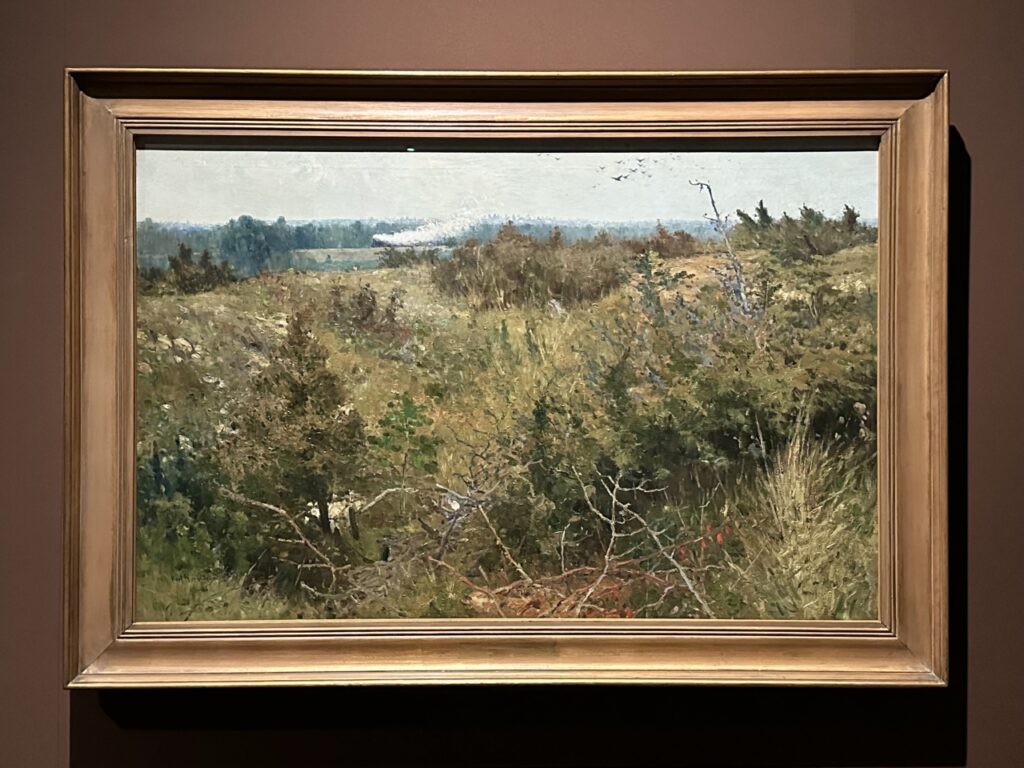
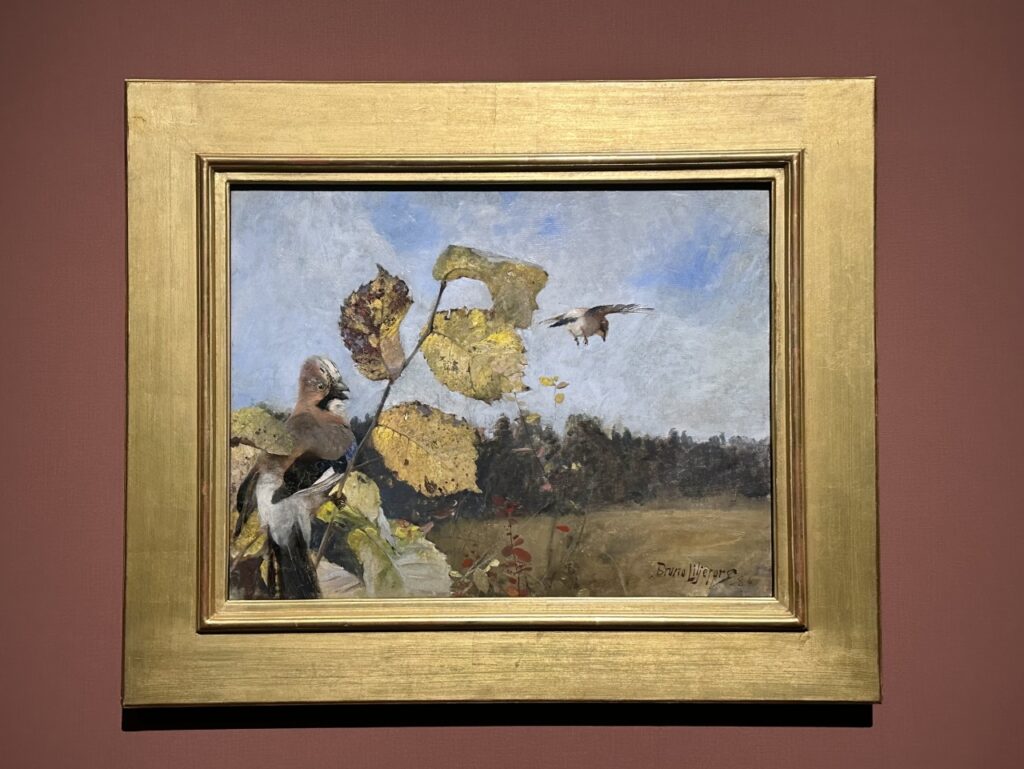
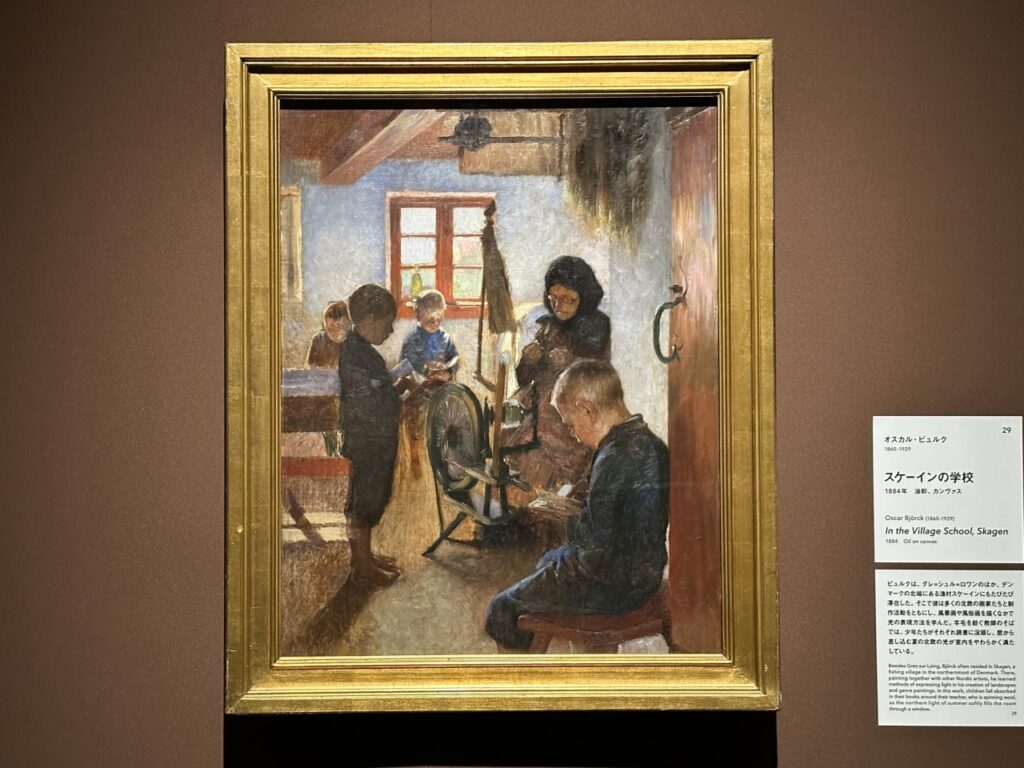
The Swedish national painter Carl Larsson (1853-1919) also moved to the same area when he was still unknown, where he encountered watercolors and discovered a new direction for his expression in light-hearted landscape paintings filled with dazzling light.
Towards the end of the 1880s, many Swedish painters who had been working in France returned home and aimed to create art that was distinctively Swedish, in order to demonstrate their national identity.
Chapter 4, "The Brilliance of Everyday Life – Living a 'Swedish' Lifestyle," features works by artists who have found motifs in the harsh yet bountiful nature, their own families, close friends, or the fleeting joys hidden in everyday life, and have depicted them with intimate and emotional expressions.
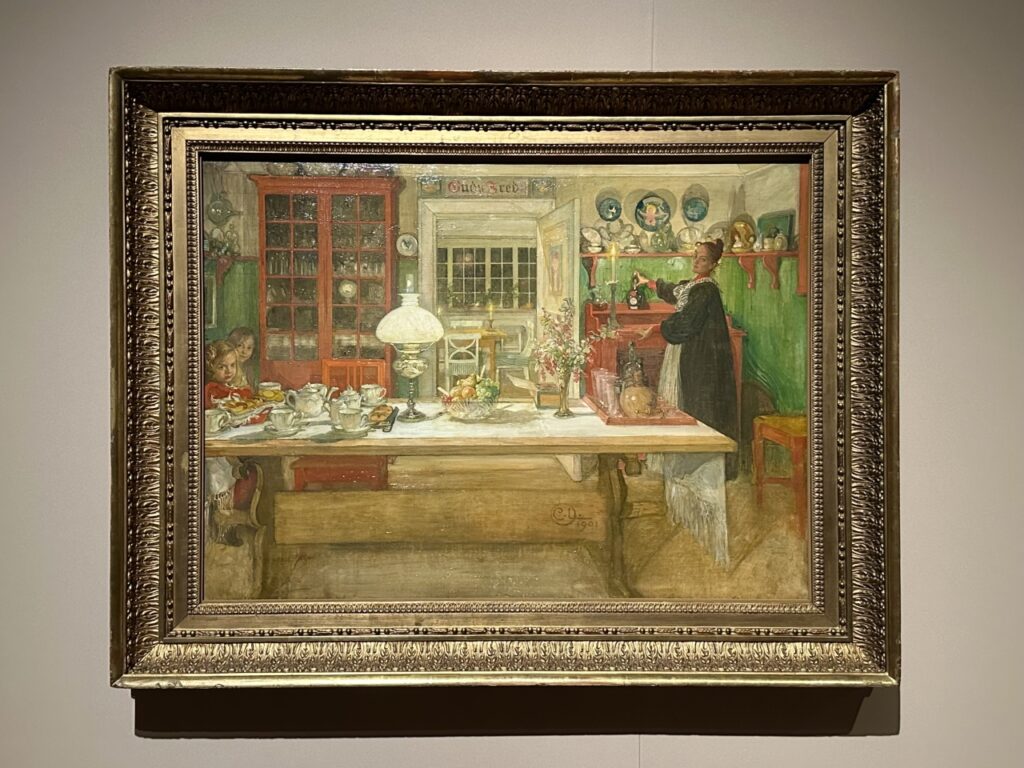
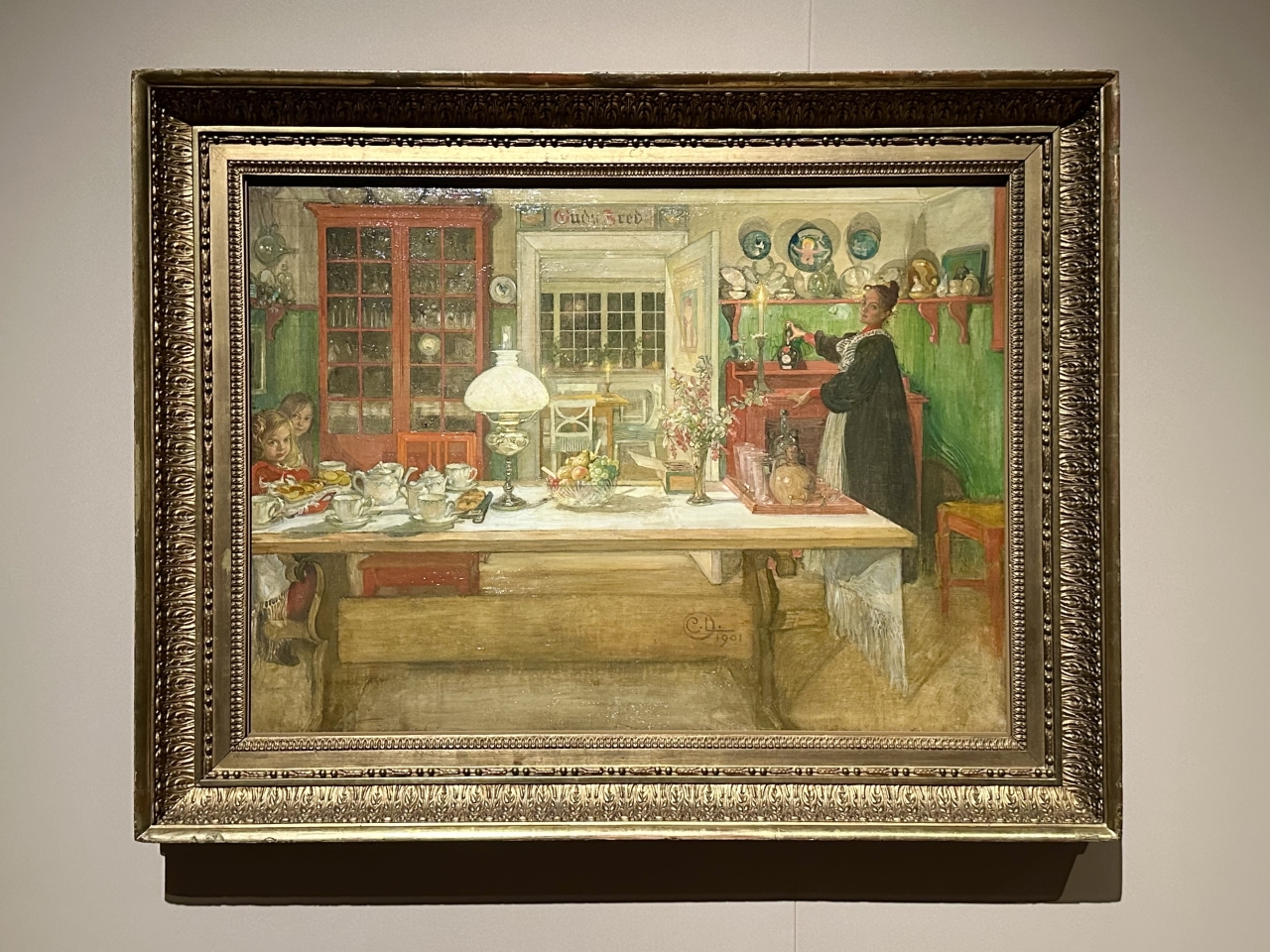
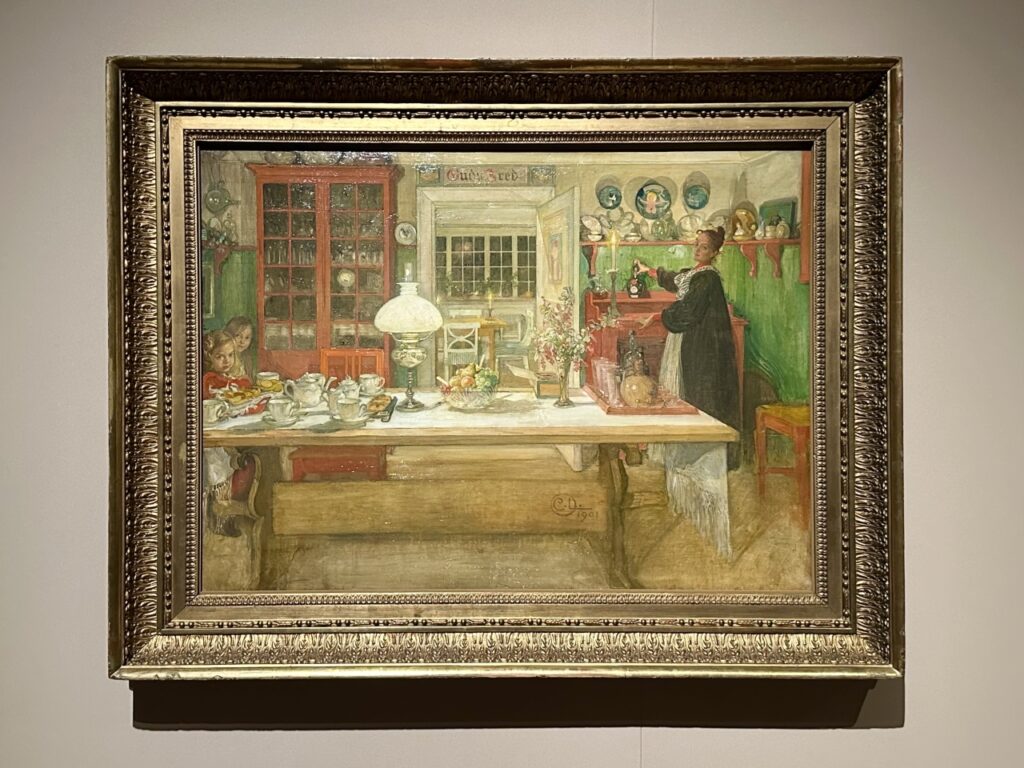
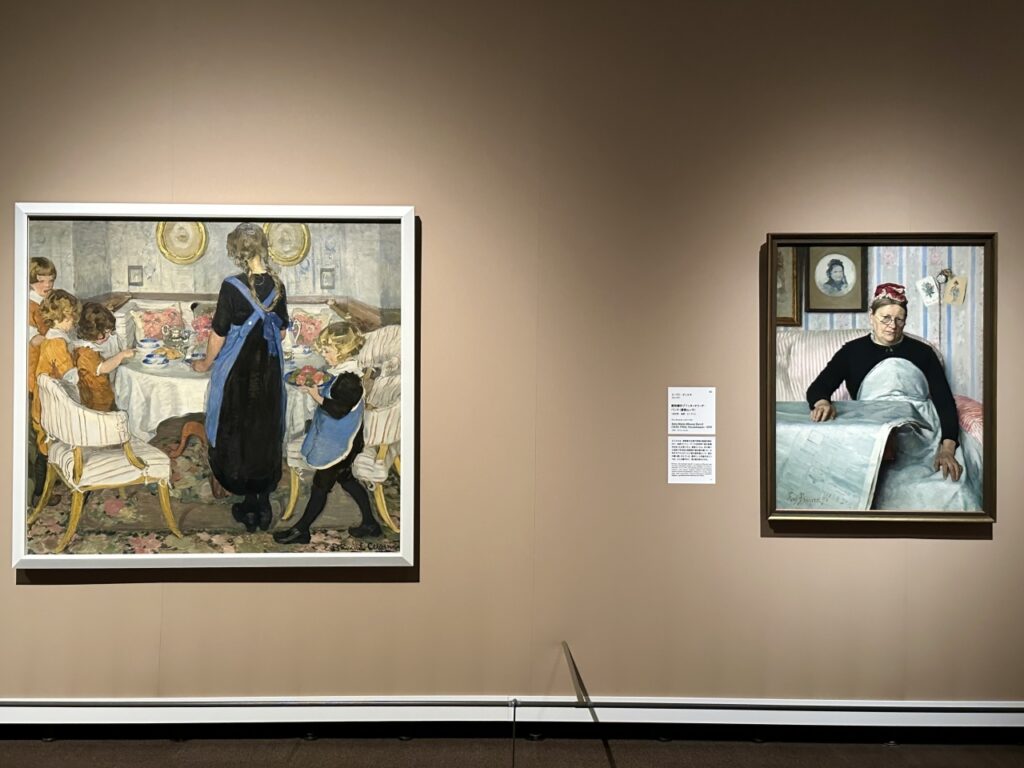
It was Larsson, in particular, who shaped the image of "Swedish living." Larsson lived in Lilla Hitnes, a two-story house in the rural town of Sundborn in the central Dalarna region, with his wife Karin, also a painter, and their seven children. The house was repeatedly renovated to suit the family's needs, and, influenced by the Arts and Crafts movement that was popular in England at the time, he skillfully combined furniture from various eras and styles and decorated the interiors with textiles and embroidery designed by Karin herself. With passion, he created his ideal home, a comprehensive work of art for living.
In Swedish society at the time, the idea was spreading that a simple yet comfortable living environment surrounded by "truly beautiful things" made by artisans would foster people's aesthetic sense and lead to the creation of a better society. Against this cultural background, Larsson published "Ett hem" (A Dwelling) in 1899, a collection of watercolors depicting the interior decoration of his own home, scenes of a lively and carefree lifestyle, and seasonal events. This became widely known as an image of the ideal home symbolizing "Swedishness."
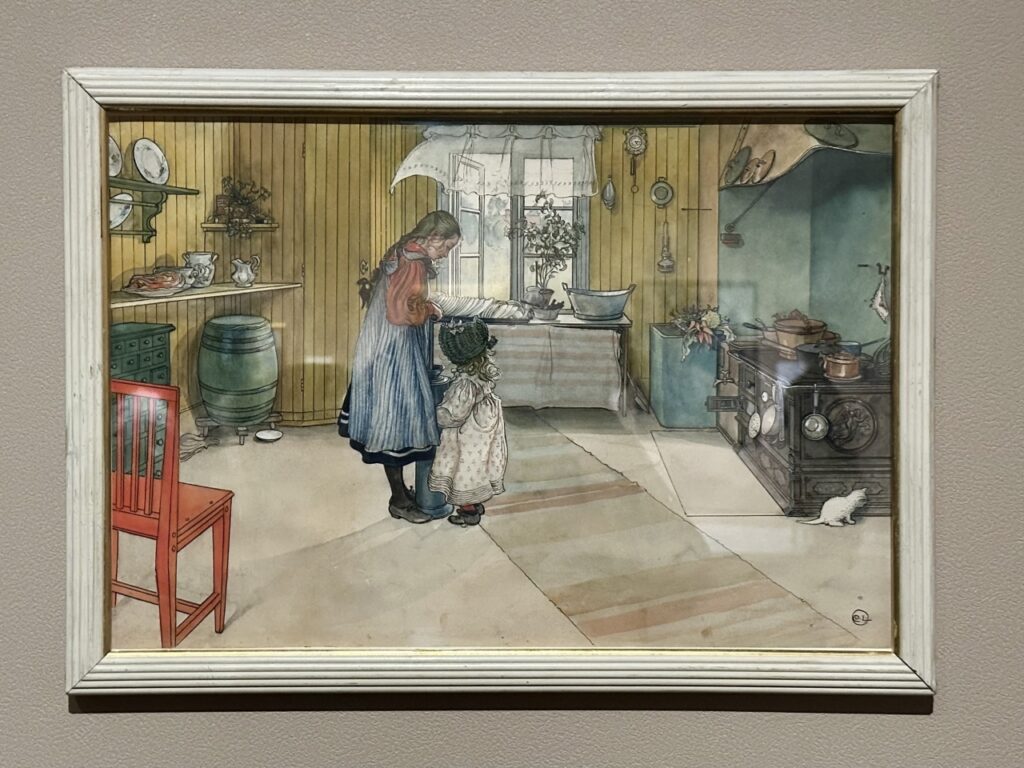
Although "A Home" contains 24 watercolors, in order to protect the artworks, only one original painting will be exhibited at each venue in Tokyo, Yamaguchi, and Nagoya. Instead, nine more watercolors will be introduced through specially produced video content, conveying the heartwarming atmosphere of "Lilla Hittnes" on a large screen.
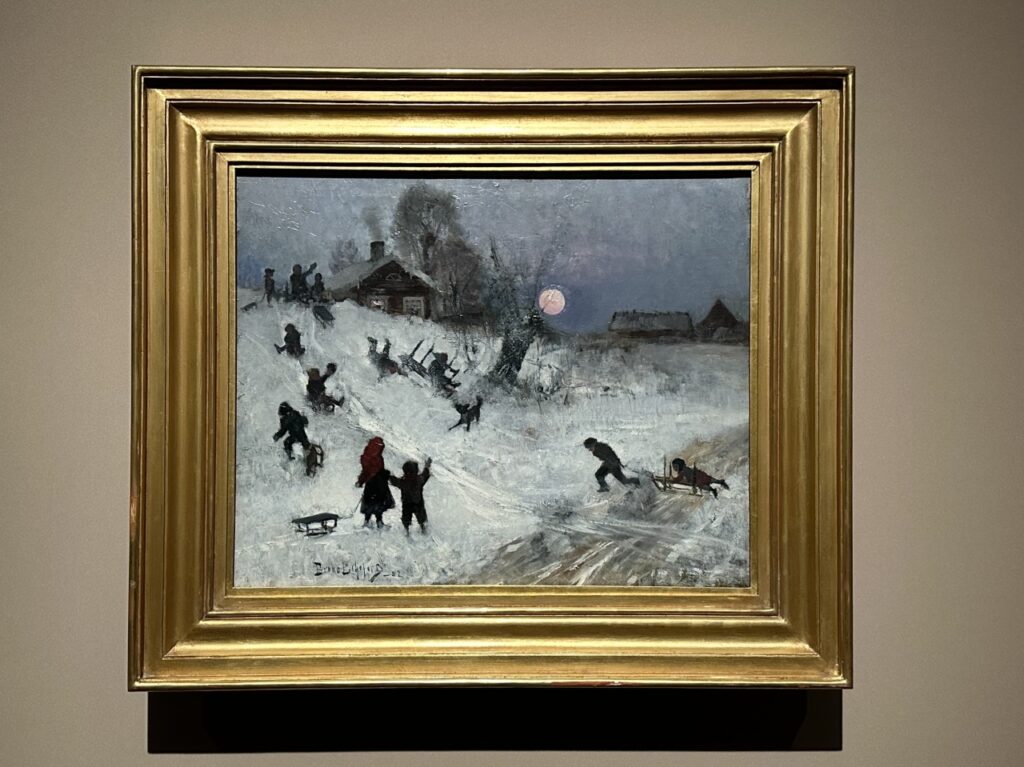
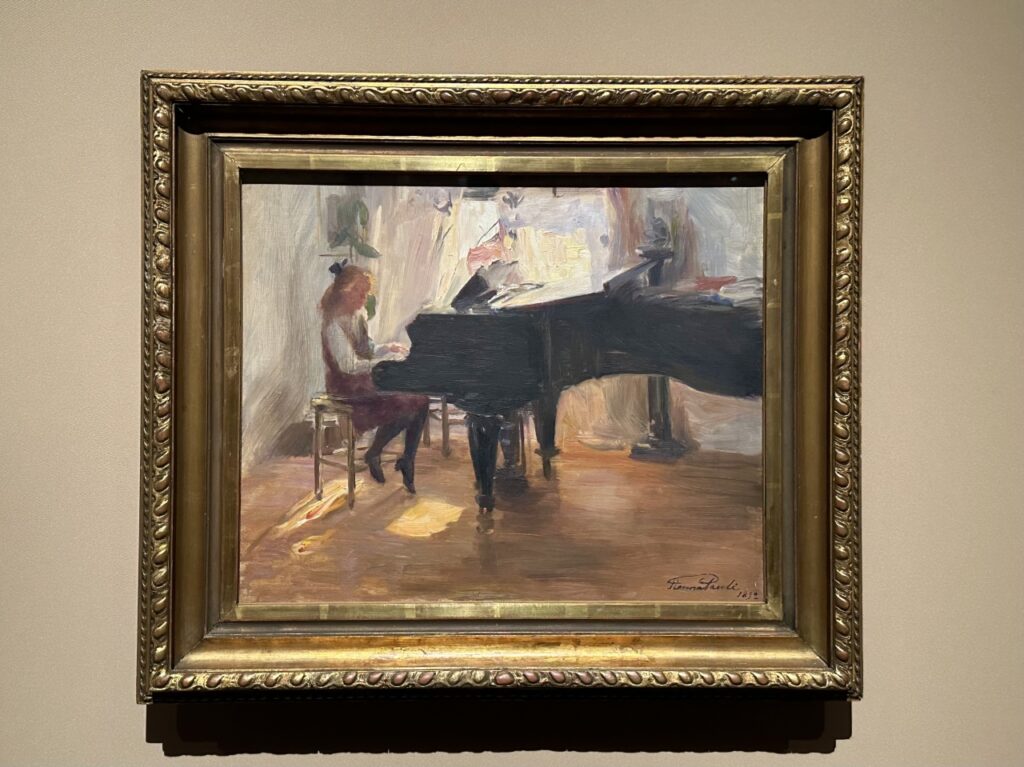
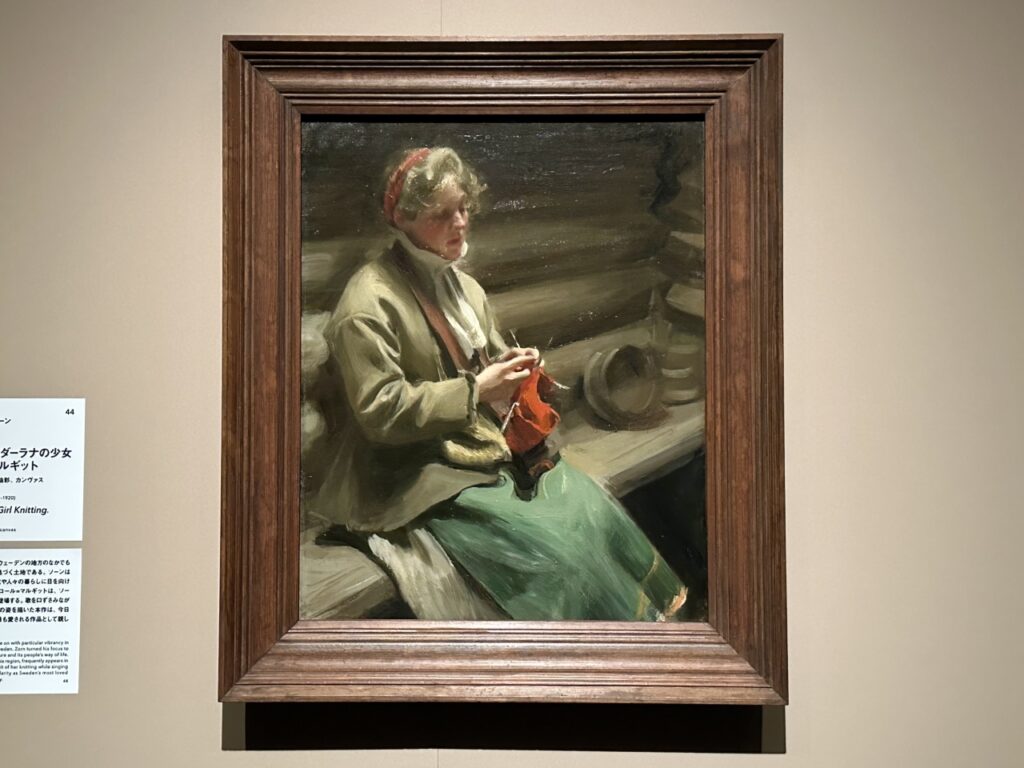
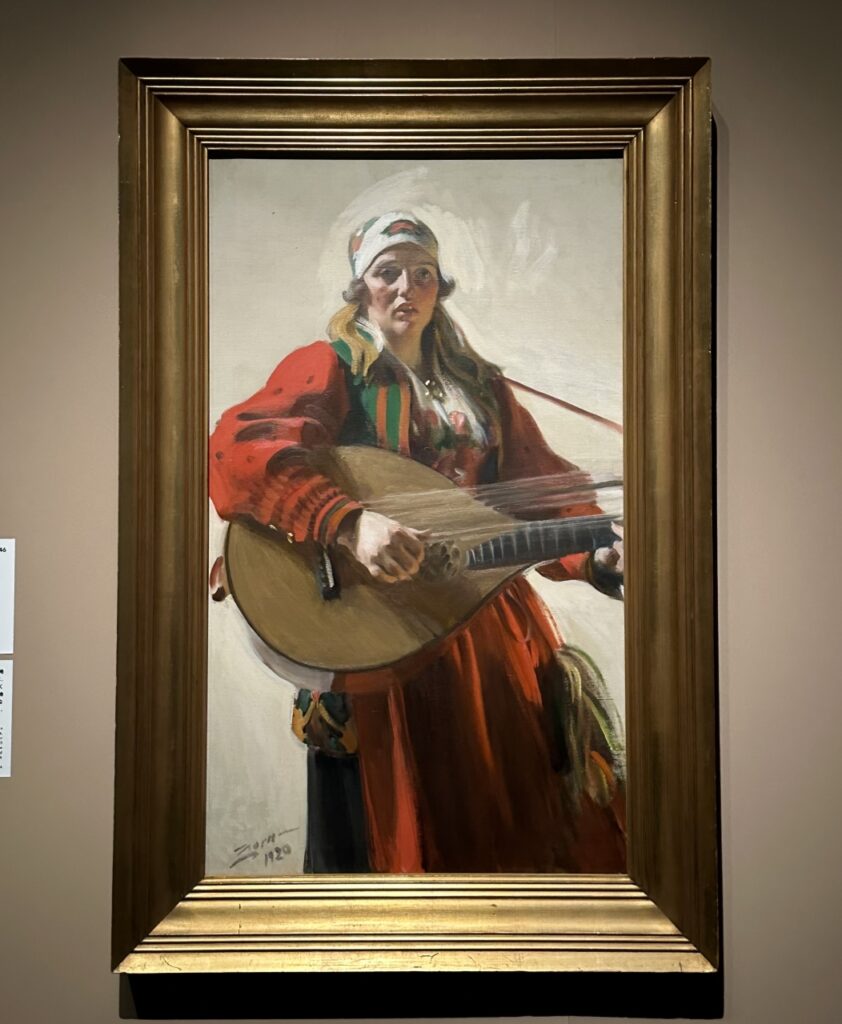
Anders Sohn (1860-1920), a friend of Larsson and one of Sweden's earliest internationally successful painters, also returned from Paris and settled in Mora, his hometown in Dalarna. Dalarna is a region particularly steeped in history and tradition, and Sohn frequently used the folk culture of Dalarna, such as its traditional music and dress, which was in the process of being lost in the shadow of modernization, as his subject matter. His captivating style is characterized by his quick brushstrokes, vividly capturing fleeting moments of light and air, and his work Kor-Margit Knitting remains one of Sweden's most beloved and frequently reproduced works to this day.
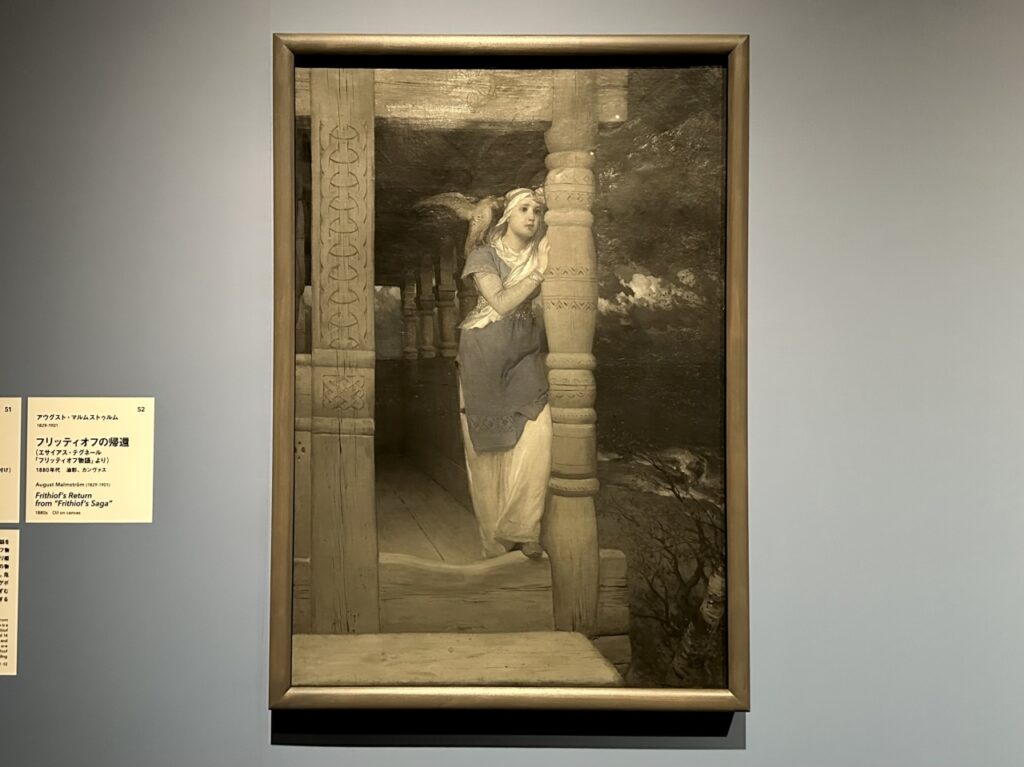
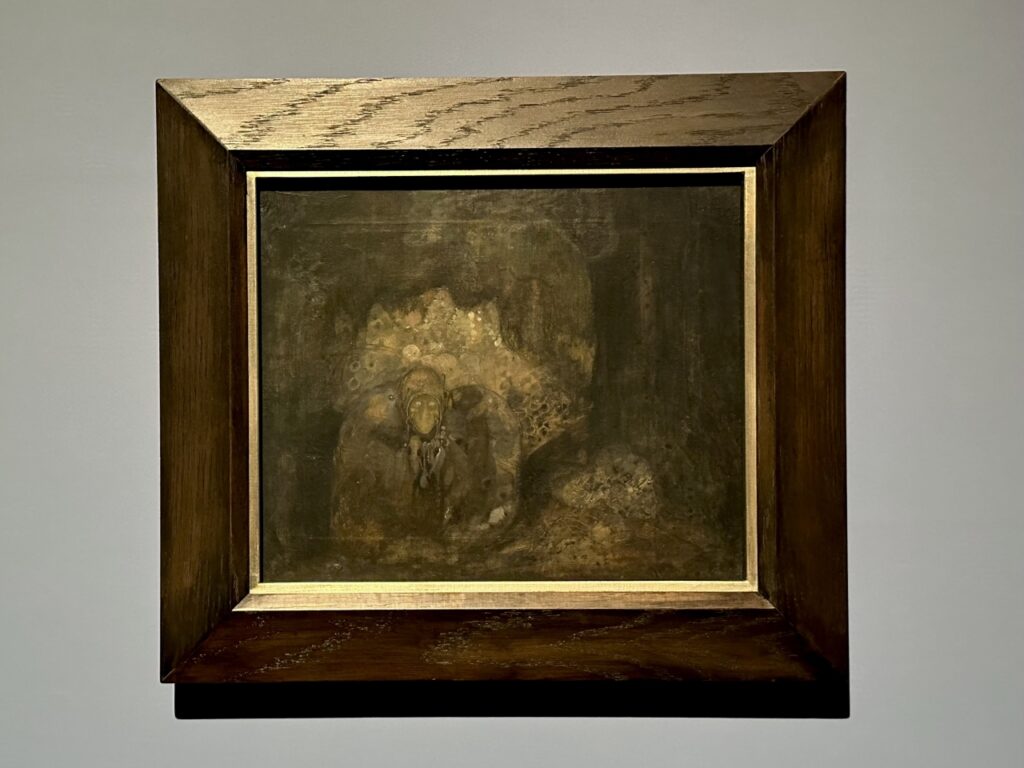
Meanwhile, Chapter 5, "Beyond Reality: Painting the Invisible World," focuses on painters who were interested in the invisible world beyond reality, such as Norse mythology linked to their own spiritual worlds and nationalism, and the visualization of folklore.
Famous for his illustrations for the Swedish fairy tale collection "Bland tomtar och troll," Jon Bauer (1882-1918) was a beloved illustrator known for his fantastical worldviews based on Nordic folk tales featuring trolls and forest fairies. His depictions of dimly lit forests, painted in subdued colors and seemingly possessing a will of their own, and the trolls, whose eeriness is tinged with melancholy and humor, evoke a sense of mystery and a strong sense of awe for nature.
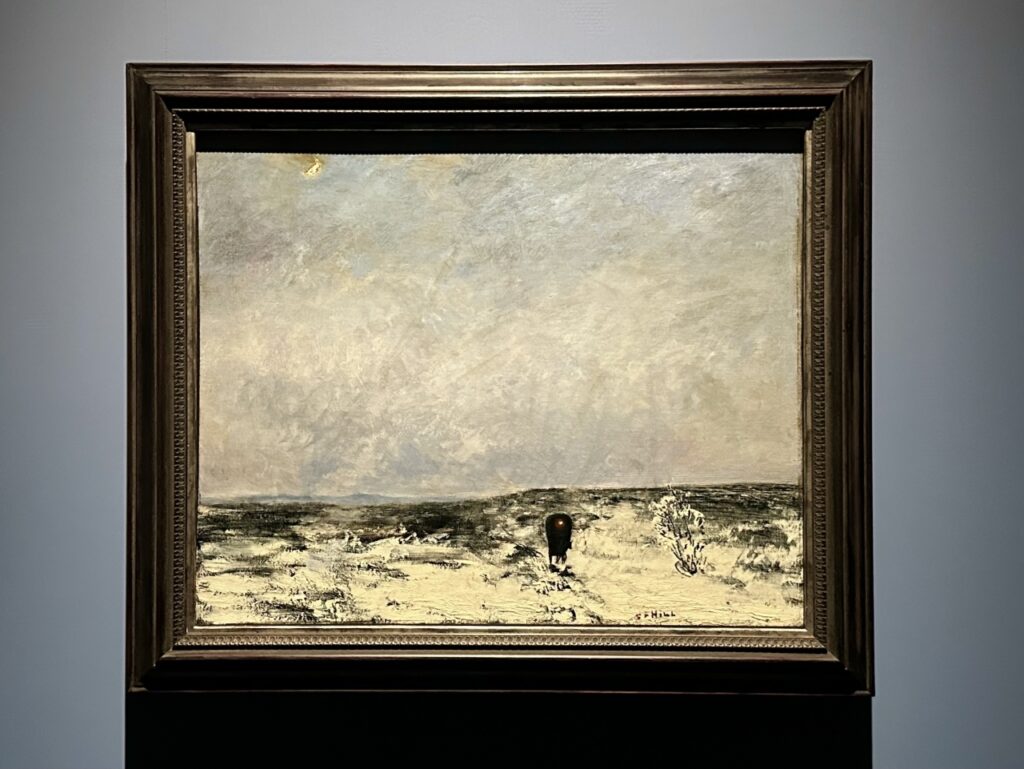
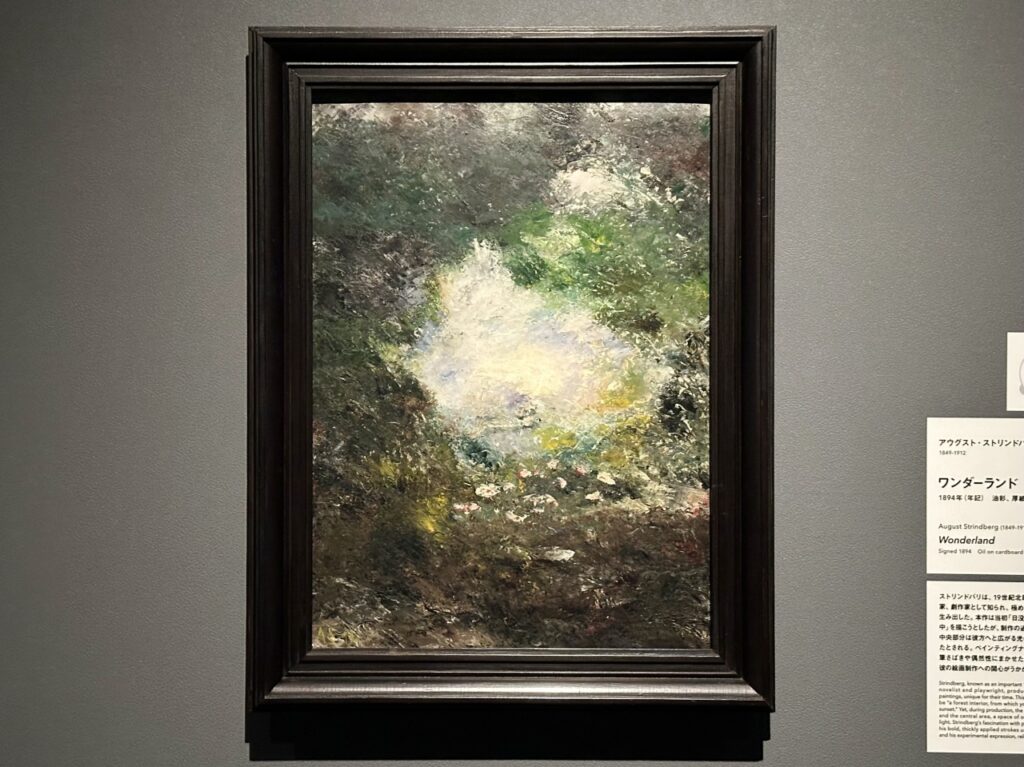
A particularly unique figure is August Strindberg (1849-1912), Sweden's leading playwright and writer of the 19th century. Self-taught, Strindberg devoted himself to painting for only a limited period of his life, which coincided with a period of mental instability, including a slump in his playwriting, family discord, and an interest in occultism and chemical experiments. Using a painting knife, he created landscapes that directly appealed to the viewer's psyche, even his own state of mind, with a unique style that made the most of the coincidences and images that emerged from the unconscious in the creative process.
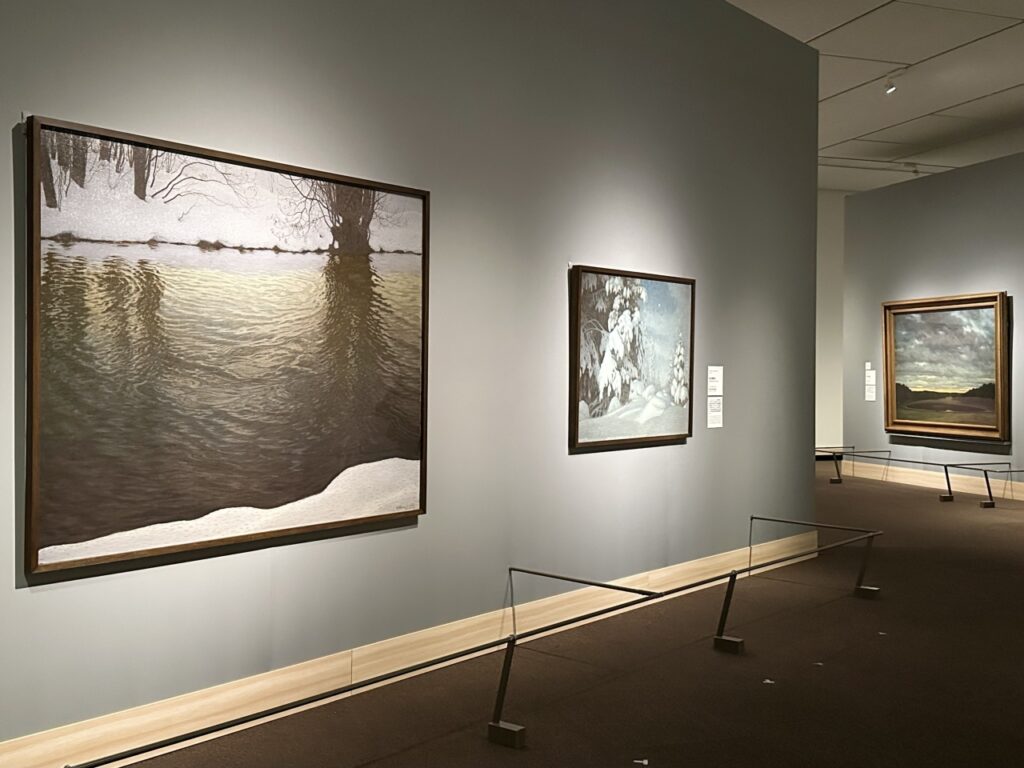
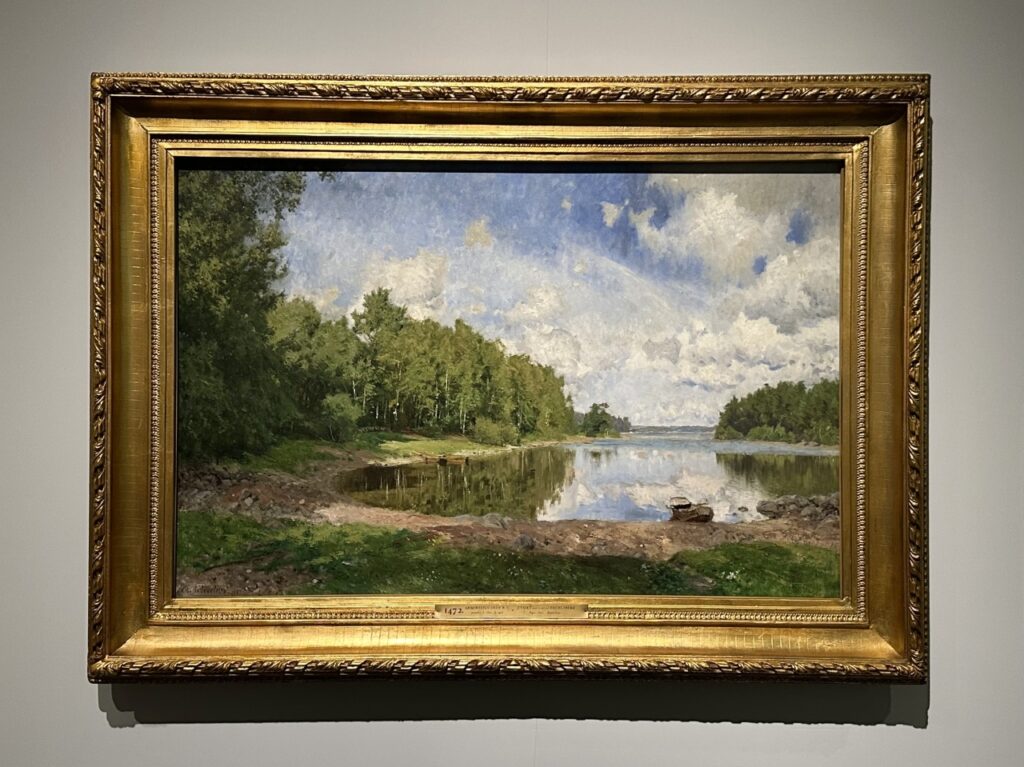
Chapter 6, "With Nature: The Creation of New Swedish Painting," is the highlight of the exhibition. Sweden was once considered a country with "nothing to paint," but from the 1890s onwards, painters began to "discover" Sweden's unique natural beauty, such as its lush forests and lakes, rocky coastlines, and snow-covered winter landscapes, and they began to seek out suitable ways of depicting it.
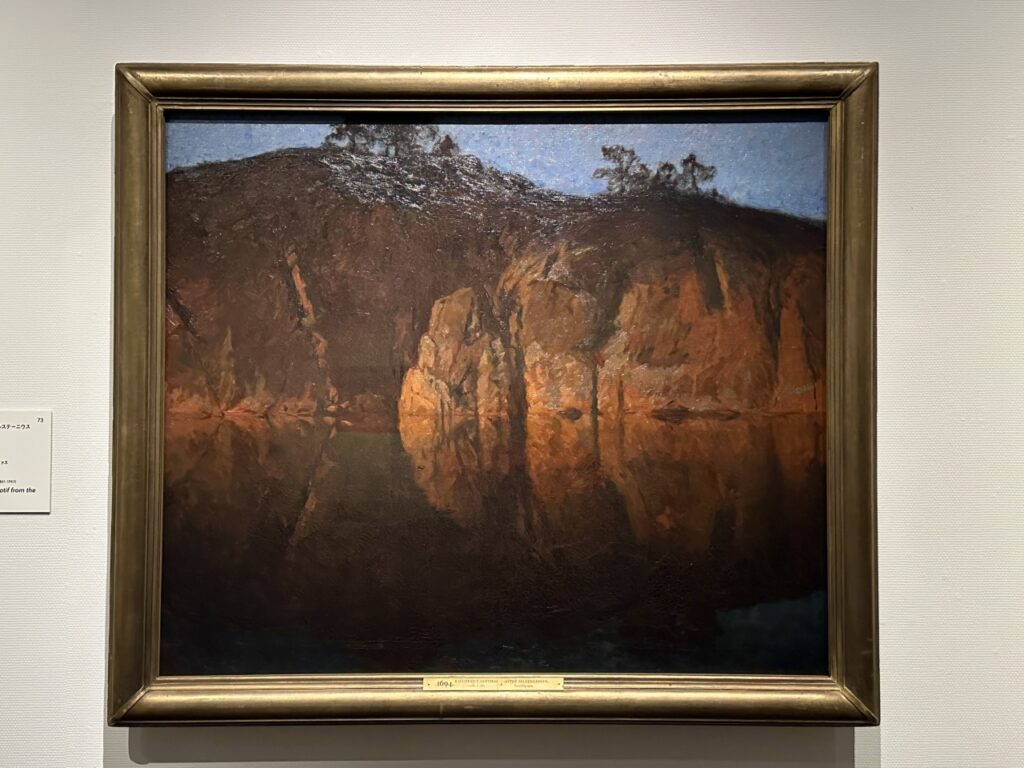
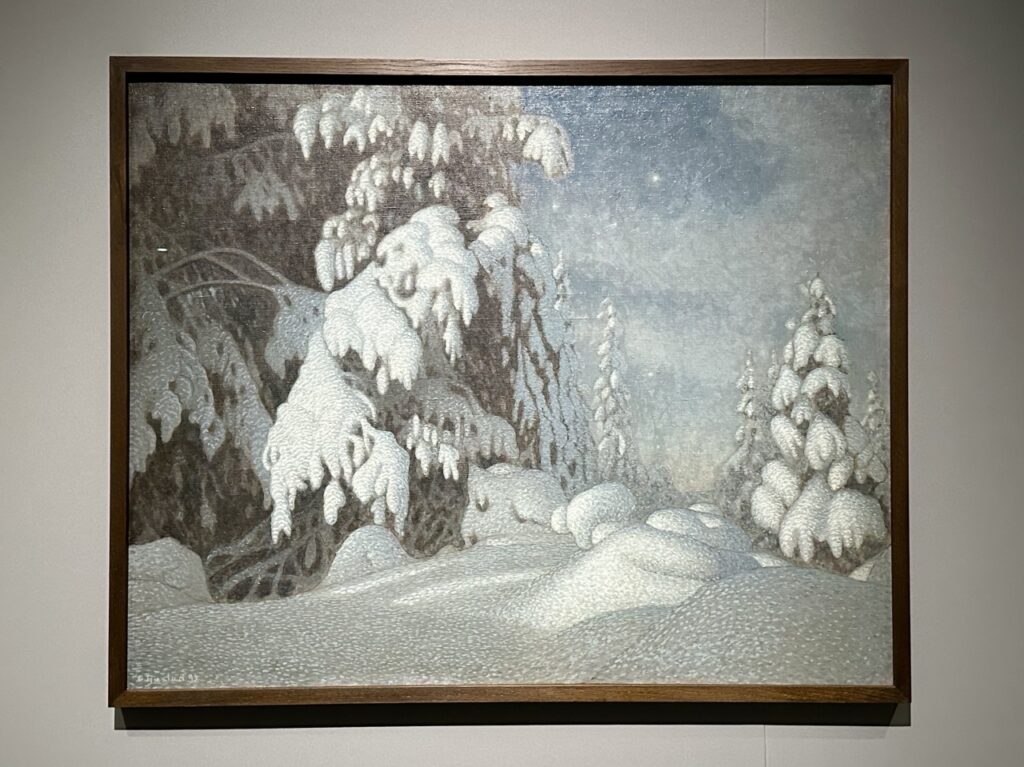
For example, Gustav Fjestad (1868-1948) was a painter who settled on the shores of Lake Lacken in Värmland, central-western Sweden, and continued to paint winter scenes throughout his life. His work, Winter Moonlight, is characterized by its voluminous, decorative depiction of the fluffy, rounded snow that covers the ground and conifers. The light effects created by his unique pointillism, which rhythmically layers small dots and lines to create a sense of unity as a surface, give the snowy world a mysterious and tranquil atmosphere that is characteristic of Fjestad.
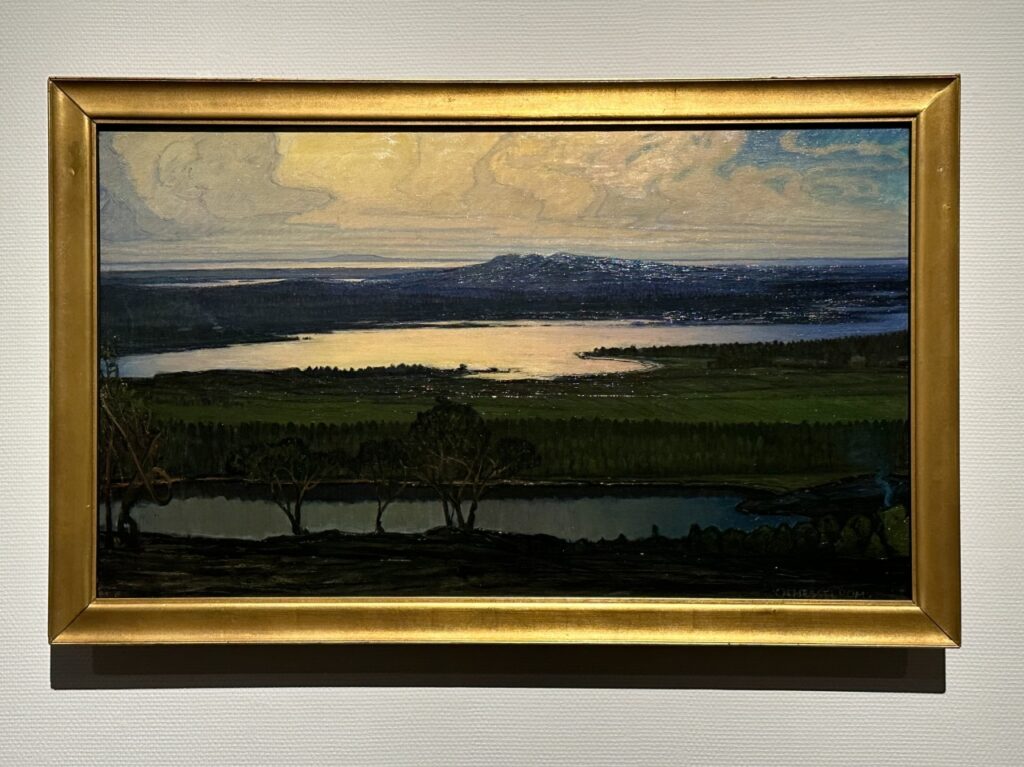
In particular, landscape paintings of this period placed emphasis not only on exploring subject matter and techniques, but also on expressing emotion and atmosphere through the landscape. This was fulfilled by the soft, delicate light of dusk and dawn, which replaced the brilliant sunlight seen in works of the 1880s. On summer nights, the long periods of twilight and the blue light that enveloped the night gave a lyrical feel, illuminating Sweden's rich natural landscapes. This artistic trend, later known as "National Romanticism," gave rise to distinctively Swedish paintings not found in art from other countries.
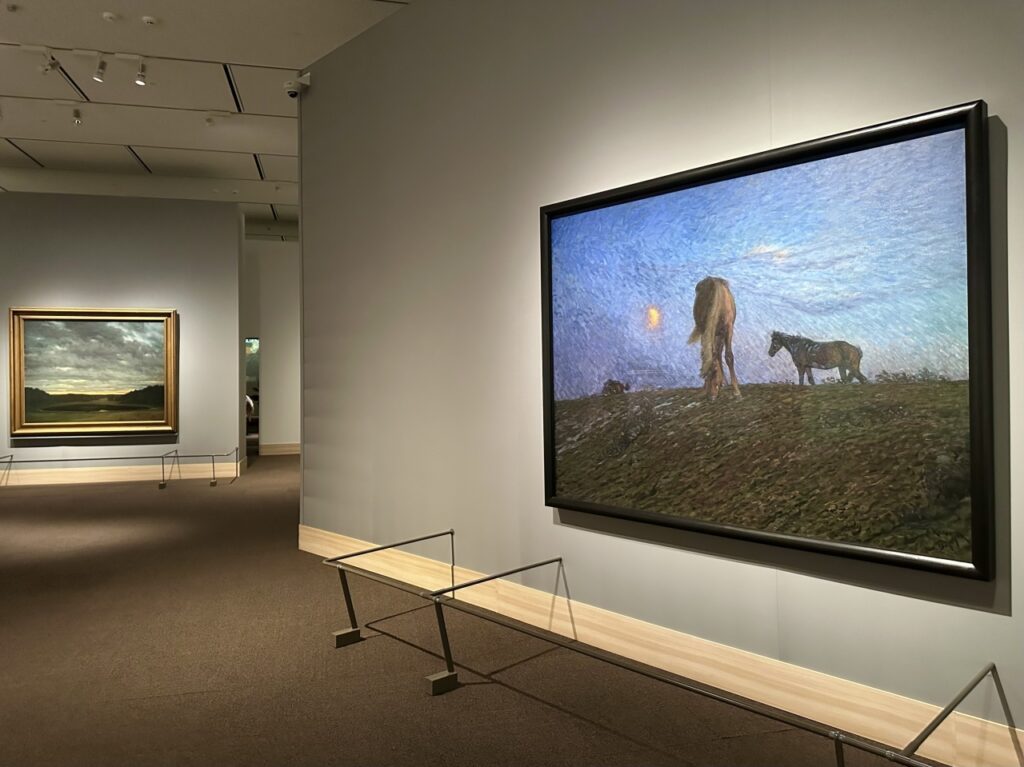
Nils Kruger (1858-1930), who had a strong interest in horses working in various working environments since his time in Paris, continued to paint scenes of grazing horses, cows, and other livestock resting on the island of Uland, near his hometown of Kalmar, even after returning to Sweden. Heavily influenced by Van Gogh in his later years, Kruger's painting "The Coming of Night" emotionally captures the air and light of twilight, with a blue light filling half of the canvas, rendered in short, Van Gogh-esque strokes. A closer look reveals that the blue light not only fills the sky, but also pours down on the bodies of the grazing horses and the earth, creating a grand, fantastical atmosphere in an otherwise ordinary landscape.
Additionally, the audio guide for this exhibition (fees apply) incorporates "slow looking" into the special track, a first for the museum. This viewing program is also implemented in the Nationalmuseum's educational programs, and allows visitors to appreciate the artworks more deeply through the process of carefully observing each piece and asking questions, so be sure to check it out when you visit.
Overview of "Tokyo Metropolitan Art Museum 100th Anniversary Exhibition: Swedish Paintings: Nordic Light, Everyday Brilliance"
| venue | Tokyo Metropolitan Art Museum |
| Dates | January 27, 2026 (Tuesday) – April 12, 2026 (Sunday) |
| Opening hours | 9:30-17:30 *Until 8:00 PM on Fridays *Entry is until 30 minutes before closing |
| Closed days | Monday, February 24th (Tuesday) *However, the room will be open on Monday, February 23rd (national holiday) |
| Admission fee | Adults: 2,300 yen, University and vocational school students: 1,300 yen, 65 years and older: 1,600 yen *Free for those under 18 and high school students. *Free admission for university and vocational school students on weekdays only from Tuesday, January 27th to Friday, February 20th. * Free admission for those who have a Physical Disability Certificate, Love Certificate, Rehabilitation Certificate, Mental Disability Health and Welfare Certificate, or Atomic Bomb Survivor Health Certificate, and their accompanying person (up to one person). *Those under 18 years old, high school students, university/vocational school students, those over 65 years old, and those with various types of certificates must present proof of their identity. |
| Organizer | Tokyo Metropolitan Art Museum (Tokyo Metropolitan Foundation for History and Culture), NHK, NHK Promotion, Tokyo Shimbun |
| inquiry | 050-5541-8600 (Hello Dial) |
| Exhibition official website | https://swedishpainting2026.jp |
| official x | @swedish2026 |
| Official Instagram | @swedish2026 |
*The content of this article is current as of the time of coverage. Please check the official exhibition website for the latest information.
