The interactive exhibition "The Door to Japanese Art" at the main building of the Tokyo National Museum (hereinafter referred to as "TNM") in Ueno Park, Tokyo, will reopen on Tuesday, June 30, 2026, after renovations.
The concept behind the new content, "Tohaku Wonder Wall," is "once-in-a-lifetime encounter." From a vast collection of approximately 120,000 items, it interactively presents a recommended item based on the visitor's actions, guiding them to a "new encounter with cultural artifacts."
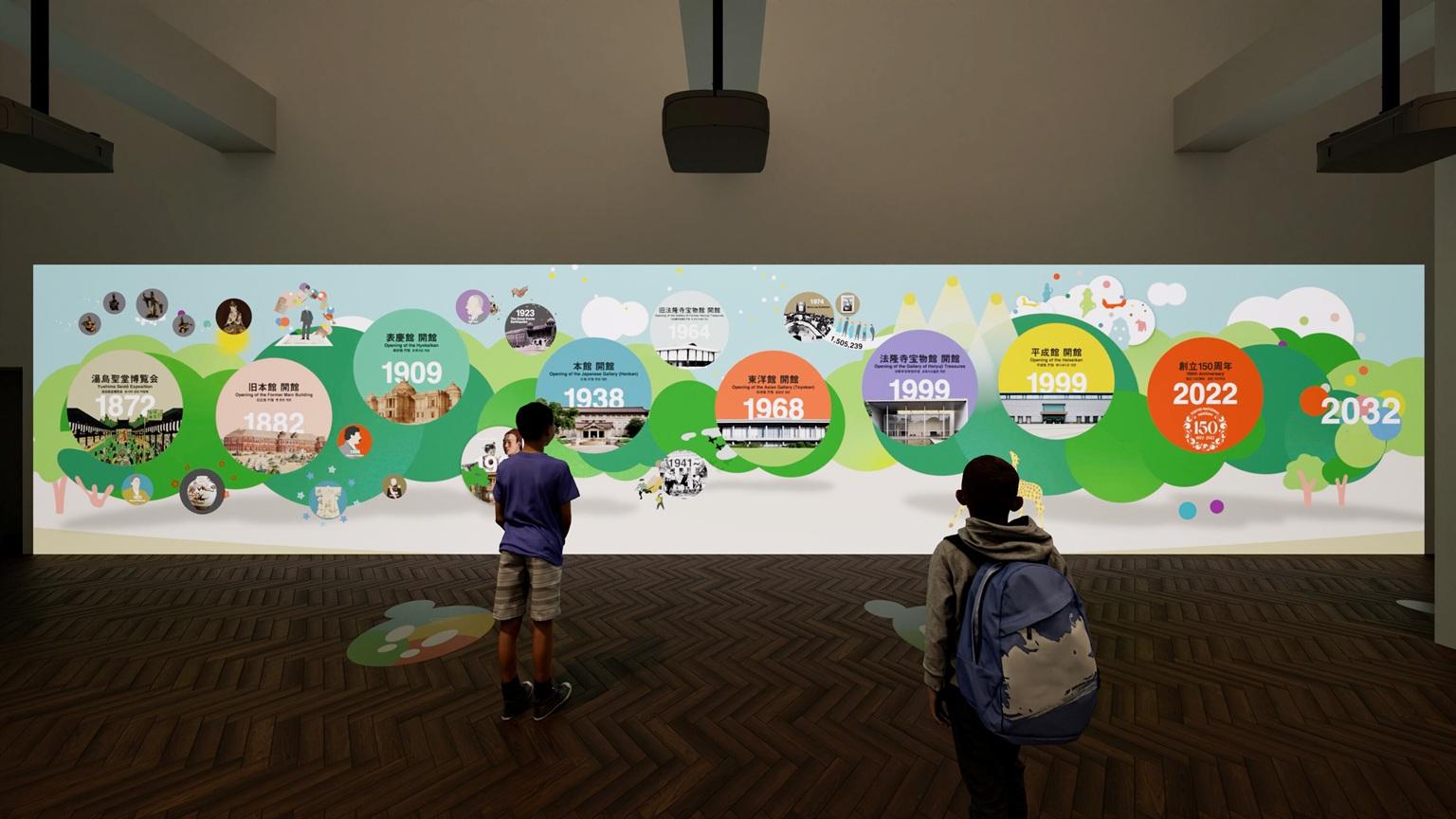
"Tohaku Wonder Wall" Exhibition Room Image
■Corner 1: "Tohaku Wonder Wall" – Creating a once-in-a-lifetime encounter between you and cultural heritage sites.
The Tokyo National Museum houses a collection of approximately 120,000 items, including national treasures and important cultural properties. However, only about 3,000 of these cultural properties are on display today. This means that visitors often find it difficult to see the cultural property they are looking for, and some visitors also express confusion about "where to go and what to see" in the various exhibition halls. Due to preservation reasons, exhibits are changed regularly, so there's no guarantee that you'll see the same cultural property you encountered today on your next visit. However, this is by no means a negative thing. In other words, the Tokyo National Museum is a "museum of once-in-a-lifetime encounters," where you can encounter unknown cultural properties every time you visit.
"Tohaku Wonder Wall" is an interactive content that serves as an entrance to the magnificent world of cultural treasures, stimulating visitors' curiosity and guiding them to a more active and enriching viewing experience. By utilizing the Tokyo National Museum's web information and collection database "ColBase," it creates a system that matches visitors with cultural treasures that can definitely be seen on that day, according to their diverse interests, proposing a new way for visitors to experience the museum.
≪First half of the content: A special video (short film) exploring 150 years of history and masterpieces≫
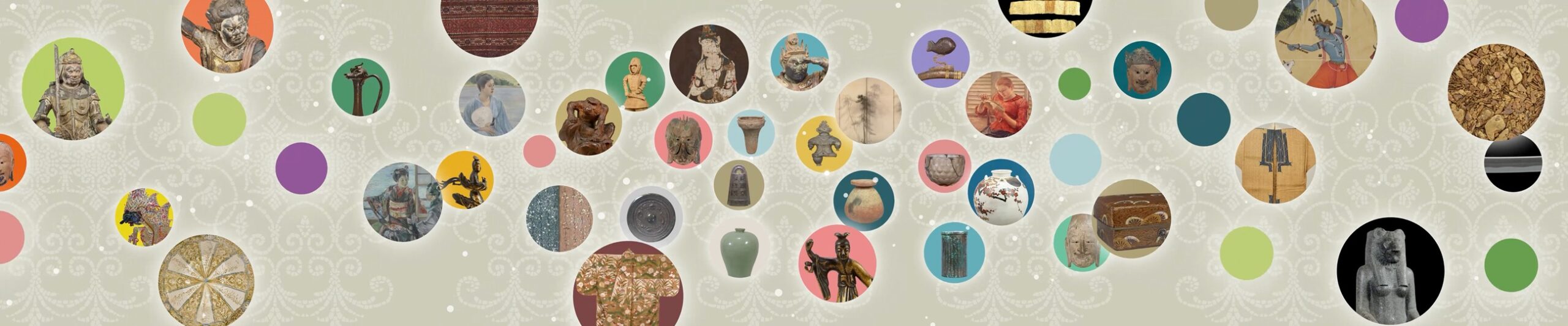
This approximately two-minute special video provides an overview of the Tokyo National Museum. Beginning with the Yushima Seido Exposition in 1872 and continuing to its 150th anniversary in 2022, the video uses visuals and music to express the dynamic breadth of Japanese and Asian cultural artifacts. The video features masterpieces representing the museum, such as the "Pine Forest Screen," the "Kokin Wakashu (Gen'ei Edition)," and the "Shakoki Dogu (Goggle-Eyed Clay Figurine)," conveying the appeal of its diverse collection that transcends eras and genres.
A scene from the "Tohaku Wonder Wall" special movie.
≪Second half of the content: An interactive experience that guides you to "the one thing you'll encounter today"≫
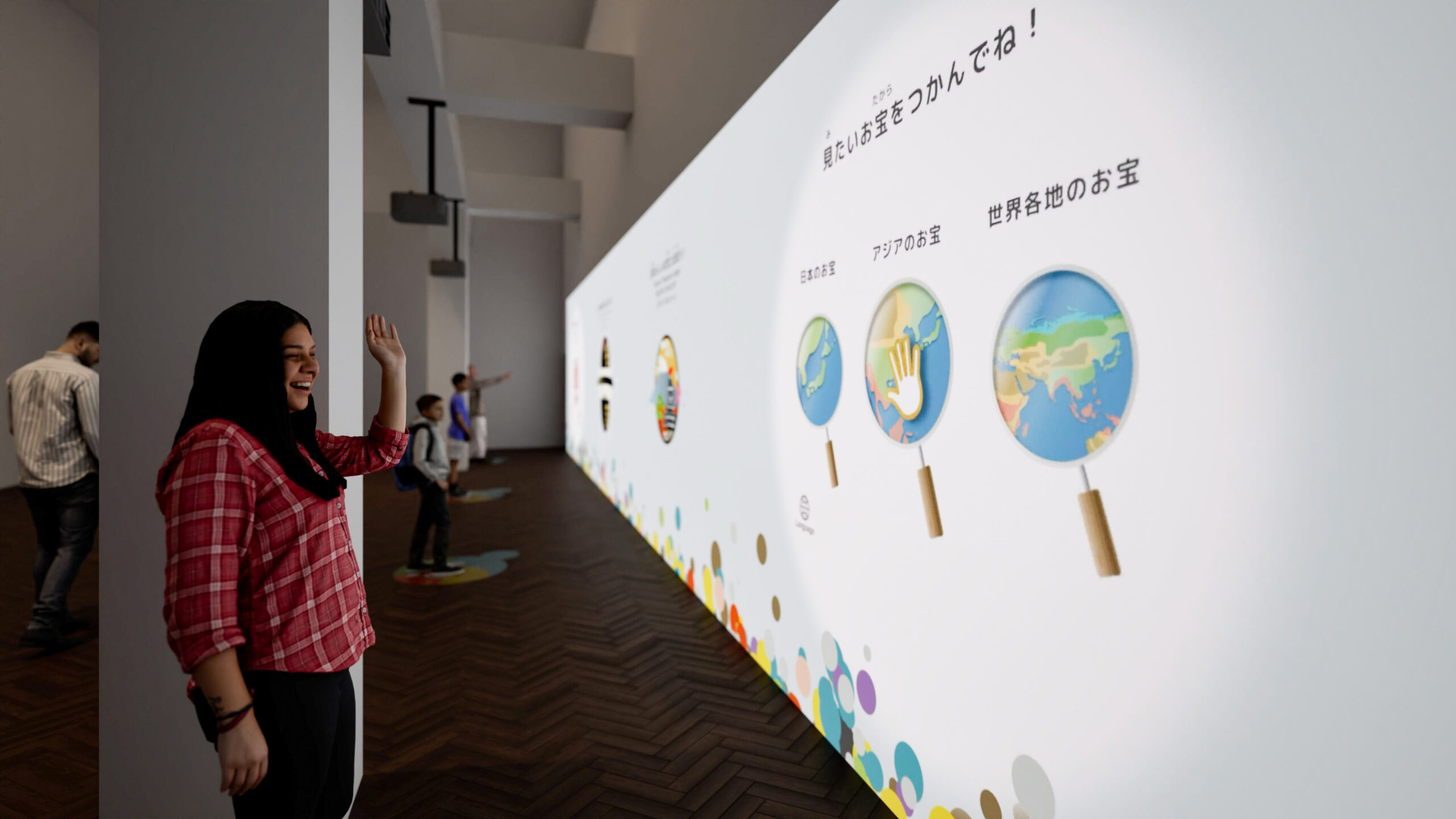
This digital content features various interactive elements, such as a "Meet the Researchers' Favorites!" corner showcasing masterpieces carefully selected by researchers, and a corner where you can encounter cultural artifacts by spinning a lottery-like wheel, where "what you win is a surprise each day." Four randomly selected content pieces from six different perspectives are generated and displayed in real time, linked to information on approximately 3,000 works on display that day, and finally, "a recommended item for you" is suggested, making you want to head to the exhibition rooms to see the actual cultural artifacts. It is available in four languages: Japanese, English, Chinese, and Korean, making it intuitively enjoyable for many visitors from both Japan and abroad. Make your encounter with the museum and cultural artifacts more fun and unexpected than ever before.
Image of the "Tohaku Wonder Wall" interactive content experience.
■Corner 2: "Encountering High-Definition Replicas" – The sense of distance without glass provides a moving experience (ongoing exhibition)
The Cultural Properties Utilization Center (Bunkatsu), in collaboration with companies and other organizations, will exhibit high-definition reproductions of folding screens and hanging scrolls, which will be displayed according to the season.
Many Japanese cultural artifacts are sensitive to light, heat, and humidity. To ensure they can be passed down for 100 or even 1000 years, exhibition lighting, temperature, and humidity are strictly controlled, and the number of days they are on display each year is limited. Originally, these items were passed from hand to hand and used in daily life, but now it is no longer possible to enjoy them with that kind of personal connection.
In this section, you can examine highly detailed replicas, created using the latest digital technology and traditional craftsmanship, without glass cases, allowing you to carefully examine every detail. Enjoy a unique viewing experience with replicas that is not possible with the originals—seeing, feeling, and imagining the scenery and space that unfolds from them.
Furthermore, the originals of these high-resolution reproductions, especially masterpieces, are often loaned to other museums, meaning they are only exhibited at the Tokyo National Museum once every few years. These lifelike, high-resolution reproductions ensure that many people can encounter these beloved treasures.
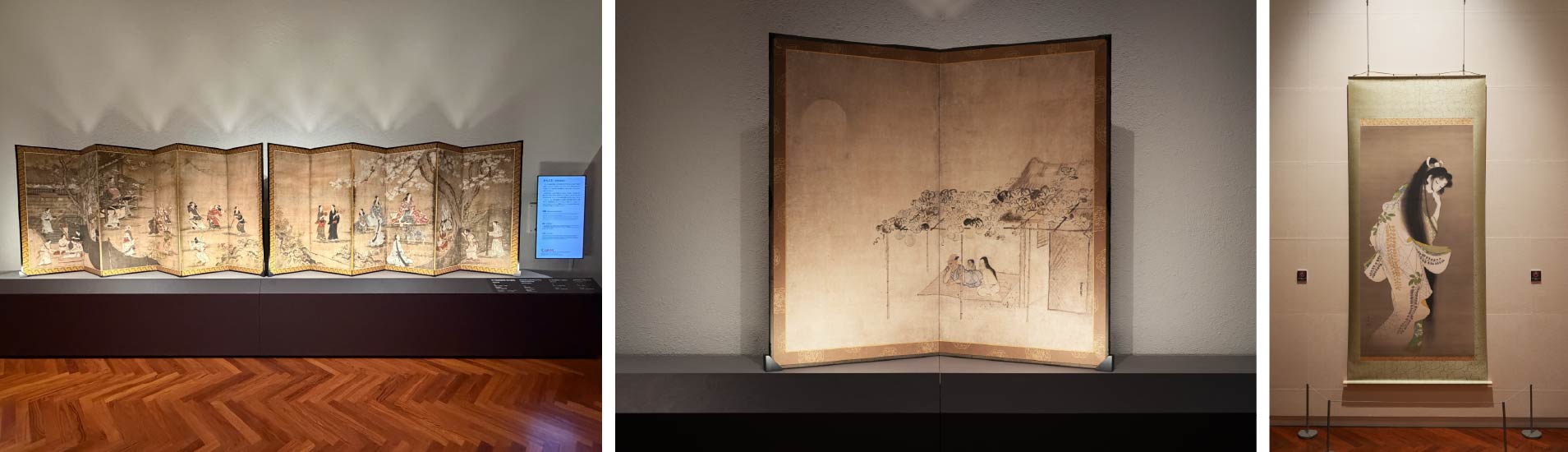
All are high-definition reproductions. From left to right: National Treasure "Screen Painting of People Enjoying Fun Under the Cherry Blossoms" (on display until May 17), National Treasure "Screen Painting of People Enjoying Summer Evening" (on display from June 30 to August 30), "Flame" (on display until August 30).
■Exhibition information
Tokyo National Museum, Main Building, 1st Floor, Room B: "The Gateway to Japanese Art"
Opening date: June 30, 2026 (Tuesday)
*Closed for renovation work from May 18th (Mon) to June 29th (Mon)
Venue: Room B, 1st Floor, Main Building, Tokyo National Museum (13-9 Ueno Park, Taito-ku, Tokyo)
Opening hours: 9:30 AM to 5:00 PM (Last entry 30 minutes before closing)
*Open until 8:00 PM every Friday and Saturday.
*This exhibition follows the format of the Tokyo National Museum Collection Exhibition.
Closed on Mondays (except when Monday is a public holiday or weekend, in which case the museum will be open and closed on the following weekday), during the New Year holidays, and other occasional temporary closures.
Admission Fee: (Tokyo National Museum Collection Exhibition) General Admission: 1,000 yen, University Students: 500 yen, High School Students and younger: Free
*This can be viewed with the admission fee for the Tokyo National Museum Collection Exhibition or the admission fee for the special exhibition currently being held (valid only on the day of viewing).
Homepage: https://cpcp.nich.go.jp/modules/r_exhibition/index.php?controller=dtl&id=53
[Cultural Property Utilization Center]
Established in 2018 at the National Institutes for Cultural Heritage, it is a national center for the utilization of cultural properties. With the vision of "creating a society in which all people think about and participate in passing on cultural properties to the future 1,000 or 2,000 years from now," and with the mission of "creating opportunities for as many people as possible to become familiar with cultural properties," it engages in a variety of activities. https://cpcp.nich.go.jp/
The event will be held from May 16th (Sat) to June 14th (Sun), 2026 at the Tokyo University of the Arts Art Plaza in Ueno (admission is free).
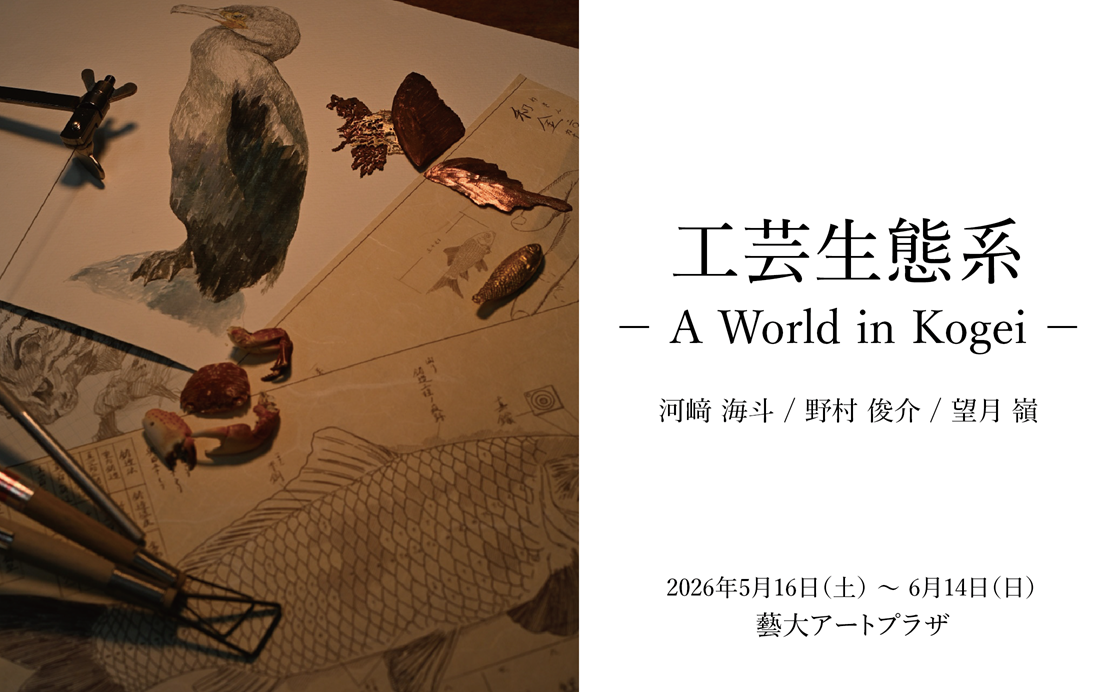
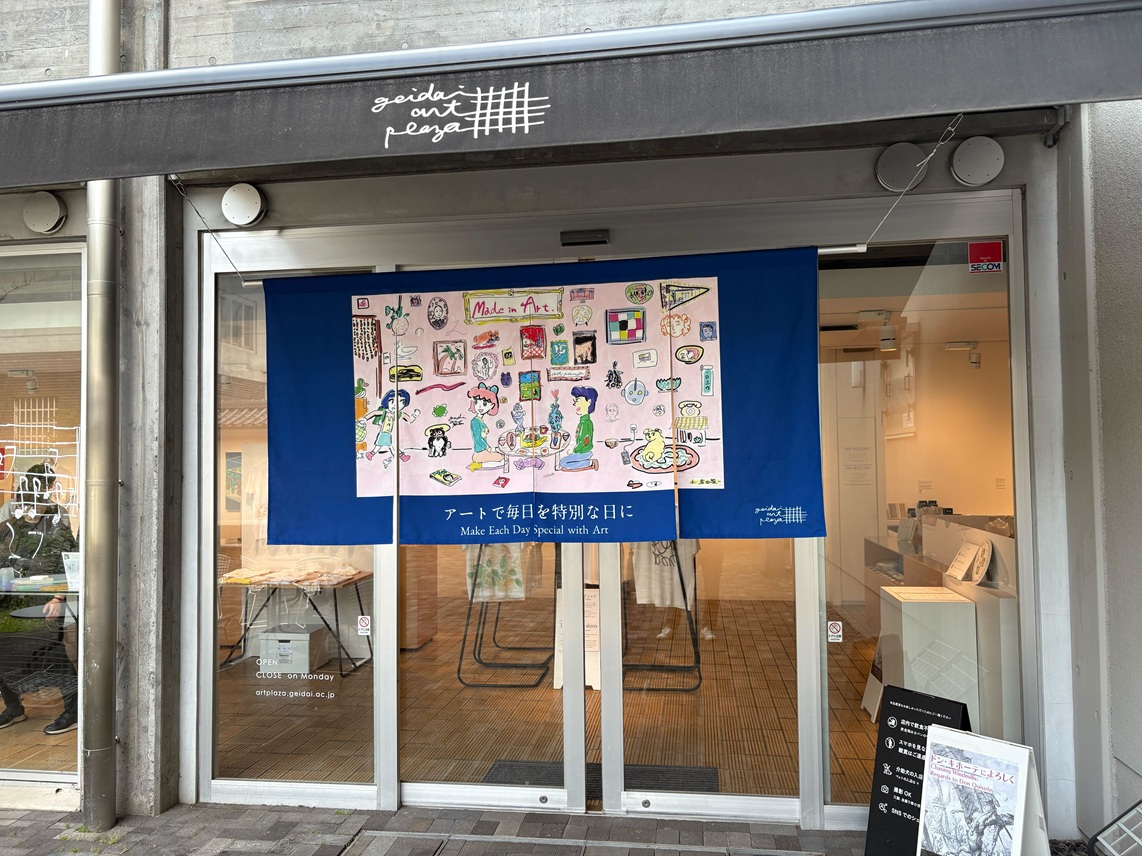
Geidai Art Plaza ( https://artplaza.geidai.ac.jp/ ), a gallery operated on the campus of the Faculty of Fine Arts at Tokyo University of the Arts (Ueno, Taito-ku) as a collaborative project between Shogakukan and Tokyo University of the Arts, will be hosting an exhibition titled "Craft Ecosystem – A World in Kogei -" by Kaito Kawasaki, Shunsuke Nomura, and Rei Mochizuki from May 16th, 2026 (Saturday).
Admission is free and photography is permitted.
Held on Saturday, May 16, 2026
"The Craft Ecosystem – A World of Kogei -"
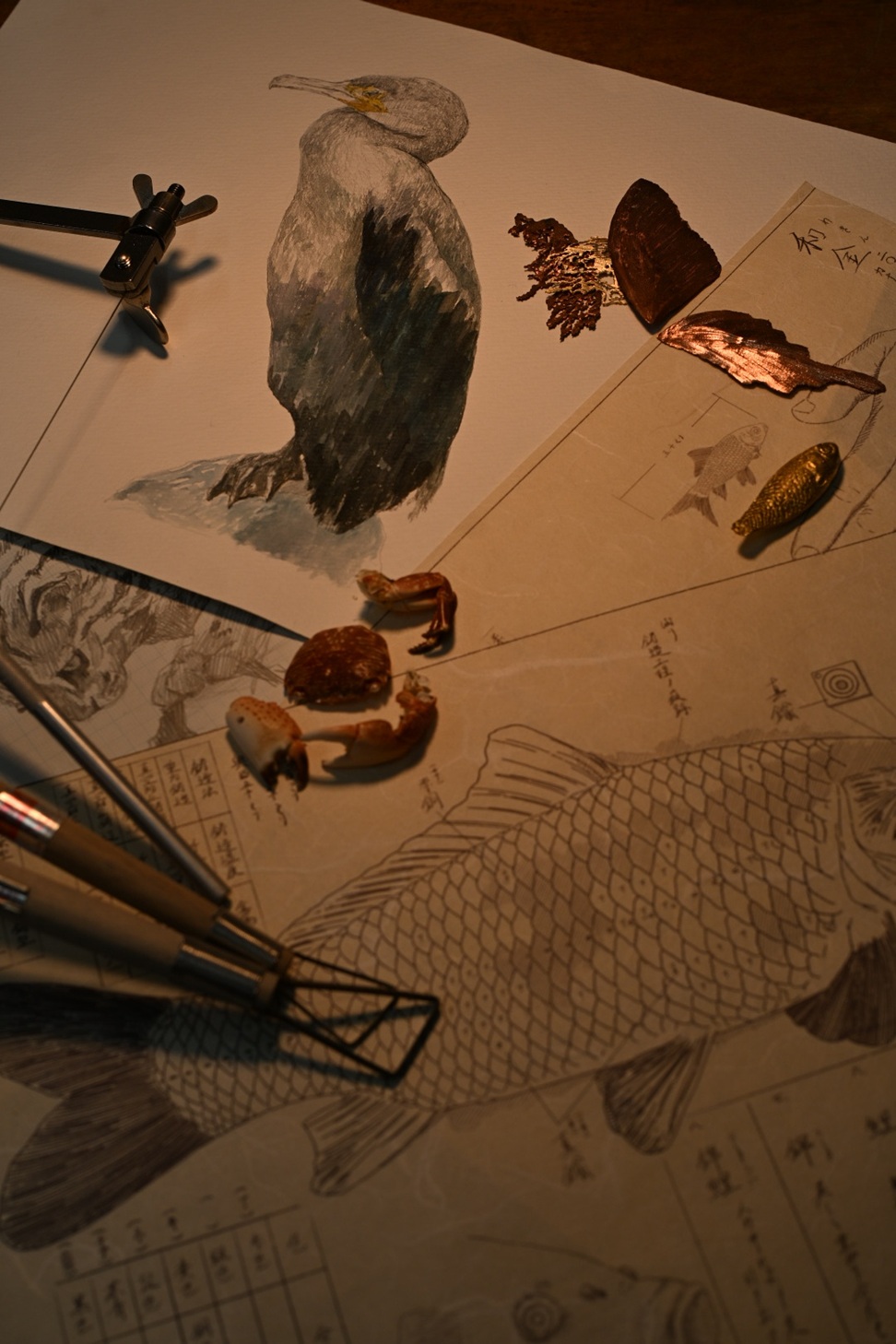
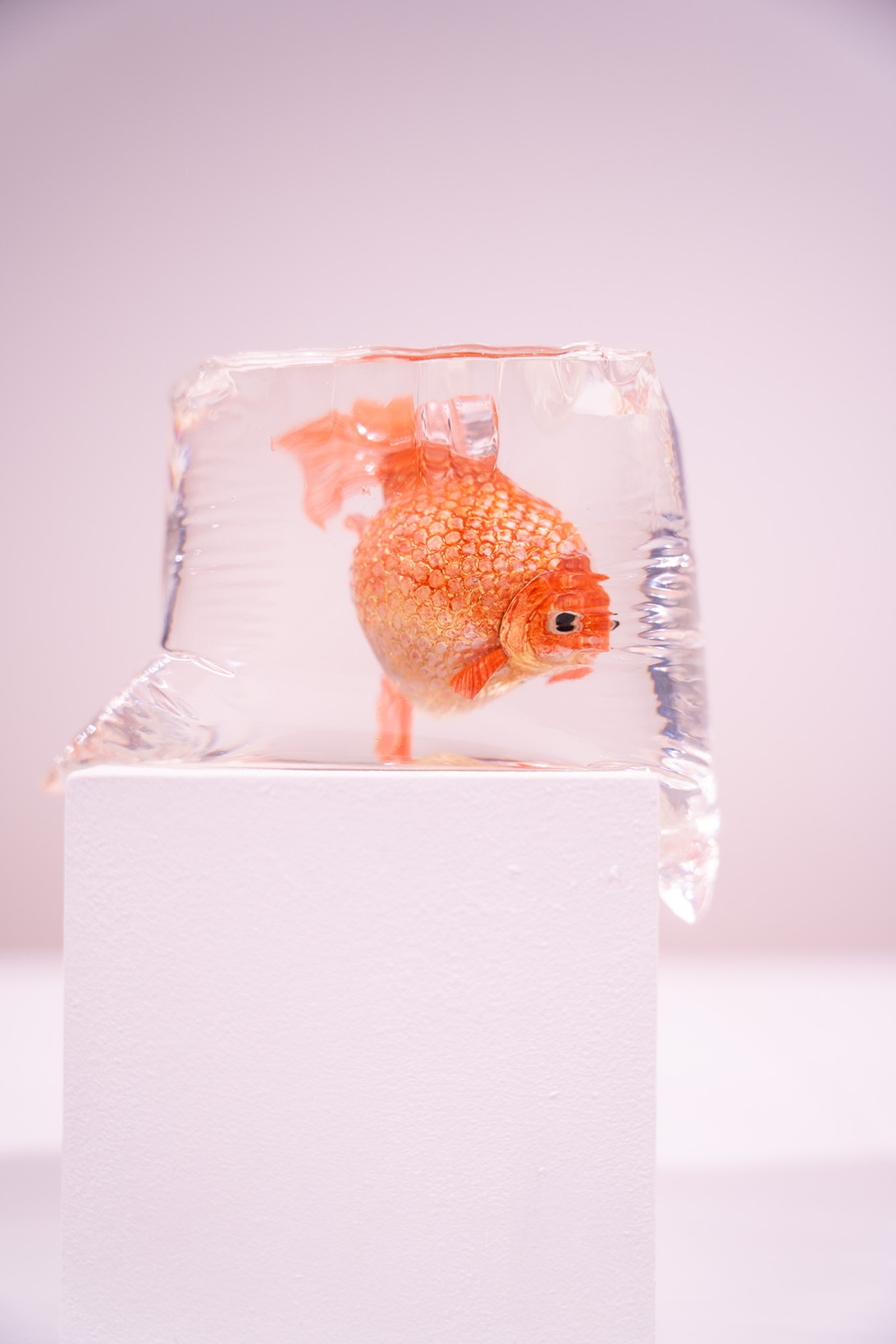
What exactly is "craft"? We often perceive it as an accumulation of skills. However, the craft nurtured within Japan's diverse climate and culture is more than just the accumulation and perfection of skills. It is also an activity in which beauty is found within the interplay of the local climate and materials, people's lives, history, and time. Perhaps craft expresses an "ecosystem" that includes people, emerging in connection with people's way of life and environment. The three artists participating in this exhibition seem to be continuously exploring this contemporary state of craft in their respective practices. There, a single ecosystem is surely breathing, where people and nature, past and present, are loosely connected.
(Geidai Art Plaza, Shiro Takagi)
■ Exhibition overview
Exhibition Title: "Craft Ecosystem – A World of Kogei -"
Venue: Geidai Art Plaza (12-8 Ueno Park, Taito-ku, Tokyo, within the Tokyo University of the Arts Faculty of Fine Arts campus)
Dates: May 16th (Sat) – June 14th (Sun), 2026
*Pre-opening on May 15th (Fri) at 13:00
Admission fee: Free
Opening hours: 10:00-18:00
Closed on Mondays. *Open on public holidays, closed the following Tuesday.
*Business hours may change. Please check our official website and social media for the latest information.
[Exhibiting Artists]
Kaito Kawasaki
Born in Kure City, Hiroshima Prefecture in 2000.
2018: Created a painting of the atomic bomb, "Woman Who Died in the Blast."
Graduated from Hiroshima Municipal Motomachi High School, General Studies Course, Creative Expression Program in 2019.
April 2020: Enrolled in the Department of Crafts, Faculty of Fine Arts, Tokyo University of the Arts.
In April 2021, I enrolled in the Department of Crafts, specializing in metal casting, at the Faculty of Fine Arts, Tokyo University of the Arts.
November 2021: Yamato Museum Crowdfunding Reward Design Competition – Grand Prize Winner
2022 Tokyo University of the Arts Scholarship Program, Ataka Prize
Selected for the Tokyo University of the Arts Art Plaza Grand Prize Exhibition in January 2023.
January 2024: Geidai Art Plaza Art Award, Special Jury Prize
January 2024 Heisei Art Award
2025 Geidai Art Plaza Art Award Shogakukan Prize
Salon de Printemps Award 2026
March 2026: Completed the Metal Casting Major, Department of Crafts, Faculty of Fine Arts, Tokyo University of the Arts.
Born in Tokyo in 2000.
Enrolled in the Art and Craft Department at Tokyo Metropolitan Kogei High School in 2016.
Graduated from Tokyo Metropolitan Kogei High School, Art & Craft Department in 2019.
Enrolled in the Department of Crafts, Faculty of Fine Arts, Tokyo University of the Arts in 2020.
2023 "The 59th Mori Kiln Pottery Exhibition" Nihonbashi Mitsukoshi Main Store, Main Building 6th Floor, Museum Craft Salon
2023 "Ceramic Synergy Exhibition" Kyoto City Kyocera Museum of Art
2023 "KOGEI Art Fair Kanazawa" Hyatt Centric Kanazawa
Art Fair Tokyo 2024, Tokyo International Forum, Hall E
2025 Solo Exhibition at Mitsubishi UFJ Bank, Seijo Branch
2025 "OSAKA INTERNATIONAL ART" Osaka-jo Hall
2025 "Special Feature on Contemporary Artists' Tea Bowls" Nihonbashi Mitsukoshi Main Store Art Square
Completed graduate studies in Ceramics at the Department of Crafts, Graduate School of Fine Arts, Tokyo University of the Arts in 2026.
Selected for the 2022 "Geidai Art Plaza Grand Prize Exhibition"
2023 "Geidai Art Plaza Grand Prize Exhibition" Art Plaza Award
2023: Ceramic Synergy Award at the "Ceramic Synergy Exhibition," Bunkyo Elementary School Award.
2023 International Takifuji Art Award Special Prize
Honorable Mention at the 2023 Tokyo University of the Arts Art Festival
2026 "Art Power Award" Final Project (Insource Co., Ltd.)
Born in Aichi Prefecture in 1998.
Entered the Department of Crafts, Faculty of Fine Arts, Tokyo University of the Arts in 2020.
Graduated from the Department of Crafts, Faculty of Fine Arts, Tokyo University of the Arts in 2024.
2024 Graduation Project "Shayuru Yoru" (Clear Night), now in the collection and installation of Lectore Hayama Shonan International Village.
In 2024, I enrolled in the Master's Program in Crafts, Metalworking, at the Graduate School of Fine Arts, Tokyo University of the Arts.
Graduated from Tokyo University of the Arts Graduate School of Fine Arts, Master's Program in Crafts (Metalwork) in 2026.
2026 Graduation Project "Late Winter" – Collection of Arakawa Ward, Tokyo, installed at Arakawa Ward General Sports Center
In 2026, I enrolled in the doctoral program in metalworking, specializing in crafts, at the Graduate School of Fine Arts, Tokyo University of the Arts.
Currently enrolled in the Metal Engraving Laboratory, Doctoral Course, Graduate School of Fine Arts, Tokyo University of the Arts.
2024 All Japan Gold and Silver Art Exhibition, Tokyo Metropolitan Government Bureau of Industrial and Labor Affairs Director's Award
2024 Tokyo University of the Arts Scholarship Program Ataka Prize
2026 Tokyo University of the Arts Art Plaza Art Award Runner-up
Arakawa Ward Mayor's Award, 2026
What is the Tokyo University of the Arts Art Plaza?
The Geidai Art Plaza is a gallery that exhibits and sells works by faculty, staff, students, and graduates of Tokyo University of the Arts (hereinafter referred to as Geidai), which has produced many top artists. Located on the Geidai Ueno campus, it is one of the few places where the general public can freely enter and visit throughout the year. It was launched in 2018 as a collaborative project between Shogakukan and Geidai.
Currently, the university holds exhibitions with different themes every one to two months. Each exhibition features 10 to 50 artists, bringing together works expressed through a diverse range of techniques and approaches unique to Tokyo University of the Arts, including oil painting, Japanese painting, sculpture, crafts, and design.
■ Access
Nearest stations: JR Ueno Station (Park Exit), Uguisudani Station (approximately 10-minute walk)
Get off at Nezu Station on the Tokyo Metro Chiyoda Line and walk for about 10 minutes.
Get off at Ueno Station on the Tokyo Metro Hibiya Line and walk for about 15 minutes.
Get off at Keisei Ueno Station on the Keisei Electric Railway and walk for about 15 minutes.
Take the Toei Bus Route 26 (Kameido to Ueno Park) and get off at Yanaka bus stop. It's about a 3-minute walk from there.
*Please note that there is no parking available, so please refrain from coming by car.
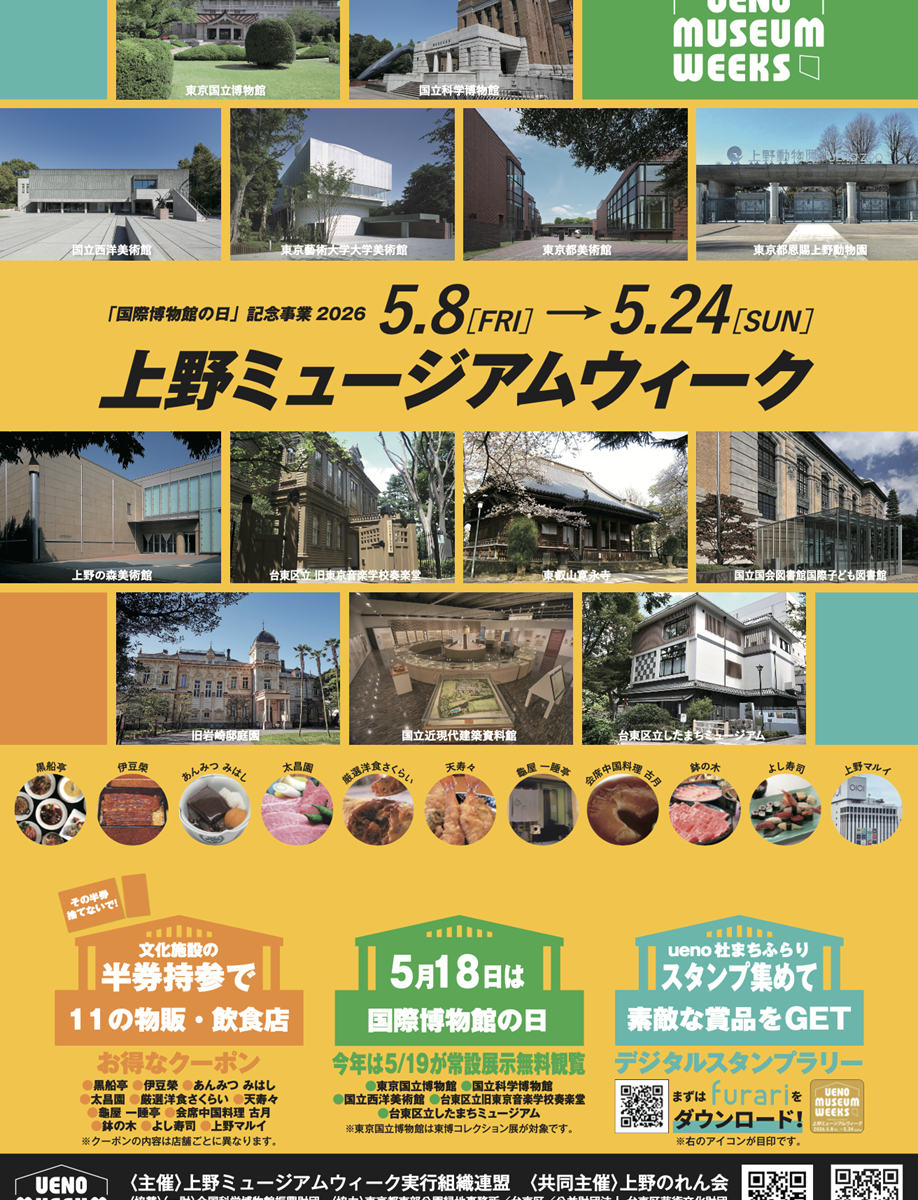
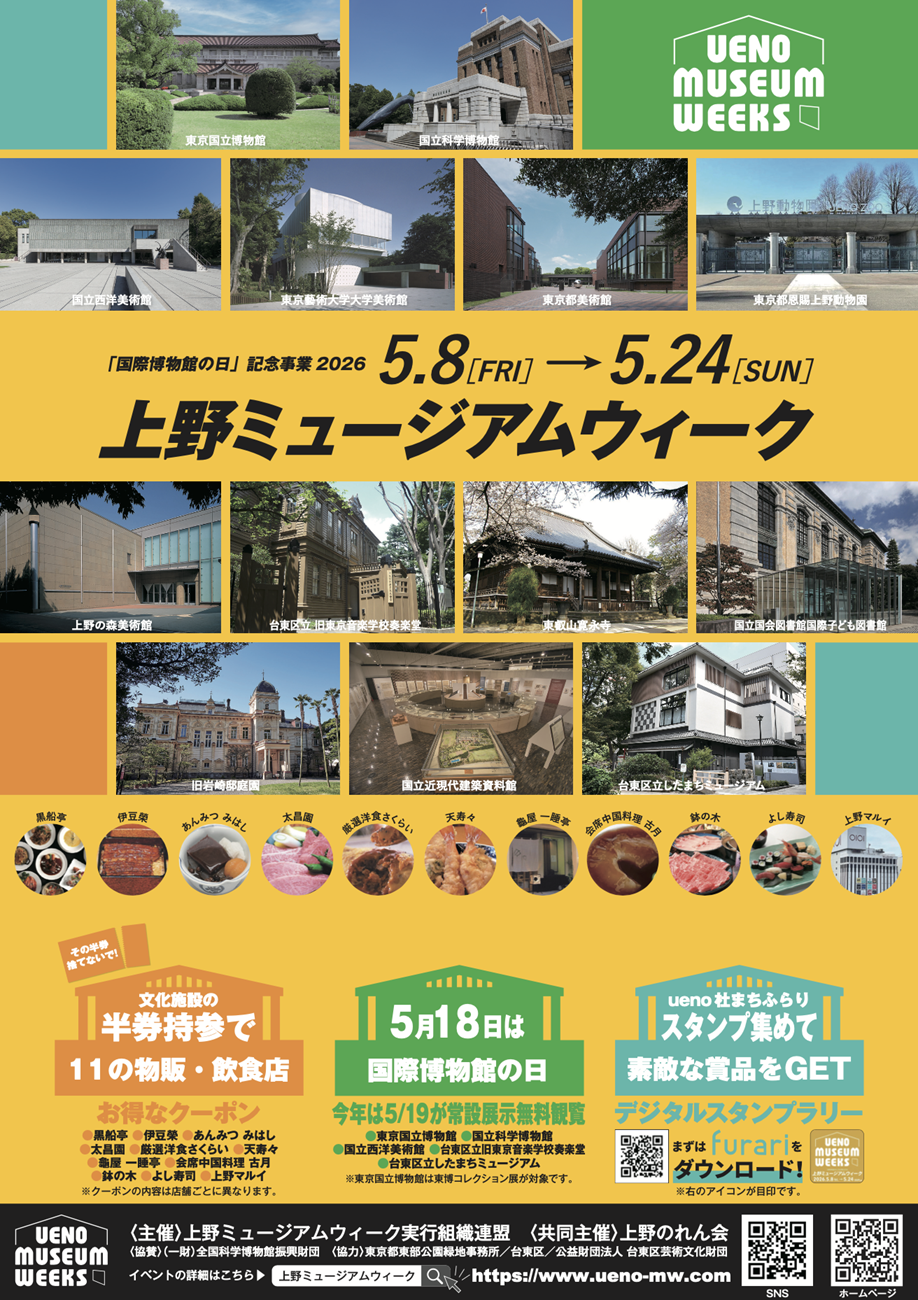
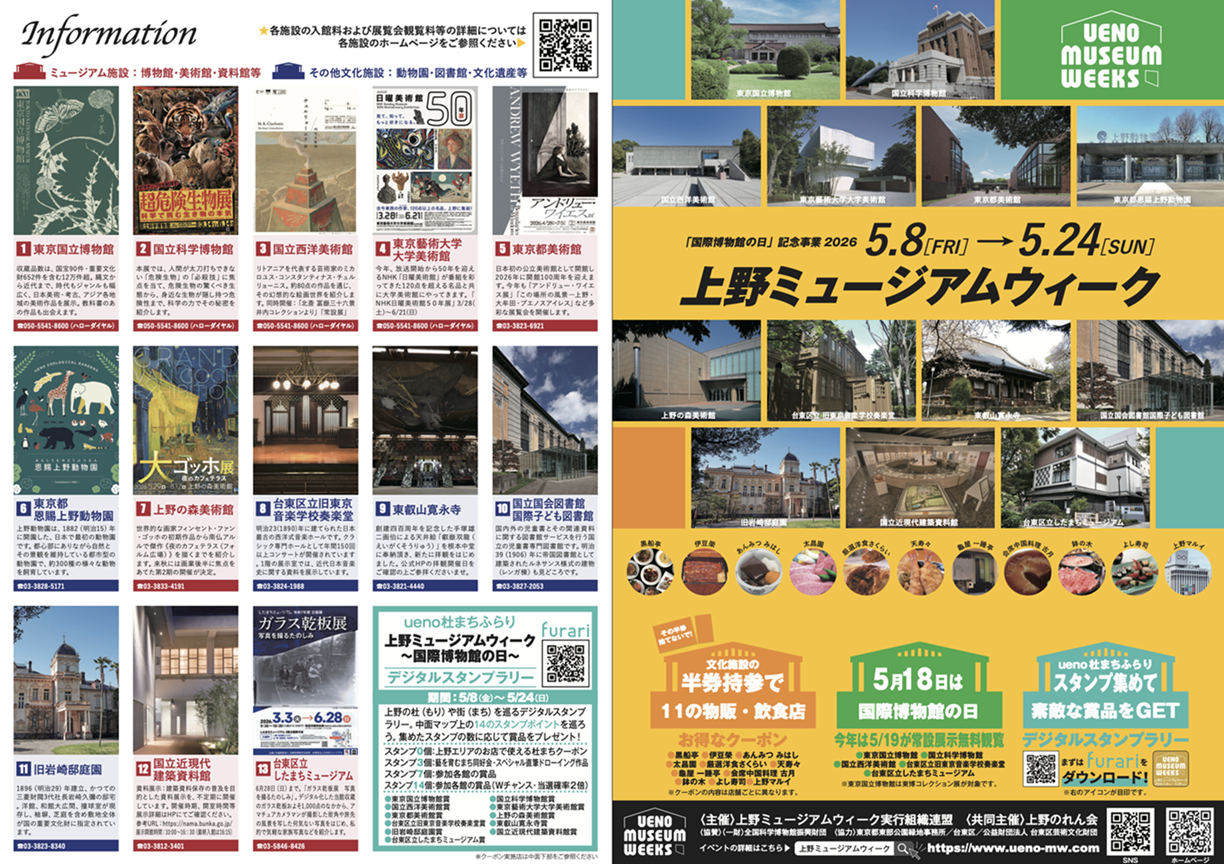
From May 8th (Fri) to May 24th (Sun), enjoy a special week exploring the Ueno area, featuring museums, popular spots, and gourmet food! Enjoy culture and art while exploring the city at a great price!
In the Ueno area, in commemoration of "International Museum Day" on May 18th, "Ueno Museum Week" will be held, with the cooperation of 13 facilities including museums, art galleries, and zoos located around Ueno Park, as well as member stores of the Ueno Norenkai (Ueno Traditional Shop Association). Following last year's great success, the digital stamp rally will continue, and many exhibitions will be held throughout the town, making this an even more attractive special week. Combined with the annual "Town Fun" coupons, the entire Ueno area will become a theme park overflowing with the excitement and thrills of culture, so please enjoy this special time to the fullest.
The main attraction this year is the "free admission" event held in commemoration of "International Museum Day." Please note that this year it will be on Tuesday, May 19th. You can enjoy free admission to the permanent exhibitions of five museums: the Tokyo National Museum (Tokyo National Museum Collection Exhibition), the National Museum of Nature and Science, the National Museum of Western Art, the former Tokyo Music School Concert Hall, and the Shitamachi Museum.
Matsuzakaya Ueno's art gallery will feature historical works of art that have evolved alongside the development of department store culture, while Ueno Marui will feature a credit card that supports museums when used. In addition to cultural facilities within the park, spots where you can feel art in the city will also be rally points, such as CREATIVE HUB UENO “es” (Ueno Station), a gallery created by renovating the former police box site at Ueno Station, and PARCO_ya Ueno, where local artists will hold exhibitions with a panda theme.
Enjoy the atmosphere of Ueno, a town of art, through both International Museum Day and the stamp rally.
■Event Overview■
International Museum Day Commemorative Event 2026: Ueno Museum Week
Event period: May 8th (Fri) – May 24th (Sun), 2026
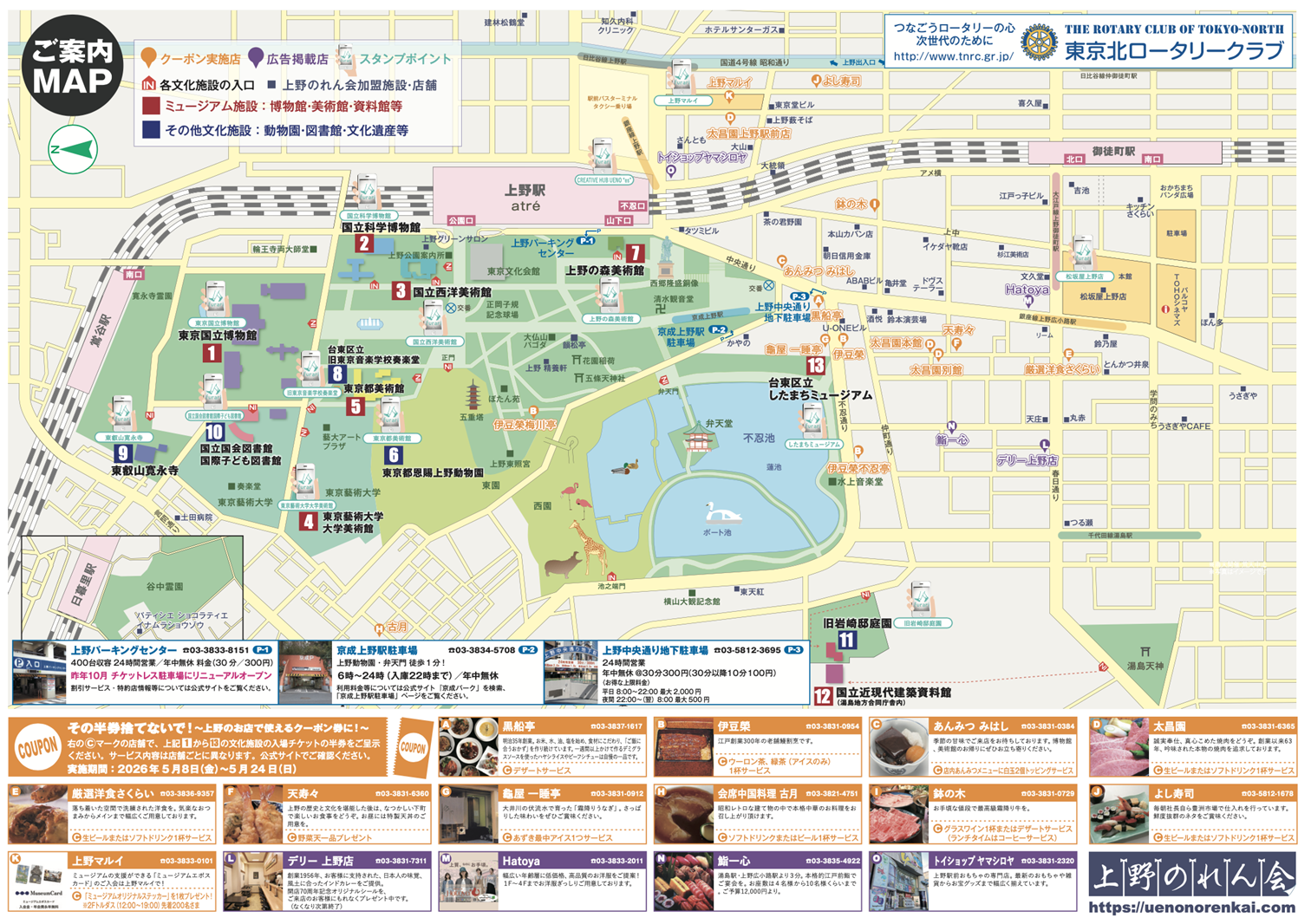
Venue (participating facilities/organizations): Tokyo National Museum / National Museum of Nature and Science / National Museum of Western Art / Tokyo University of the Arts Museum / Tokyo Metropolitan Art Museum / Ueno Zoo / Ueno Royal Museum / Taito City Former Tokyo Music School Concert Hall / Former Iwasaki Garden / National Archives of Modern Architecture / National Diet Library International Library of Children's Literature / Toeizan Kaneiji Temple / Taito City Shitamachi Museum / Ueno Norenkai participating shops (in no particular order)
*There will be days when the museum is closed during the exhibition period.
Organized by: Ueno Museum Week Executive Committee
Co-organizer: Ueno Norenkai
Sponsored by: The National Foundation for the Promotion of Science Museums
Cooperation: Tokyo Metropolitan Government Eastern Parks and Green Spaces Office, Taito Ward, Taito Ward Arts and Culture Foundation
Official website: http://www.ueno-mw.com/
■【Ueno Mori Machifurari】Ueno Museum Week 2026 ~International Museum Day~■ "A thrilling stroll through the forest, a satisfying meal in the city: A greedy walk through Ueno"
A digital stamp rally will be held from May 8th (Fri) to May 24th (Sun). Stamp points will appear at the participating facilities listed below.
[Checkpoints Introduction]
1. Tokyo National Museum
2.National Museum of Nature and Science
3.National Museum of Western Art
4. International Library of Children's Literature, National Diet Library
5. Tokyo Metropolitan Art Museum
6. Ueno Royal Museum
7. Former Tokyo Music School Concert Hall
8. Tokyo University of the Arts University Art Museum
9. Toeizan Kan'ei-ji Temple, Konpon-chudo Hall
10. Former Iwasaki Residence Garden
11. Shitamachi Museum
12. Ueno Marui
13. CREATIVE HUB UENO “es” (JR Ueno Station)
14. Matsuzakaya Ueno Store
15. PARCO_ya Ueno
[How to use]
Download the digital stamp rally app "furari" to your smartphone. Go to the designated locations at participating facilities that are part of the stamp rally and collect stamps.
0 stamps… Morimachi coupon usable at restaurants and shops in the Ueno area.
Three stamps… Special hand-drawn artwork from the Art-Fostering Town Club – Ueno Museum Week 2026.
7 stamps… Prizes from each participating museum
15 stamps… Prizes from participating museums (double your chances of winning)
*Prizes will be shipped to winners one to two months after the end of Museum Week.
★ 0 stamps Morimachi coupons can be used at restaurants and shops in the Ueno area.
From eel, yakiniku, Western food, and sweets to women's clothing, bags, and sukajan jackets.
Take advantage of this opportunity to use our special coupon, which can be used for a wide range of purposes.
You can use it simply by registering for the app.
★ 3 stamps Ueno Museum Week 2026 Special Original Drawings: 40 pieces (40 sets)
Four artists from the Ueno art group, Gei wo Hagukumu Machi Doukoukai, will each create 10 drawings of their own choosing. These original drawings will be given away by lottery.
★ 7 stamps
List of prizes from each participating museum
★ 7 stamps (& 15 stamps)
Prizes from each participating museum
*Winners will be selected by lottery from among those who applied.
These prizes are provided by the participating museums (11 museums).
〇 Tokyo National Museum Award
– Tokyo National Museum Collection Exhibition Invitation Ticket + Original Ticket Folder Set (20 sets, 40 tickets total)
URL: https://www.tnm.jp/
〇National Museum of Nature and Science Award
・Common invitation ticket
Two tickets per person, for 20 people. *Each person can enter one permanent exhibition at any of the following facilities (Ueno Main Building, Tsukuba Botanical Garden, or Nature Education Garden) once.
・URL: http://www.kahaku.go.jp
〇 National Museum of Western Art Award
・20 pairs (40 tickets total) of free admission tickets to the special exhibition "Rembrandt the Printmaker: Challenge, Inheritance, and Impact"
・URL: https://www.nmwa.go.jp/
〇Tokyo University of the Arts University Art Museum Award
– University art museum original postcard (20 winners)
・URL: https://museum.geidai.ac.jp/
〇Tokyo Metropolitan Art Museum Award
・20 pairs (40 tickets total) of free admission tickets to the special exhibition "Landscapes of This Place – Ueno, Omuta, Buenos Aires"
・URL: https://www.tobikan.jp/
Ueno Royal Museum Award
– Invitation tickets to the "Great Van Gogh Exhibition: Cafe Terrace at Night" (5 pairs, 10 people)
・URL: http://www.ueno-mori.org/
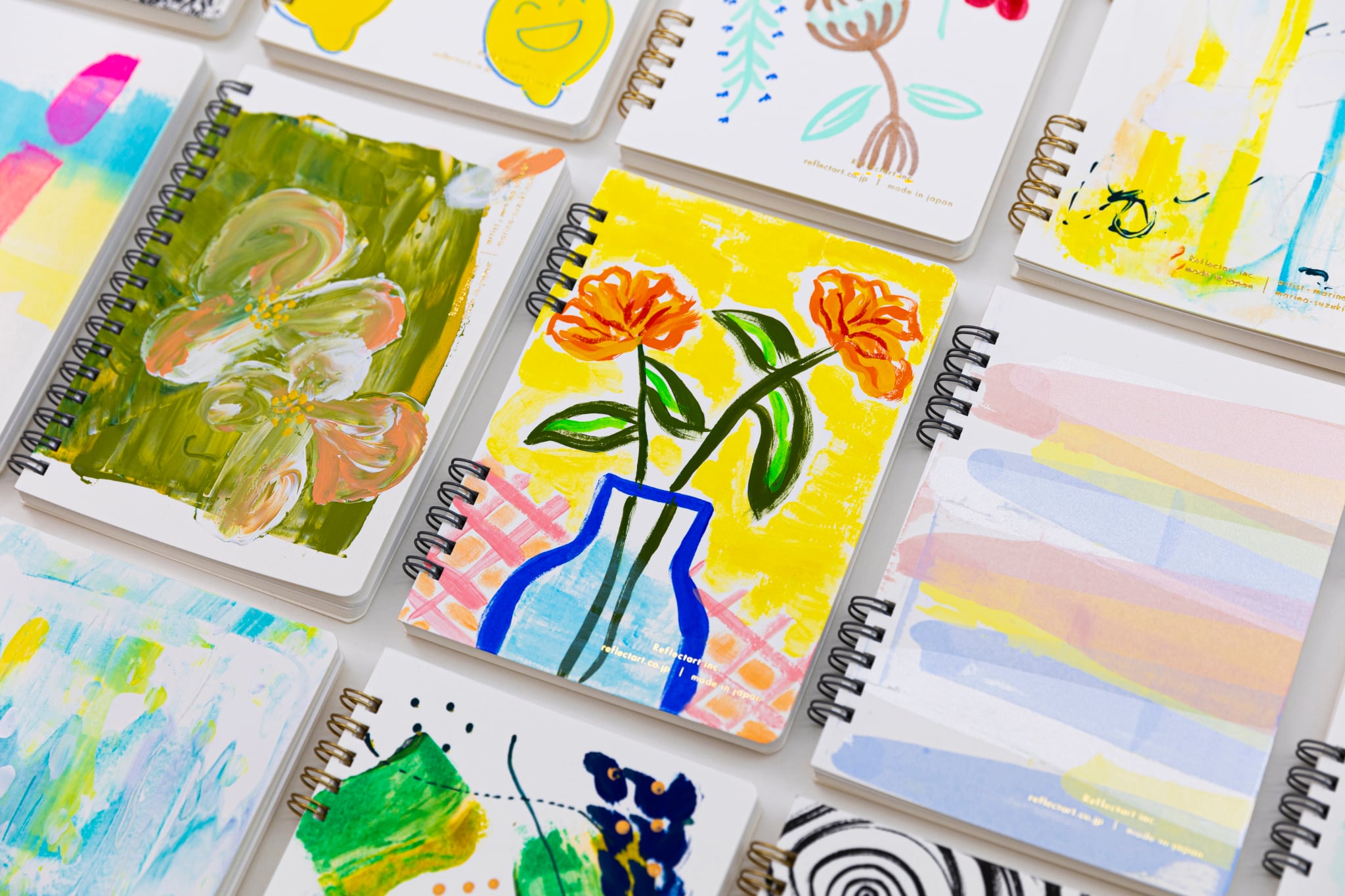
〇 Art and Things Award
– Ring notebooks with handwritten illustrations by artists (not printed): 10 winners
・URL: https://www.mono-to-art.com/
[Checkpoints Introduction]
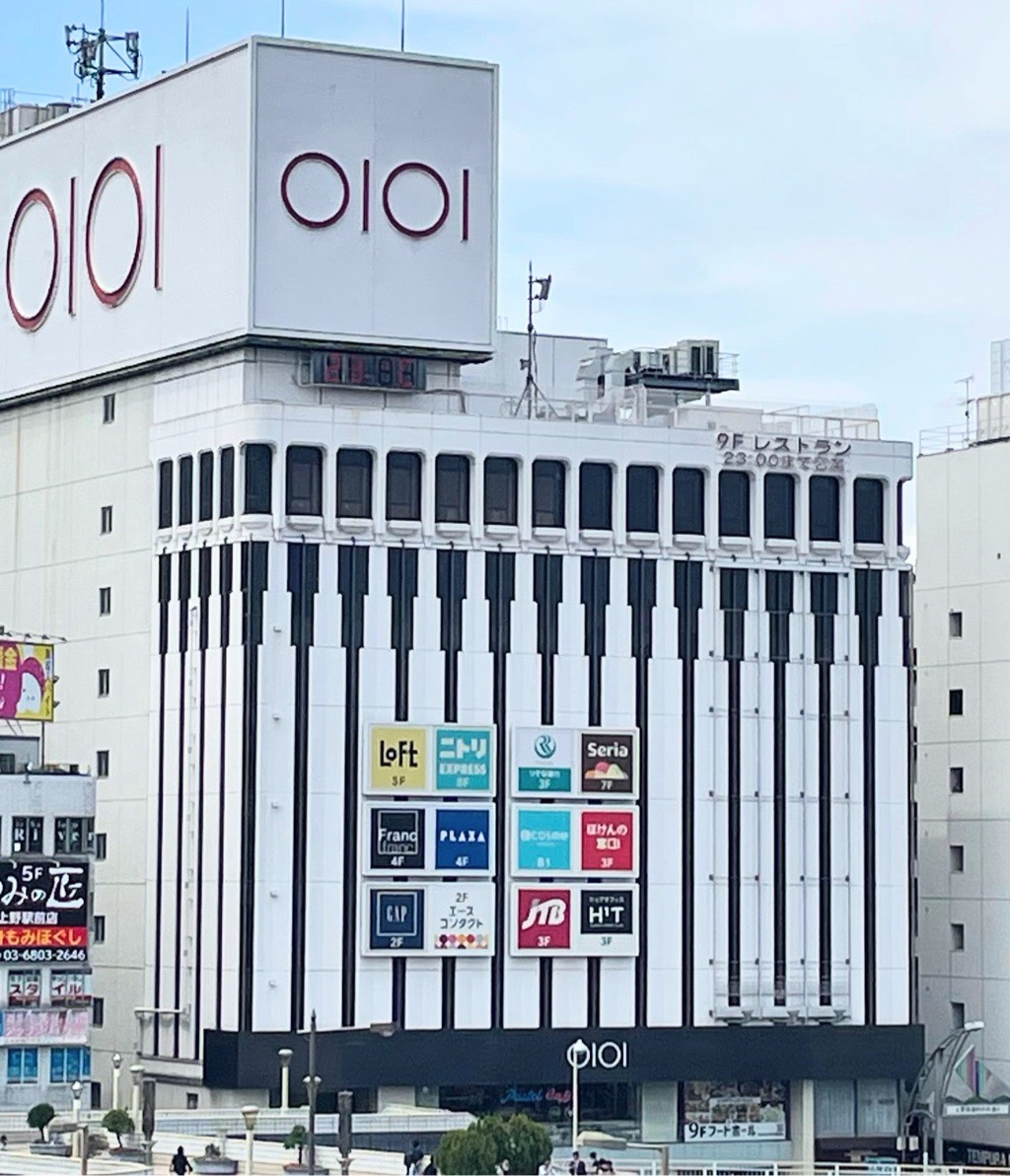
Ueno Marui
Ueno Marui is a landmark commercial facility located just a few minutes' walk from JR Ueno Station and Tokyo Metro Ueno Station. With approximately 100 tenants from the second basement floor to the ninth floor, offering a wide range of shopping and dining options, it's a popular spot for both locals and tourists alike, symbolizing the vibrant atmosphere of Ueno. Events and pop-ups are frequently held on each floor, making it a bustling location that reflects the lively spirit of Ueno.
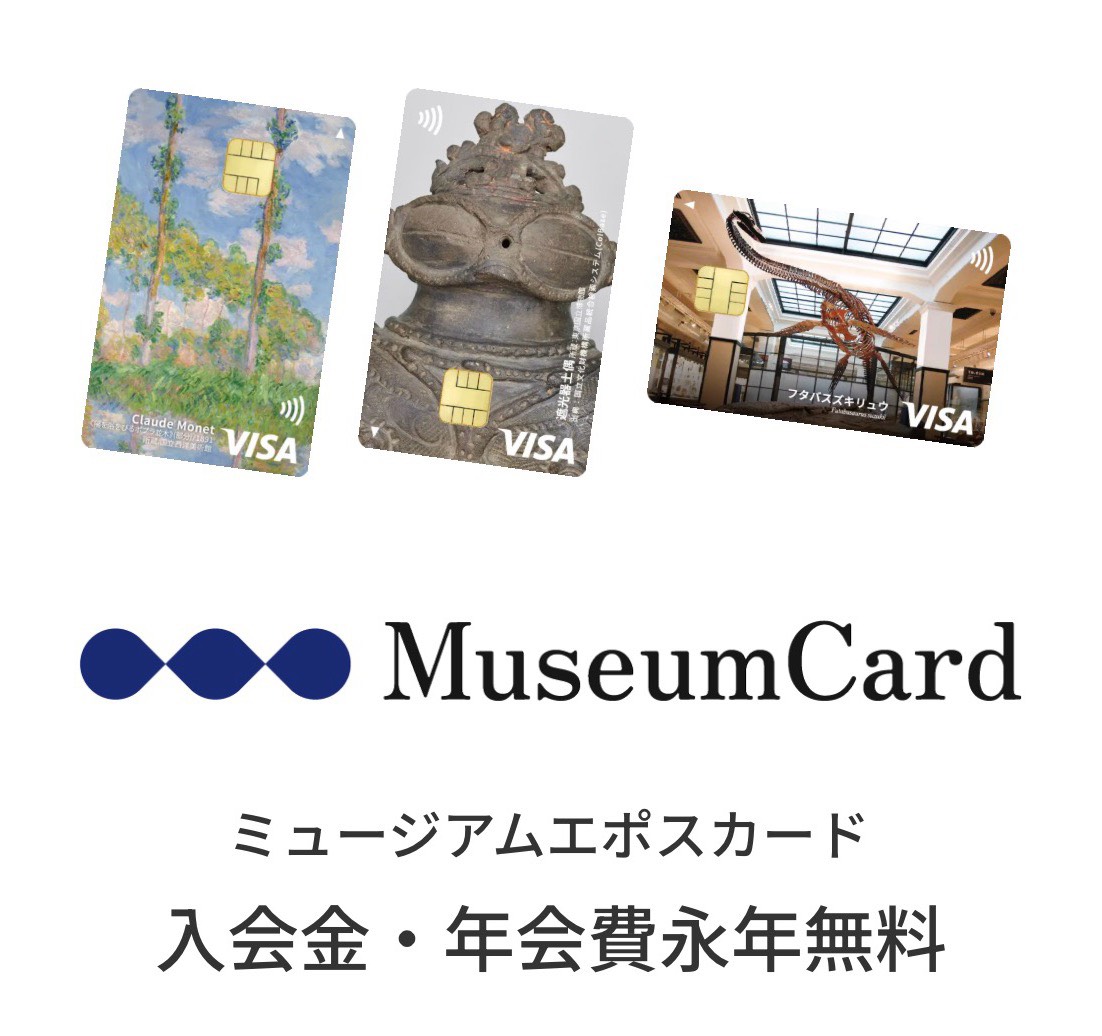
The Museum Epos Card is a credit card that supports museums with your everyday purchases. There's no annual fee, and you can choose your favorite museum design. Every time you use it, 0.1% of your spending goes to participating museums, helping to preserve cultural assets, artworks, and specimens for the future. It's a card that will delight both card enthusiasts and art lovers.
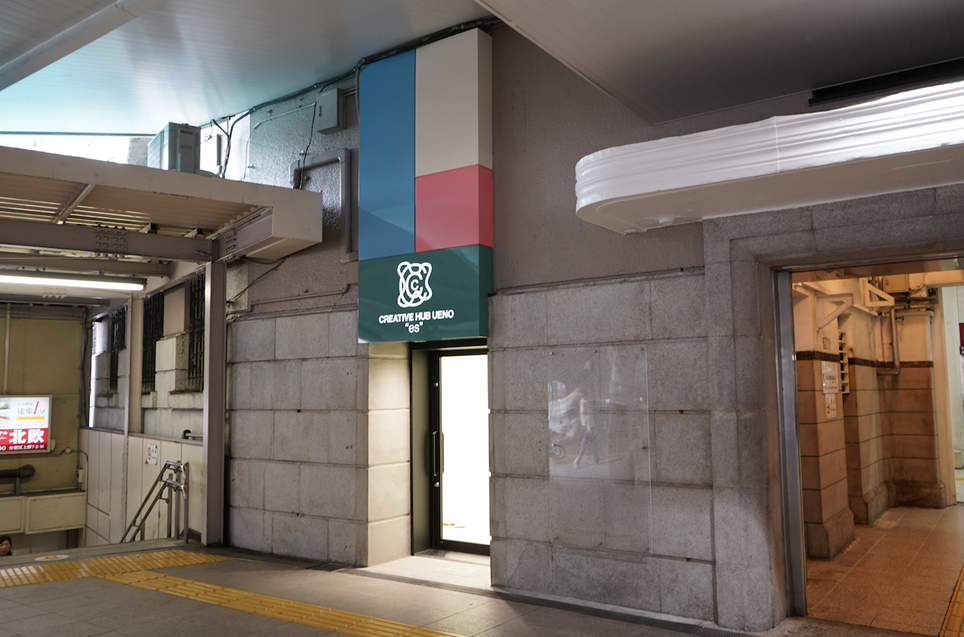
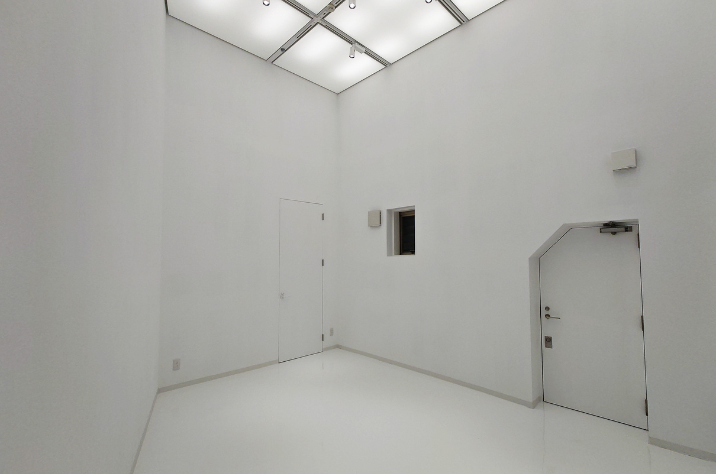
As the first step in a comprehensive partnership agreement between Tokyo University of the Arts and JR East, this gallery was created by renovating the former police box site at Ueno Station. It will exhibit works by young artists who are students or graduates of Tokyo University of the Arts, providing an opportunity to experience art that reflects the times. Furthermore, the entire Ueno Station will be envisioned as an art museum, and visitors will be guided through the art installations scattered throughout the station, creating a space for diverse cultural exchange. The gallery name "es" is a psychological term referring to the "realm of the unconscious," and was chosen with the aim of creating a space that embodies a small but infinite realm of expression, containing diverse desires and energies.
Venue: CREATIVE HUB UENO “es” (7-1-1 Ueno, Taito-ku, Tokyo)
Event Period: April 28, 2026 (Tue) – May 31, 2026 (Sun) Duration: 30 days
Closed on: May 11th (Mon), May 18th (Mon), and May 25th (Mon)
Gallery hours: 11:00 AM – 7:00 PM (Last entry 6:45 PM)
Exhibition content: Aimi Saito Solo Exhibition "Small Vehicles"
Manami Saito solo exhibition “An Exhibition of Small Vehicles”
Titled "Small Vehicles," this exhibition showcases works I've created to date.
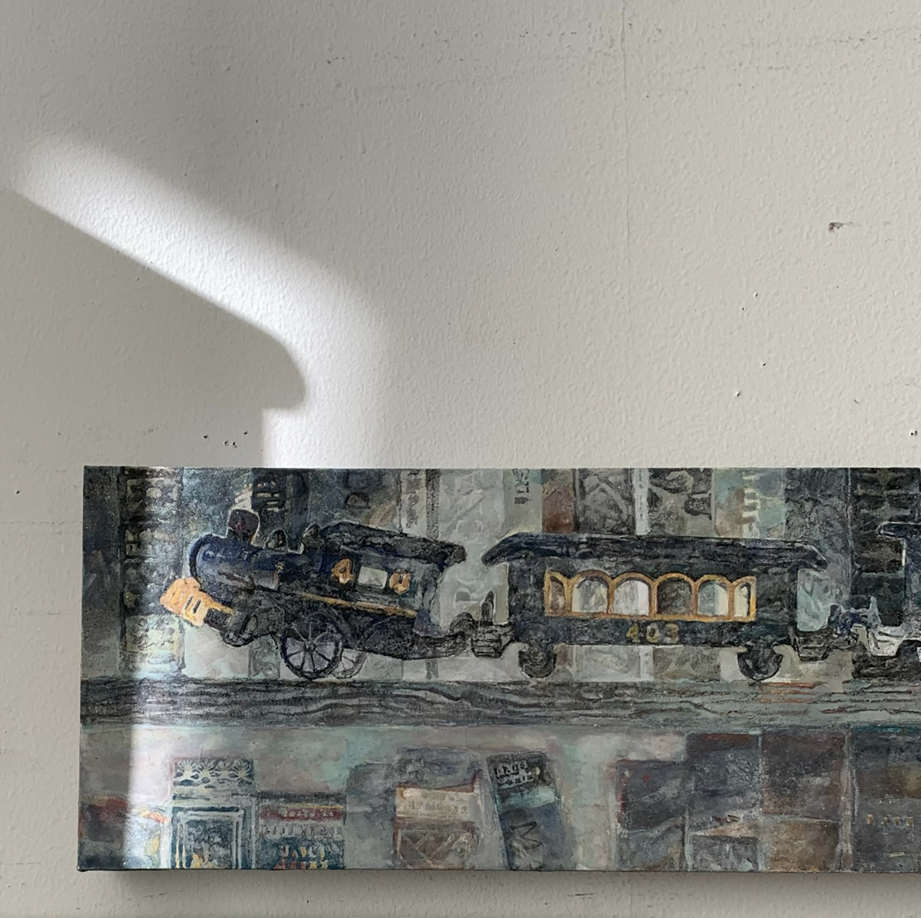
"Books and Trains" 2025 Glue, hemp paper, mineral pigments
Manami Saito
Saito creates paintings using mineral pigments. These granular pigments, made by crushing minerals, have a unique and eye-catching color and texture. While capturing the subtleties of everyday life, he has come to realize anew that "vehicles" are fascinating forms, and in this exhibition, he will focus his works on the motif of vehicles.
Career
Graduated from the Department of Painting, Faculty of Fine Arts, Tokyo University of the Arts in 2018.
2020 Graduate School of Fine Arts, Master's Program in Painting, Japanese Painting Research Field
2023 Graduate School of Fine Arts, Doctoral Program, Department of Fine Arts, Japanese Painting Research Area
Currently an associate member of the Japan Art Institute.
Main exhibition history
2022 L'Espoir Newcomer Selection Exhibition (Ginza Surugadai Gallery)
2024 Solo Exhibition "-Days of Yesteryear-" (Matsuzakaya Ueno Store, Matsuzakaya Nagoya Store)
Matsuzakaya Ueno Store
The art gallery at Matsuzakaya Ueno Department Store is a historic sales area that has grown alongside the development of department store culture. Since the post-war period, it has held exhibitions in a wide range of fields, including Japanese painting, Western painting, and crafts, introducing works by many artists, from renowned figures to emerging talents. Located in Ueno, a city of culture and art, it continues to host many exhibitions today, serving as a platform for disseminating art culture and showcasing artists' work. Please feel free to visit us on this occasion.
The exhibition schedule is as follows. Please note that the latest information is updated regularly, so please check the page below for details. https://shopblog.dmdepart.jp/ueno/art/
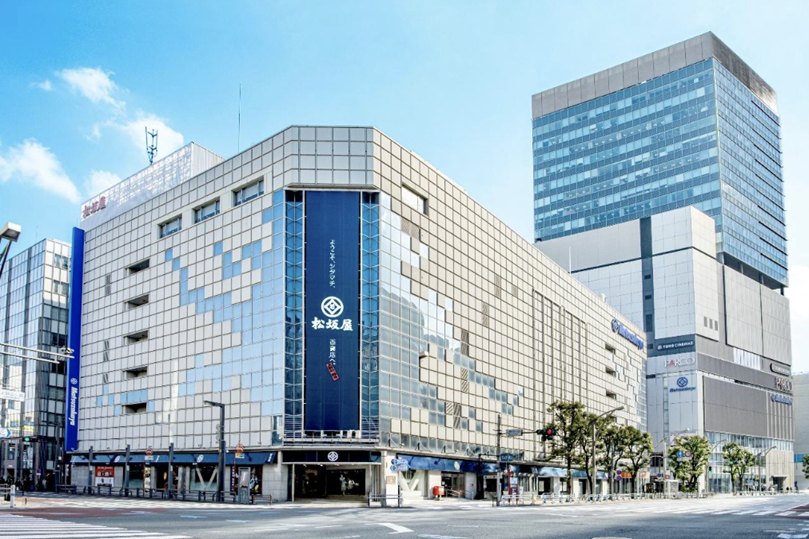
Matsuzakaya Ueno Store is a long-established department store representing the Ueno area, boasting a history dating back to its founding in 1768. It is directly connected to Ueno-Hirokoji Station on the Tokyo Metro Ginza Line and is also just a 2-minute walk from JR Okachimachi Station, making it easily accessible. From the basement to the 8th floor, it offers a wide range of products, from food and fashion to lifestyle goods, and has long been a beloved landmark in Ueno for locals.
Matsuzakaya Ueno Store (3-29-5 Ueno, Taito-ku, Tokyo)
Opening hours: 10:00 AM – 8:00 PM (Art gallery until 6:30 PM)
PARCO_ya Ueno
This commercial facility in Ueno Frontier Tower is based on the concept of "Parco for a slightly more upscale, adult audience." From the basement to the 6th floor, you'll find a selection of carefully curated fashion and gourmet food, and from the 7th floor upwards, you'll find TOHO Cinemas Ueno. It's a perfect outing spot for adults where you can enjoy both shopping and movies at the same time.
PANDER WONDER ~SAYAKA KOBORI's Exciting Panda Art Museum~ will also be held concurrently.
An exhibition by artist Sayaka Kobori of the Geiikukai will be held next to the escalator on the 2nd floor. A collection of rare pandas, including a panda on a pink background, will be on display, perfect for Museum Week. GOGO Panda paintings created for the city's Chinese New Year event will also be exhibited.
*A lottery-based sale will be held only between May 15th (Fri) and May 17th (Sun).
Special event for Ueno Museum Week! "Special Ueno Panda" appears at PARCO-YA Ueno
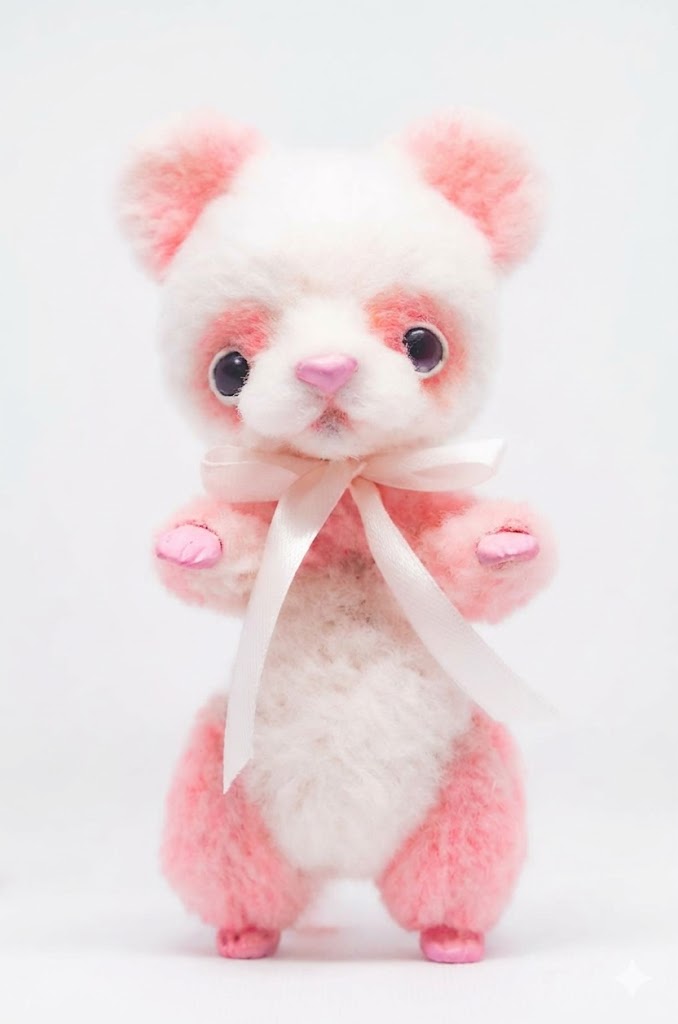
The panda being unveiled this time is the "Special Ueno Panda," whose fluffy white and pink fur is sure to catch the eye.
Its soft texture makes you want to stroke it, and the elegant ribbon tied around the neck adds to its charm.
And its charm lies in its clear, round eyes that seem to gaze intently at you. This is a truly adorable piece, filled with the warmth and delicate expression that only handcrafted work can provide.
Why not welcome a favorite piece just for you, as a memento of your art stroll through Ueno or as a special source of comfort in your daily life? Please come and see their adorable forms in person at the PARCO-YA Ueno venue.
PARCO_ya Ueno (3-24-6 Ueno, Taito-ku, Tokyo)
Opening hours: 10:00 AM – 8:00 PM (6th floor restaurant "Kofuku Kairo" is open from 11:00 AM to 11:00 PM)
The Art-Fostering Community Club: Ueno Museum Week Special – Original Drawing Artists
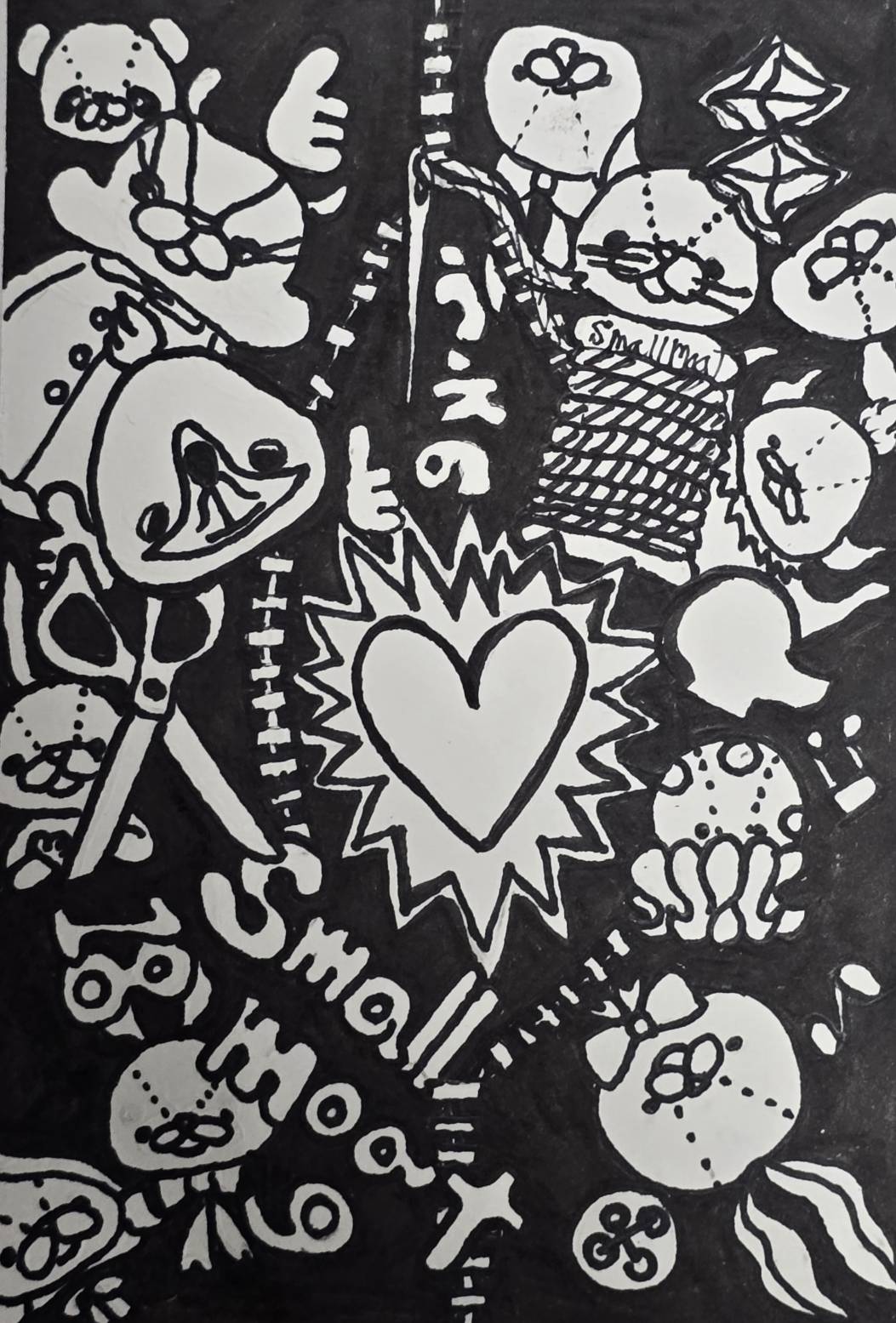
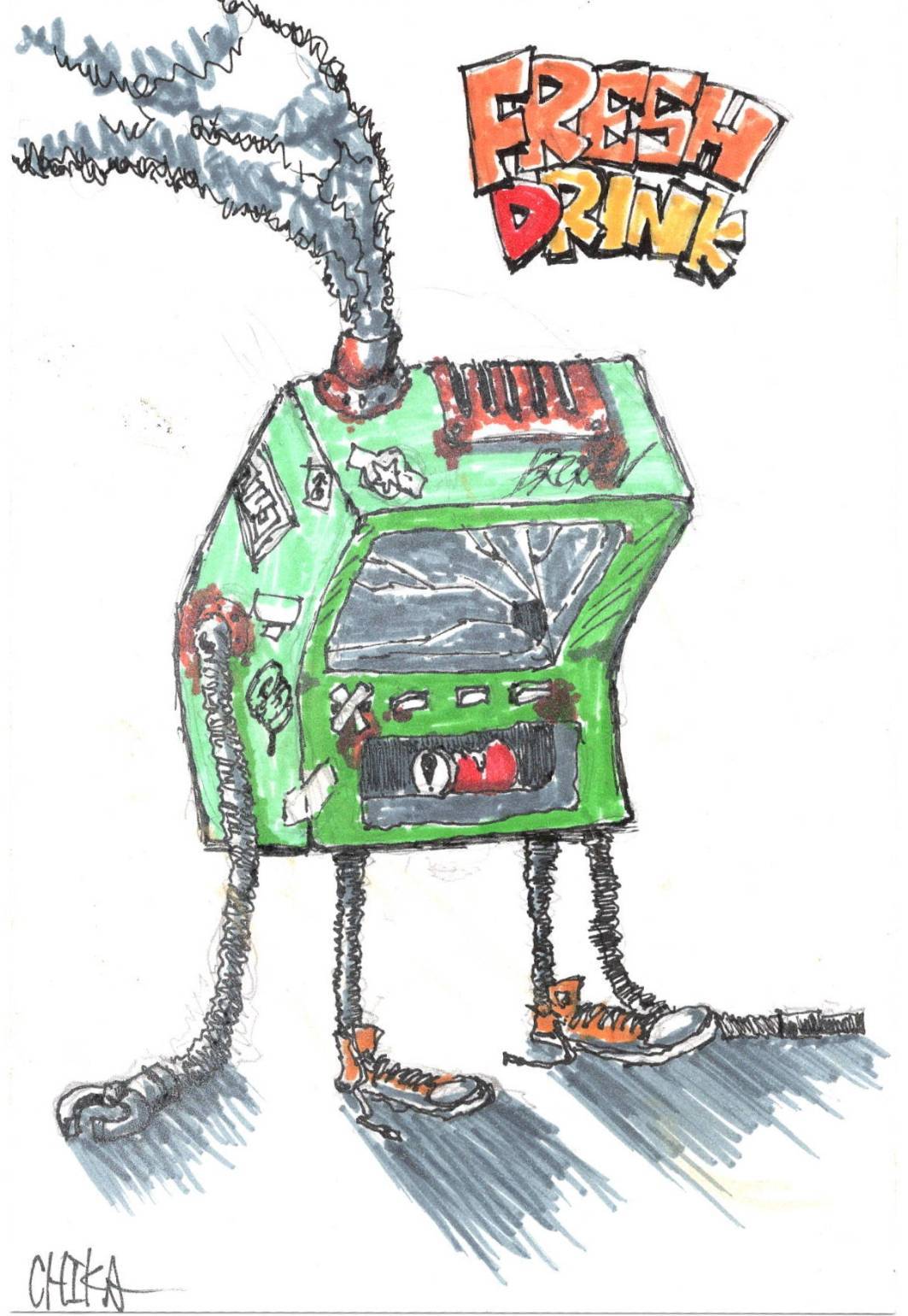
Examples of drawings by Sayaka KoboriMegumi Iida's drawing examplesYanagisawa Itsuki Drawing ExamplesChika Toys (CHIKA) Drawing Examples
Kobori Sayaka
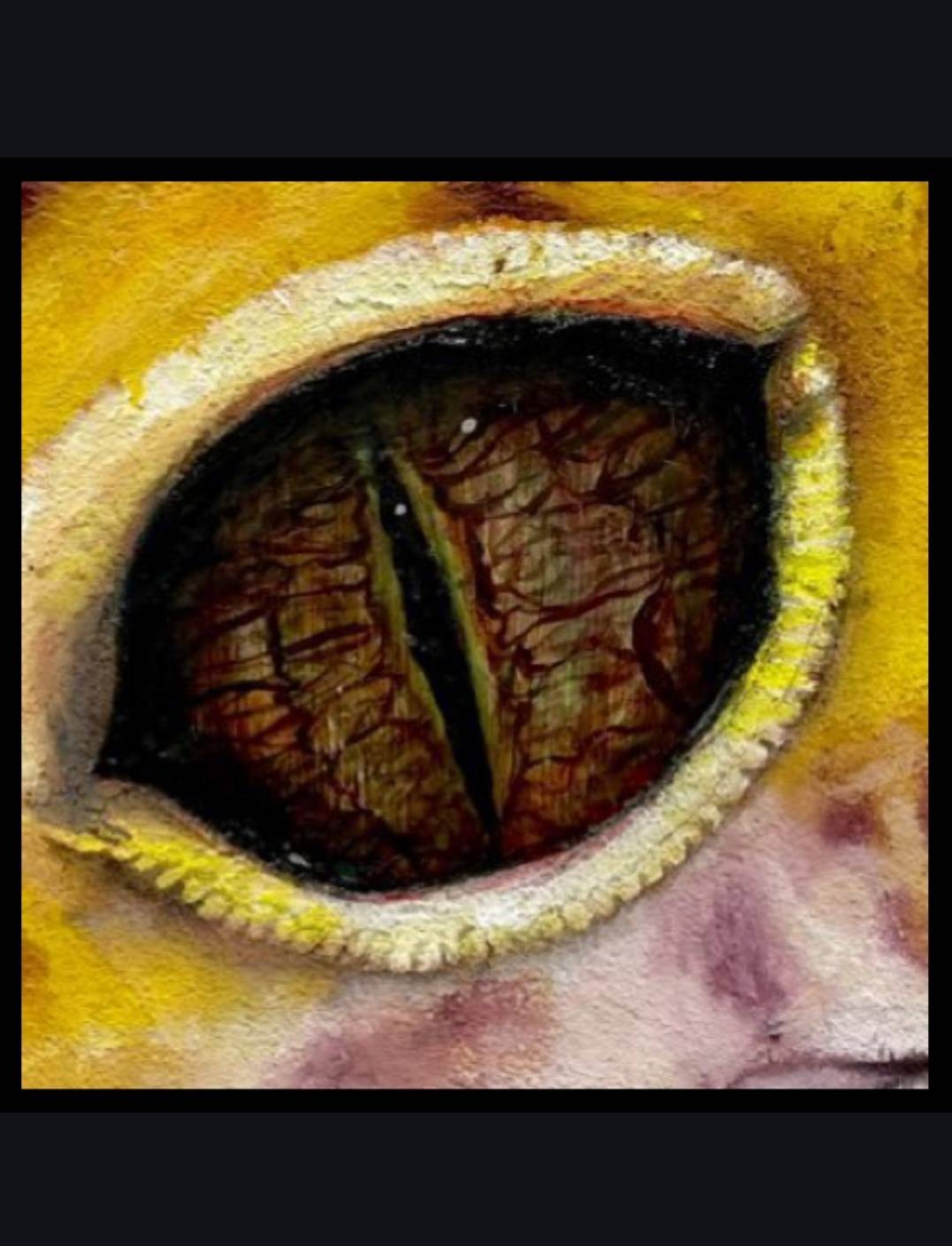
A soft sculpture artist. Believing that "cuteness saves the world," she works with the theme of bringing healing and hope to people living in an oppressive society. Using high-quality materials such as German-made fur fabric, she is committed to high-end handmade craftsmanship from pattern making to sewing, dyeing, and accessories. With her Uchinoko series as her main focus, she explores the possibilities of plush toys as a medium through advertising visuals, event appearances, and social media posts. Her "Ueno Panda," a collaboration with the Ueno Tourism Association, continues to soothe the hearts of many panda fans who visit Ueno even though the pandas are gone. Member of the Association for Nurturing the Arts.
The Ueno Panda, an official plush toy of the Ueno Tourism Association, is available here .
Biography and Exhibition History
Ueno's Future Exhibition 2020 (Ueno Marui, Tokyo)
First solo exhibition "Sayaka Kobori's Stuffed Animal Exhibition" (Gallery ROCKET, Omotesando Hills, Tokyo)
Future Artists Tokyo 2021 (Tokyo International Forum Art Fair Tokyo 2021)
Solo exhibition "Sayaka Kobori Exhibition" (Laforet Harajuku, Tokyo)
Exhibited at Laforet Harajuku's Love and Ecstasy Market in 2022.
Megumi Iida
Painter. Interested in and creating works about memories and events that fade away from recognition. By recording the existence of things that become hazy and uncertain in painting, she attempts to recognize the existence of the invisible. Born in 2000, from Chiba Prefecture.
Biography and Exhibition History
Graduated from Musashino Art University, Faculty of Art and Design, Department of Oil Painting in March 2024.
April 2024: Enrolled in the Master's Program in Art and Design at Musashino Art University Graduate School.
Currently enrolled in master's program
January 2024: 2023 Musashino Art University Graduation and Completion Exhibition / Musashino Art University Takanodai Campus
November 2024 Group Exhibition:EPIC PAINTERS Vol:14@THE blank GALLERY,Tokyo
Itsuki Yanagisawa
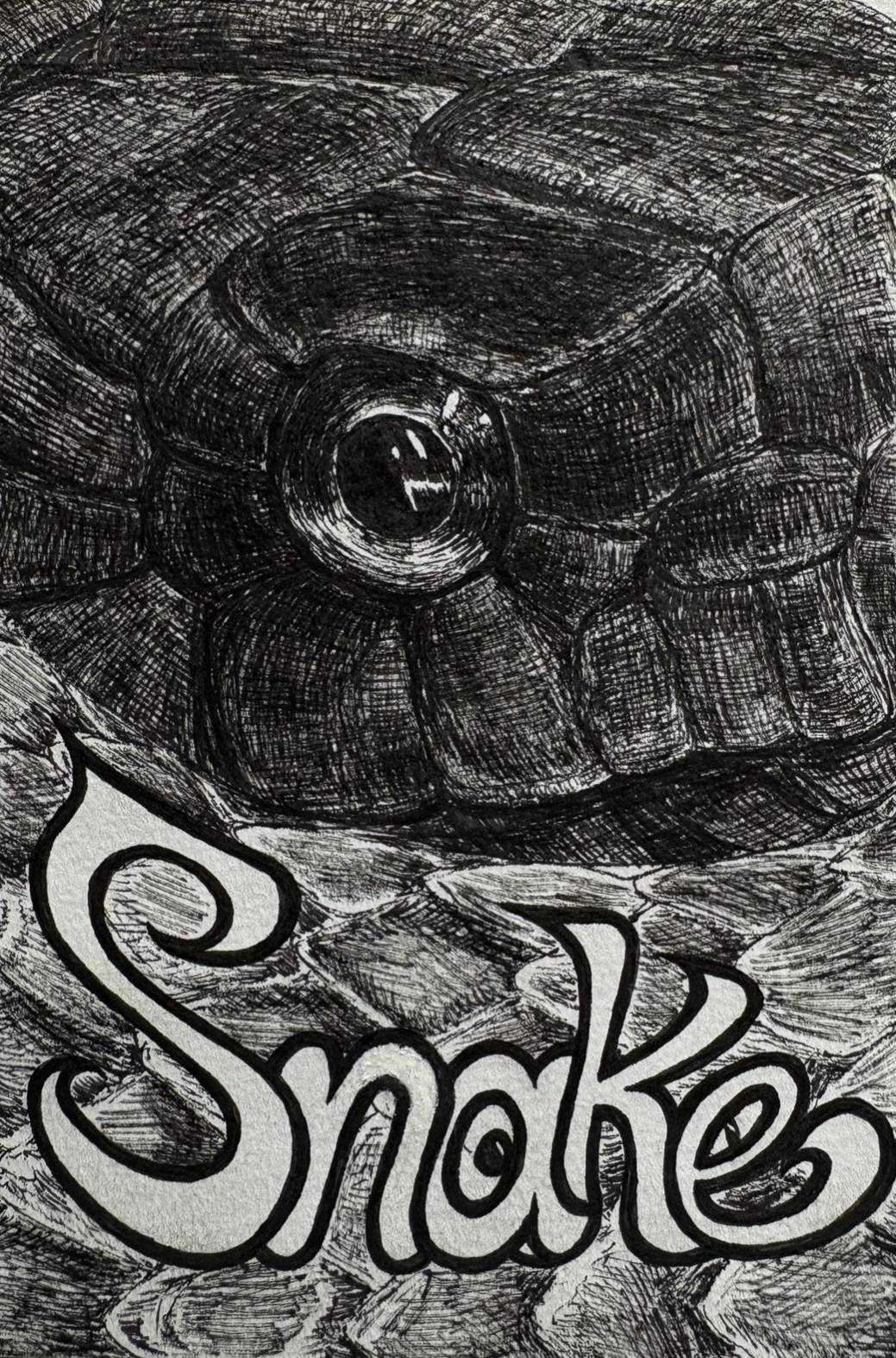
The artist creates oil paintings with "texture" as the theme. By enlarging snake scales to compose the image, and layering fine details and colors, a mysterious texture is created, and each viewer will perceive the texture, temperature, and mass of the object differently. This is because each viewer has a different environment, knowledge, and experience.
Biography and Exhibition History
Born in Kawagoe City, Saitama Prefecture in 2001.
Graduated from Musashino Art University, Faculty of Art and Design, Department of Oil Painting, Oil Painting Major in 2024.
February 2024: "The Great Art Education Association Exhibition," Matsuzakaya Ueno Store, 7th Floor Art Gallery, A Community for Fostering the Arts
February 2024: Hakkendo "Young Artist Open Call Exhibition 'Good Buds Blooming Buds' in TOKYO 2024" Matsuzakaya Ueno Store
September 2024, Hakkendo "KANZEN -Complete-" Isetan Shinjuku Store
CHIKA Toys
A sculptor, he explores forms of coexistence between AI and humans through futuristic retro designs. His robots, with their unusual heads, possess a charming humor and, at times, a touch of melancholy, despite their rugged and rusty appearance. He re-examines the relationship between technology and humanity, and critically examines a sustainable future. Through his portrayal of society and his own existence, he expresses a unique worldview that prompts viewers to consider what it means to be human. He is an extremely popular artist with over 100,000 followers.
Biography and Exhibition History
Born in Fukuyama City, Hiroshima Prefecture.
First exhibited at "Design Festa vol.38" in 2013, officially launching creative activities.
First participated in "Wonder Festival" in 2014, and has been active mainly in both Wonder Festival and Design Festa. 2020: Ueno Future Exhibition (Ueno Marui, Tokyo)
Future Artists Tokyo 2021 (Tokyo International Forum Art Fair Tokyo 2021)
2023 10th Anniversary Exhibition "CHIKA WORLD" (HOWHOUSE, Yanaka, Tokyo)
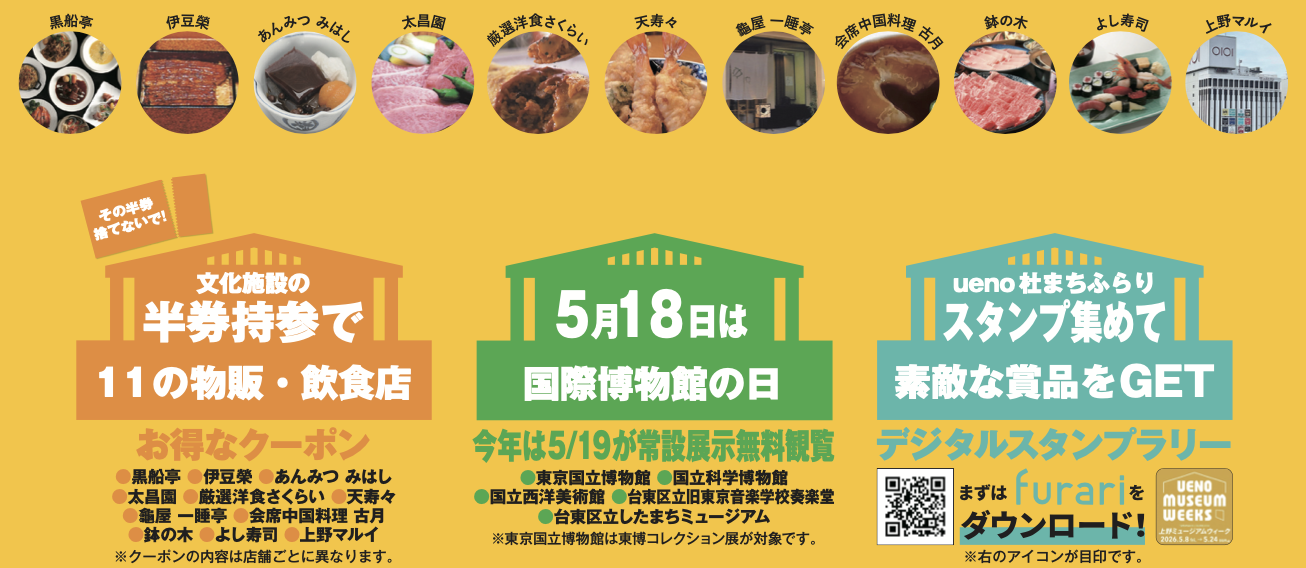
■Don't throw away that ticket stub! Coupon service■
During the event period, you can receive free services at the following stores by presenting your ticket stub from each museum. For details on the services offered, please visit the Ueno Museum Week official website.
[Participating Stores] Kurofune-tei (dessert service included) Izuei (One complimentary cup of oolong tea or green tea) Anmitsu Mihashi (with 2 mochi balls as a topping) Taishoen (One complimentary draft beer or soft drink) Sakurai's carefully selected Western-style cuisine (one complimentary draft beer or soft drink) Tenjuju (One free vegetable tempura item) Kameya Issuitei (One free red bean monaka ice cream) Kaiseki Chinese Cuisine Kogetsu (One complimentary soft drink or beer) Hachinoki (One glass of wine or dessert; coffee service with lunch) Yoshi Sushi (One complimentary draft beer or soft drink) Ueno Marui (One free museum original sticker will be given to the first 200 customers) Delhi Ueno Store (70th Anniversary Original Sticker Giveaway *First 200 customers only)
[How to use]
Show your ticket stub for a cultural facility in Ueno Park.
QR codes on your smartphone, or those printed at convenience stores or ticket counters, are also acceptable.
*One ticket per person.
*Cannot be used in conjunction with coupon services.
■What is International Museum Day?■
International Museum Day is an international day established in 1977 by the International Council of Museums (ICOM) to promote a broader understanding of the role of museums. With the aim of making museums more accessible to a wider audience and raising awareness of their role, commemorative events are held at museums around the world on and around May 18th. In Ueno, which has an exceptionally large number of cultural facilities such as museums and art galleries, the period around International Museum Day is celebrated as "Ueno Museum Week" each year, with cultural facilities and the Ueno Noren Association holding various commemorative events.
■Ueno Norenkai■
Ueno, known as the "Cloud of Flowers," has been a representative entertainment district since the Edo period. Since the Meiji era, it has been a center for the dissemination of arts and culture. The Ueno Norenkai is a federation of about 100 famous shops in Ueno. Since its founding in 1959 (Showa 34), it has been publishing the town magazine "Ueno" every month, aiming to rediscover the cultural traditions of this area. The magazine is currently on its 796th issue (as of April 2026).
■Flyer■
◎Inquiries
Ueno Museum Week Executive Committee Secretariat
TEL 03-3833-8016 FAX 03-3839-2765 (Ueno Norenkai, Weekdays 10:00-17:00)
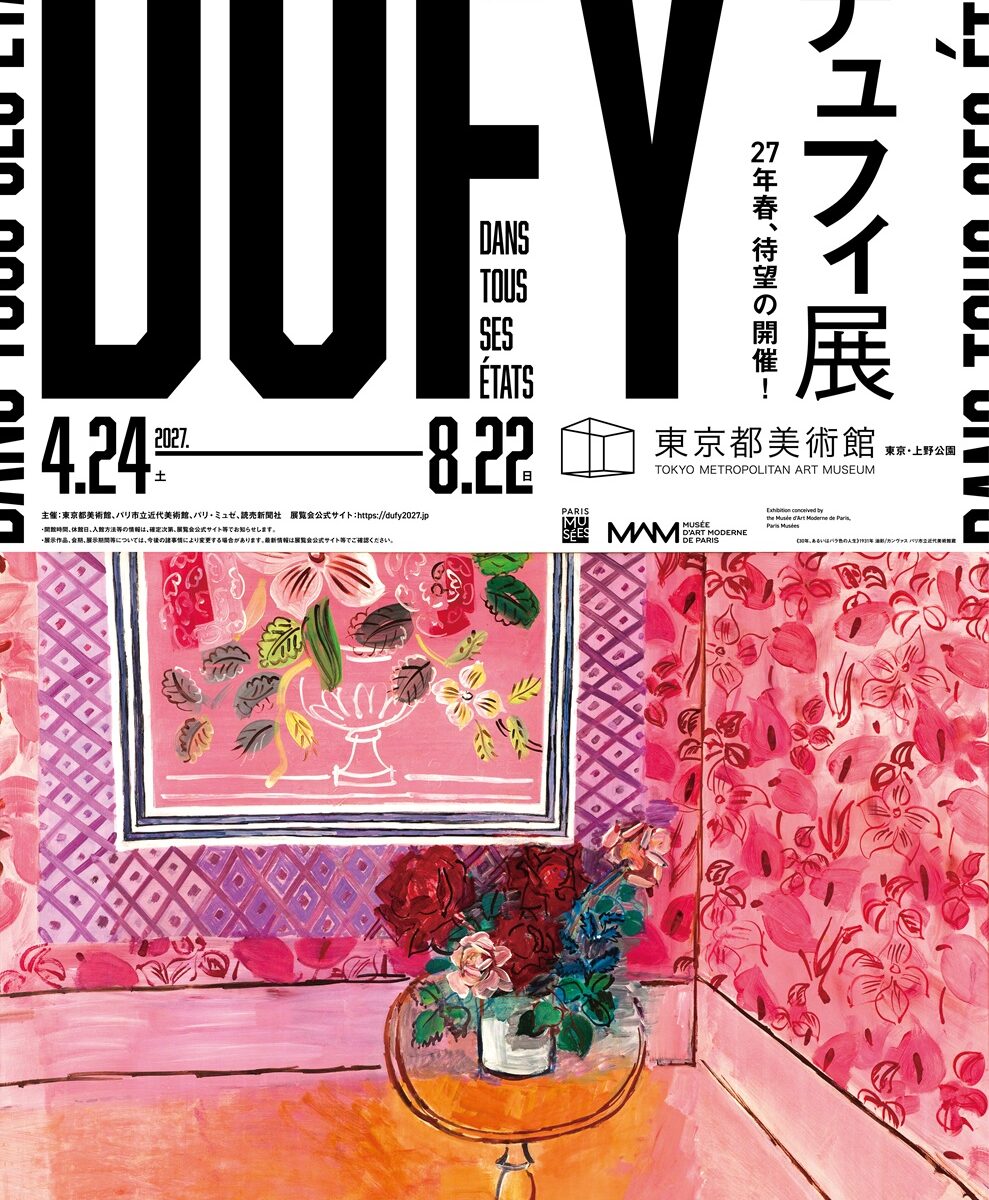
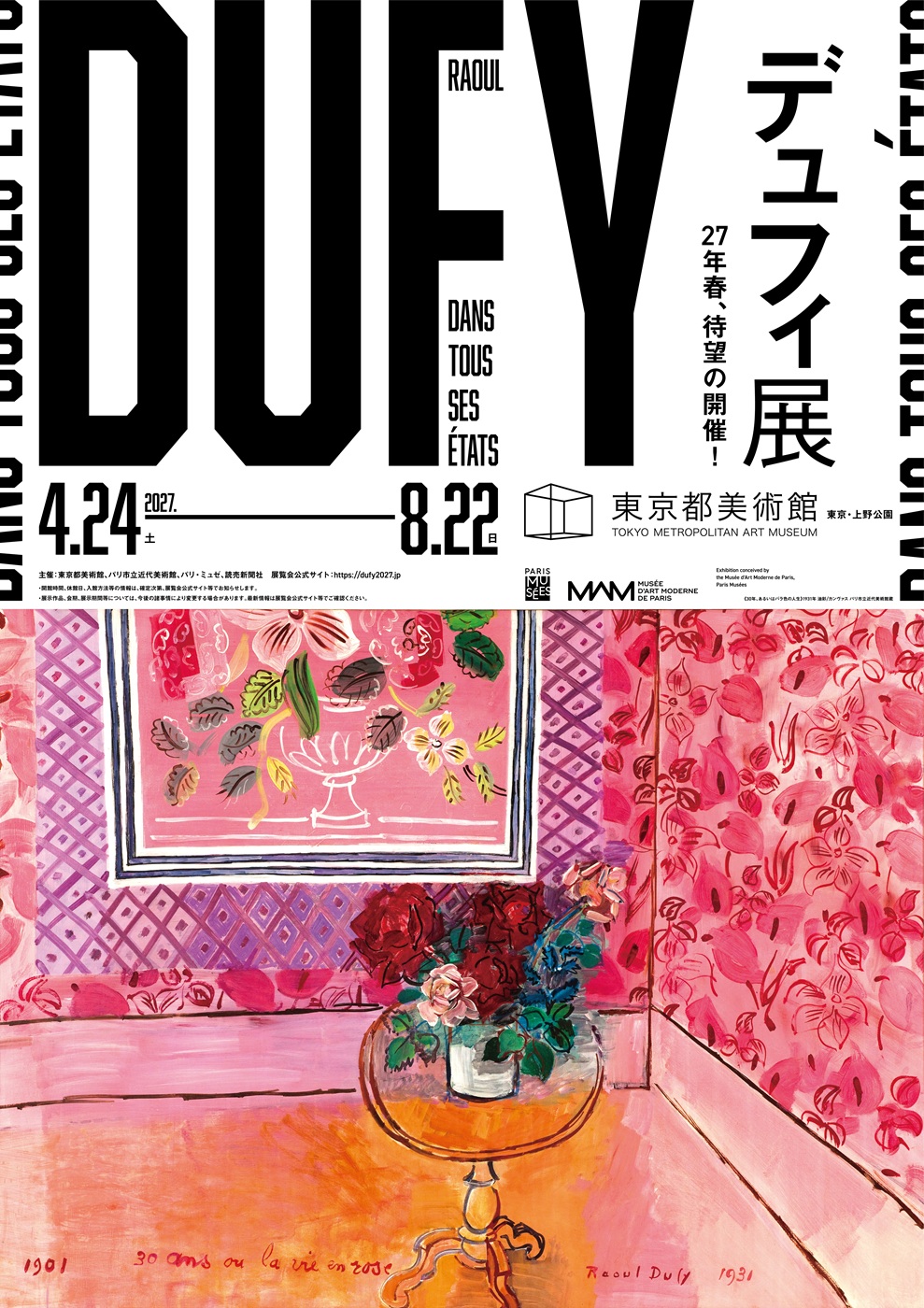
The Tokyo Metropolitan Art Museum will be hosting the "Dufy Exhibition" from Saturday, April 24th to Sunday, August 22nd, 2027.
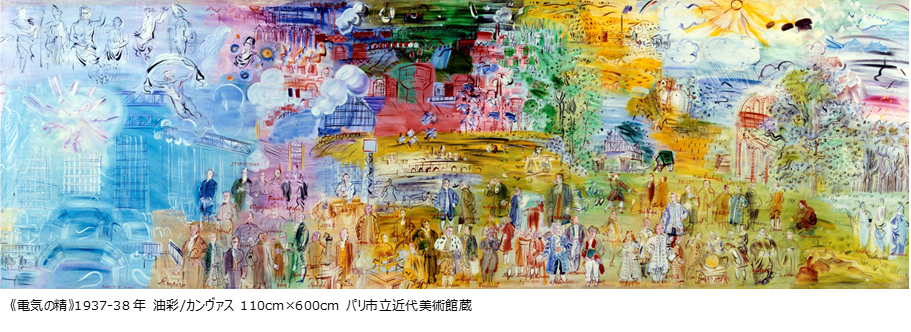
A massive 6-meter masterpiece! The original fresco painting "The Spirit of Electricity," created for the Paris World's Fair, is coming to Japan!
Raoul Dufy (1877–1953) was a leading 20th-century French painter known for his use of color and light. He left behind numerous works depicting tranquil and pleasant subjects such as the sea, ships, music, wheat fields, and rural landscapes in vibrant colors. His creative activities extended beyond canvas to textiles, costume design, ceramics, tapestries, and furniture, making him a widely recognized and versatile artist.
This exhibition commemorates the 150th anniversary of Dufy's birth and presents a comprehensive overview of his work, primarily through numerous pieces held in the collection of the Musée d'Art Moderne de la Ville de Paris. Of particular note is the precious 1/10 scale painting (6 meters wide) that served as the original for the colossal fresco "The Spirit of Electricity," created for the 1937 Paris World's Fair.
In the spring of 2027, vibrant and bright colors will spread throughout Ueno, Tokyo.
The spirit of electricity
"The Spirit of Electricity" is a massive fresco, measuring 60 meters wide, created for the "Pavilion of Electricity and Light" at the 1937 Paris World's Fair. It is now housed in a dedicated exhibition room at the Musée d'Art Moderne de la Ville de Paris, creating a magnificent space that envelops visitors. With its technical brilliance and rich motifs, it can be considered the culmination of Dufy's art and one of the greatest works of decorative art.
[Event Overview]
Exhibition name: Dufy Exhibition
Date: April 24, 2027 (Sat) – August 22, 2027 (Sun)
Venue: Tokyo Metropolitan Art Museum (Ueno Park, Tokyo) 8-36 Ueno Park, Taito-ku, Tokyo 110-0007
Organizers: Tokyo Metropolitan Art Museum (Tokyo Metropolitan Foundation for History and Culture), Musée d'Art Moderne de la Ville de Paris, Musée de la Paris, Yomiuri Shimbun
Official website: https://dufy2027.jp
<Visit>
September 11 (Sat) – December 12 (Sun), 2027, Kyoto City Kyocera Museum of Art
[From the press release of the Dufy Exhibition Public Relations Office]
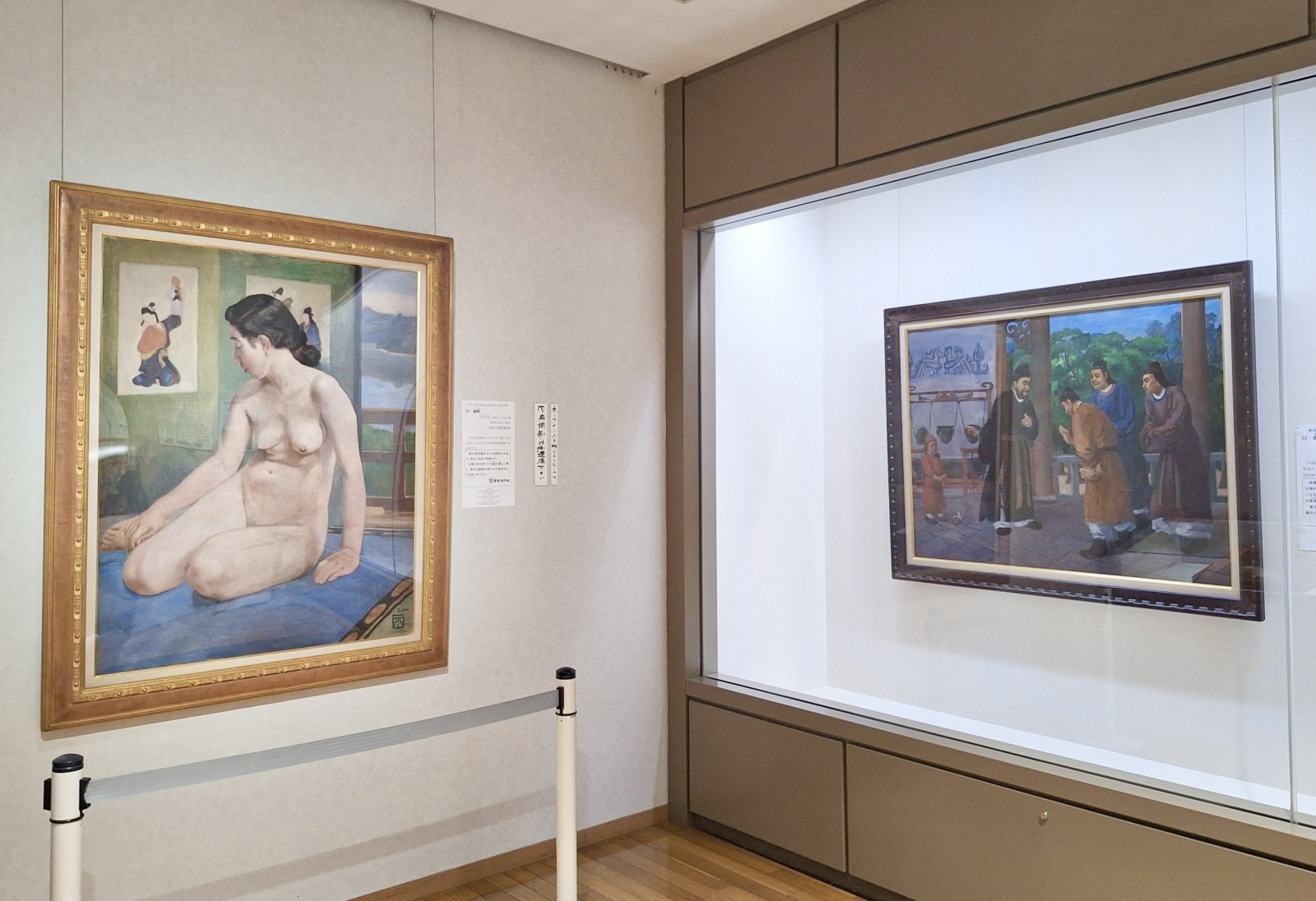
From left to right: Nakamura Fusetsu, “Lakeside,” 1940 (Showa 15) , exhibited in the first half of the period ; “Admonitions of Iki,” 1941 (Showa 16) , exhibited throughout the period.
The Taito City Calligraphy Museum, located in Negishi, Taito Ward, Tokyo, is a rare specialized museum in Japan dedicated solely to calligraphy. It boasts a collection of approximately 16,000 items of significant importance for the study of Chinese and Japanese calligraphy history. Beyond the ink writing on paper that many people imagine when they hear the word “calligraphy,” the museum’s appeal lies in its ability to trace the history of Chinese writing and characters through diverse written materials, such as “oracle bone scriptures,” the oldest existing Chinese characters inscribed on turtle shells and bones, and “stone scriptures,” Confucian classics inscribed on stone.
The Calligraphy Museum is currently holding a special exhibition, “Nakamura Fusetsu 160th Anniversary Special Feature,” to commemorate the 160th anniversary of the birth of its founder, Nakamura (1866-1943), who was both a Western-style painter and a calligrapher. The exhibition showcases works and materials from throughout his life. (The exhibition runs until July 12th, 2026.)
Unlike typical museum exhibits, this exhibition features a large number of oil paintings, watercolors, and newspaper illustrations, making it an accessible exhibition even for art fans who might feel that calligraphy is difficult or intimidating.
This time, we were given a tour of the exhibition by Mr. Nobuhiro Nakamura, the chief researcher at the museum.
*There will be changes to the exhibits during the exhibition period. See the list of exhibits here . First half of the exhibition: April 4th (Sat) – May 24th (Sun) Late exhibition: May 26th (Tuesday) – July 12th (Sunday)
*All featured works are from the collection of the Taito City Calligraphy Museum.
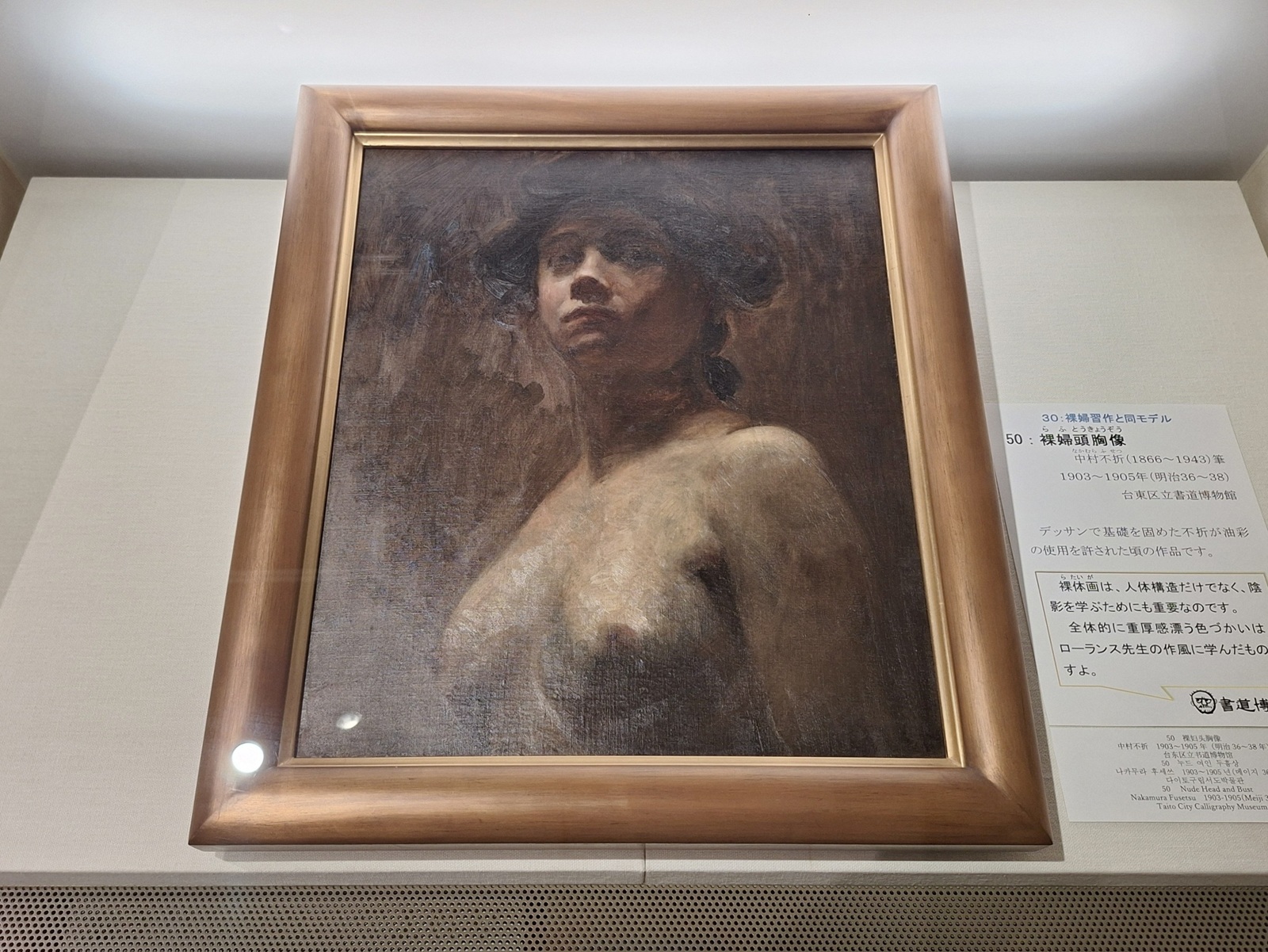
Nakamura Fusetsu, “Nude Head and Bust,” 1903-1905 (Meiji 36-38) , on display throughout the exhibition period.A charming self-portrait by Fusetsu. From Nakamura Fusetsu’s “Fusetsu Painting Collection, Volume 1,” 1910 (Meiji 43) , on full display throughout the exhibition.
Nakamura Fusetsu (formerly Nakamura Sekitaro), famous for creating the sign lettering for “Shinjuku Nakamuraya,” was a figure who left a significant mark on both the Western-style painting and calligraphy worlds throughout the Meiji, Taisho, and Showa periods.
Born in Kyobashi, Edo in 1866, Fusetsu lost his job as an official of the shogunate during the turmoil of the Meiji Restoration when he was five years old. Relying on his mother’s connections, he moved to Nagano, where he spent his boyhood working as an apprentice in a kimono shop and as a confectioner, while studying Chinese classics, Nanga painting, and calligraphy in his free time. Aspiring to become a mathematician, he became an elementary school teacher at the age of 19, teaching arithmetic and drawing, but he soon realized that language proficiency was essential to learning more advanced mathematics. For Fusetsu, who had a hearing impairment, this was not an easy path, and he decided to seriously pursue his second-choice dream: painting.
“Based on these experiences, I decided to use the name ‘Fuzetsu’ (meaning ‘unwavering’ or ‘unsettled’) to express my determination that I would never be discouraged or lose heart again,” says Nakamura.
In 1887, at the age of 23, he moved to Tokyo and, relying on a relative, lodged in a vacant room at the villa of Takahashi Korekiyo, who would later become Prime Minister. He enrolled in the art school “Fudosha,” run by the Western-style painter Koyama Shotaro, and received painting instruction there for over a decade.
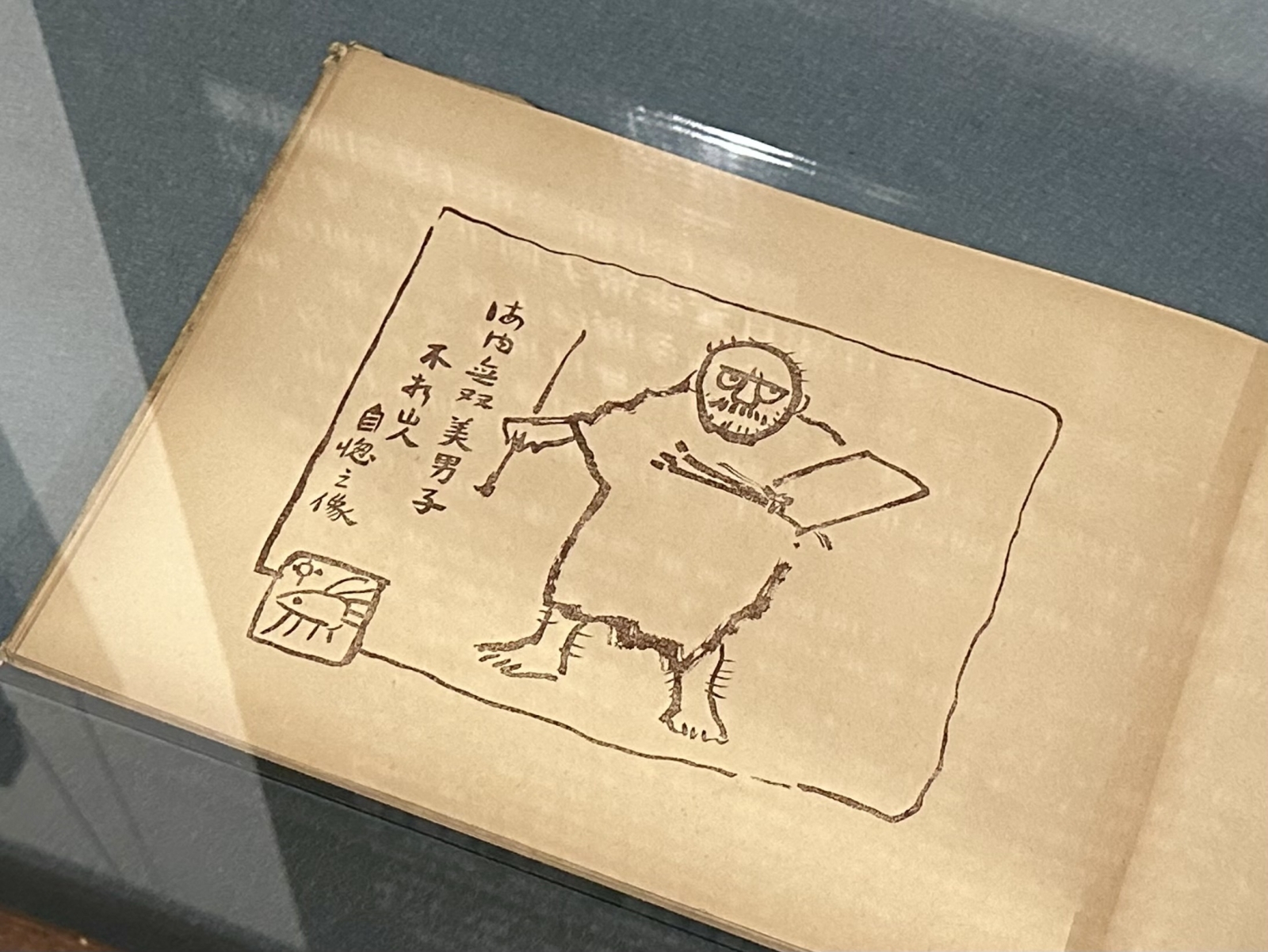
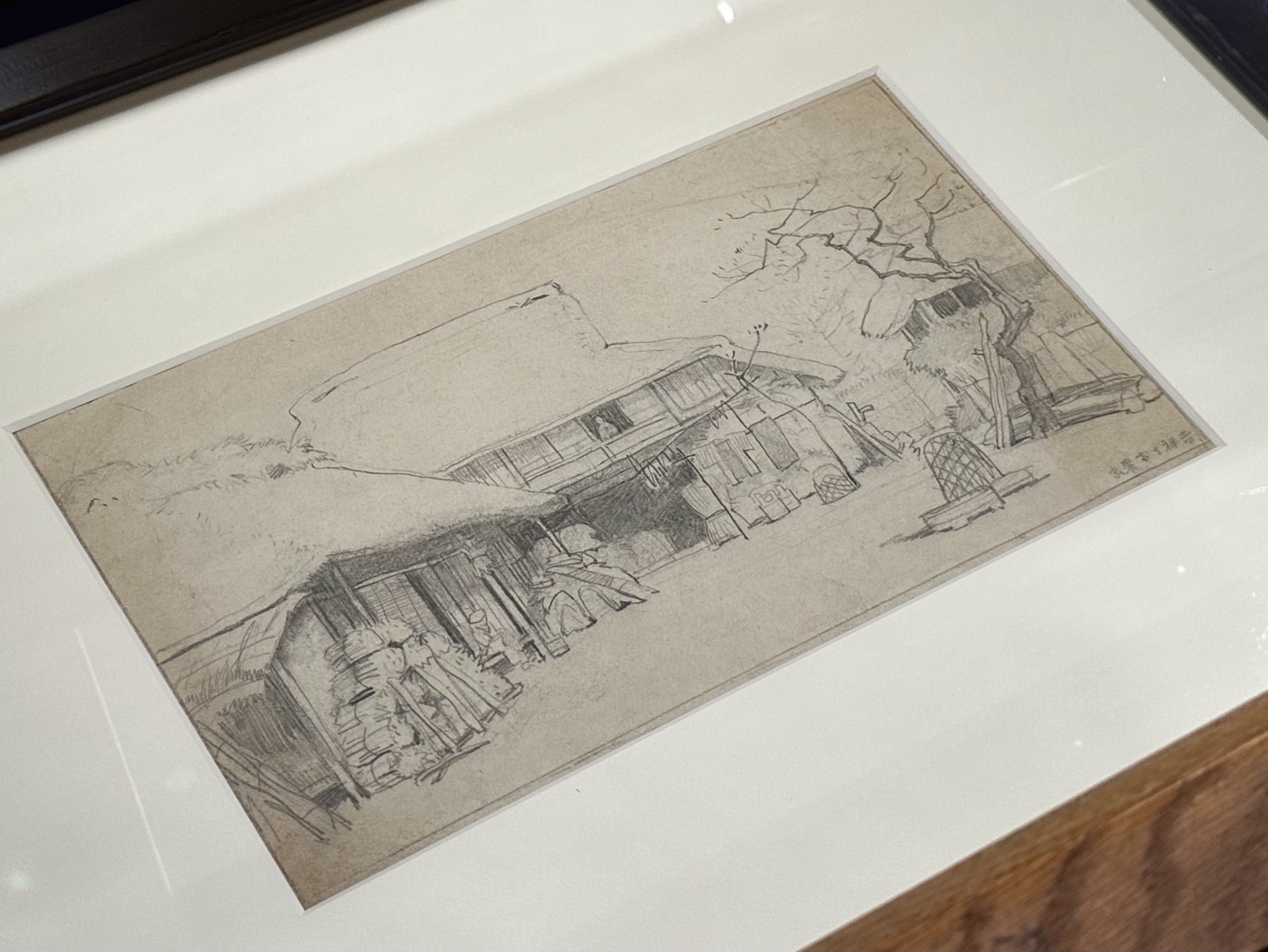
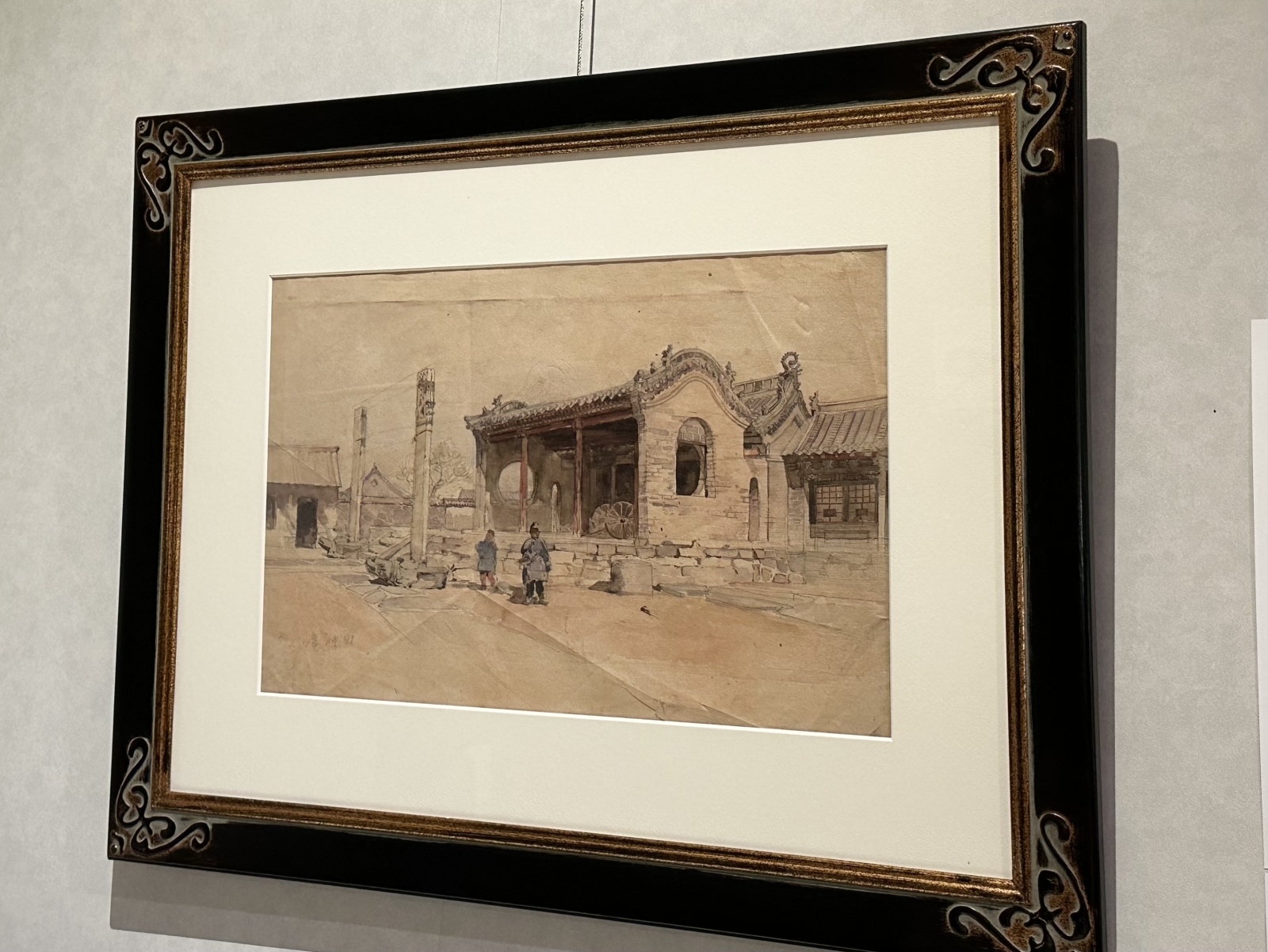
Nakamura Fusei《Kichijoji Village Farmer》 Early Meiji 20s (1888-1896) Exhibition
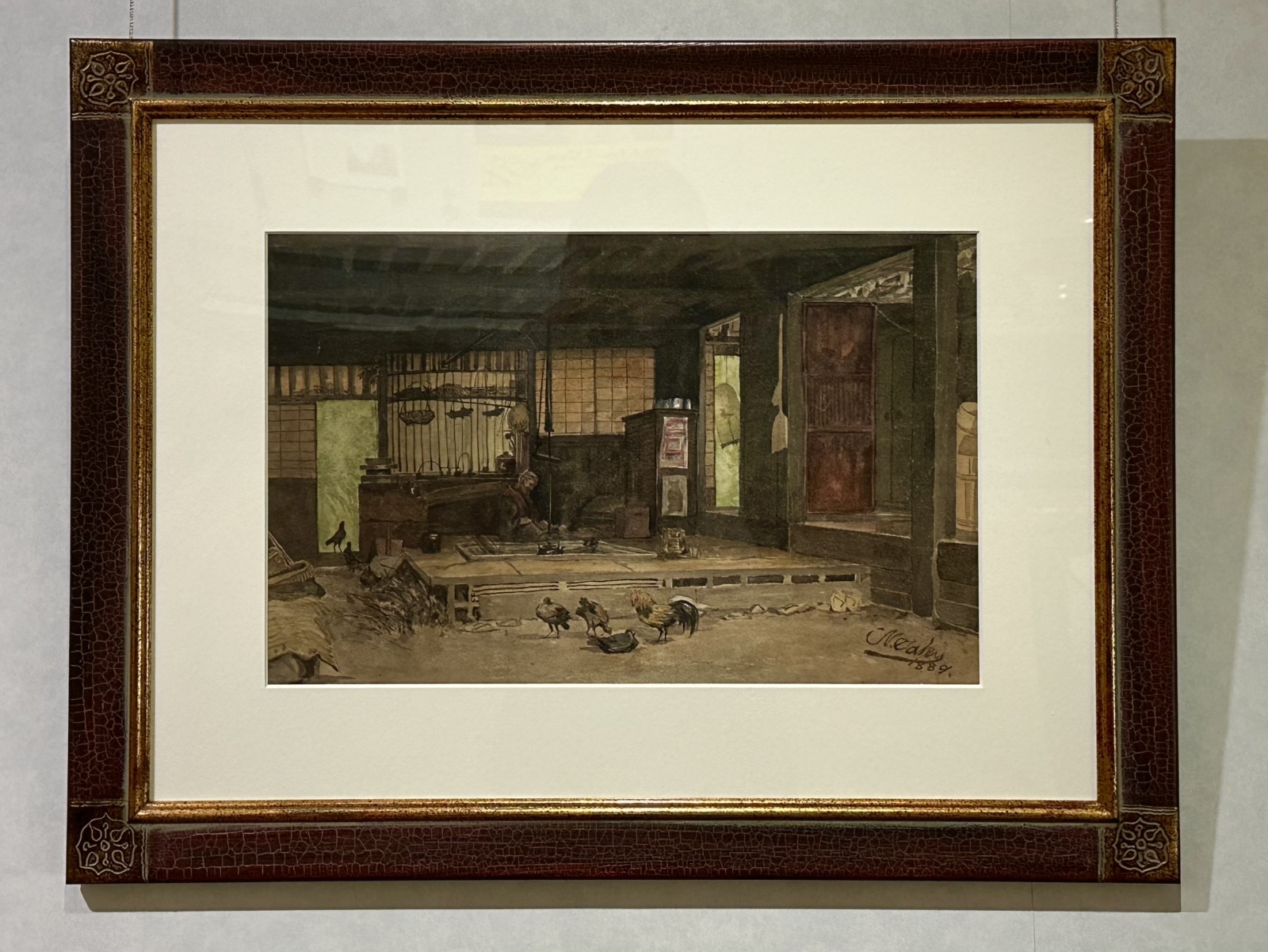
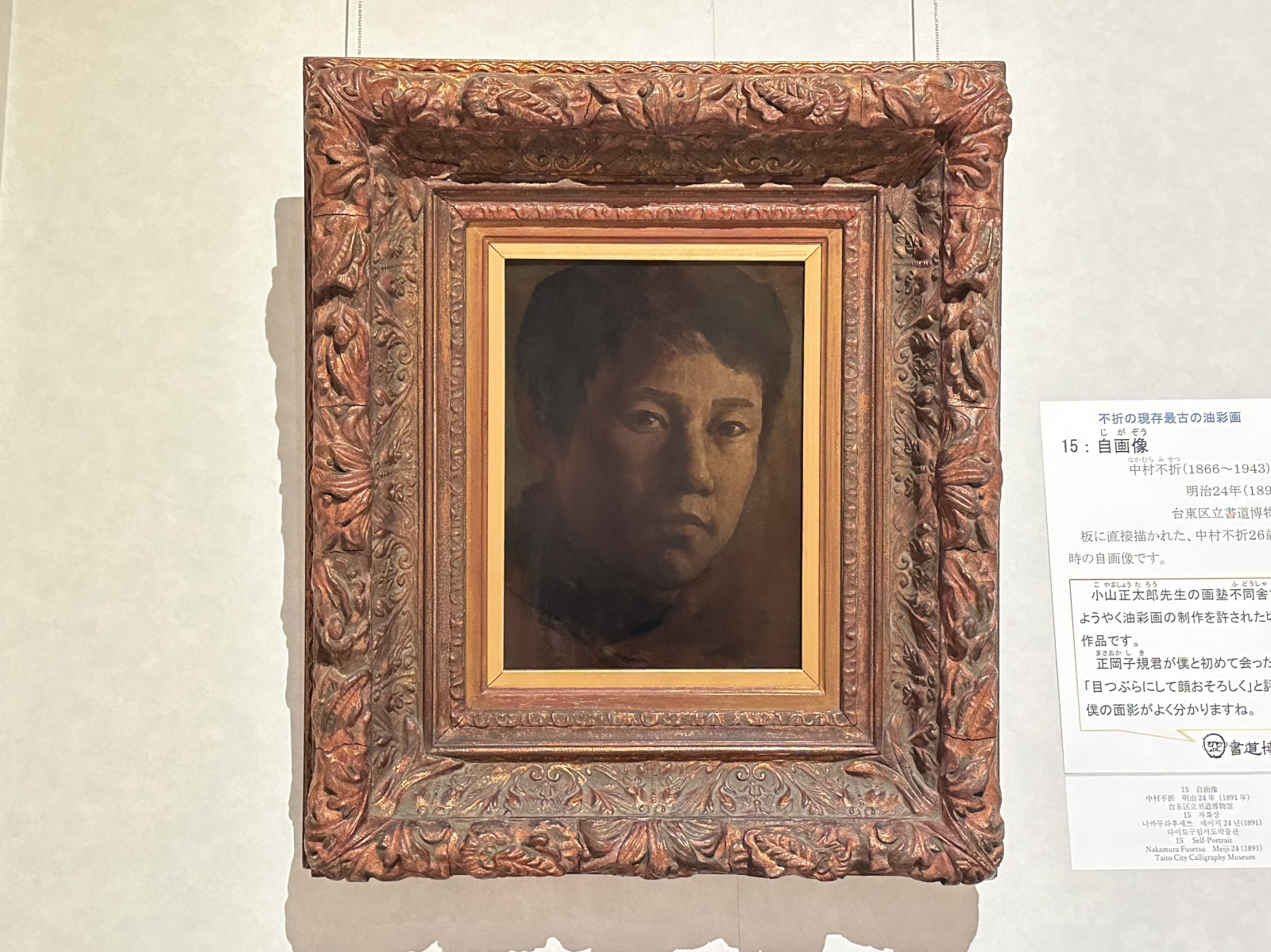
The exhibition room on the first floor begins with a collection of works created during his time as a student at the art school, including sketches and watercolors of landscapes using the one-point perspective technique of Western painting, and his first surviving oil painting, “Self-Portrait.” The art school’s educational policy emphasized thorough drawing, and students were only allowed to paint watercolors and then oil paintings after they had fully mastered pencil drawing. Therefore, Fusetsu and other students would travel from Sendagi, where the Fudōsha art school was located, to suburbs such as Kichijōji, spending their days sketching landscapes and receiving critiques.
Nakamura Fusetsu《Inside the farmhouse》 Early exhibition of 1889Fuse Nakamura “Self-portrait” Exhibited in the first half of 1891
Amidst the tide of nationalism, Fusetsu struggled to make a living as a Western-style painter. A major turning point came in 1894, when he was 29 years old. He was selected to be the illustrator for the newspaper “Ko-Nippon,” edited by Masaoka Shiki, a haiku poet and journalist. This caught the attention of literary giants and haiku poets, and gradually he began to receive requests for illustrations and book designs for books and magazines.
“At the time, the Nippon Shimbun, the newspaper company to which Shiki belonged, was frequently suspended from publication for publishing articles that severely criticized the government’s diplomatic stance and Westernization policies. To mitigate the losses incurred during these suspensions, they planned to create ‘Ko-Nihon,’ an illustrated newspaper for families. Shiki asked his friend, the painter Asai Chu, to find an illustrator who was skilled in that field, and Asai Chu introduced him to Fusetsu, with whom he had a relationship at the Fudōsha publishing house. Not only was Fusetsu highly skilled at drawing, but he could also draw lines that were easy for the woodblock carvers to handle, with effective use of omission and emphasis, and he had a strong ability to compose pictures. Shiki recognized Fusetsu’s talent at a glance. Fusetsu was skilled at both drawing and writing, and he was also very reliable as he always met deadlines,” says Nakamura.
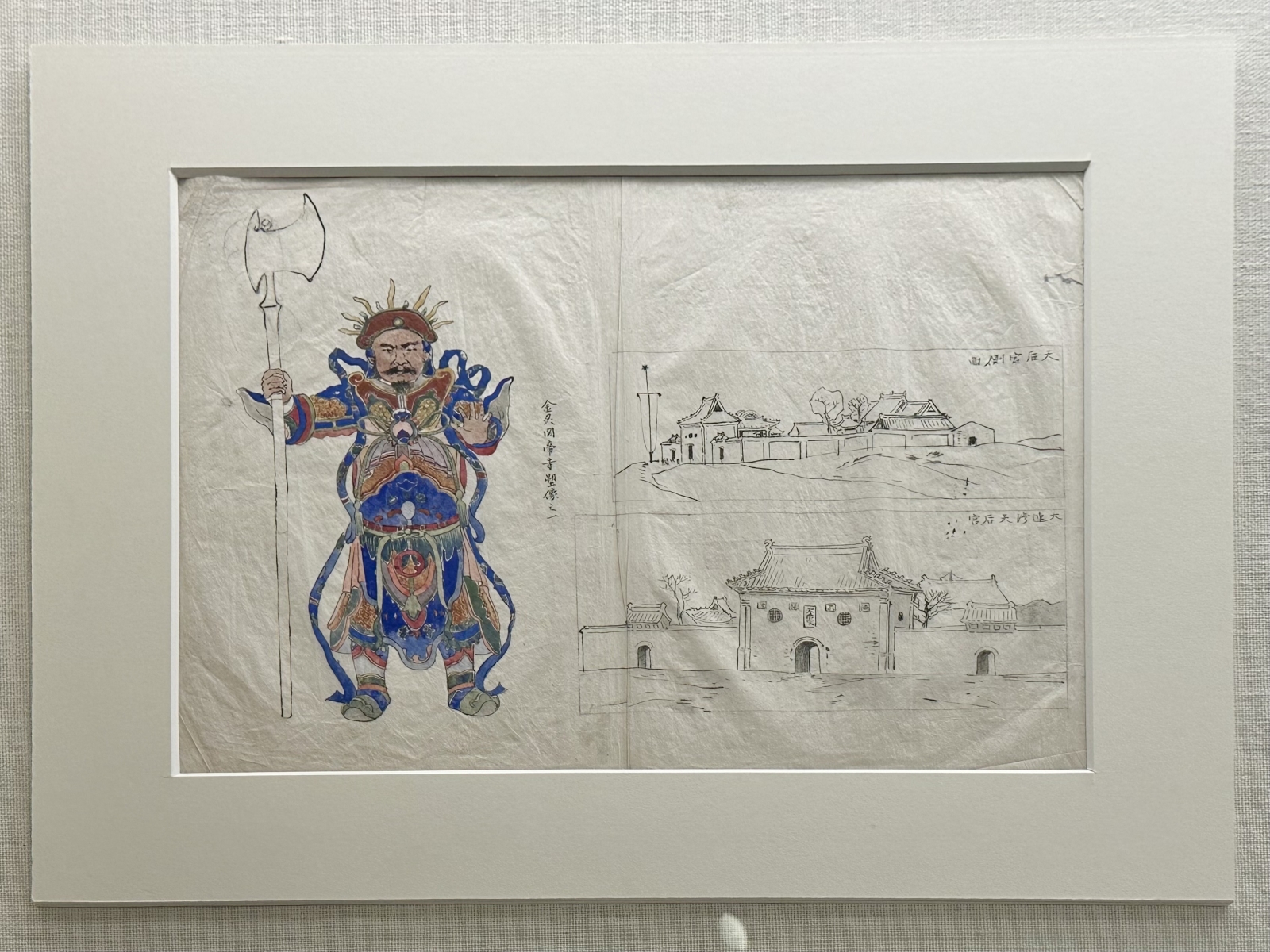
Being close in age, Shiki and Fusetsu became inseparable friends, and the following year, in 1895, they traveled to China as war correspondents (and painters) during the First Sino-Japanese War. However, when they arrived, a ceasefire was declared, leaving them without work. Fusetsu accepted Shiki’s invitation and spent about four months traveling around China and the Korean Peninsula, sketching along the way.
Nakamura Fusei《Zaijinbyo》 First half of 1895 (Meiji 28) exhibitionNakamura Fusori “Ryoza Illustrated Draft Collection” 1895 (Meiji 28) Full-time exhibition
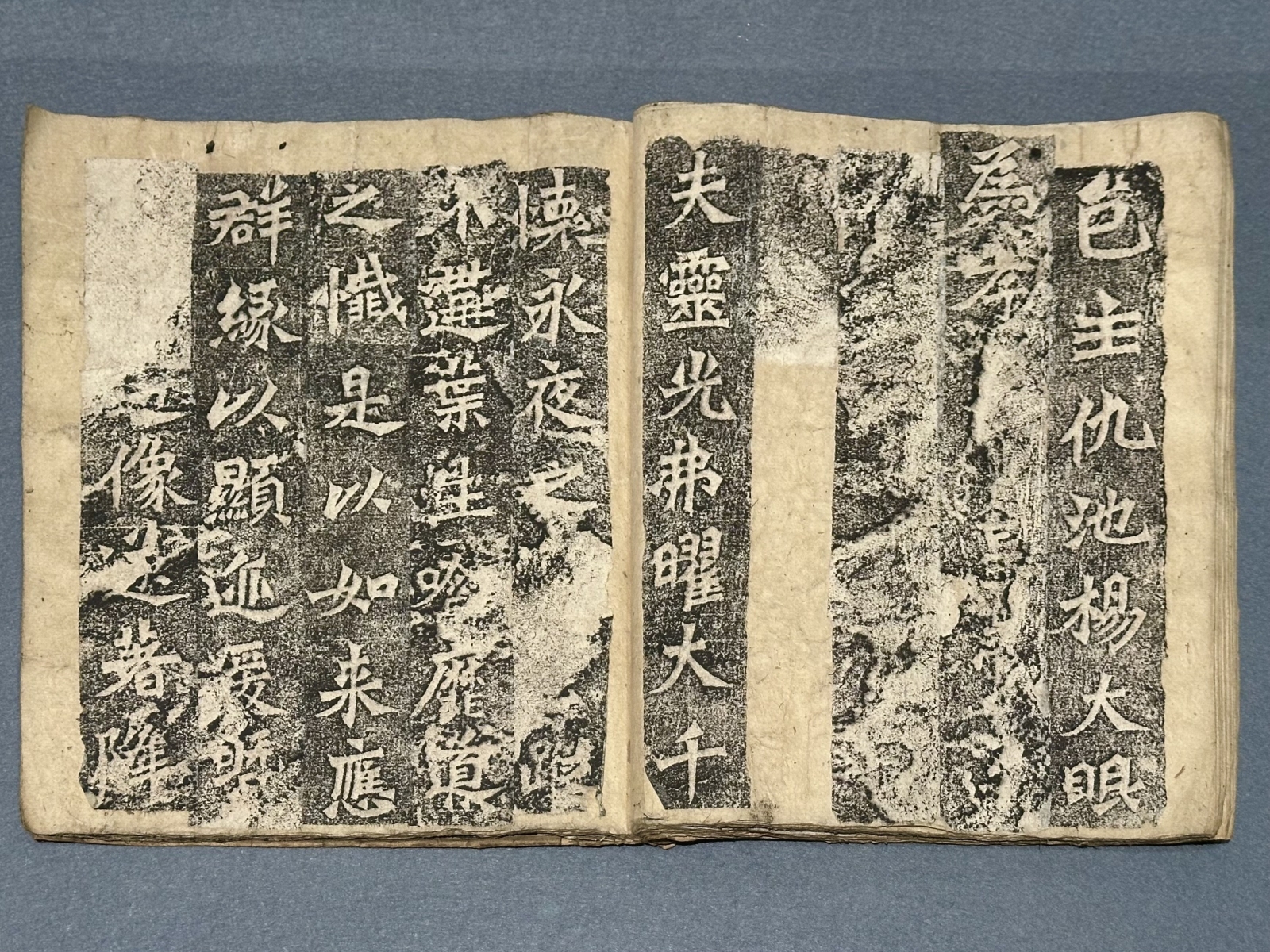
Upon his first encounter with continental culture, Fusetsu became deeply engrossed in the allure of calligraphy. While conducting research, he encountered valuable archaeological materials, including rubbings (copies of characters inscribed on stone monuments, etc., made with paper and ink; used as models for copying calligraphy). After returning to Japan, he spent his personal fortune collecting materials from used bookstores and antique shops, building the collection that now forms the basis of the Calligraphy Museum.
The first half of the second-floor exhibition room traces the development of Fusetsu’s career as a Western-style painter.
Seeking to further advance his career as a painter, Fusetsu went to Paris to study in 1901 (Meiji 34) at the age of 36. He studied under Raphael Collin, a French academic painter who had mentored Kuroda Seiki, and then under the historical painter Jean-Paul Laurens, honing his skills for about four years.
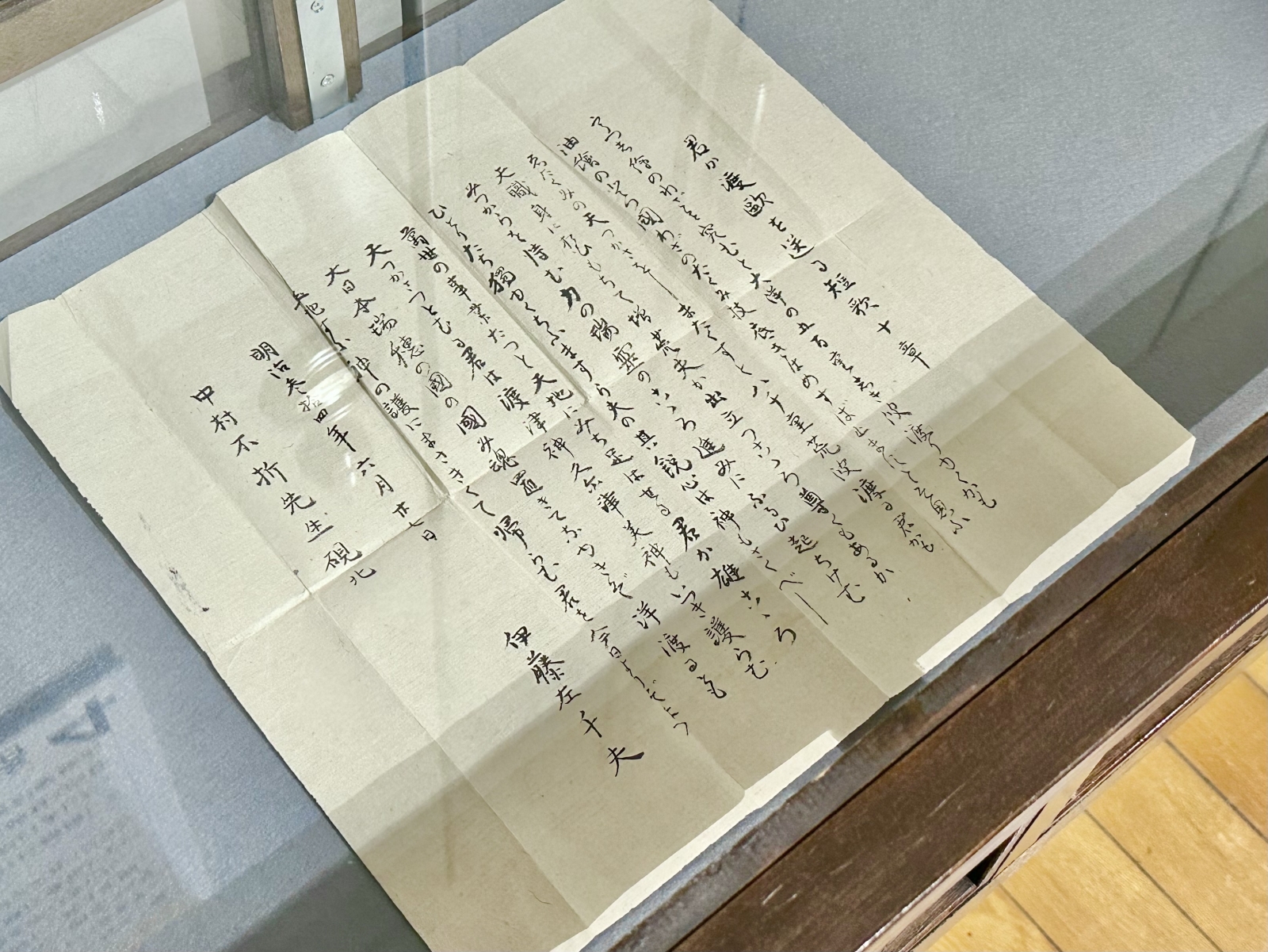
“Back then, studying abroad typically involved either government or zaibatsu (financial conglomerates) assistance, or selling artwork in America, where Japonism was popular, to raise funds before heading to France, the birthplace of Japonism. However, Fusetsu, who had struggled financially since childhood, was independent and frugal, so he diligently saved the income he earned from newspaper illustrations and other sources, and, very unusually for the time, managed to raise a large sum of money for his studies abroad on his own before his departure. Furthermore, the year before he left, he bought a house with an atelier outright and gave his wife and children a substantial amount of money for living expenses before he departed. In response to Fusetsu’s extraordinary determination, Ito Sachio (a tanka poet and novelist) presented him with ‘Ten Tanka Poems to Send You Off to Europe,’ filled with deep friendship and wishes for his success. Be sure to check out that ‘overwhelmingly passionate’ message,” says Nakamura.
Sachio Ito’s “Ten Tanka Poems to Send You Off to Europe,” 1901 (Meiji 34), on permanent display : “With your calling in your heart, you are a brave man; how noble is the heart that sets out,” and other tanka poems all convey the utmost respect and admiration for Fusetsu.
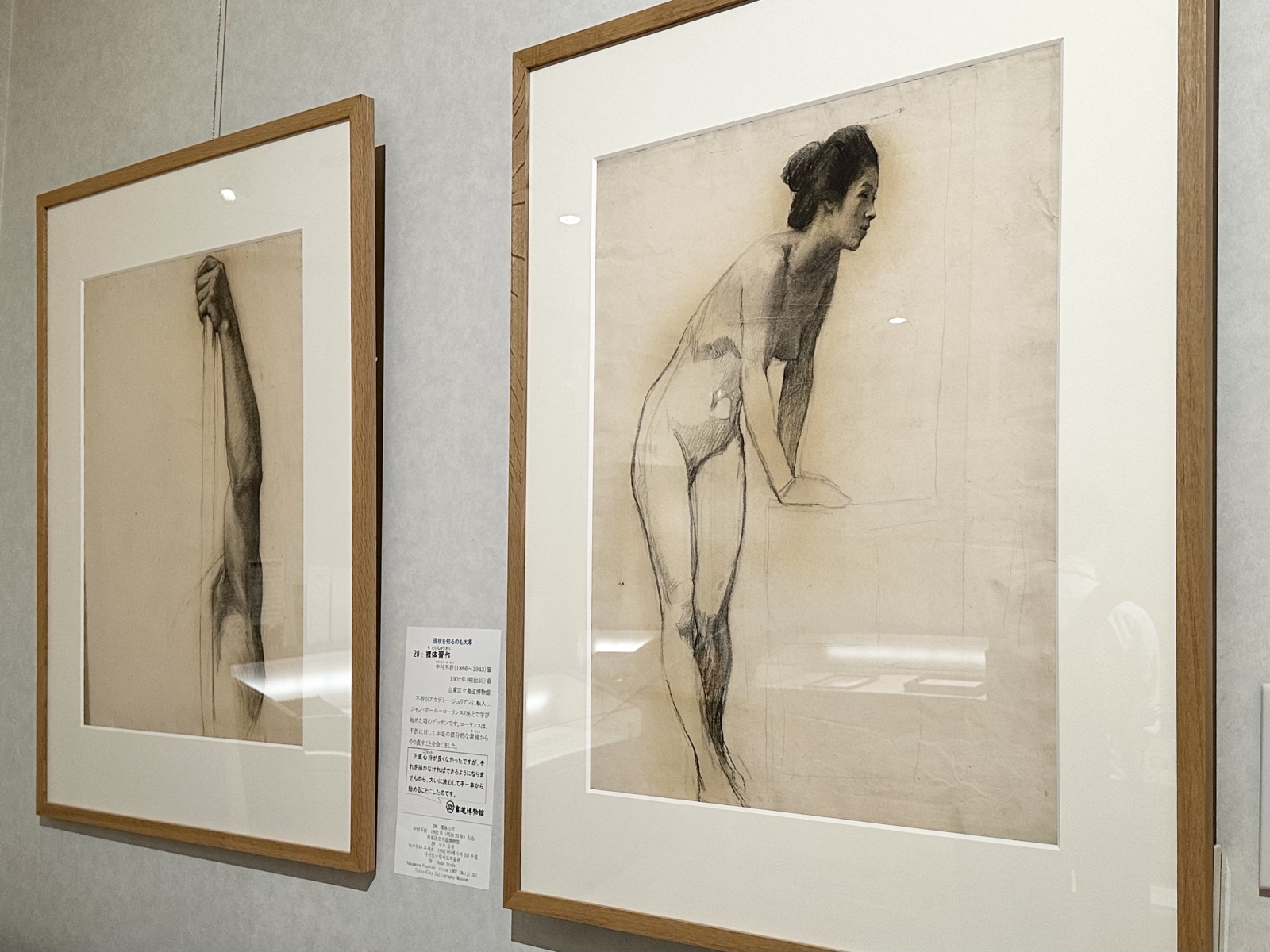
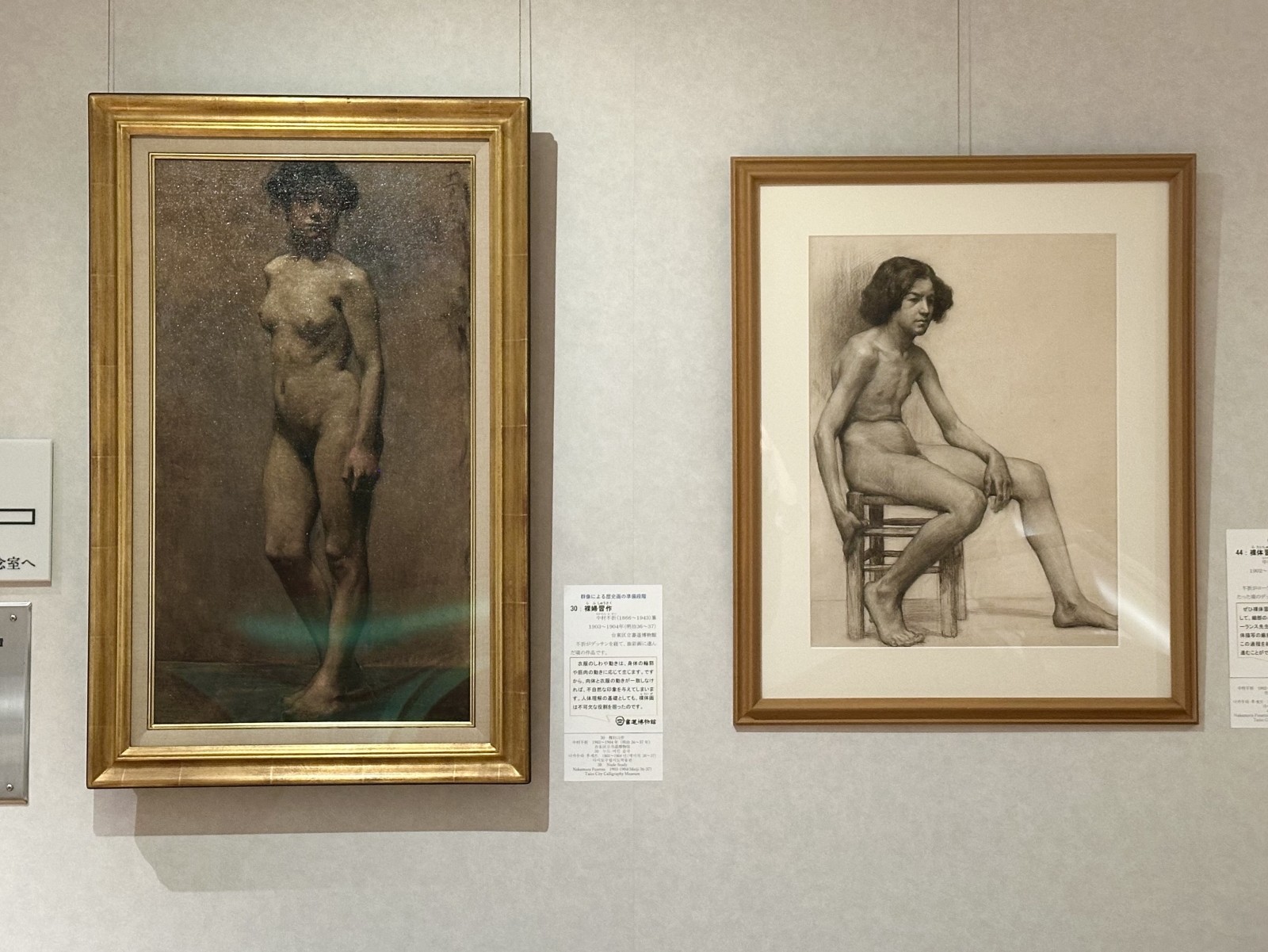
In the exhibition held during her studies in Paris, four nude studies stand out.
Although Fusetsu had honed his sketching skills at Fudōsha, as evidenced by his early nude studies abroad, where hands and toes are vaguely depicted, it was difficult to say that he had received sufficient training in depicting the human body. Laurence saw these drawings and determined that Fusetsu had not yet reached the stage of drawing the whole body. She began rigorous instruction, starting with partial sketches of hands and feet, and within a few months, Fusetsu had mastered the precise techniques of depicting the human body.
From left to right: Nakamura Fusetsu’s “Study of a Nude,” circa 1902 (Meiji 35), and “Study of a Nude,” 1901 (Meiji 34). Both are on display throughout the exhibition period.From left: Nakamura Fusetsu, “Study of a Nude,” 1903-1904 (Meiji 36-37) , on display throughout the exhibition period ; “Study of a Nude,” 1902-1903 (Meiji 35-36) , on display during the first half of the exhibition period.
“Around 1900, new movements such as Impressionism had already emerged, but in academic art education, traditional historical paintings dealing with religion and mythology still held the top spot in the hierarchy. To tackle historical paintings with groups of people, one had to differentiate the skeletal structure and skin texture of men and women of all ages, otherwise the painting would lack persuasiveness. Therefore, it was necessary to thoroughly study nudes as a foundation. My tireless efforts paid off, and two years later I had developed enough skill to be selected as 10th out of 200 people in a competition at the art school,” (Nakamura).
Nakamura Fusetsu, “Dante’s Journey Through Hell,” 1904 (Meiji 37). On display throughout the exhibition period . This work won 10th place in a competition to create preliminary sketches (compositional drawings) of designated historical paintings in a short amount of time.The “Longmen Twenty Calligraphy Pieces” (Northern Wei to Tang Dynasties, 4th to 10th centuries) are on permanent display . Fusetsu favored this robust and powerful style of regular script and studied it in his spare time while studying abroad. He was so dedicated to his research that he was ridiculed by those around him for “coming to Paris solely to study Chinese characters.”
After returning to Japan in 1905 at the age of 40, Fusetsu became a leading figure in the Western-style painting world, serving as a member of the Pacific Painting Association and the Imperial Academy of Fine Arts, and as a judge for the Ministry of Education’s art exhibitions. He also dedicated himself to nurturing future generations of artists as the first principal of the Pacific Painting Association Research Institute (later the Pacific Art School). In his own work, he made historical painting, which he learned from Laurens, his life’s work, and he produced many Western-style paintings based on Oriental stories, utilizing the knowledge he had cultivated through his study of calligraphy.
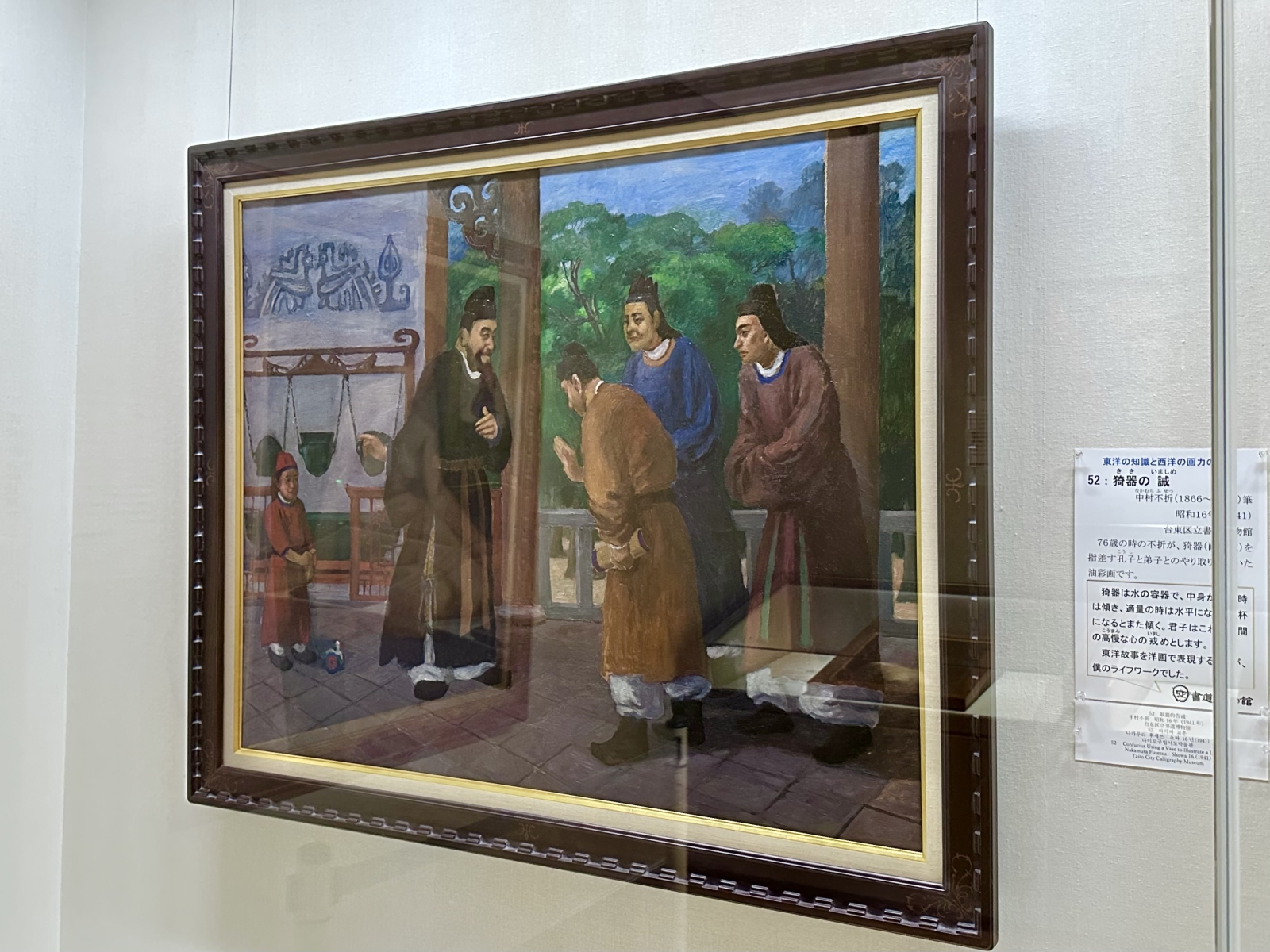
His most representative work is the one created in his later years. Yi Qi’s Admonition This is the image. In the center of the screen is Confucius, pointing to the “Yi Qi,” a vessel that can overturn whether empty or full, but becomes level when filled halfway with water. This piece depicts a story from the Spring and Autumn period of China, in which a wise ruler teaches his disciples not to become arrogant by seeking more than their capabilities allow, but to use moderation as a cautionary tale.
Nakamura Fusetsu, “The Admonition of Iki,” 1941 (Showa 16), on display throughout the exhibition period.
The latter half of the second-floor exhibition room focuses on calligraphy, Japanese paintings, newspaper illustrations, and interactions with literary giants.
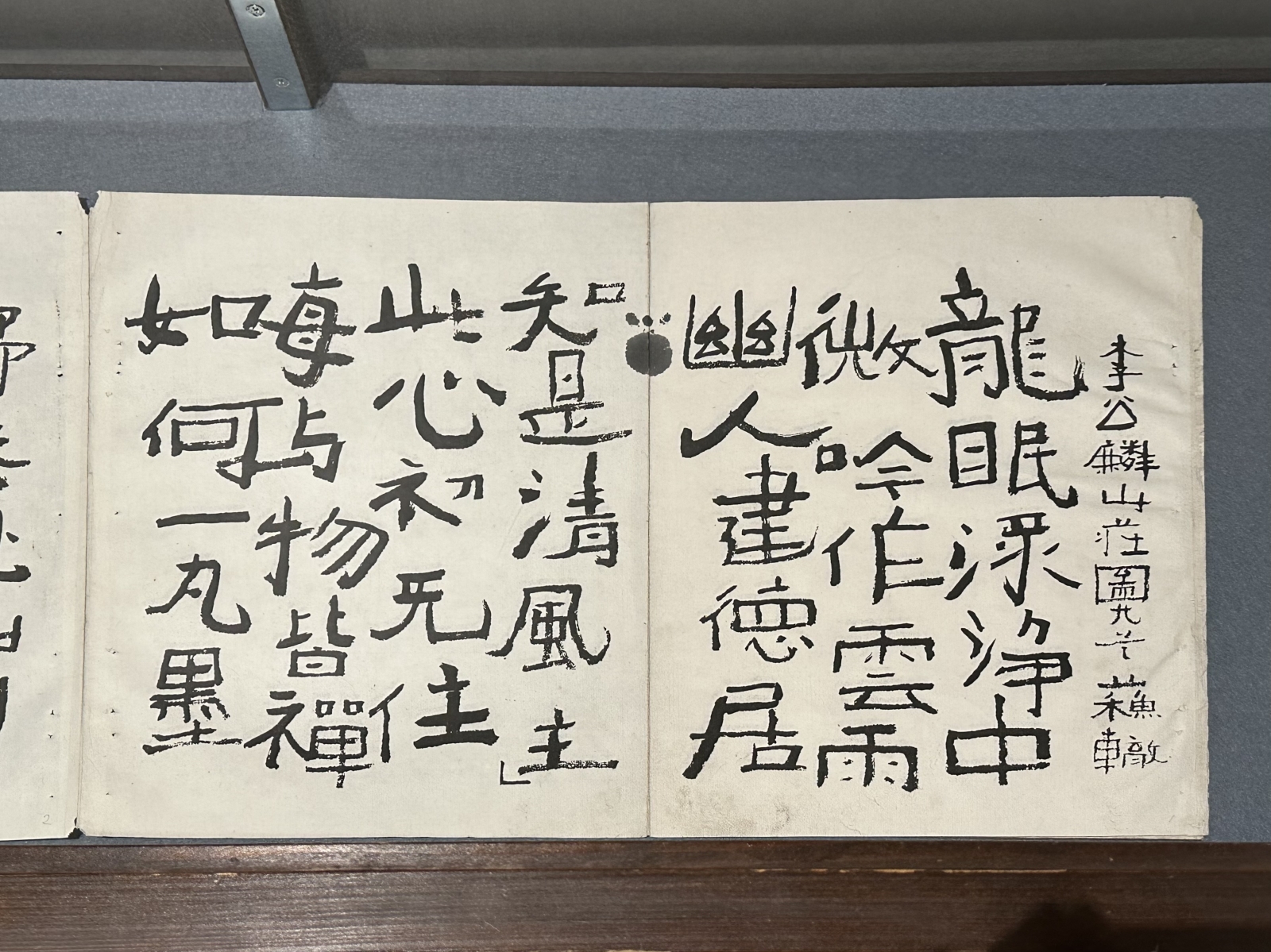
In 1908, at the age of 43, Fusetsu suffered a nervous breakdown due to his busy schedule and was ordered by his doctor to stop all work. While staying at Isobe Onsen in Gunma Prefecture for recuperation, he worked on “Ryūminjō,” a collection of 20 poems by Su Zhe, a literati of the Northern Song dynasty. This work, written as a pastime during his recovery, unexpectedly became a turning point. The haiku poet Kawahigashi Hekigoto saw the work and strongly recommended that it be published. Following the advice that “making changes would diminish the spirit of the work,” Fusetsu published it as his debut work, leaving the mistakes as they were. As a result, the work attracted attention for its bold and free calligraphic style that was not bound by rules, and it became a sensation as the so-called “Fusetsu style.”
Nakamura Fusetsu’s “Ryumincho” first half exhibition in 1908
Compared to the weighty and powerful “Ryūmon Nijūhin” and other calligraphic works from the Nanboku-chō period that Fusetsu diligently studied, the writing style of “Ryūminjō” is quite different. Those unfamiliar with calligraphy may be puzzled, but Nakamura points out that this is “a sensibility typical of the Japanese, which places importance on form.”
“Japanese people tend to try to imitate a model when one is next to them. On the continent, form is not generally emphasized. The result is a unique style of calligraphy that comes from absorbing and exhaling the aura of the model. This is also a difference between Western and Eastern art; the West pursues realism in what is visible, while the East tries to express what is invisible. For this reason, the literati who led the political culture of ancient China valued poetry, which gives form to words that emerge from the heart, and calligraphy, which records those words in writing, above all else,” (Nakamura).
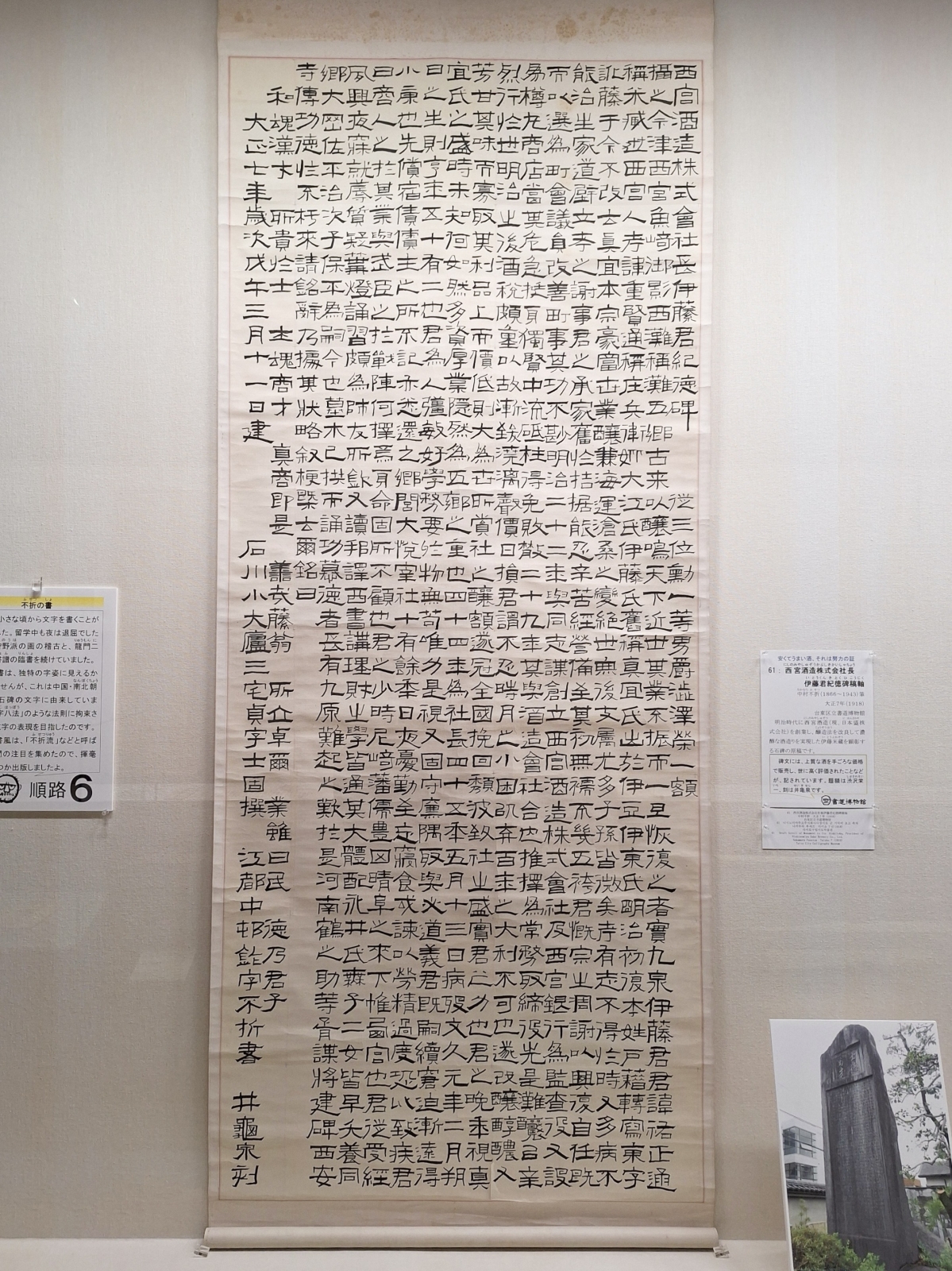
Nakamura Fusetsu, “Draft Scroll for the Monument to Mr. Ito, President of Nishinomiya Sake Brewery Co., Ltd.,” Taisho 7 (1918), Early Exhibition.
Another characteristic is that he does not fix the form of the characters within a single work, but rather embraces the mixing of various typefaces and letterforms. In fact, in the manuscript for the stone monument “Nishinomiya Sake Brewery Co., Ltd. President Ito Noriyoshi Monument Scroll,” which consists of more than 700 characters, the same characters appear many times, but almost no two are the same in form. The sheer variety of variations, such as the variant character where the “eight” part of the character “醸” is changed to “□□” or “△△,” reveals Fusetsu’s deep knowledge of calligraphy. Although expressions such as blurring and smudging are suppressed because the work is intended to be carved as a stone monument, the fact that individuality is not lost is a strength of Fusetsu’s style.
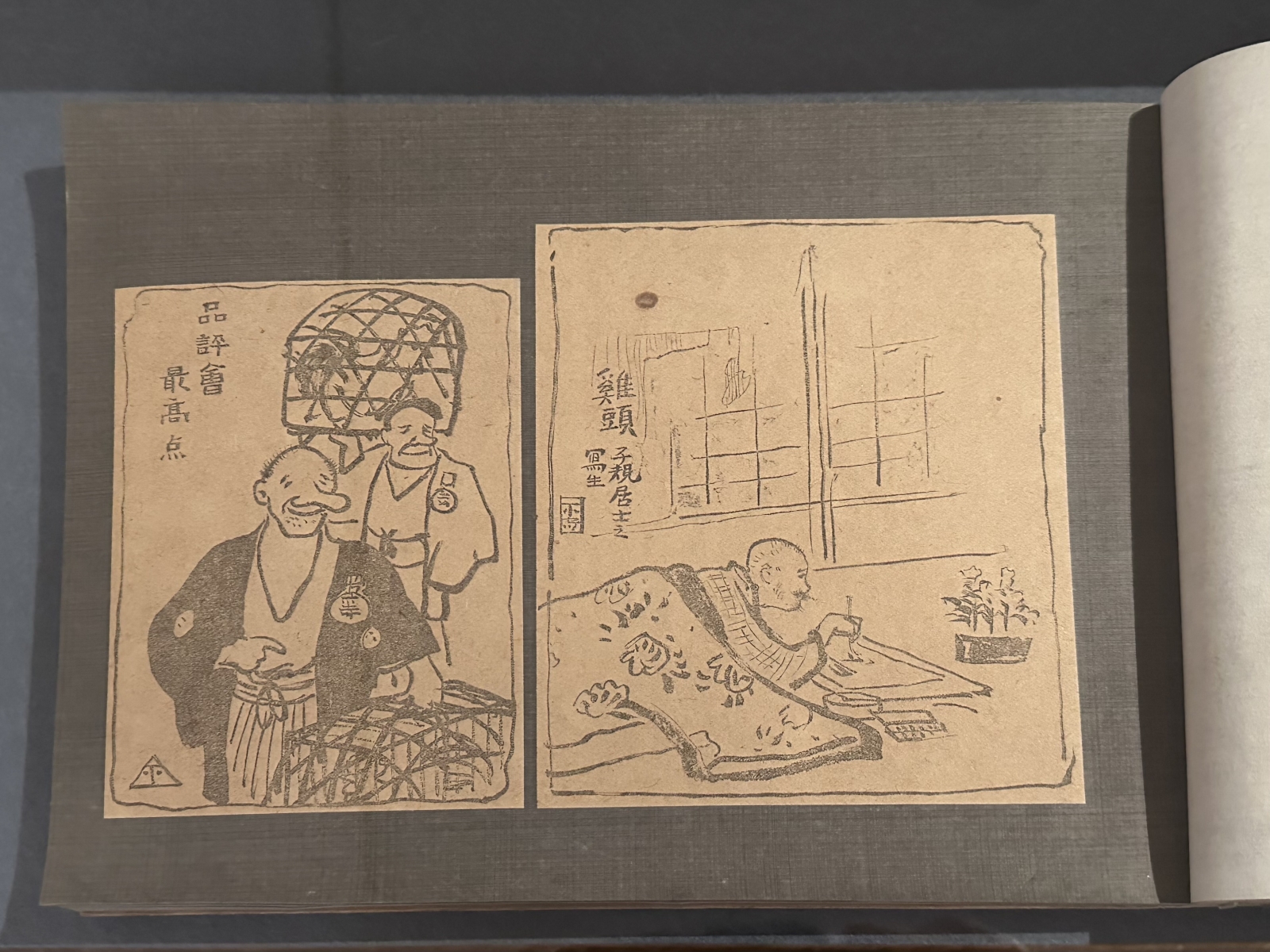
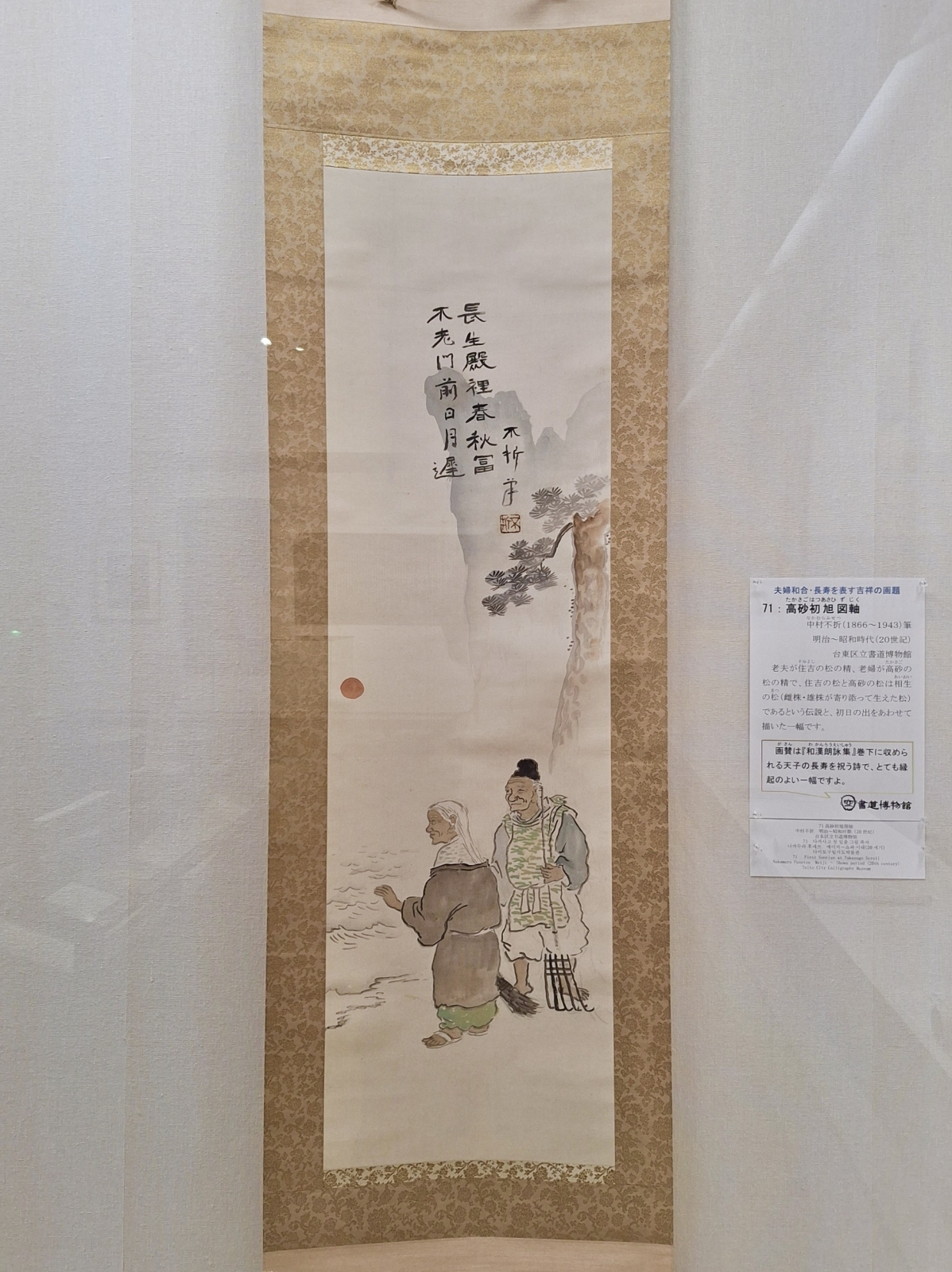
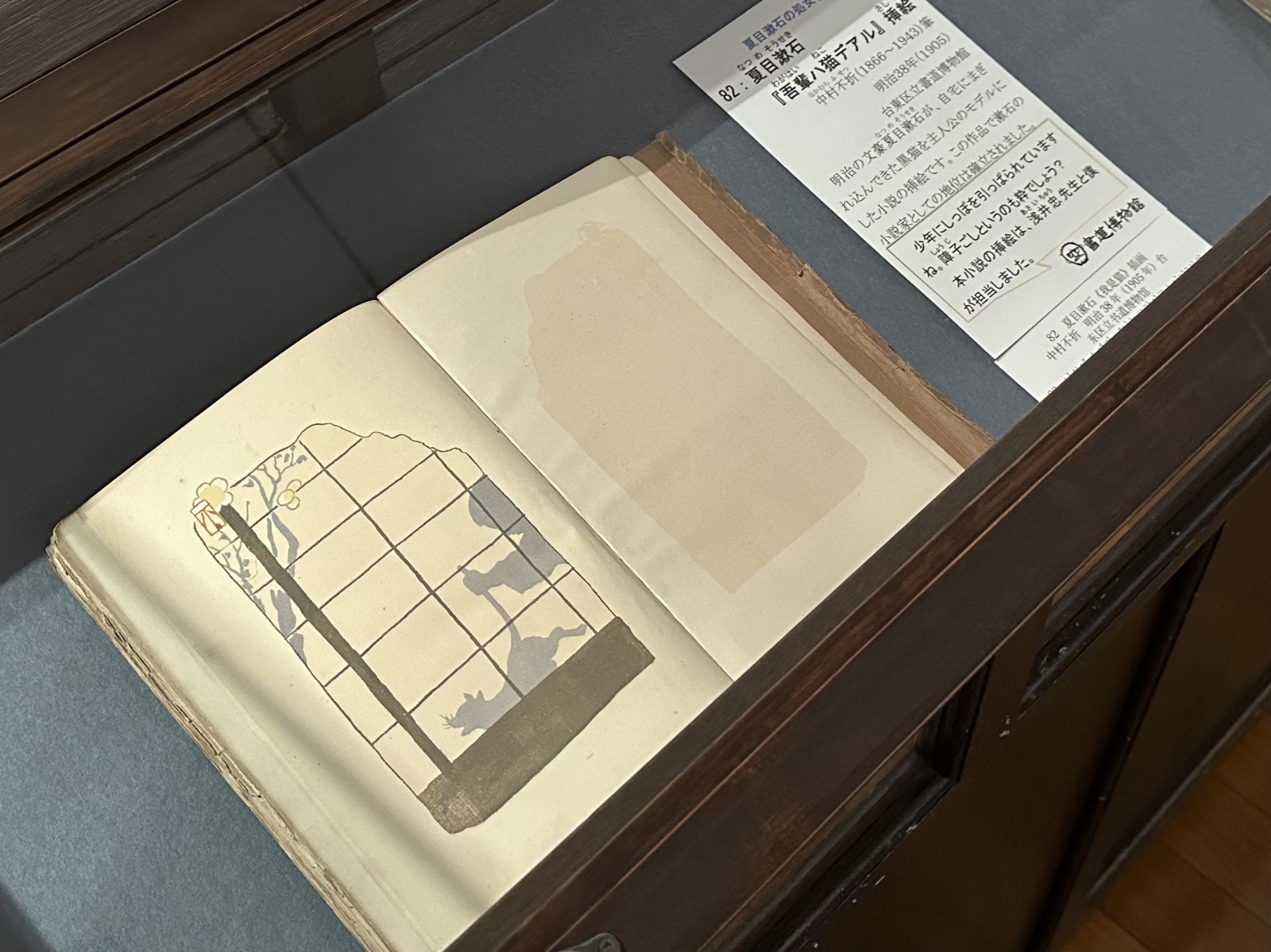
Nakamura Fusetsu, “Cockscomb, Sketch of Shiki Koji,” 1909 (Meiji 42), exhibited in the first half of the exhibition . Fusetsu, a pioneer of newspaper illustrations, entertained readers with “panel illustrations” that conveyed meaning even without text.Nakamura Fusetsu, “Takasago First Sunrise Scroll,” Meiji to Showa period (early 20th century), exhibited during the first half of the exhibition . For Fusetsu, Japanese painting was primarily a means of raising funds for his livelihood and for collecting research materials. It is said that he sometimes completed a painting in just a few minutes.Nakamura Fusetsu, “Illustrations for Natsume Soseki’s ‘I Am a Cat’,” 1905 (Meiji 38) , on display throughout the exhibition period.
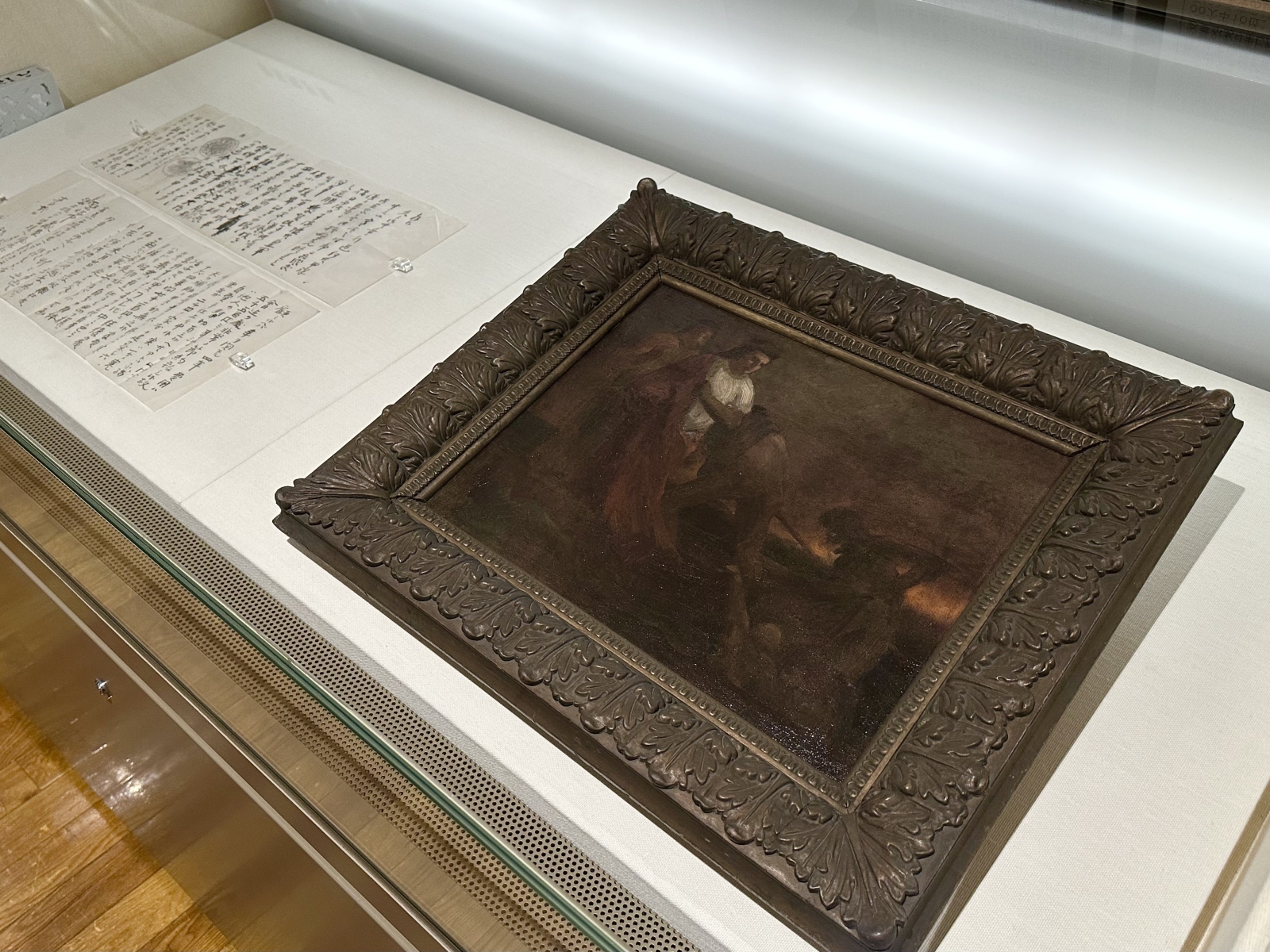
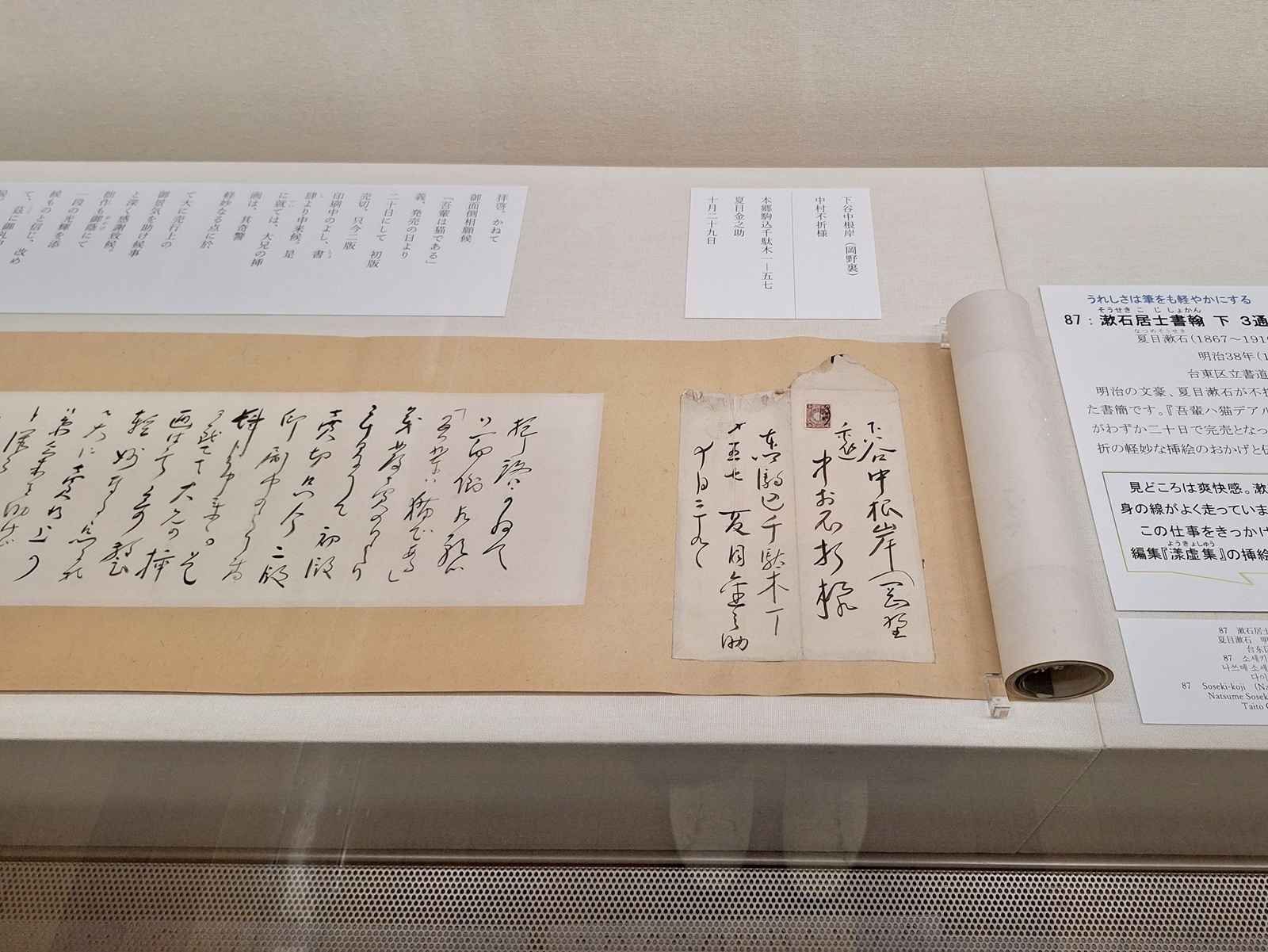
The documents illustrating his relationships with prominent Meiji-era writers are also extremely interesting. When Fusetsu, who had just returned from studying abroad, illustrated Natsume Soseki’s “I Am a Cat,” the first edition sold out in just 20 days, proving to be incredibly popular. Following the success of his debut novel, Soseki sent Fusetsu a polite letter of thanks.
Natsume Soseki, “Soseki Koji’s Letters, Part 2, 3rd Letter,” Meiji 38 (1905), exhibited in the first half of the exhibition.
“Soseki’s usual handwriting has a rather rough, textured quality, but this thank-you letter is written in beautifully crisp characters. He must have been very happy that it sold out,” (Nakamura).
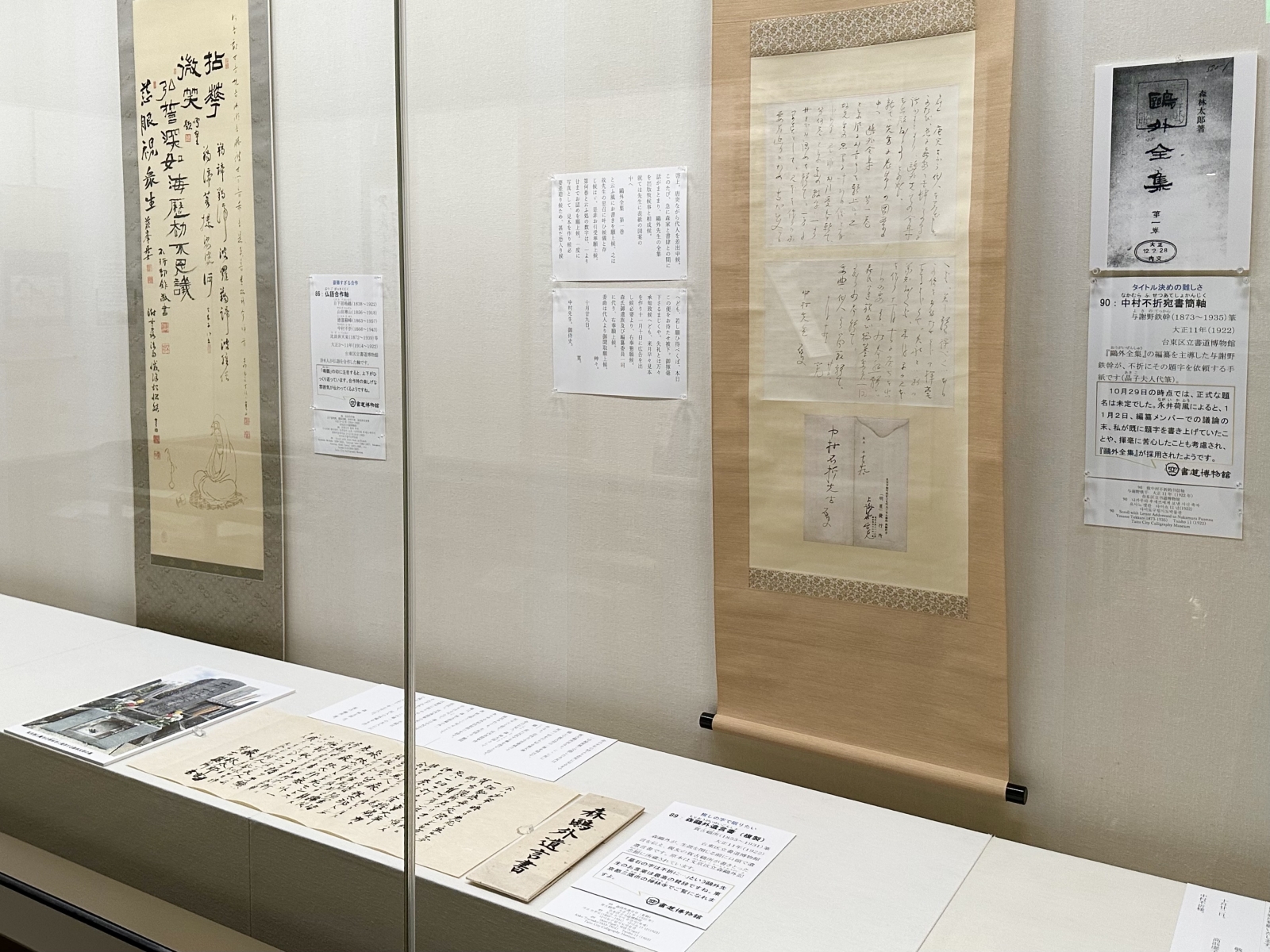
Mori Ogai was deeply devoted to Fusetsu’s calligraphy. On his deathbed, Ogai left a will requesting that his tombstone be inscribed with only his real name, “Mori Ogai’s Tombstone” (森森太郎墓), in Fusetsu’s calligraphy, rather than any titles such as “Mori Ogai” or “Army Surgeon.” He passed away in 1922. The tombstone inscribed by Fusetsu, who fulfilled this request, can still be seen today at Zenrinji Temple in Mitaka City, Tokyo.
However, when plans were made to publish Ogai’s complete works after his death, a debate arose regarding the title. Opinions were divided on whether to title it “The Complete Works of Mori Ogai,” respecting Ogai’s preference for not using the pen name “Mori Ogai” in his later years, or “The Complete Works of Ogai,” considering his name recognition. A letter from Yosano Tekkan, who belonged to the latter faction, greatly influenced the decision.
“Yosano Tekkan had already asked Fusetsu, who was unaware of the situation, to write the title ‘Ogai Complete Works.’ He created a situation where, since Fusetsu had already written it, there was no choice but to proceed as planned. As a result, the difficulties Fusetsu had with the calligraphy were taken into consideration, and a compromise was reached by adding ‘Written by Mori Taro’ next to the title,” (Nakamura).
Works on display during the first half of the exhibition include Kako Tsurusho’s “Replica of Mori Ogai’s Will” (1922) and Yosano Tekkan’s “Letter Scroll to Nakamura Fusetsu” (1922).
Fusetsu considered himself strictly a Western-style painter, and even said that “calligraphy is a pastime.” Perhaps it was precisely because of this that he was able to approach calligraphy as a pure expression unbound by formality, and his free-flowing calligraphic style attracted many people, including even the most discerning literary giants.
The later exhibition will focus even more deeply on the artist’s interactions with Masaoka Shiki. Please check the exibition list and be sure to visit.
■ Overview of the special exhibition “Fusetsu Nakamura: 160th Anniversary of His Birth”
Exhibition period
Saturday, April 4, 2020 – Sunday, July 12, 2020
*Exhibits will be changed during the exhibition period. First half of the exhibition: April 4th (Sat) – May 24th (Sun)
Late exhibition: May 26th (Tuesday) – July 12th (Sunday)
venue
Taito City Calligraphy Museum
Opening hours
9:30 AM to 4:30 PM (Last entry at 4:00 PM)
Closed days
Monday (or the following weekday if it falls on a public holiday)
Admission fee
General admission: 500 yen; Elementary, junior high, and high school students: 250 yen. *Please check the official website for details.