June 20th (Sat) – July 19th (Sun), 2026, held at Ueno Geidai Art Plaza (Free admission)
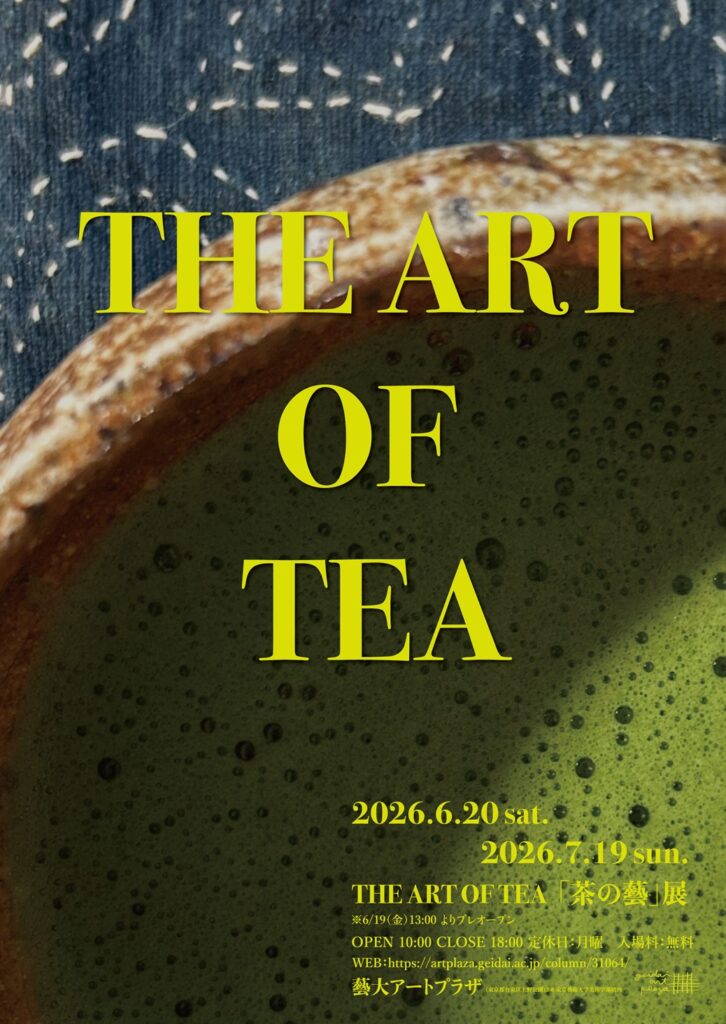
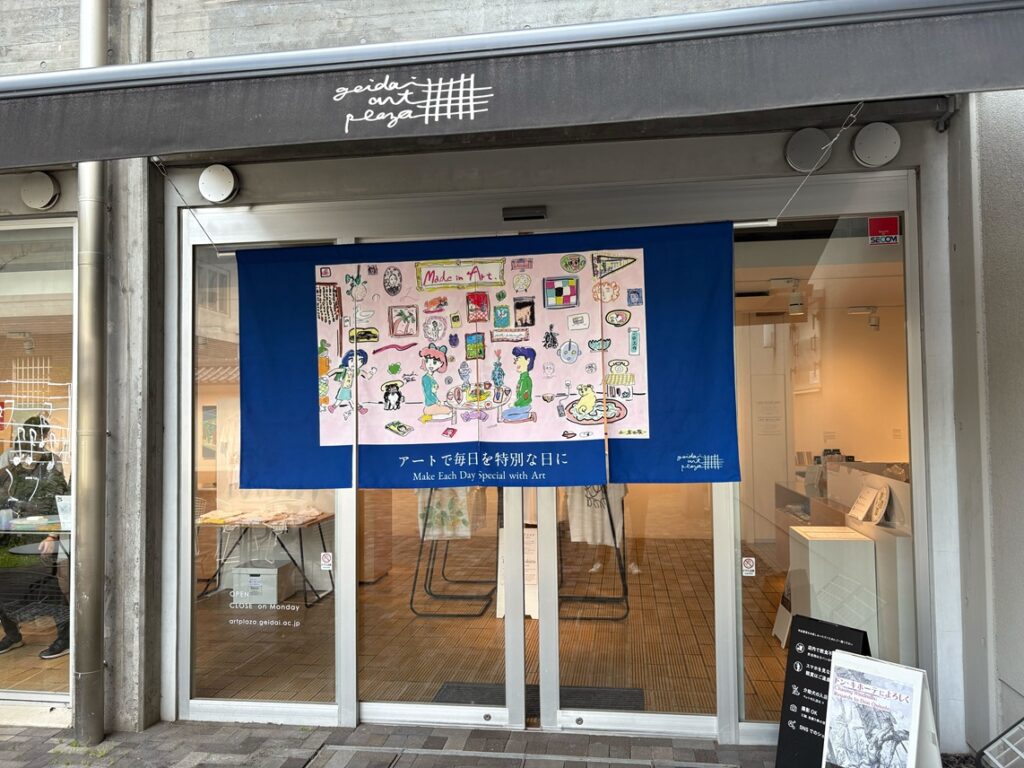
Geidai Art Plaza ( https://artplaza.geidai.ac.jp/ ), a gallery operated on the campus of the Faculty of Fine Arts at Tokyo University of the Arts (Taito-ku, Ueno) as a collaborative project between Shogakukan and Tokyo University of the Arts, will be holding a special exhibition, THE ART OF TEA “The Art of Tea,” from June 20th, 2026 (Saturday).
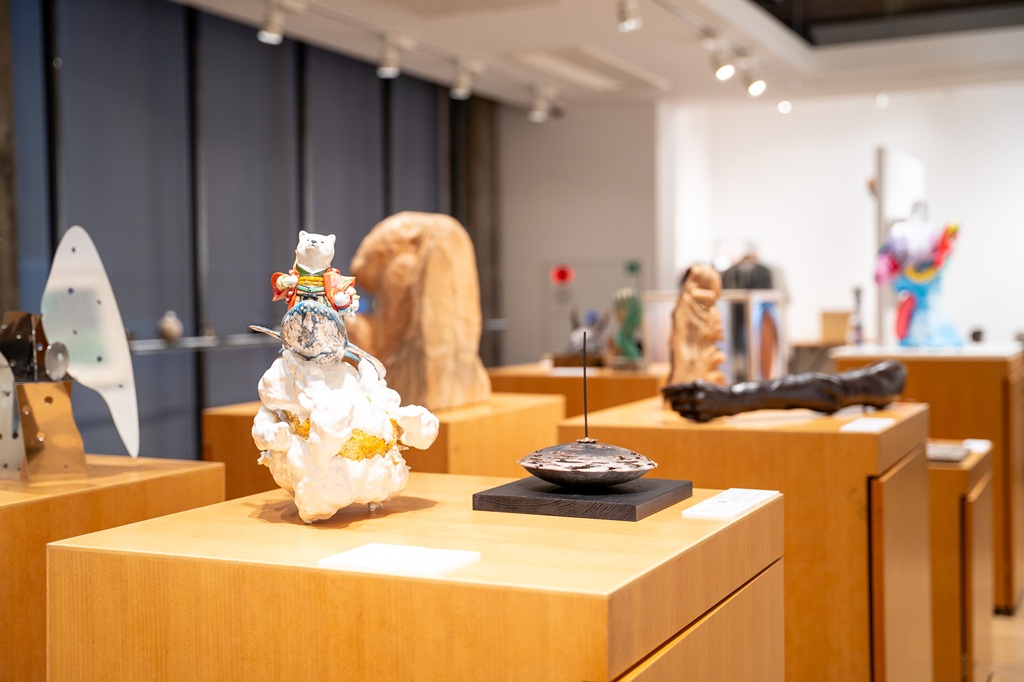
This exhibition, themed around the aesthetic sensibilities underlying the “tea ceremony,” will showcase and sell works by 18 artists (planned) who are affiliated with or graduated from Tokyo University of the Arts. Through an exhibition structure that blends two-dimensional and three-dimensional works, visitors can experience the relationship between space, artwork, and the viewer. Admission is free, and photography is permitted.
Special Exhibition: THE ART OF TEA “The Art of Tea” to be held on Saturday, June 20, 2026
The philosophy of the tea ceremony (chanoyu) undoubtedly flows through the foundations of Japanese art. It’s not merely a set of manners or traditional culture, but a system of beauty that re-examines the meaning of the encounter between people and works of art. We believe that Japanese art is “The Art of Tea.” So, what exactly is the philosophy of the tea ceremony?
Okakura Tenshin, the first principal of the Tokyo School of Fine Arts, the predecessor of Tokyo University of the Arts, viewed the tea ceremony not merely as a hobby or ritual, but as a philosophy that connects art and life, in his book “The Book of Tea.”
Firstly, the harmony between paintings and sculptures in the alcove.
Secondly, there’s the perspective of enjoying the artwork not as an independent entity, but as something that resonates with the space around it.
Thirdly, the interaction between the artwork and the viewer.
Fourthly, there is the microcosm created by the craftsmanship exemplified by tea bowls.
In this exhibition, we envisioned the Tokyo University of the Arts Art Plaza as a single “tokonoma” (alcove) and arranged the exhibition with works by five artists featuring two-dimensional pieces and five artists featuring three-dimensional pieces.
In addition, the exhibition will feature works by artists who embody the techniques and philosophy of the tea ceremony, primarily focusing on tea bowls. These works embody a uniquely Japanese aesthetic: “Beauty lies in the details.” A uniquely Japanese way of enjoying art—
Please come and experience the Art of Tea.
List of Participating Artists <br />Sho Aratani / Masashi Ishikawa / Haruna Oikawa / Mamiko Kakitsubo / Misao Kataoka / Yanoko Kawakami / Ryogo Shirota / Azusa Takahashi / Hiroyuki Nakatsugawa / Takashi Baba / Yuki Hamano / futaba / Akane Horita / San Honma / Ichiro Mori / Kaname Yagi / Shuhei Yoshida / Taisei Watanabe
Exhibition Title: Special Exhibition THE ART OF TEA “The Art of Tea” Exhibition <br />Venue: Geidai Art Plaza (12-8 Ueno Park, Taito-ku, Tokyo, within the Tokyo University of the Arts Faculty of Fine Arts campus)
Dates: June 20th (Sat) – July 19th (Sun), 2026
*Pre-opening on June 19th (Fri) from 13:00 *No exhibit changes Admission: Free <br />Opening hours: 10:00-18:00
Closed on Mondays
*Business hours may change. Please check our official website and social media for the latest information.
What is the Tokyo University of the Arts Art Plaza?
The Geidai Art Plaza is a gallery that exhibits and sells works by faculty, staff, students, and graduates of Tokyo University of the Arts (hereinafter referred to as Geidai), which has produced many top artists. Located on the Geidai Ueno campus, it is one of the few places where the general public can freely enter and visit throughout the year. It was launched in 2018 as a collaborative project between Shogakukan and Geidai.
Currently, the university holds exhibitions with different themes every one to two months. Each exhibition features 10 to 50 artists, bringing together works expressed through a diverse range of techniques and approaches unique to Tokyo University of the Arts, including oil painting, Japanese painting, sculpture, crafts, and design.
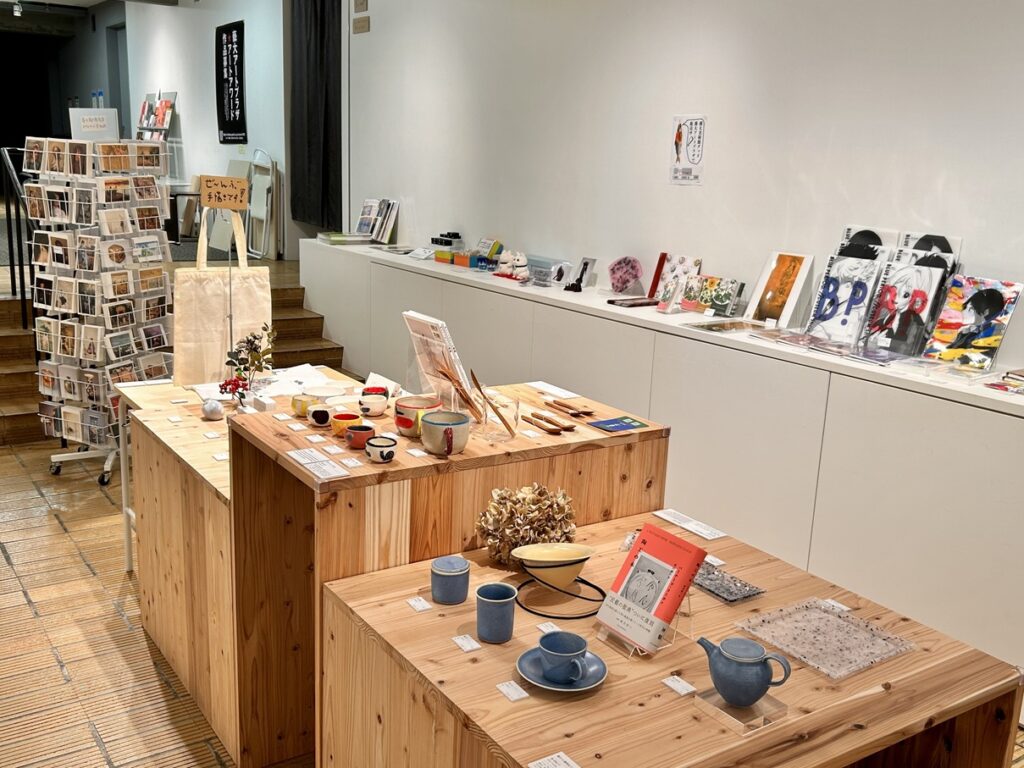
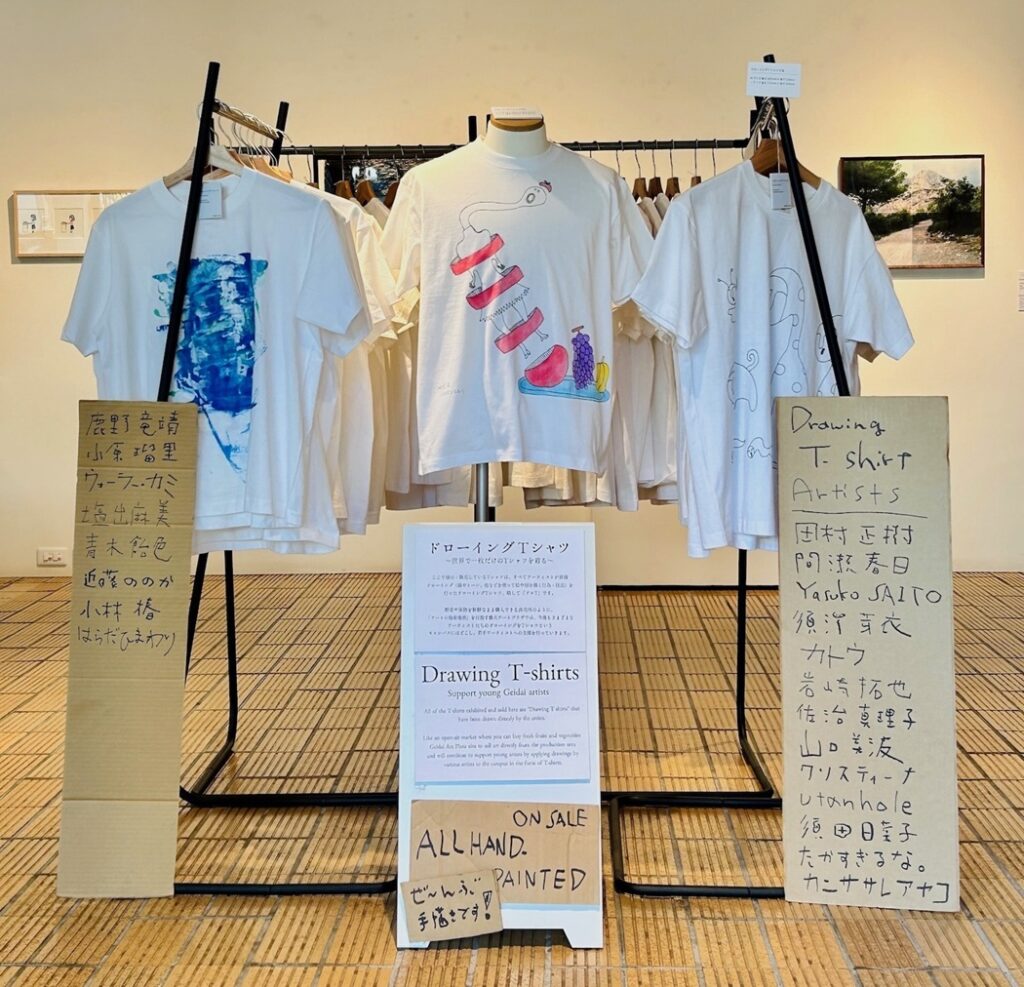
The store features a permanent display corner called “LIFE WITH ART,” focusing on art that complements everyday life, such as tableware and accessories. They also carry several “Drawing T-shirts” (commonly known as “Doro-T”), each one unique, featuring drawings directly created by artists from Tokyo University of the Arts. Admission to the Tokyo University of the Arts Art Plaza is free.
We generally welcome photography and sharing on social media. Our aim is to create a place where anyone, not just art fans, can easily experience art.
View of the permanent exhibition corner “LIFE WITH ART”
Drawing T-shirt exhibition view
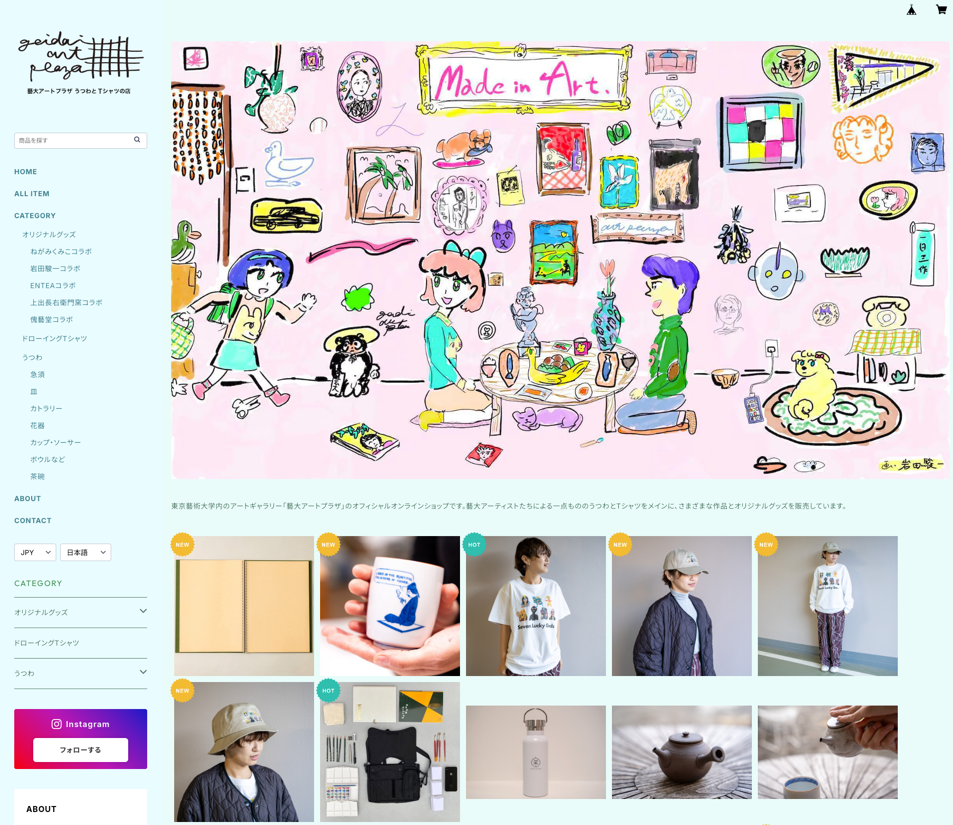
In September 2024, they also opened their official online shop, “The Shop of Tableware and T-Shirts.” In addition to one-of-a-kind tableware, cutlery, teapots, and bowls created by artists from Tokyo University of the Arts, they also sell a wide variety of original goods.
Basic Information about Tokyo University of the Arts Art Plaza
■ Access
Nearest stations: JR Ueno Station (Park Exit), Uguisudani Station (approx. 10-minute walk) Tokyo Metro Chiyoda Line Nezu Station (approx. 10-minute walk) Tokyo Metro Hibiya Line Ueno Station (approx. 15-minute walk) Keisei Electric Railway Keisei Ueno Station (approx. 15-minute walk) Toei Bus Route Ue26 (Kameido – Ueno Park) Yanaka bus stop (approx. 3-minute walk)
*Please note that there is no parking available, so please refrain from coming by car.
The special exhibition "Extremely Dangerous Creatures: Science Takes on the Serious Side of Living Things," currently being held at the National Museum of Nature and Science, has surpassed 300,000 visitors with less than a month remaining until its closing date, and the museum has decided to add evening opening hours on the following dates.
■ Regarding the implementation of additional evening hours
Applicable dates: May 30th (Sat), 31st (Sun), June 6th (Sat), 7th (Sun), 13th (Sat), 14th (Sun)
Opening hours: until 7 PM (last entry at 6:30 PM)
*Permanent exhibitions are open until 5 PM (last entry at 4:30 PM).
[Notice Regarding Implementation of Reservation System]
For the special exhibition "Exhibition of Extremely Dangerous Creatures," we are implementing a reservation system for certain dates. ■ Upcoming dates for scheduled appointments
Applicable dates: May 30th (Sat), 31st (Sun), June 2nd (Tue) – 14th (Sun)
Please check the exhibition's official website for details.
*For those who wish to enjoy the exhibition at a leisurely pace, we recommend visiting on a weekday .
[Event Overview]
Exhibition Title: Special Exhibition "Exhibition of Extremely Dangerous Creatures: Science Takes on the Serious Challenges of Living Things"
Dates: March 14 (Sat) – June 14 (Sun), 2026
Opening hours: 9:00 AM to 5:00 PM (Last entry at 4:30 PM)
Evening hours: Open until 7 PM every Saturday and Sunday from May 30th onwards (last entry at 6:30 PM).
*The permanent exhibition is open until 5:00 PM (last entry at 4:30 PM).
Closed on Mondays *However, open on Monday, June 8th
Venue: National Museum of Nature and Science (Ueno Park, Tokyo)
Admission fees (tax included): General admission/University students 2,300 yen; Elementary/Junior high/High school students 600 yen
Organizers: National Museum of Nature and Science, TBS, TBS Growdia, Asahi Shimbun
Sponsored by: Nozaki Printing Co., Ltd., Waseda Academy
Sponsored by: BS-TBS, TBS Radio
For inquiries, please call 050-5541-8600 (Hello Dial) or fax 03-5814-9898. Exhibition official website:https://chokikenseibutsuten.jp
Official X: @chokiken2026
Official Instagram: @chokiken2026
*Please note that the exhibition period, opening hours, closing days, etc. may be subject to change.
[Exhibition overview] The "Dangerous Creatures Research Institute" consists of two areas and eight labs, where you can unravel the secrets of dangerous creatures!
A "threat" you were unaware of will finally reveal itself.
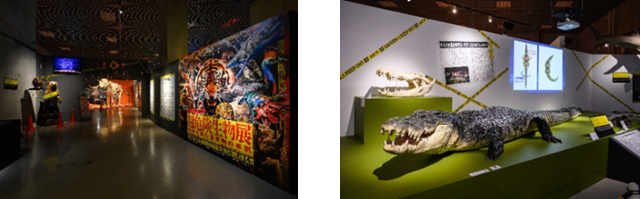
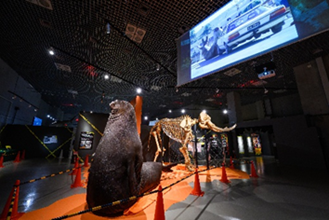
The special exhibition, "Exhibition of Extremely Dangerous Creatures," thoroughly explains the astonishing ecology of creatures that survive by using all sorts of deadly techniques as weapons. The venue is filled with exhibits so impressive they will make you recoil in shock. We will introduce them using a variety of methods, including full skeletons, taxidermied specimens, life-size models, and thrilling videos.
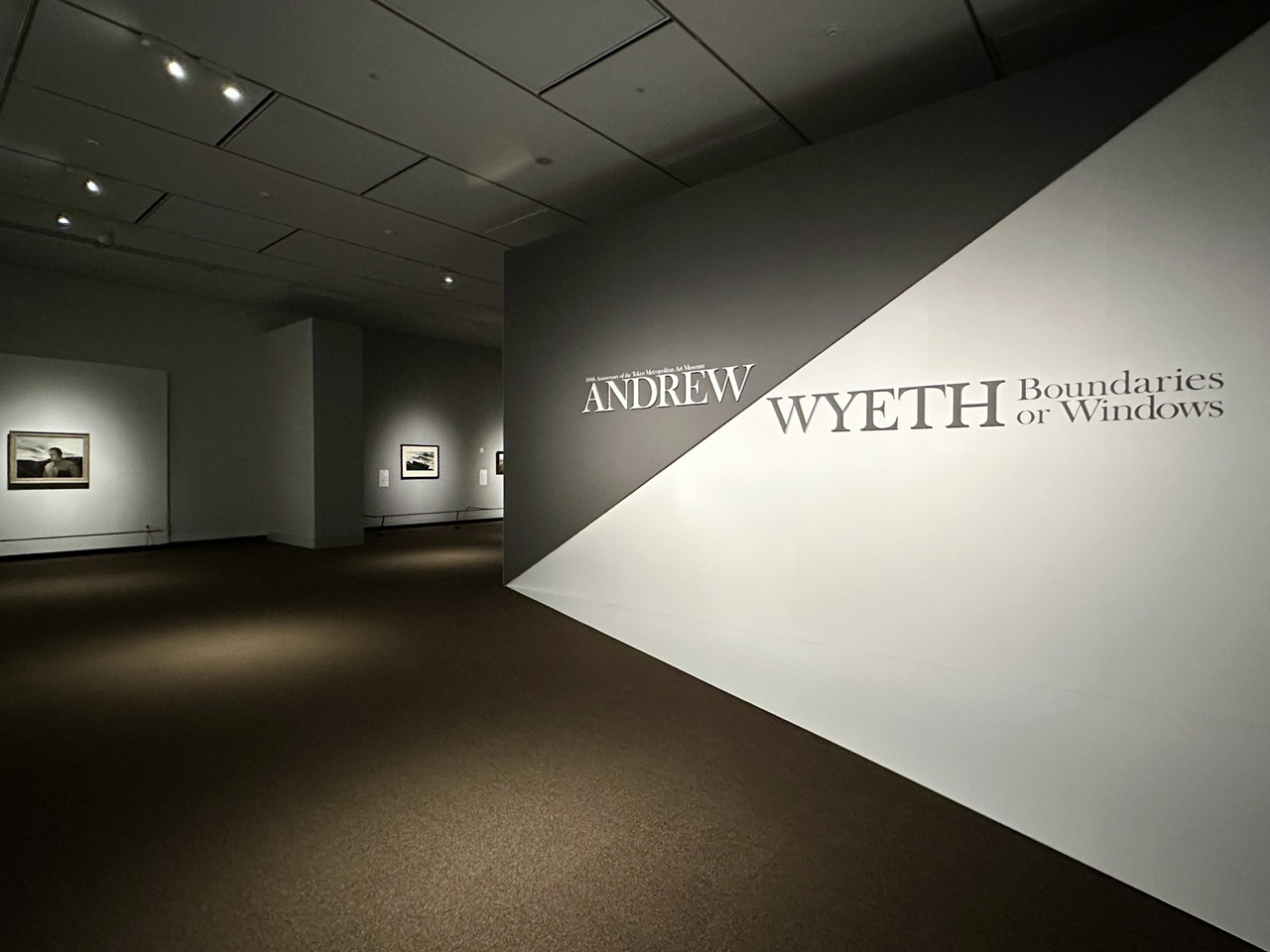
A major retrospective exhibition , "Andrew Wyeth Exhibition: Celebrating the 100th Anniversary of the Tokyo Metropolitan Art Museum," which interprets Andrew Wyeth (1917-2009), a national painter representing 20th-century American figurative painting, through the theme of "boundaries," is currently being held at the Tokyo Metropolitan Art Museum. The exhibition runs until July 5, 2026 (Sunday).
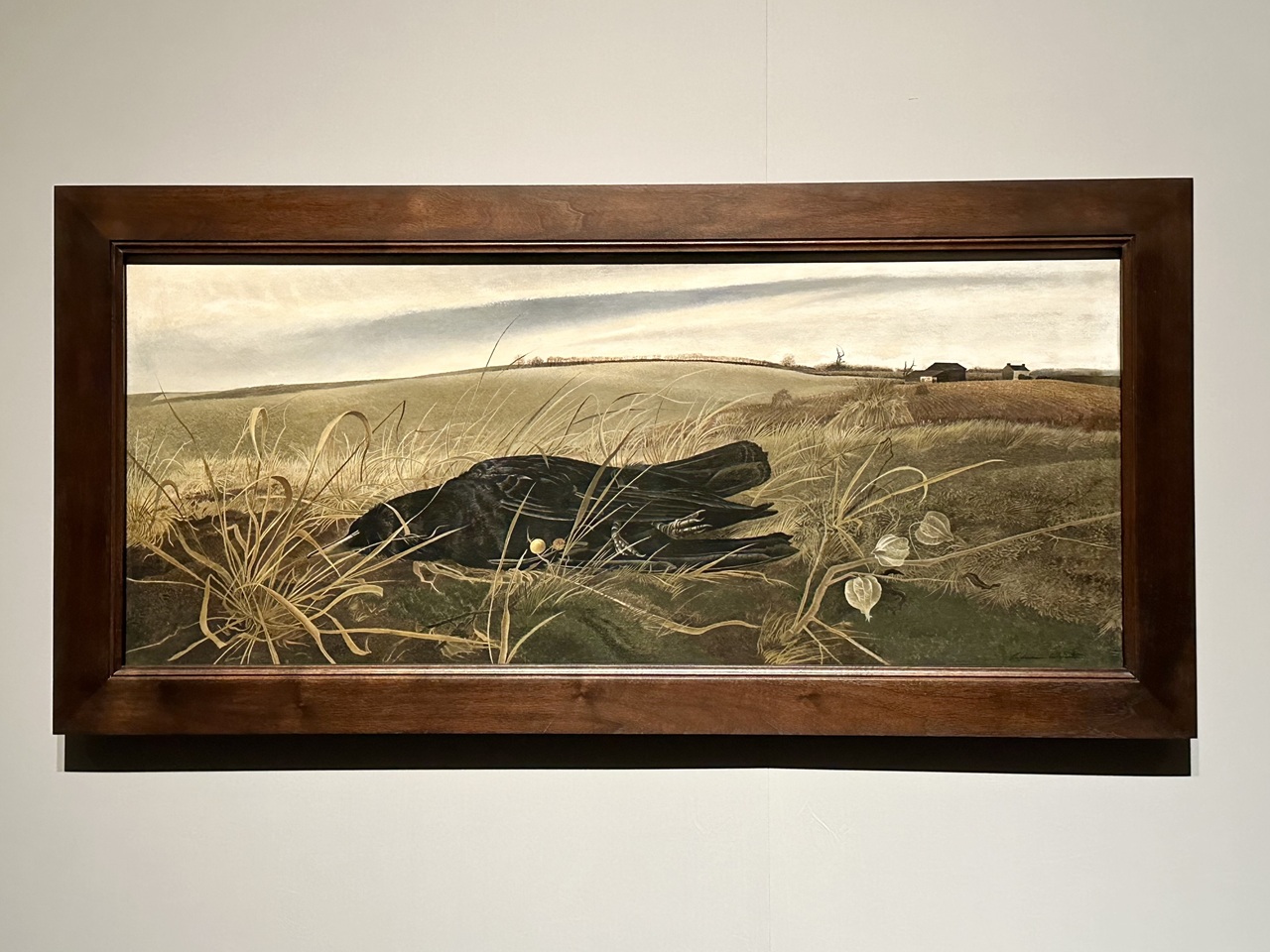
*All works featured in this article are by Andrew Wyeth.
Exhibition view of the "Andrew Wyeth Exhibition: Commemorating the 100th Anniversary of the Tokyo Metropolitan Art Museum," Tokyo Metropolitan Art Museum, 2026.
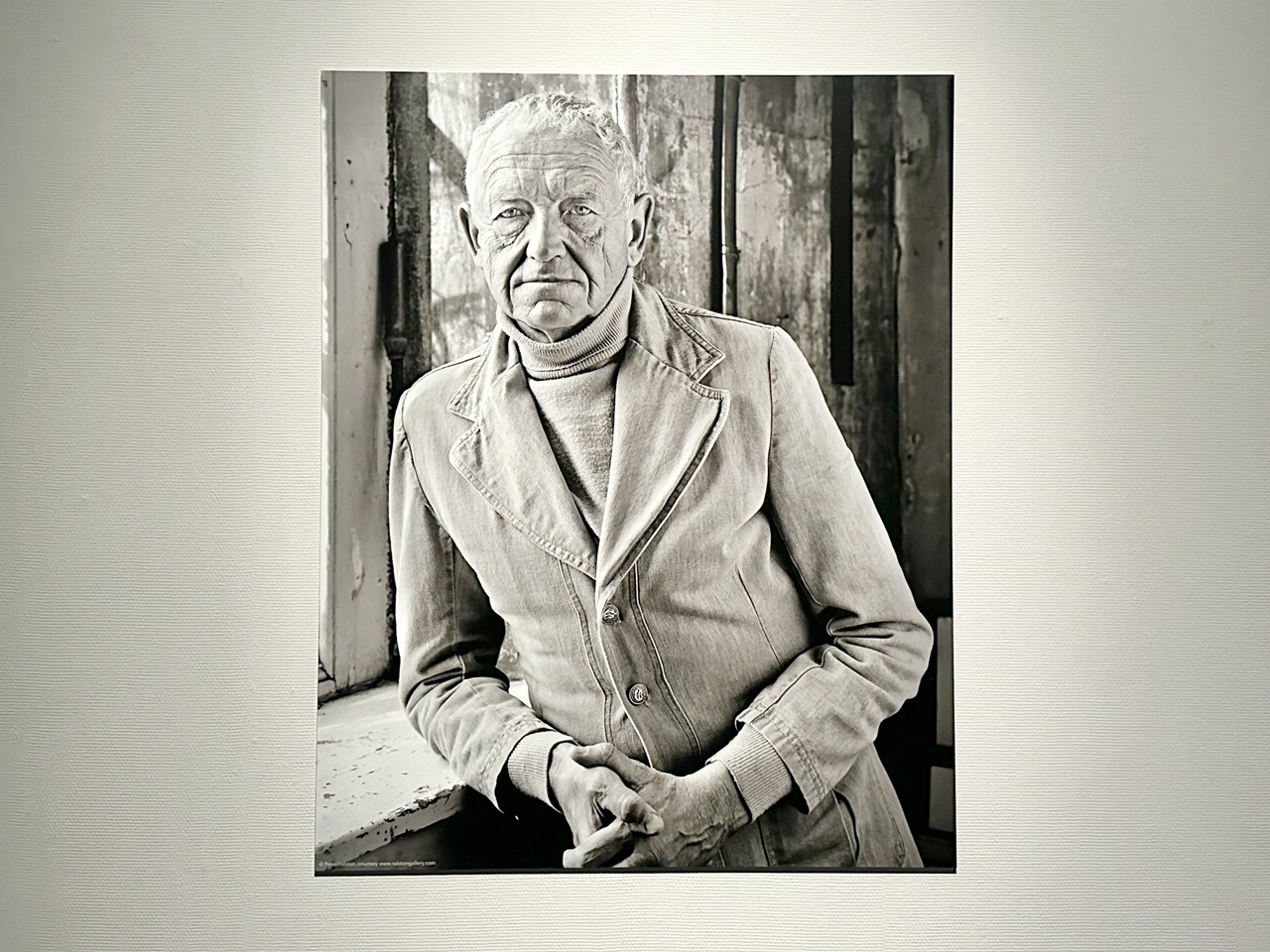
Andrew Wyeth, who was active throughout the 20th century, distanced himself from the avant-garde art movements that swept the era, such as Abstract Expressionism, Neo-Dada, and Pop Art. Based in his hometown of Pennsylvania and Maine, where he spent his summers, he continued to meticulously depict the people and landscapes around him throughout his life.
Andrew Wyeth (1917-2009)
While his style is realistic, it's not merely a reproduction of the scenes he sees. What unfolds is a unique, autobiographical world of painting that reflects introspective images, yet it contains universal elements that resonate with everyone's emotions and memories. In addition, because he repeatedly confronted limited lands and human relationships, even without depicting a clear narrative, the accumulated time, the presence and memories of the people who lived there, certainly permeate the canvas. This quiet drama is also a unique charm of Wyeth's work.
This exhibition is the first large-scale retrospective of Wyeth's work in Japan in 17 years, and the first since his death. Unlike typical retrospectives that present his works chronologically from his early years to his later life, this exhibition focuses on the expression of "boundaries" that functioned as connections to a more private world, such as "windows" and "doors," which frequently appear in Wyeth's works. Of the approximately 100 works on display, more than 10 are being shown in Japan for the first time.
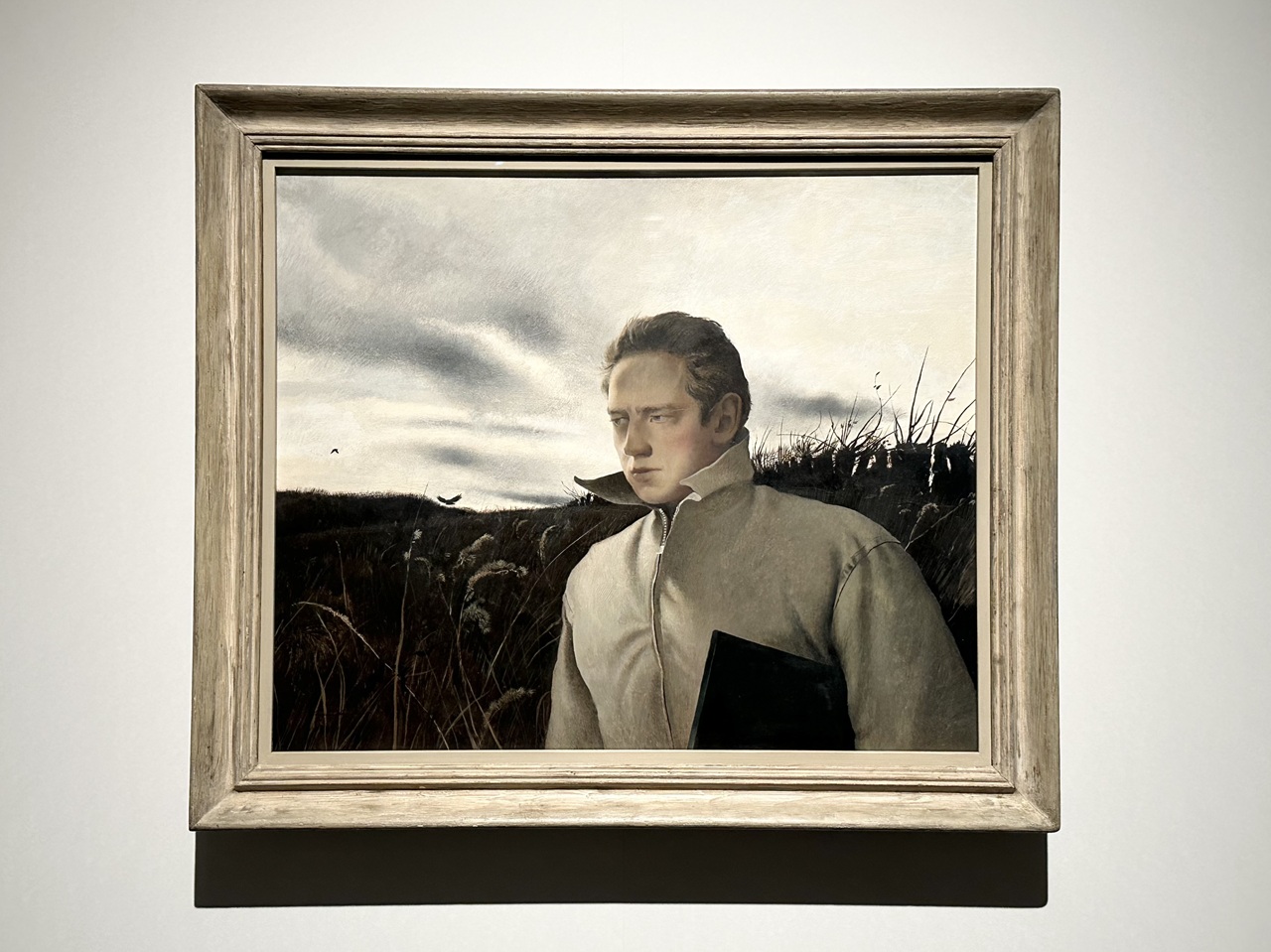
Chapter 1, "The Painter Wyeth," begins with his self-portrait (1945), which depicts the painter himself in his twenties walking through a desolate field with a sketchbook in his hand and a grim expression on his face.
Self-Portrait, 1945 / Tempera / National Academy of Design, New York
Wyeth was born in 1917 as the youngest child in a family of artists. He was frail from a young age and unable to attend school, instead spending his days wandering his neighborhood alone, sketching and nurturing his creativity. In his late teens, he received formal instruction at the studio of his father, the renowned illustrator N.C. Wyeth, where his talent blossomed. His struggles and search for his own expression under the influence of his great father formed the foundation of his introspective style.
At the age of 20, his artistic career seemed to be going smoothly, culminating in the complete sell-out of all his works at his first solo watercolor exhibition in New York. However, in 1945, the year he painted his "Self-Portrait," at the age of 28, his father and nephew, who were both obstacles he needed to overcome and his spiritual pillars, died suddenly in a railway crossing accident. From then on, Wyeth gained the perspective that "everything is in flux," and he deepened his unique world of painting, which was fundamentally rooted in a view of life and death that emphasized the impermanence of the world.
This chapter focuses on the meticulous tempera paintings that Wyeth enthusiastically worked on, including his self-portrait.
"Winter Fields," 1942 / Tempera / Whitney Museum of American Art, New York
Tempera, a classical technique that gradually fell out of favor after the rise of oil painting, involves dissolving pigments in egg yolk and water and applying thin layers repeatedly. Wyeth received his initial instruction from his brother-in-law and father's pupil, Peter Heard. For Wyeth, who disliked the glossy sheen of oil paints, tempera, with its rough, dry texture and the ability to achieve extremely detailed depictions, was an ideal medium of expression. Wyeth cherished the chic colors produced using only natural materials, considering them the colors of his homeland.
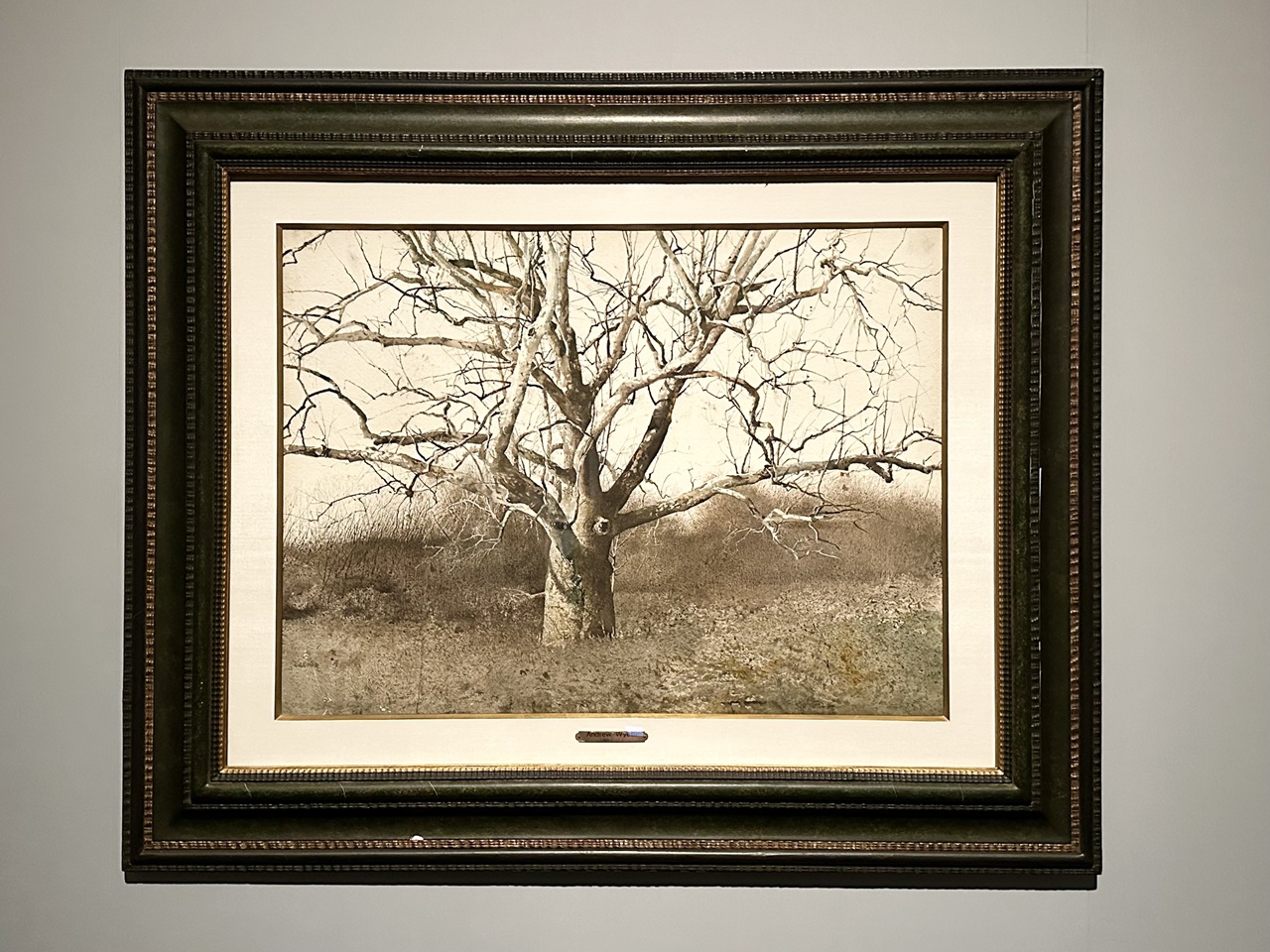
In watercolor painting, he employs the "dry brush" technique, where he applies a small amount of paint with minimal water, layering it by rubbing it across the canvas. This technique vividly portrays the rough textures of plants and walls, and even the wind-blown air, as if weaving a tapestry. The melancholic, poetic quality of his paintings is undoubtedly supported by this technique.
"The Hawk's Tree" (1973) / Drive Rush / Narita Golf Club
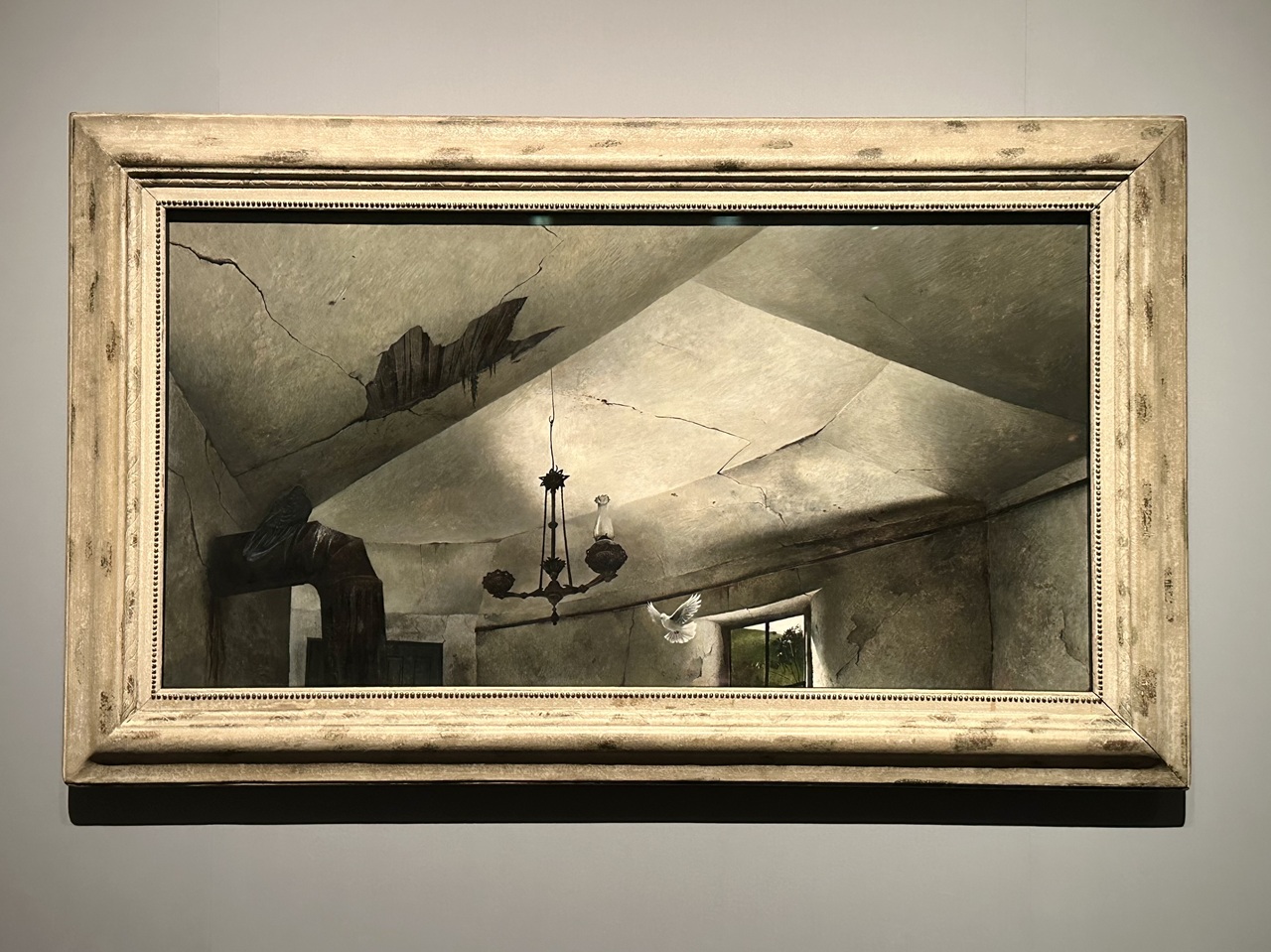
"Mother Archie's Church" (1945) is a tempera painting depicting a church that served as a spiritual haven for the African American community. The building is in ruins, but a white dove flies in through an open window. The composition, which also touches on the exhibition's theme of "boundaries," can be interpreted as not simply showing signs of loss, but rather a glimmer of faint hope.
Chadds Ford, the rural village where Wyeth grew up, was home to African American communities and immigrants with German roots. Even in an era of deep-seated discrimination and prejudice, Wyeth befriended these people and depicted many of them as models for his works.
Chapter 2, "Light and Shadow," focuses on one of Wyeth's characteristic features: his skillful use of contrast between light and shadow.
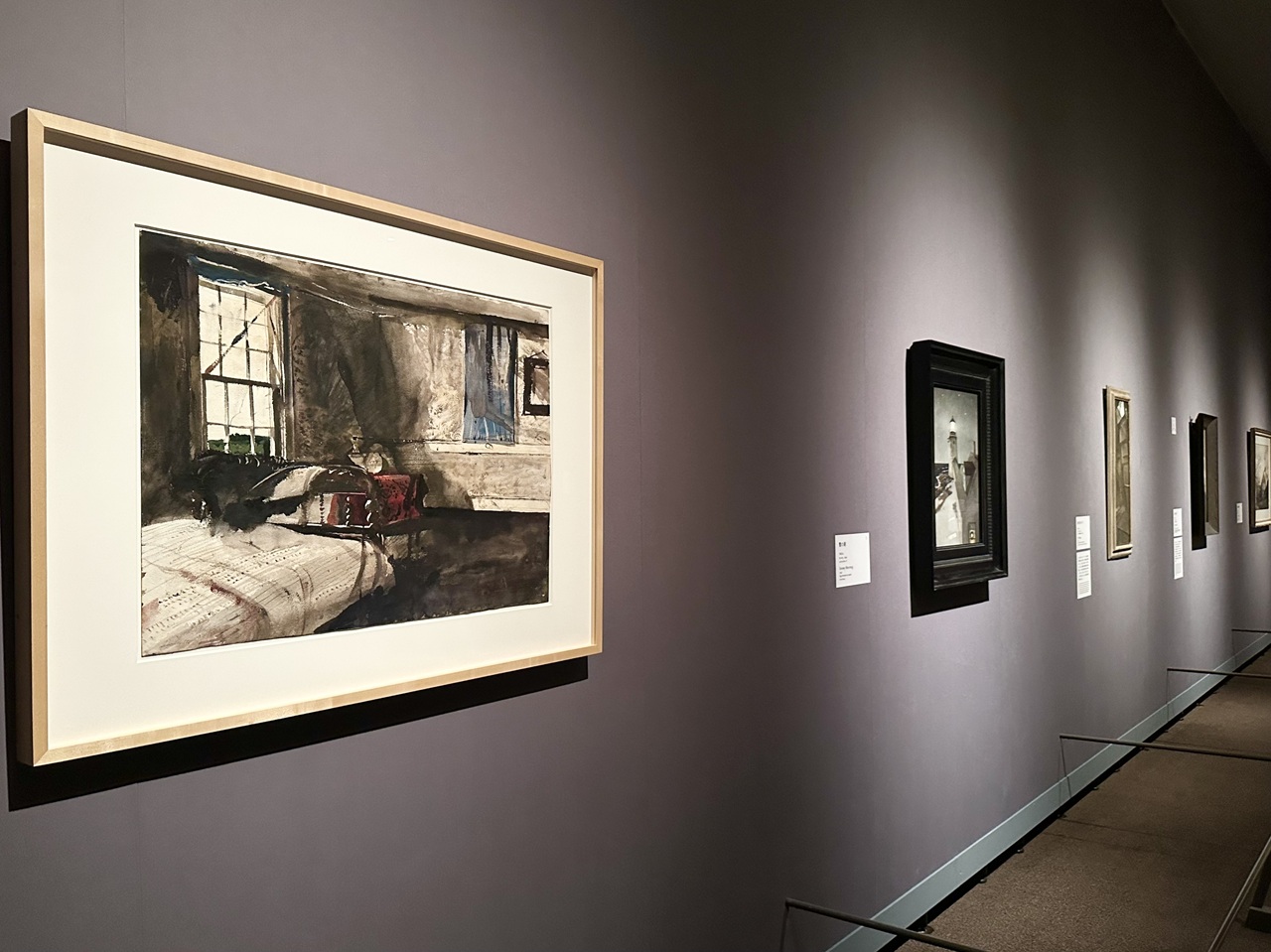
Exhibition view; on the left is "Spool Bed," 1947, watercolor, Whitney Museum of American Art, New York.
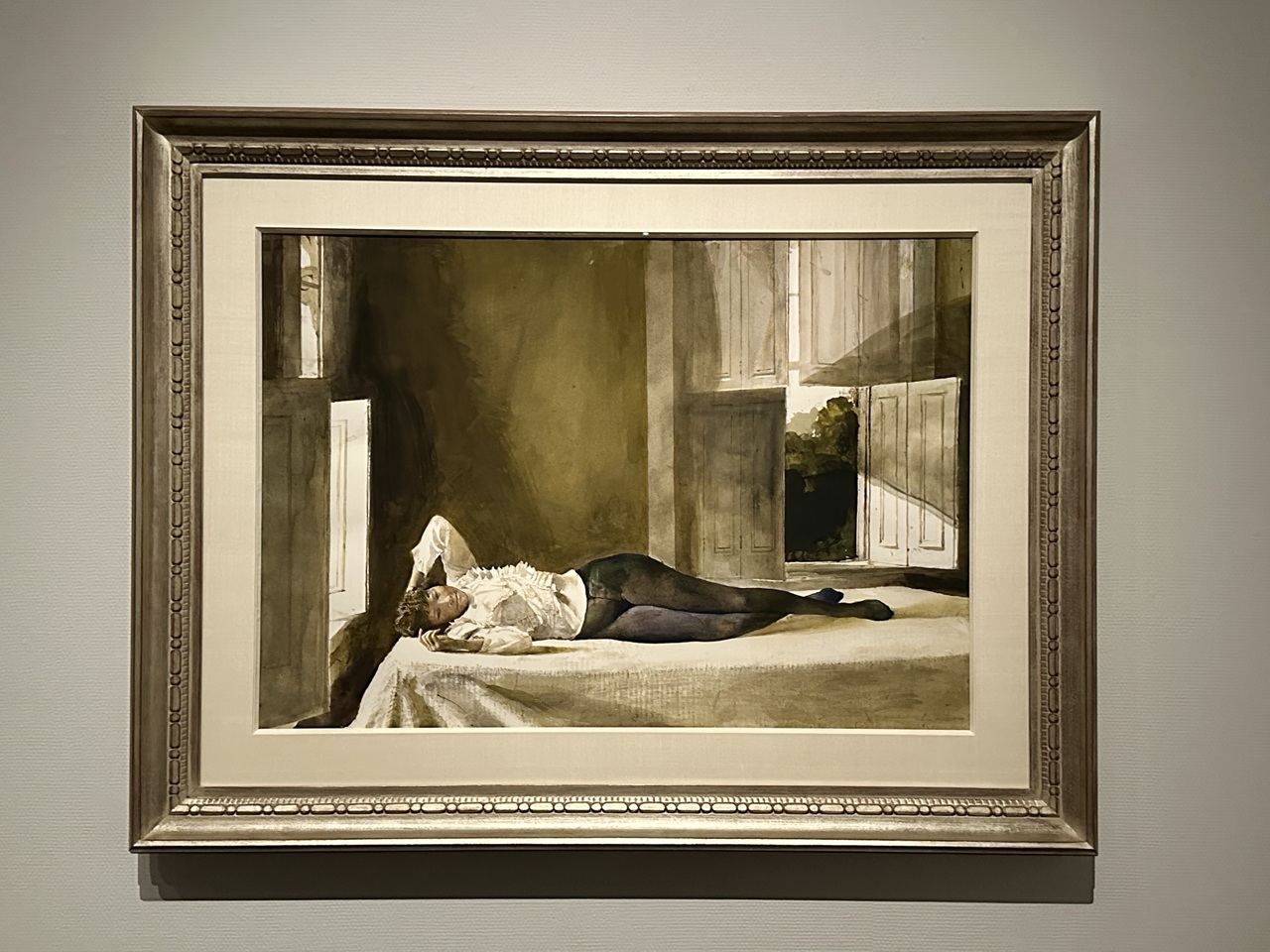
Many of Wyeth's works feature a coexistence of areas that are intensely lit and areas that are dimly lit. This is not a dramatic, spotlight-like effect seen in 17th-century Baroque paintings, but rather a natural representation of light as it is in reality. However, this contrast is not merely a visual technique to emphasize contrast; it sometimes quietly highlights boundaries that separate and connect these two areas, such as windows and doorways.
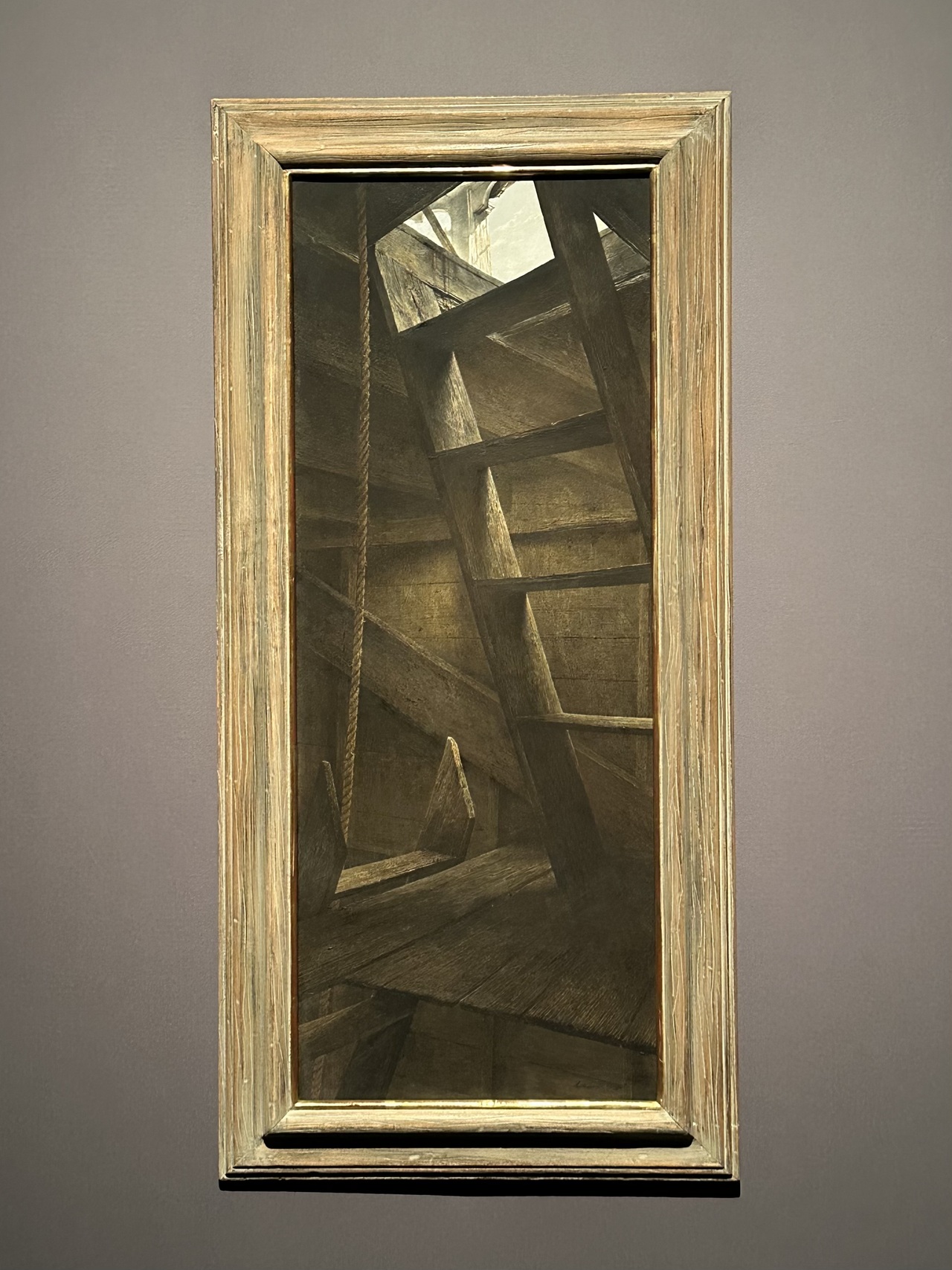
"Bell-Ringing Rope," 1951 / Tempera / Delaware Art Museum, Wilmington
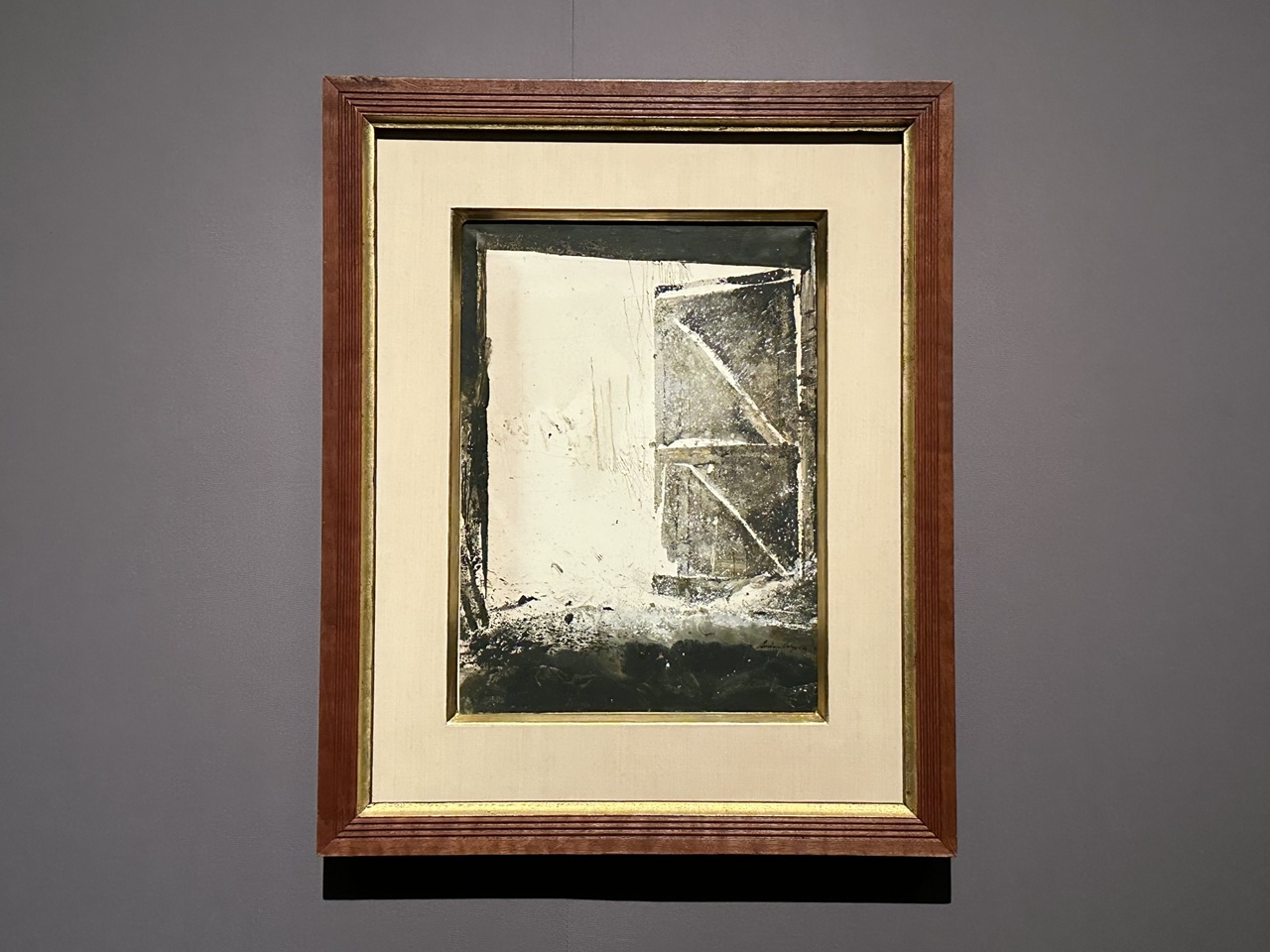
Wyeth's own experiences and emotions were embedded in his use of light and shadow, and it was an important element in shaping the serene drama. For example, in works such as "Bell-Ringed Rope" (1951) and "Cooling Shed" (1953), the light shining through the darkness conveys a sense of anticipation for the outside world and a premonition of liberation.
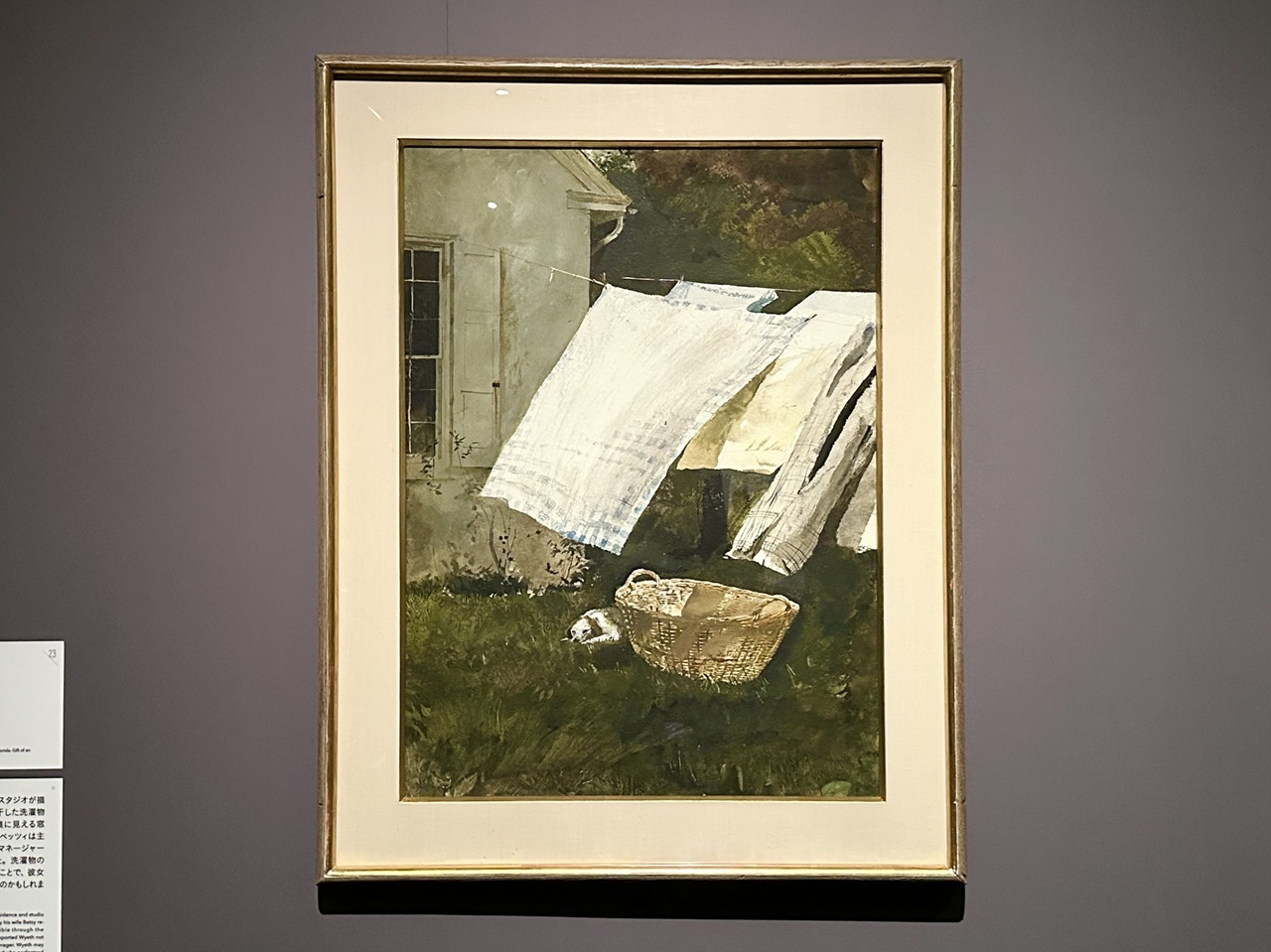
In "Laundry" (1961), laundry hanging in the garden of Wyeth's studio is blown by the wind and illuminated by bright light along with the basket. In contrast, the inside of the window is dark and gloomy, but upon closer inspection, the two are not disconnected but connected by a clothesline. There is a sense of warmth in his gaze towards his wife Betsy, who simultaneously handled the behind-the-scenes work of a capable manager and the duties of a housewife who supported the home.
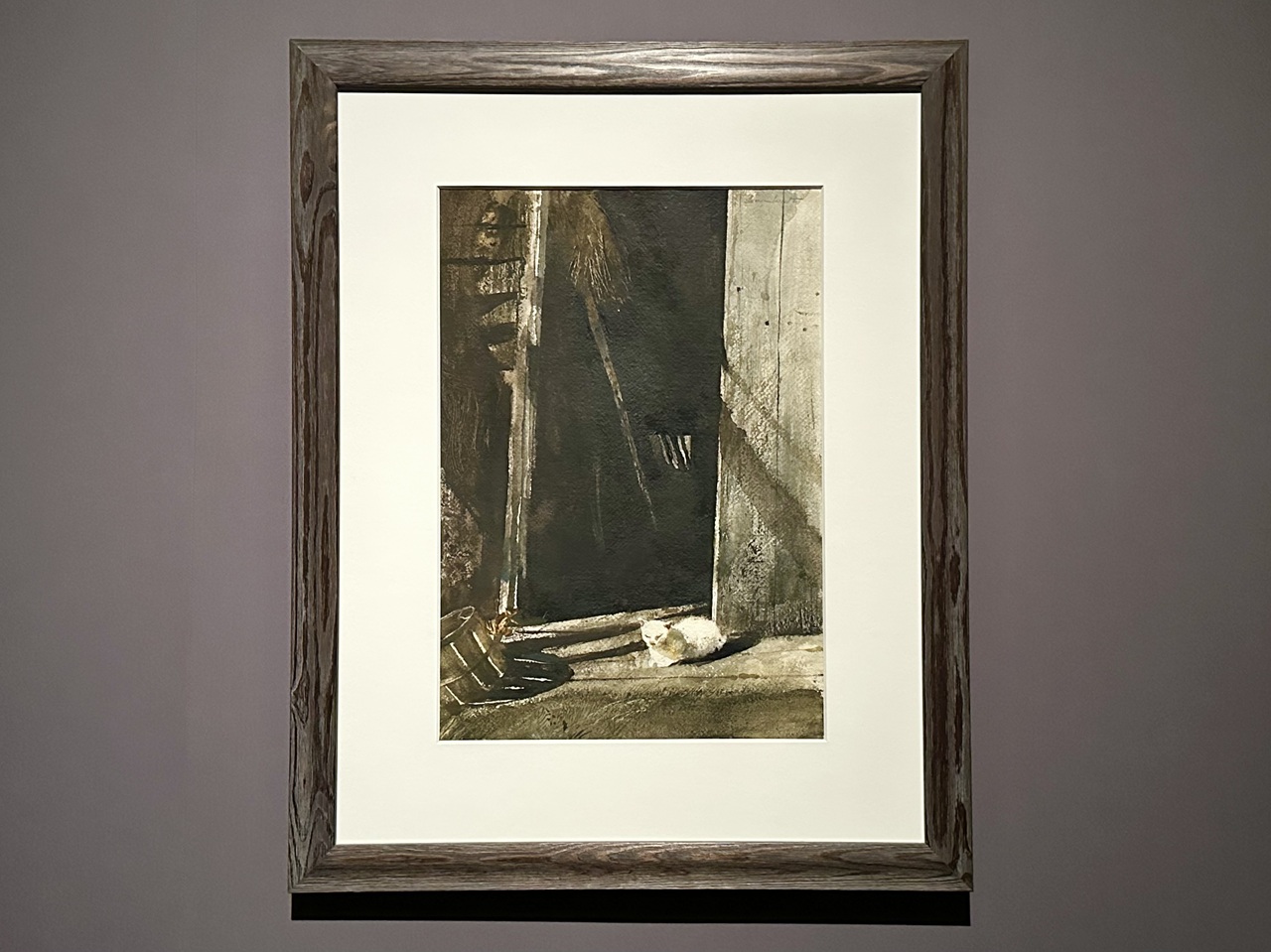
"Laundry" 1961 / Watercolor / Cummer Art Museum, Jacksonville"Napping," 1963 / Watercolor / Farnsworth Art Gallery, Rockland
Furthermore, Wyeth continued to confront the inescapable question of "life and death" through the accidental death of his father, as mentioned earlier, and the near-death experience he had five years later due to a lung disease. In "Nap" (1963), a white cat basks in the sun against the backdrop of deep darkness beyond the door of a barn. The cat is in a state of "sleep," which is associated with death, but the place where it is sleeping is the boundary between light and shadow. This can be seen as an expression of Wyeth's philosophy that "life and death" are not opposing forces, but rather a continuum and interconnected.
The section of this exhibition that takes up the most space is Chapter 3, "A New England House—Olson House."
"Olson's House," 1939 / Watercolor / Marunuma Art Forest
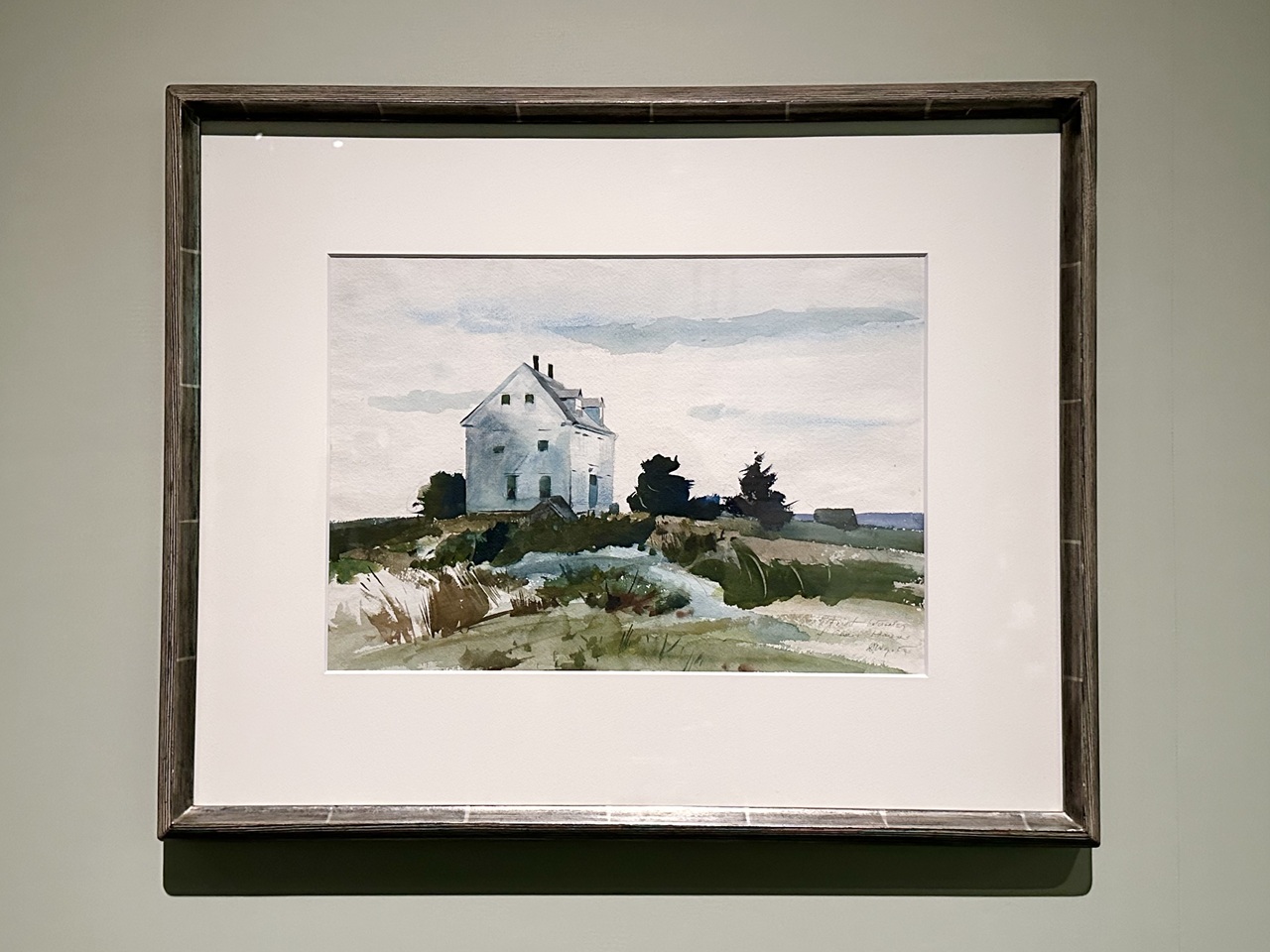
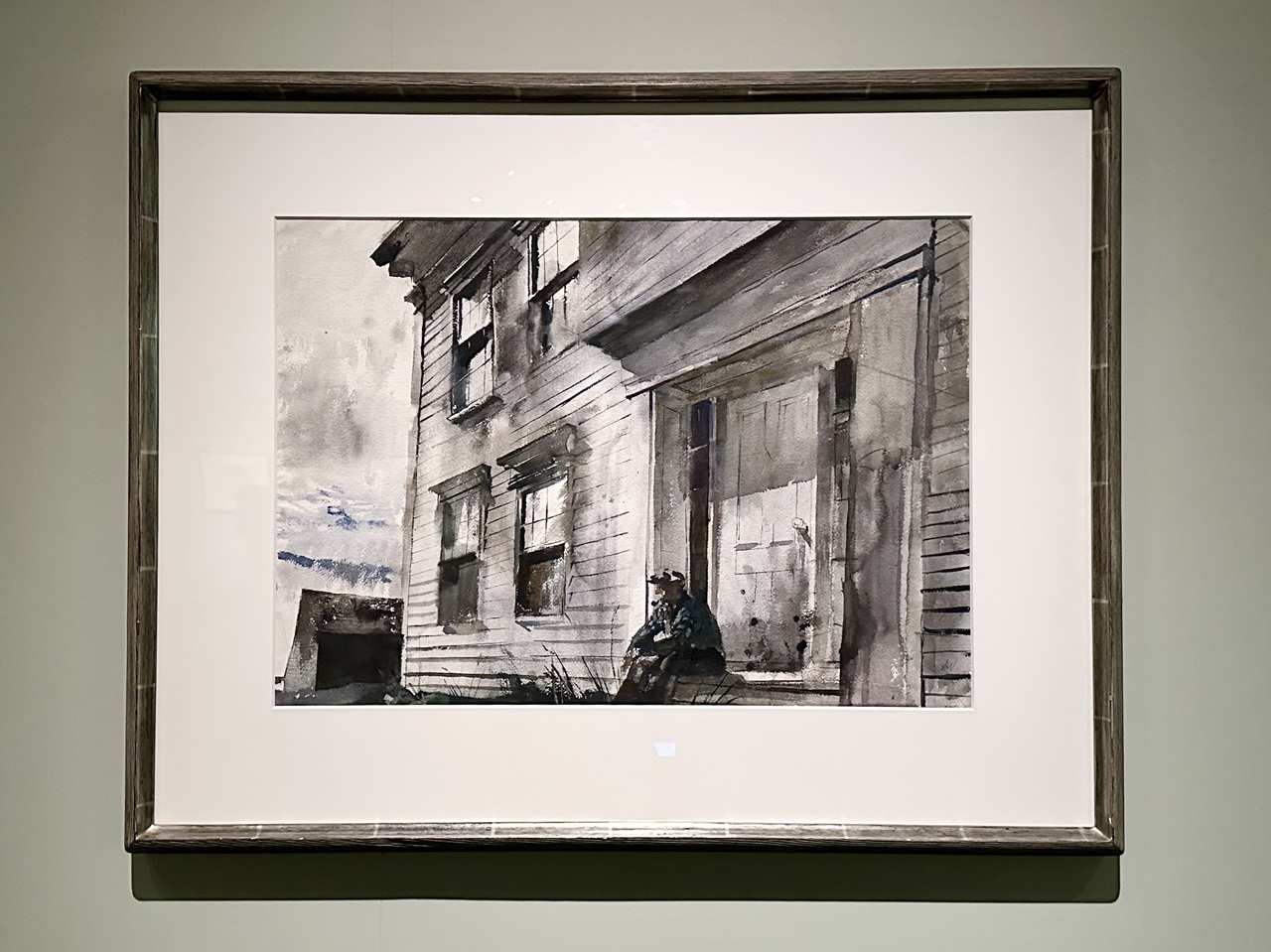
Every summer, Wyeth would spend time in Cushing, Maine, in the New England region where the quintessential American landscape still remains. The painting "The Olson House" (1939), displayed at the beginning of this chapter, is a watercolor he painted shortly after his first visit to the Olson siblings' home, accompanied by Betsy, who would later become his wife. Immediately captivated by the building, which stood alone on a hill and had an irregular shape due to renovations and additions, Wyeth used the second floor of the house as his studio for the next 30 years, producing a vast number of works.
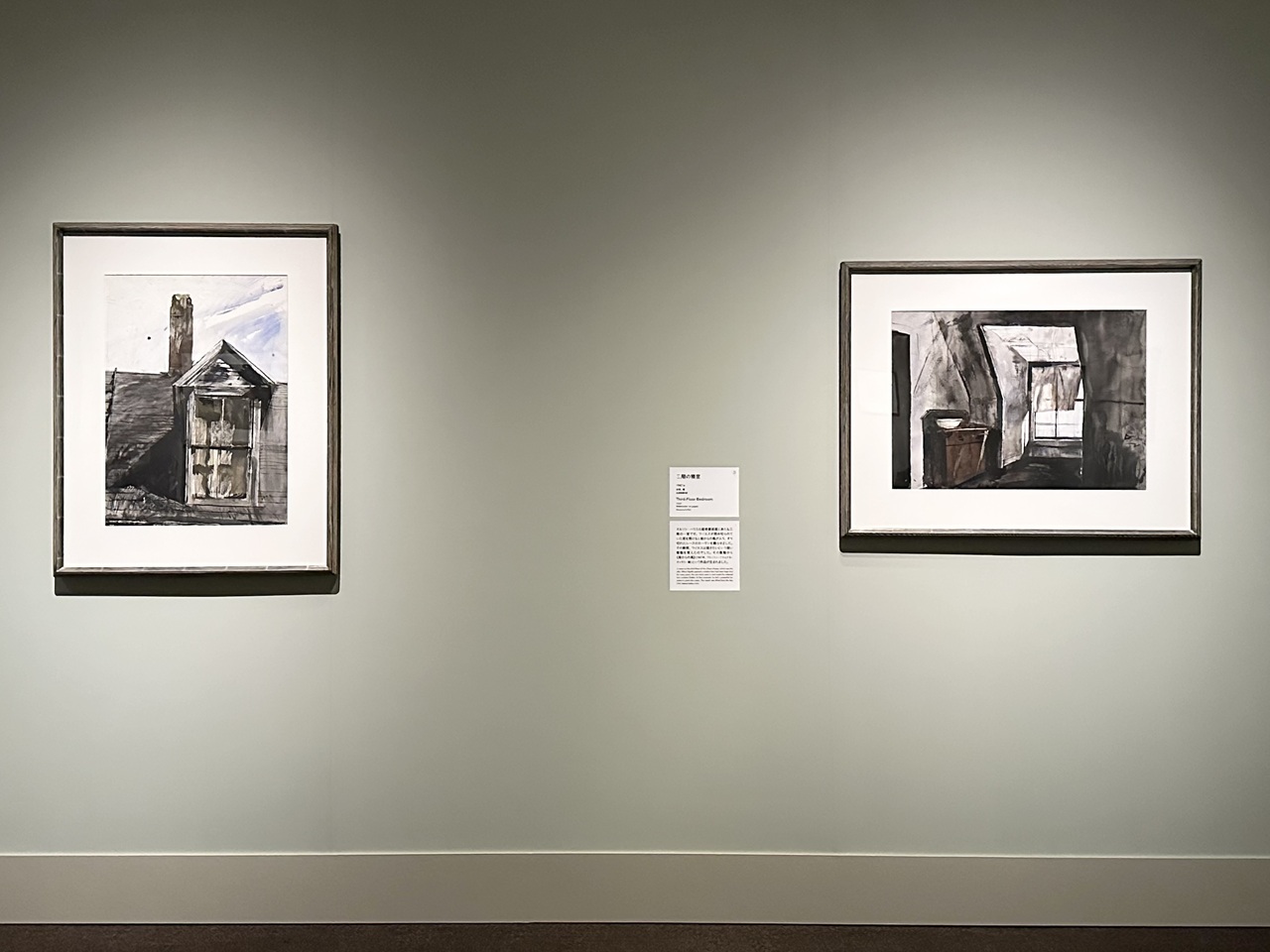
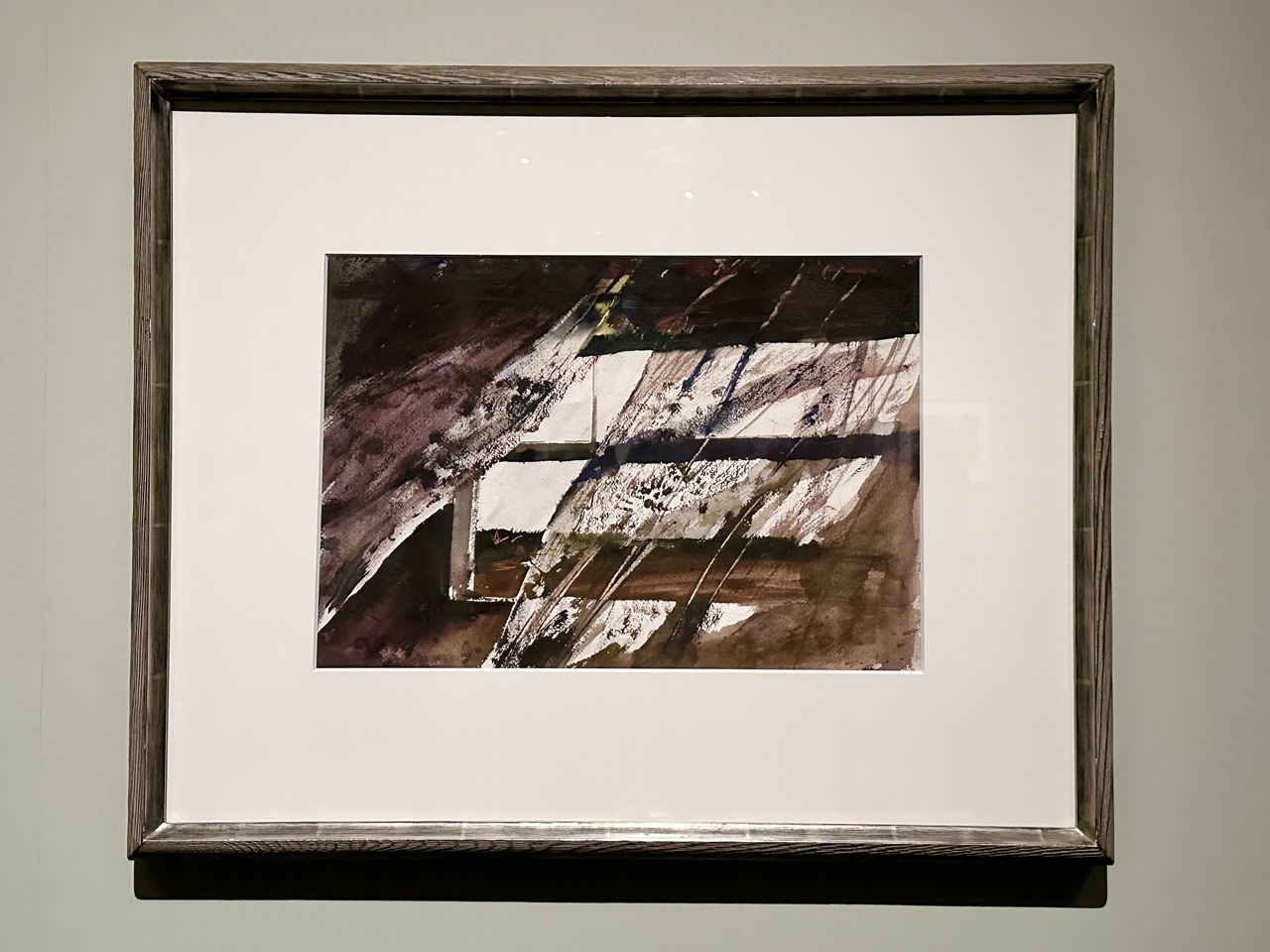
"Alvaro Sitting on the Staircase of the Front Door," 1942 / Watercolor / Marunuma Art ForestExhibition view, from left: "Roof Window" and "Third Floor Bedroom," both 1947 / Watercolor / Marunuma Art Forest"Wind from the Sea" Study / 1947 / Watercolor / Marunuma Art Forest
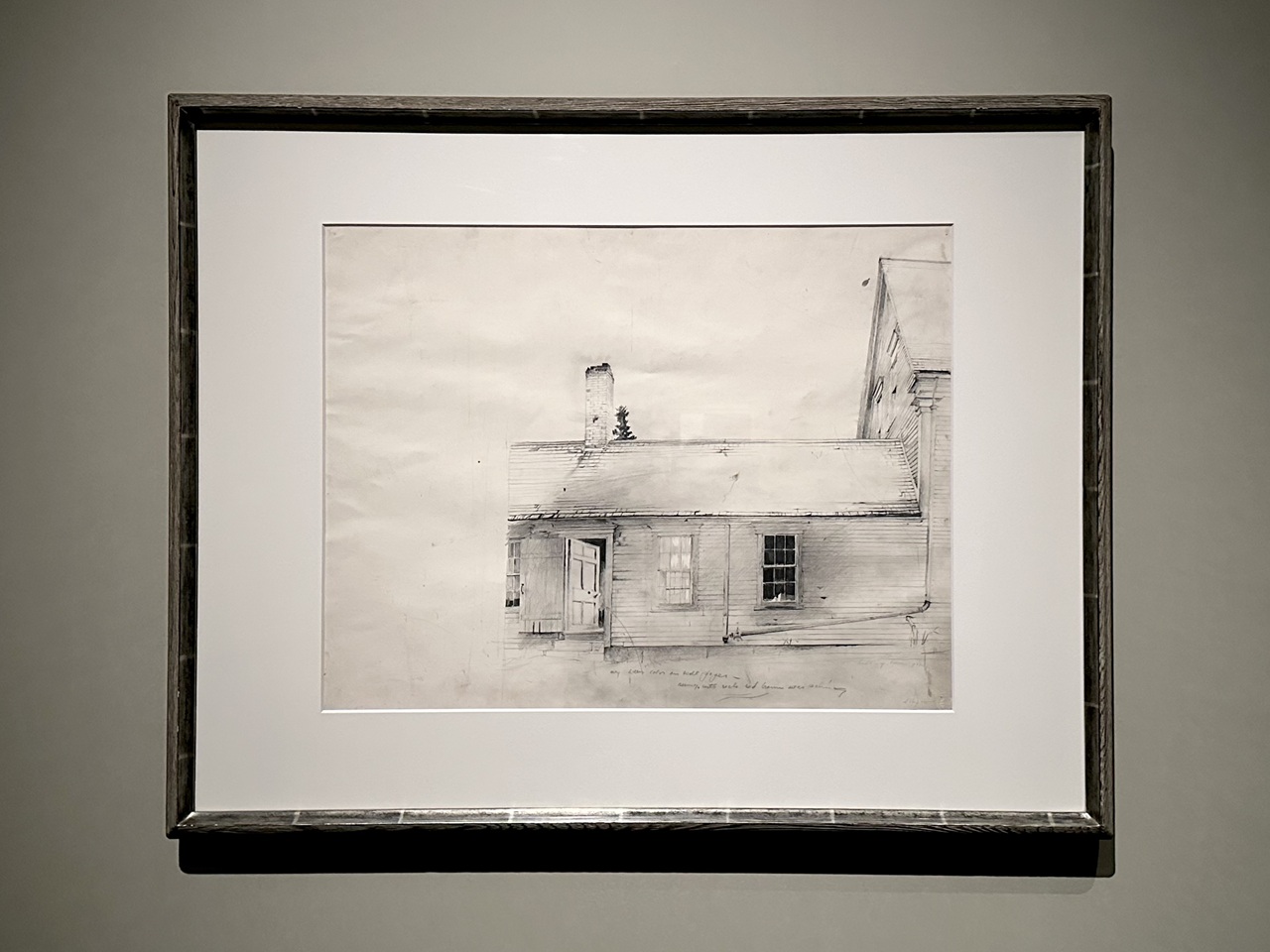
For Wyeth, pencil drawings were "a way to express the strong emotions I felt with the subject," and he usually sketched quickly, as if to unleash his impulses. On the other hand, with regard to the Olson House, perhaps he was looking ahead to its inevitable demise. He meticulously captured every detail, from the windows to each panel, as if finishing a portrait, leaving behind drawings that vividly record its features.
"New England" study / 1960 / pencil / Marunuma Art Forest
It wasn't just the buildings that captivated Wyeth. He was also deeply drawn to the character of Christina, the older sister who, despite being disabled in her legs due to a progressive illness, possessed a noble independence, and her patient younger brother, Alvaro, who gave up his beloved fishing at sea to work on the farm in order to support her. In particular, he held Christina, who possessed a mental strength that he himself lacked despite growing up in a privileged family, in high esteem, and he made her the muse for many of his works, including the masterpiece "Christina's World" (owned by the Museum of Modern Art, New York, not included in this exhibition).
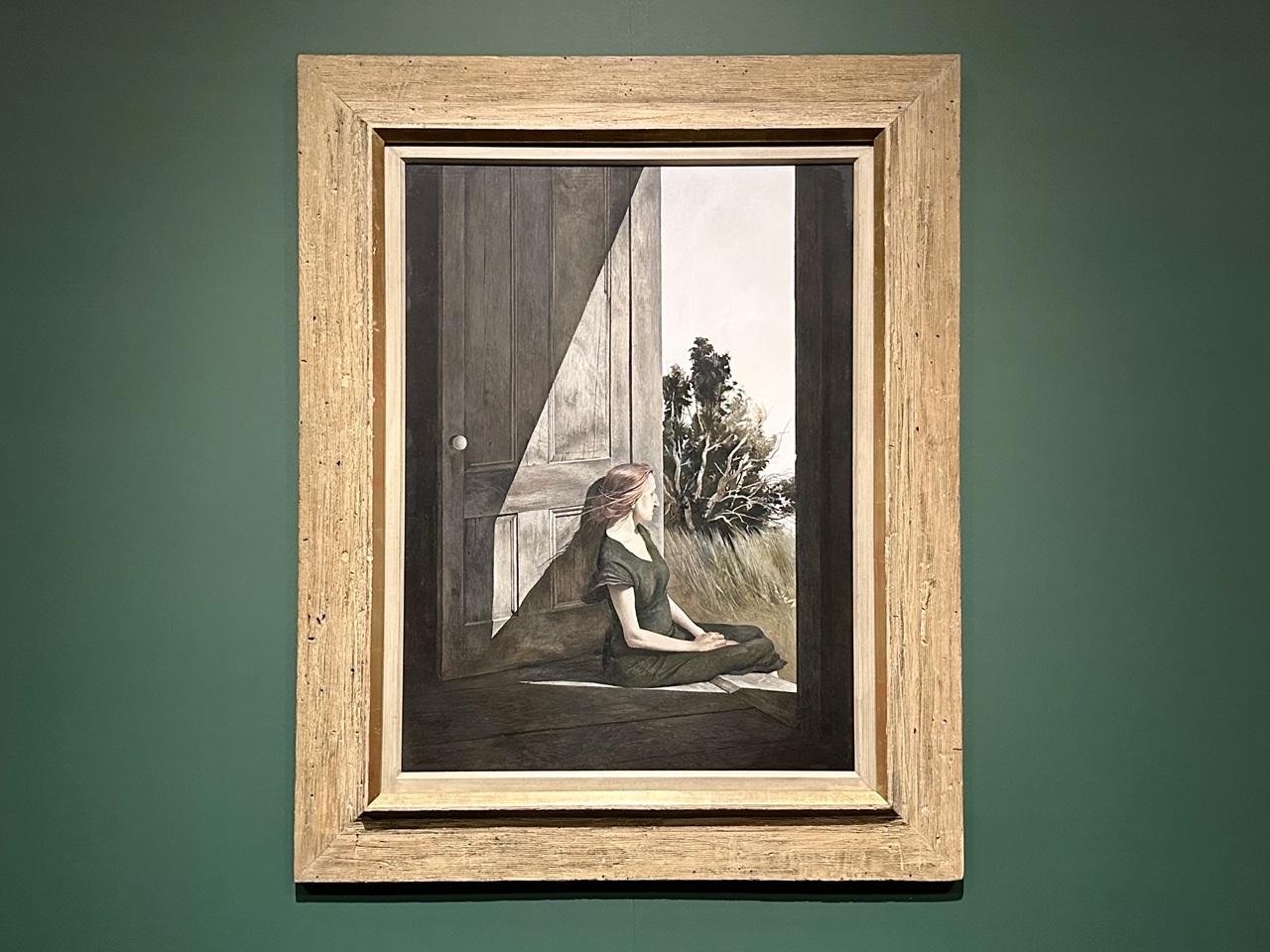
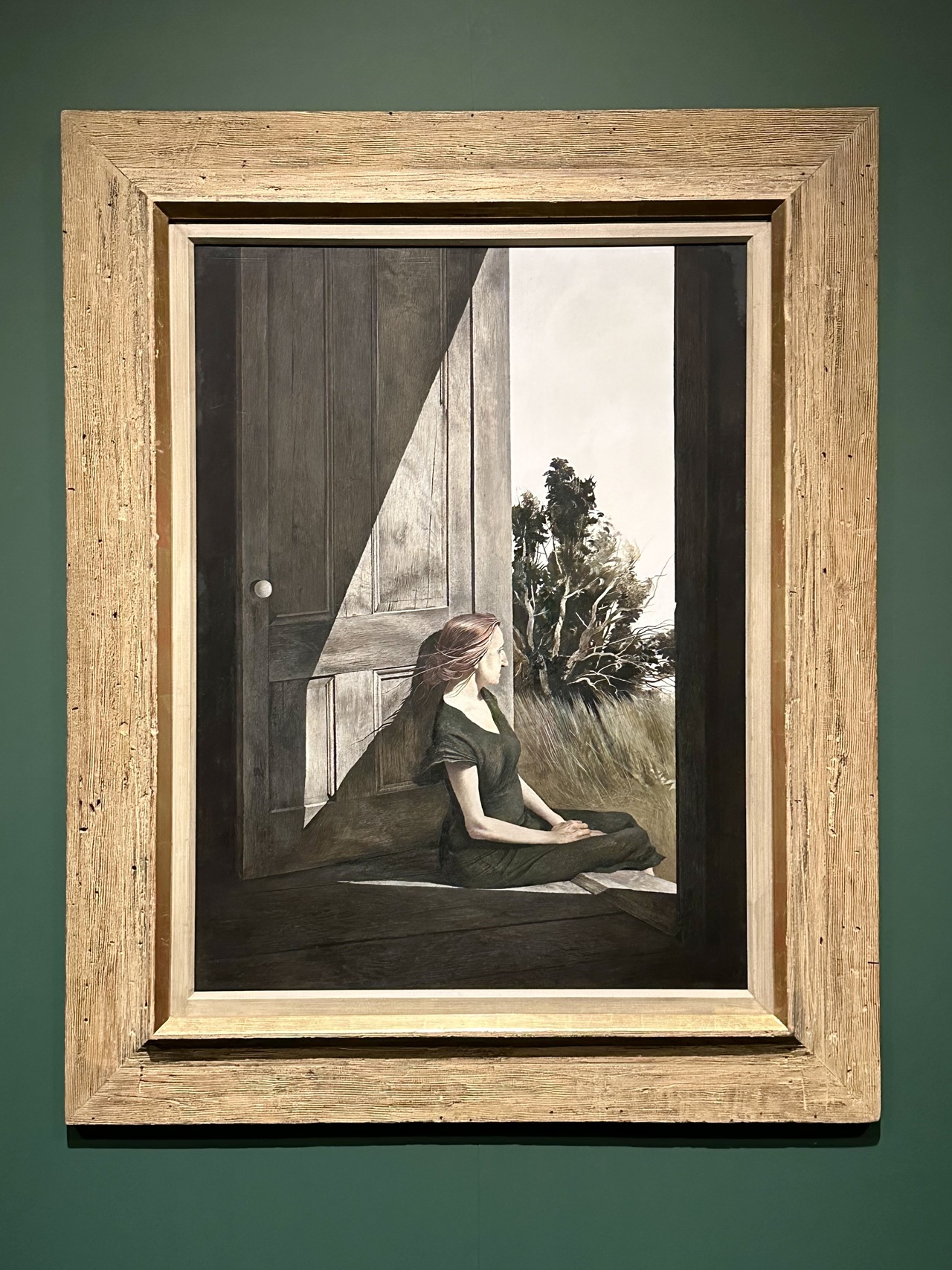
Another representative portrait is "Christina Olson" (1947), which captures Christina sitting on the steps of the back doorway, bathed in the afternoon sun, after finishing her kitchen work. Wyeth said that her figure "reminded him of a wounded seagull," and this too occupies a boundary between inside and outside.
Christina, unable to easily go outside due to her physical limitations, might be considered a being belonging more to the dark, indoor world. However, she casts her gaze out through an open doorway to the sunlit outside world, and the wind blowing in from outside the frame makes her hair flutter, giving the painting a sense of life. Here, boundaries are not depicted as something that divides something, but as a passage that creates interaction between inside and outside. Next to it is a preliminary sketch of "hair not swaying in the wind," illustrating how important the depiction of wind was to Wyeth.
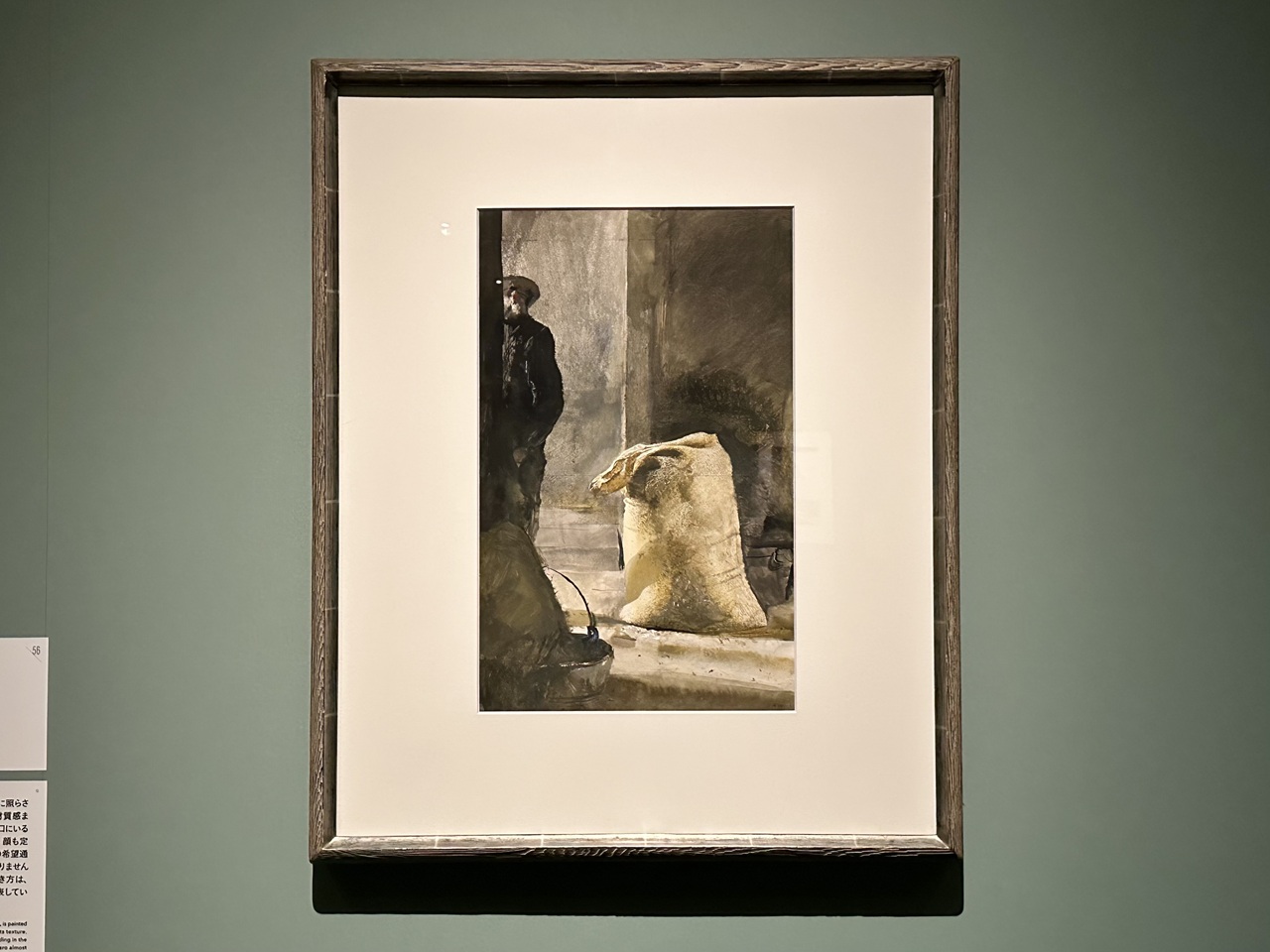
"Grain Sack" 1961 / Watercolor / Marunuma Art Forest
Maine was one of the earliest states to be settled, and the Olson siblings, who lived in an old house dating back to the early 19th century, had a father who was also an immigrant from Sweden. Wyeth may have seen in the siblings' modest yet resilient life the people who built the foundation of America. In this way, rather than focusing on easily recognizable symbols such as the Stars and Stripes or the skyscrapers of New York, Wyeth deeply embraced the primal landscapes connected to history and the dignity of the quiet people who lived there, and it was this that he became a painter who depicted America and gained the support of the public.
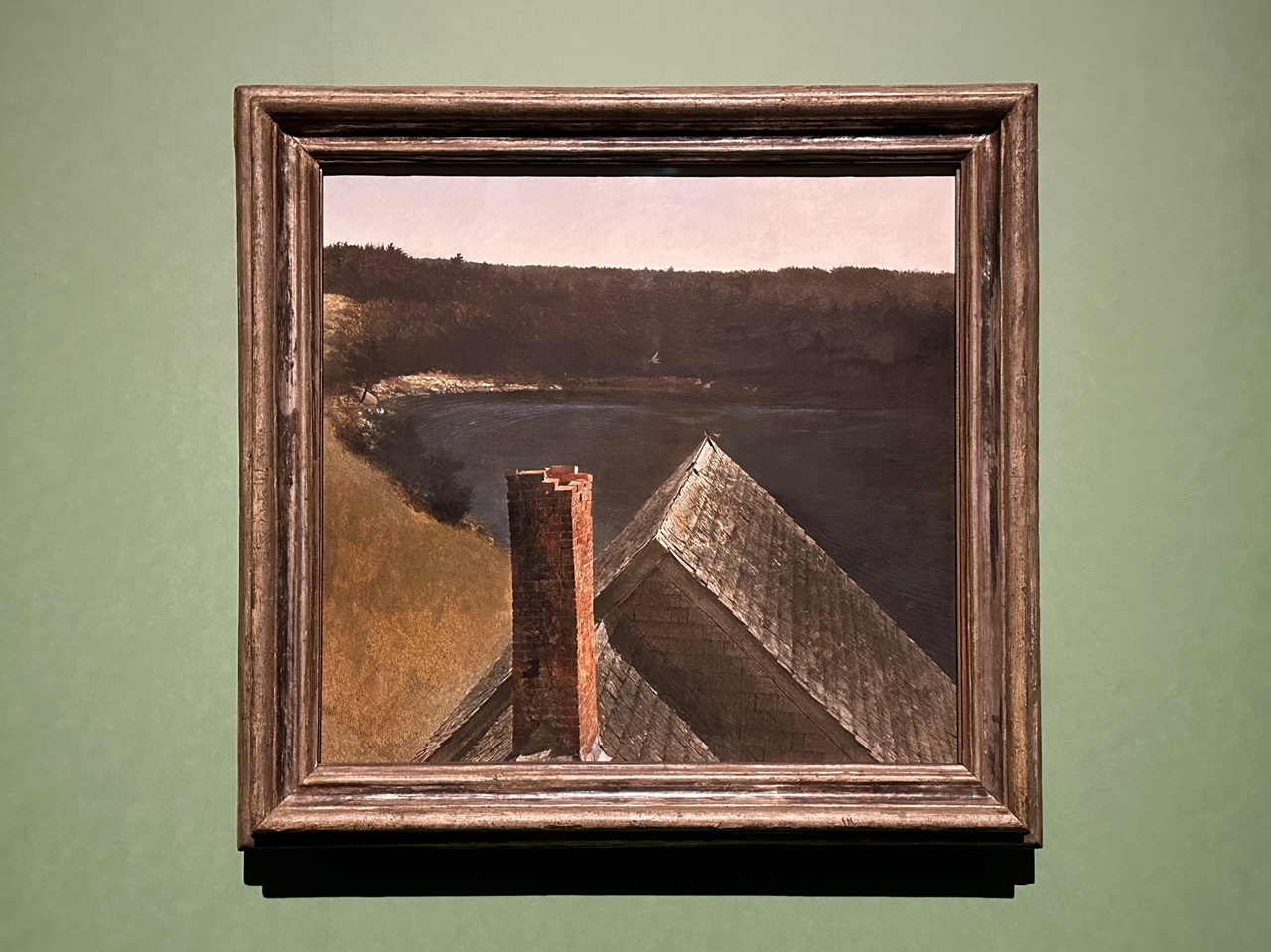
"The End of the Olson Family," 1969 / Tempera / Cleveland Museum of Art
Alvaro died in December 1967, followed shortly after by Christina in January 1968. The following summer, Wyeth visited the empty house and created "The End of the Olson Family" (1969). The painting depicts a chimney reminiscent of Christina's kitchen work, the cove where Alvaro once fished, and a small swallow flying freely in the sky. When compared to the juxtaposed study, the "window frame," the boundary separating the foreground and background of the painting, has been removed in this work, revealing Wyeth's deep longing to continue his connection with the siblings who had already passed away.
Wyeth is known for consistently painting the same subjects over many years, including the Olson siblings, his Pennsylvania neighbor Karl Kerner (a former military officer), and Helga Testorf, who cared for Kerner. Chapter 4, "The Breadth of the Gaze," focuses on the painter's approach of constantly searching for "that moment when the switch flips" in familiar landscapes, as well as the breadth of his motifs that extended beyond just people.
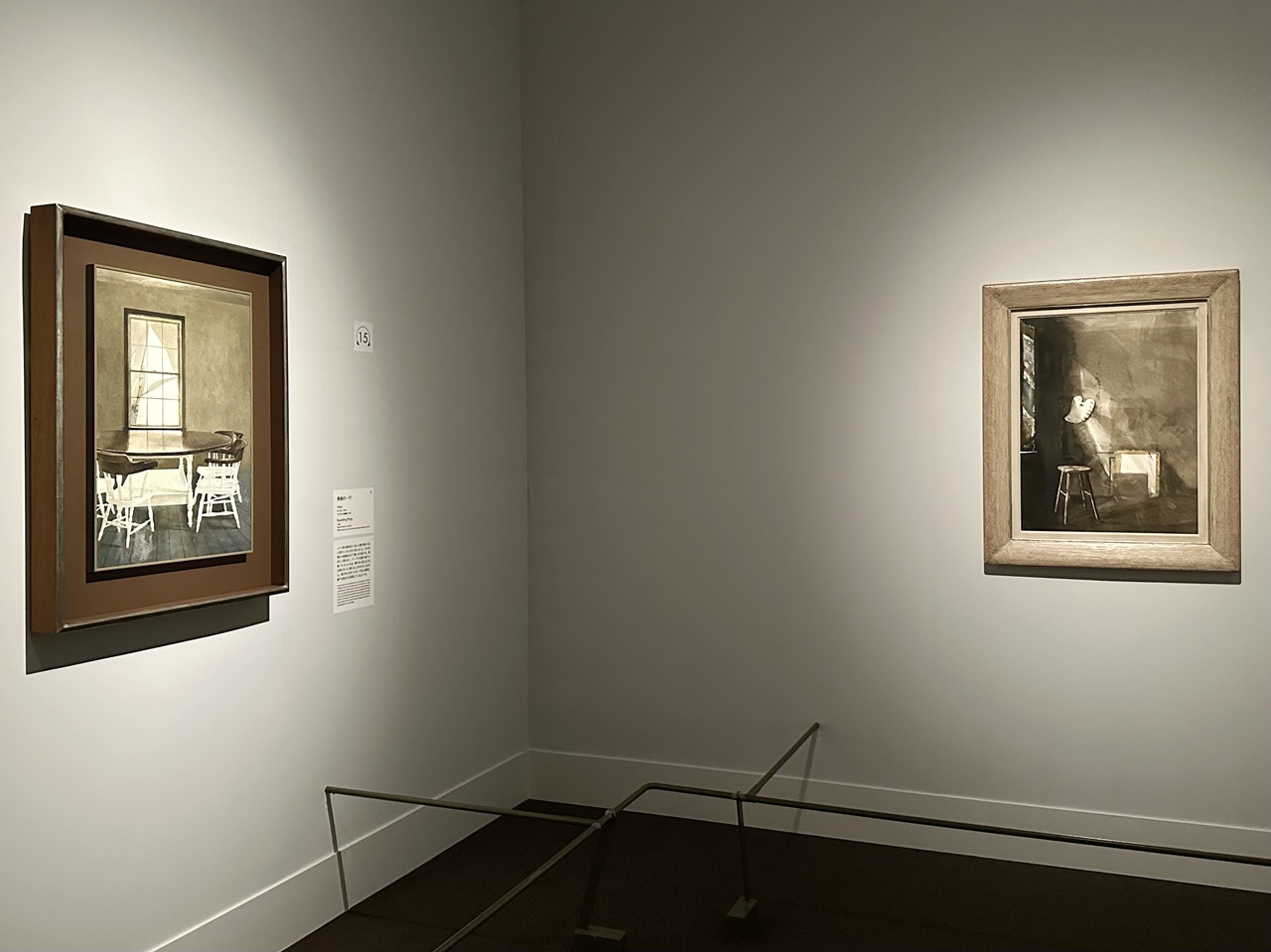
Exhibition view, from left: "The Boarding Party," 1982/tempera/Phillbrook Art Museum, Tulsa; "High Stool," 1985/watercolor/Keisuikai Medical Corporation
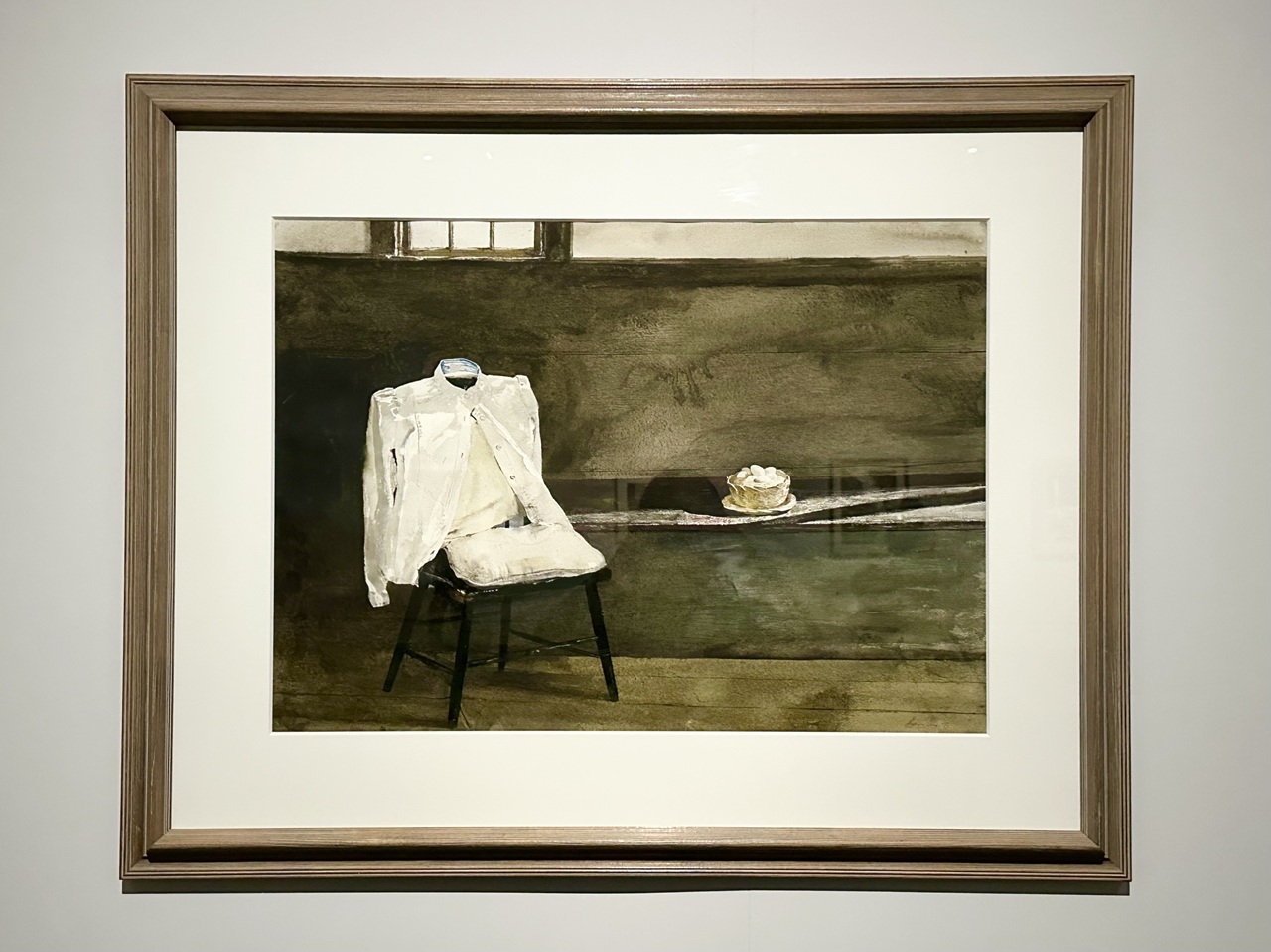
In this chapter, works featuring chairs as a motif, such as "The Passenger on Board" (1982), "High Stool" (1985), and "Island Porch" (1999), are particularly striking. "Model's Chair" (1982) depicts a white chair and clothing on which a woman named Anne Cole was resting. The absence of a model was chosen because it was thought to better represent Anne's character. Here, the chair can be said to play a role in the intersection of presence and absence. Wyeth often used this technique, deliberately removing figures from the canvas, to paradoxically bring out their presence and inner feelings.
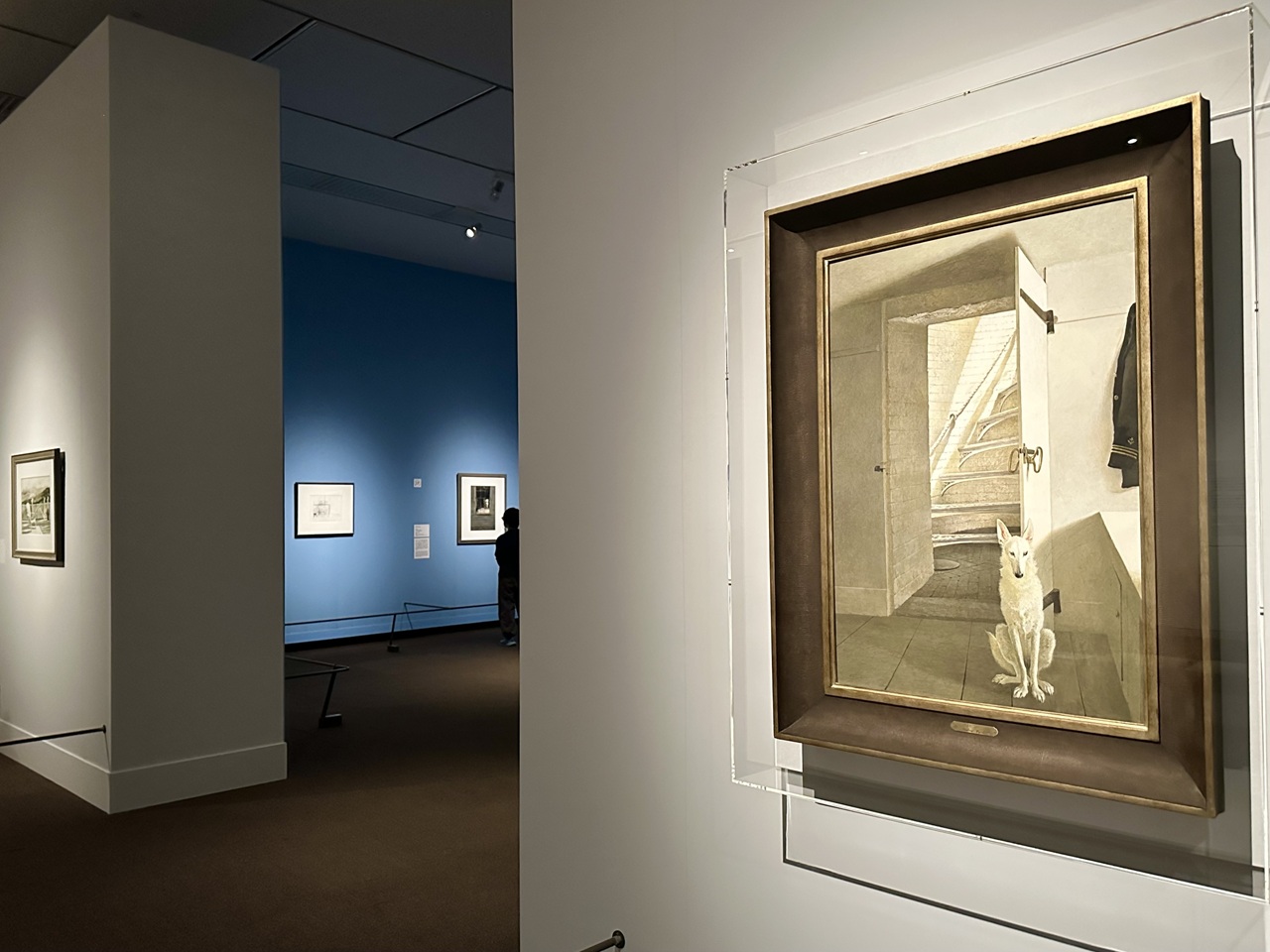
"Lighthouse" (1983) depicts a scene at a lighthouse on Southern Island, Maine. Betsy's dog, Gnome, sits politely in front of the open door, hinting at the outside world beyond the stairs. The lighthouse's light is what sustains the lives of sailors continuing their voyages. Gnome seems to be taking on the role of a lighthouse keeper, protecting their lifeline in place of his master.
Exhibition view; on the right is "Lighthouse," 1983 / Tempera / Unimat Group
In the final chapter, "Boundaries or Windows," we return to the motif of boundaries, particularly windows, and delve deeper into the underlying themes that permeate Wyeth's paintings.
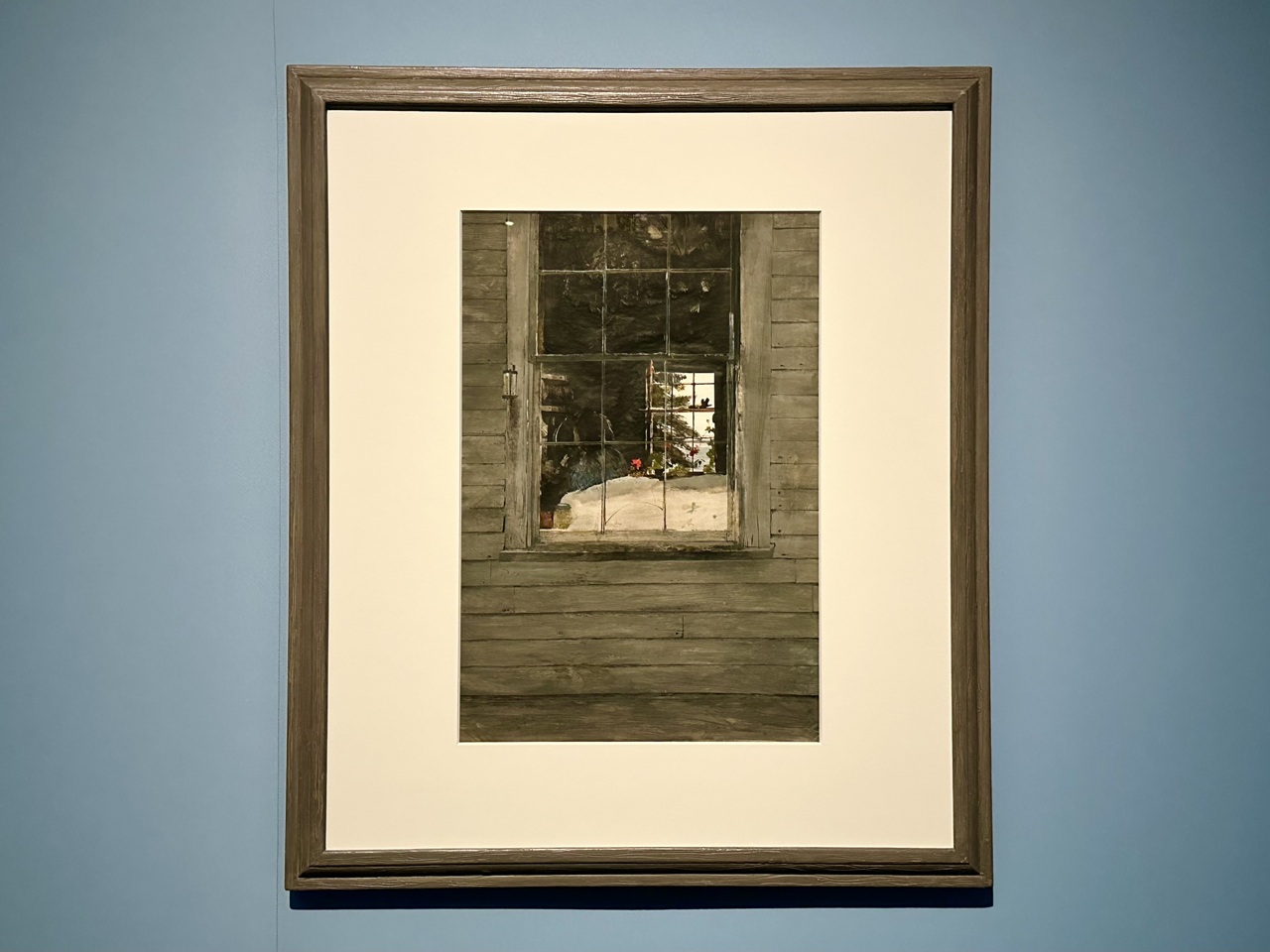
"Geranium" (1960) captures Christina inside the Olson House through a window. However, Christina's figure is so faint that one might not notice her unless pointed out, and her presence is hinted at only by a single red geranium, which she was said to have loved. Sunlight streams in through the window in the background, and, like "Christina Olson," it conveys that her world is not closed off but connected to the bright outside world.
"Geraniums," 1960 / Drybrush, watercolor / Farnsworth Art Gallery, Rockland
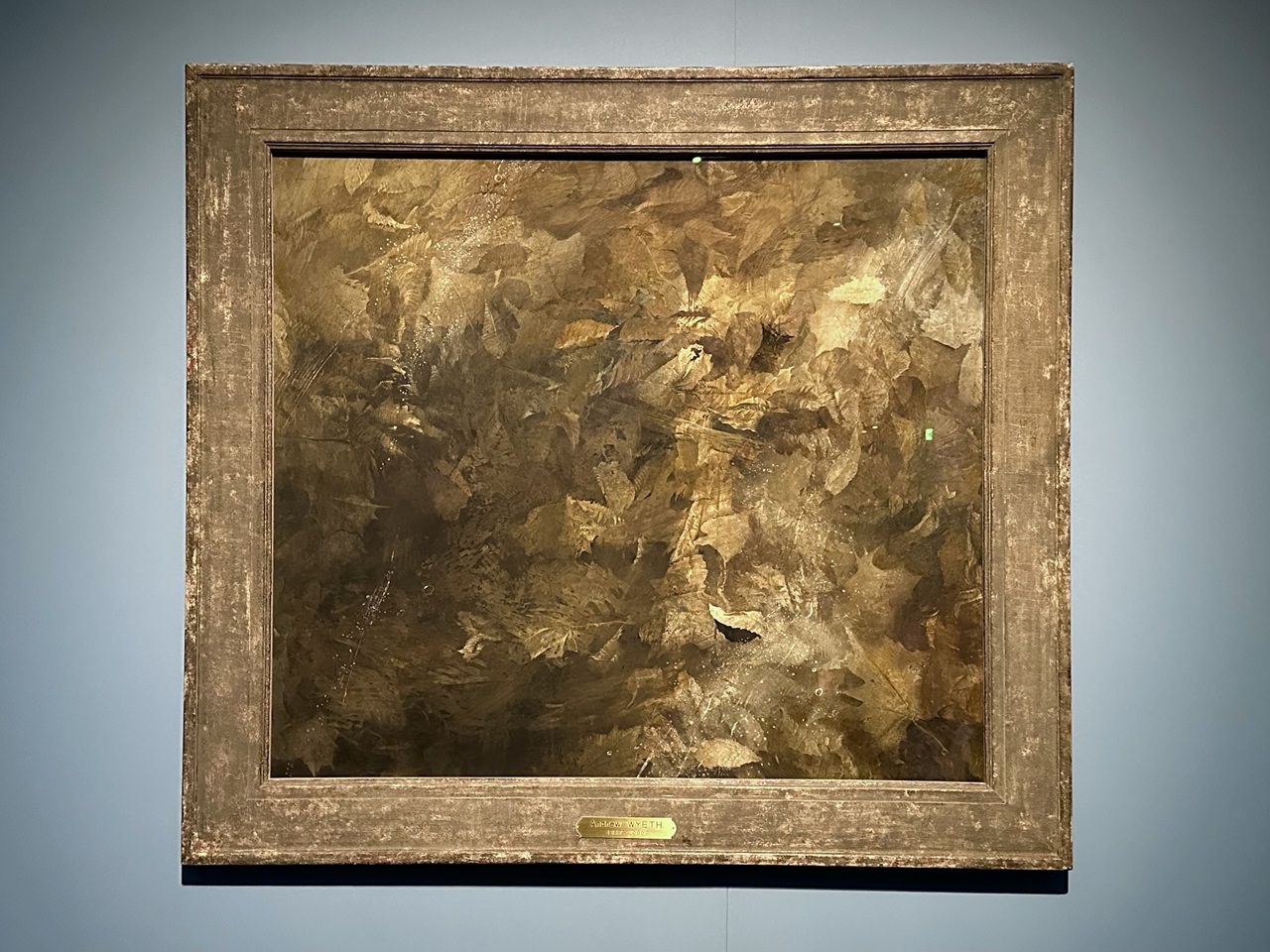
At first glance, "Thin Ice" (1969) appears to be an abstract painting, but it depicts a view of fallen leaves submerged in a waterway near Wyeth's home, seen through a thin layer of ice. This work was created during a period when Wyeth was grappling with a deep sense of loss after the death of Christina the previous year, and Wyeth himself said that the countless submerged leaves represent his experiences and the people he had met. In that context, it is possible to interpret what lies beyond this thin ice as the "world of death."
However, upon closer inspection, we notice tiny bubbles indicating the flow of water, revealing that it is not a completely still realm of death. Furthermore, the way a single leaf protrudes from the ice, casting a shadow on its surface, eloquently illustrates Wyeth's view of life and death, suggesting that life and death are not in opposition but rather a continuum.
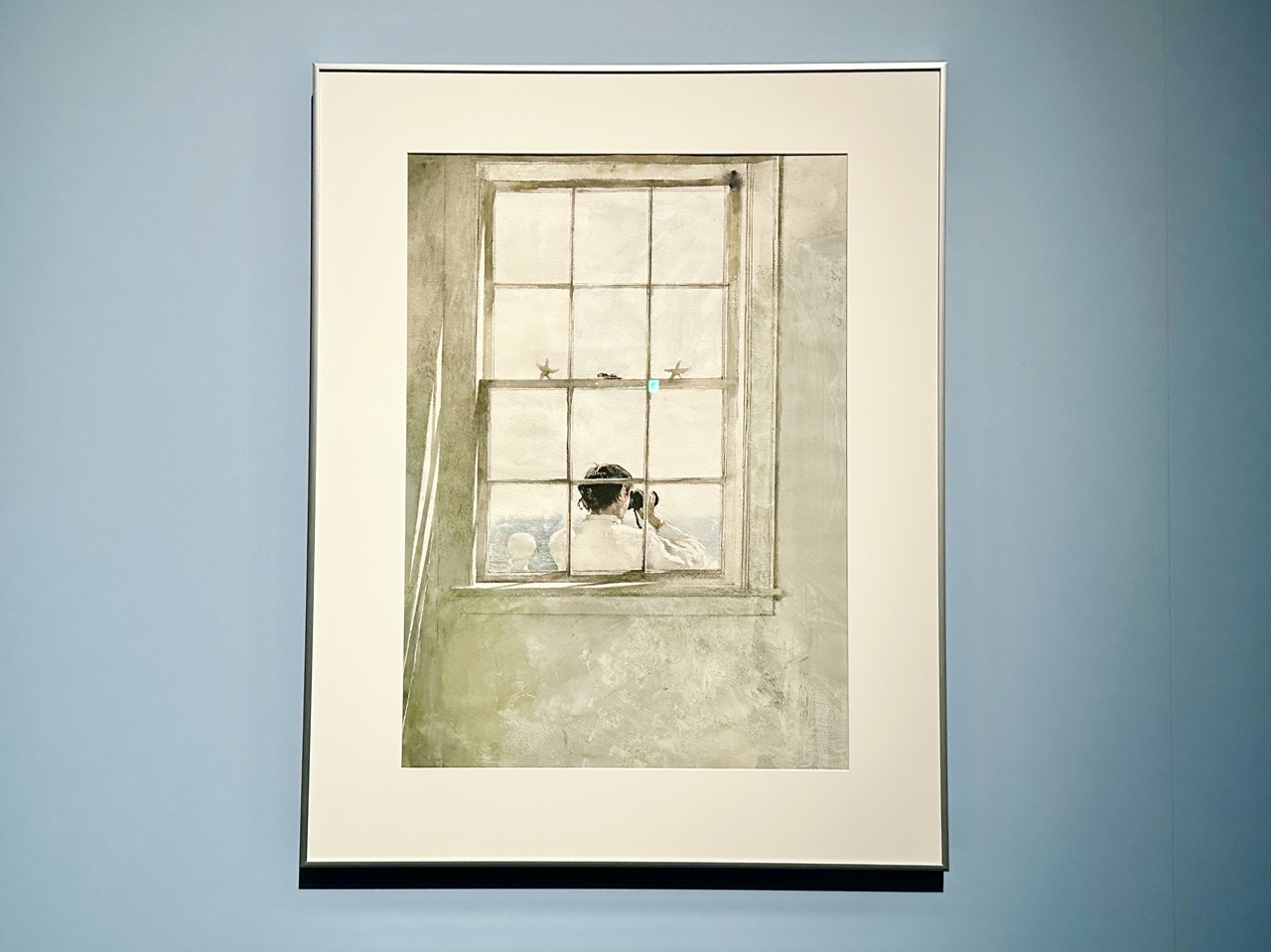
"Starfish" 1986 / Watercolor / Philbrook Art Museum, Tulsa
Wyeth's paintings, while always imbued with a sense of loss, also exude a faint glimmer of hope in the light streaming through the window and the image of birds crossing a boundary. His "aesthetics of transience" resonates deeply with the Japanese aesthetic sensibility. This exhibition, the first large-scale retrospective since his death, will provide an opportunity to re-examine the serene drama of his work.
Overview of the "Andrew Wyeth Exhibition Commemorating the 100th Anniversary of the Tokyo Metropolitan Art Museum"
venue
Tokyo Metropolitan Art Museum
Exhibition period
April 28, 2026 (Tuesday) – July 5, 2026 (Sunday)
Opening hours
9:30 AM – 5:30 PM
*Friday until 8:00 PM
*Entry is permitted until 30 minutes before closing time.
Closed days
The office will be open on Monday, June 29th.
Admission fee
General admission: 2,300 yen, university/vocational school students: 1,300 yen, ages 65 and over: 1,600 yen, ages 18 and under/high school students and younger: free
*Please check the official website for details.
Organizer
Tokyo Metropolitan Art Museum (Tokyo Metropolitan Foundation for History and Culture), Tokyo Shimbun, Fuji Television