
National Museum of Western Art
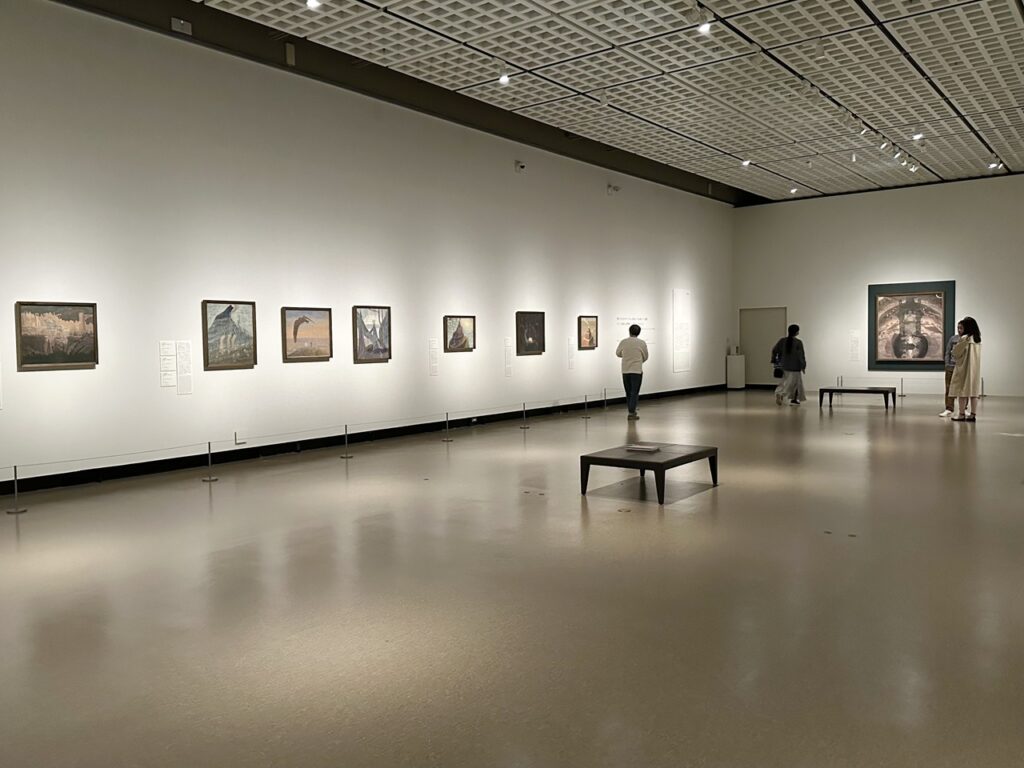
A major retrospective exhibition of the works of Mikalojus Konstantinas Čiurlionis (1875–1911), a leading Lithuanian artist, titled “Čiurlionis Exhibition: Inner Star Chart,” is currently being held at the National Museum of Western Art. This is the first major retrospective in Japan in 34 years. The exhibition runs until June 14, 2026 (Sunday).
*All exhibited works are by Mikaloyus Constantinas Čiurlionis and are from the collection of the National Museum of Art, MK Čiurlionis, Kaunas, Lithuania.
In the early 20th century, Čiurlionis demonstrated exceptional talent in both painting and music, laying the foundation for modern Lithuanian culture. During his short life of 35 years, he produced over 300 works during approximately six years of his artistic career.
His art was formed under the rule of the Russian Empire and amidst the national liberation movement, and is rooted in a unique Lithuanian identity, drawing inspiration from the country’s rich nature, history, and ancient folk tales. At the same time, he was interested in theosophy and astronomy, deepening his contemplation on the human spiritual world and the mysteries of the universe. Known for his unique expression that bridges Symbolist and Abstract painting, his innovative approach, particularly his transformation of musical forms into the structure of paintings, stemming from his sensibility as a composer, has solidified his reputation today.
Held in Lithuania to commemorate the 150th anniversary of his birth, this exhibition showcases approximately 80 representative paintings, prints, and drawings from the collection of the National Museum of Art, M. K. Čiurlionis (Kaunas).
The exhibition is structured into three chapters, with a prologue and epilogue added, and the prologue introduces the starting point of Čiurlionis’s artistic career.
Born in 1875 into a modest family in southern Lithuania, Čiurlionis displayed musical talent from a young age under the tutelage of his organist father. In 1894, at the age of 18, he enrolled in the Warsaw Conservatory in neighboring Poland to study composition. He honed his skills there until 1901, composing musical works including his representative symphonic poem “In the Forest.” After studying at the Royal Conservatory of Leipzig in Germany, it wasn’t until around 1902 that he seriously pursued his long-held dream of becoming a painter.
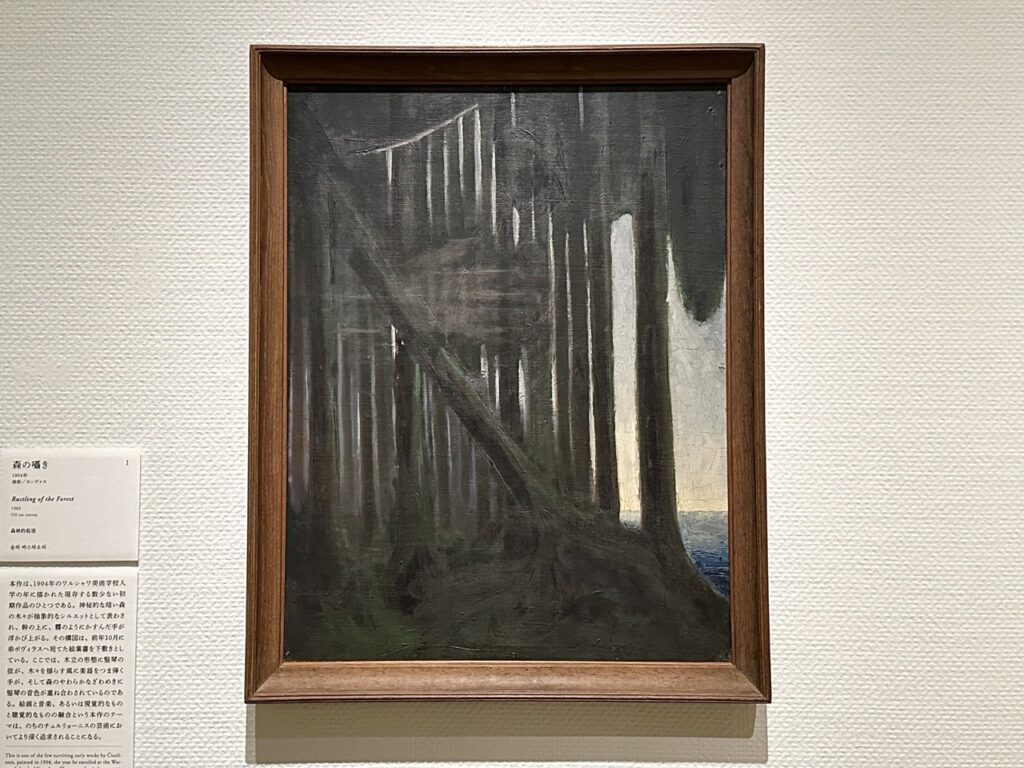
His early paintings are said to have strongly exhibited Symbolist expression, but unfortunately, most of them have been lost. “Whispers in the Forest” (1904), painted in 1904 when he enrolled as a first-year student at the newly established Warsaw Academy of Fine Arts, is a valuable surviving example.
In the painting, a hand, hazy like mist, emerges before a grove of trees standing in a mysterious, dark forest. Comparing it to a postcard of the same motif created the previous year, it becomes clearer how the form of the trees is superimposed with the strings of a harp, and the soft murmur of the forest with the sound of a plucked harp. This work already strongly reflects the musical sensibility that would characterize Čiurlionis’s paintings.
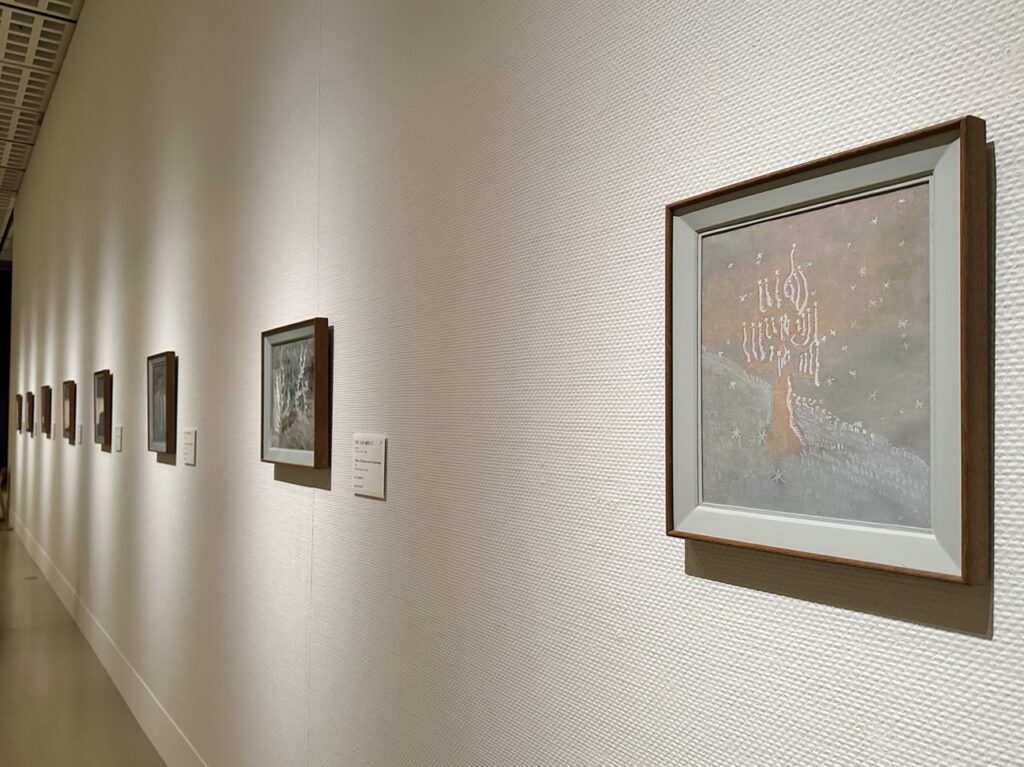
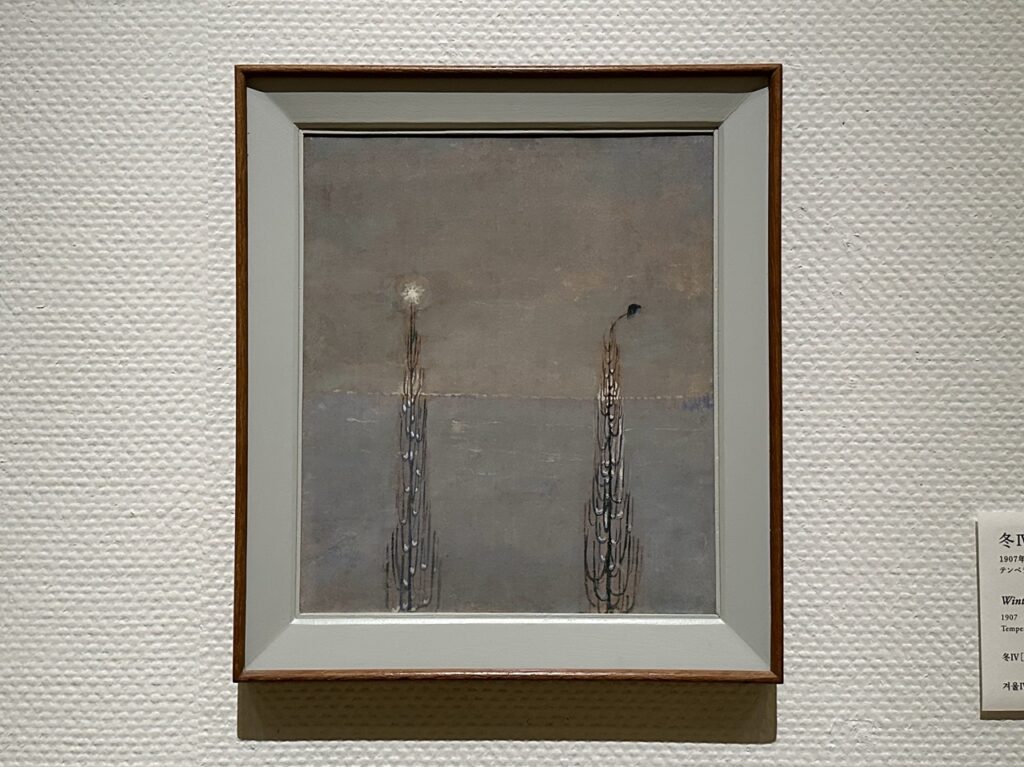
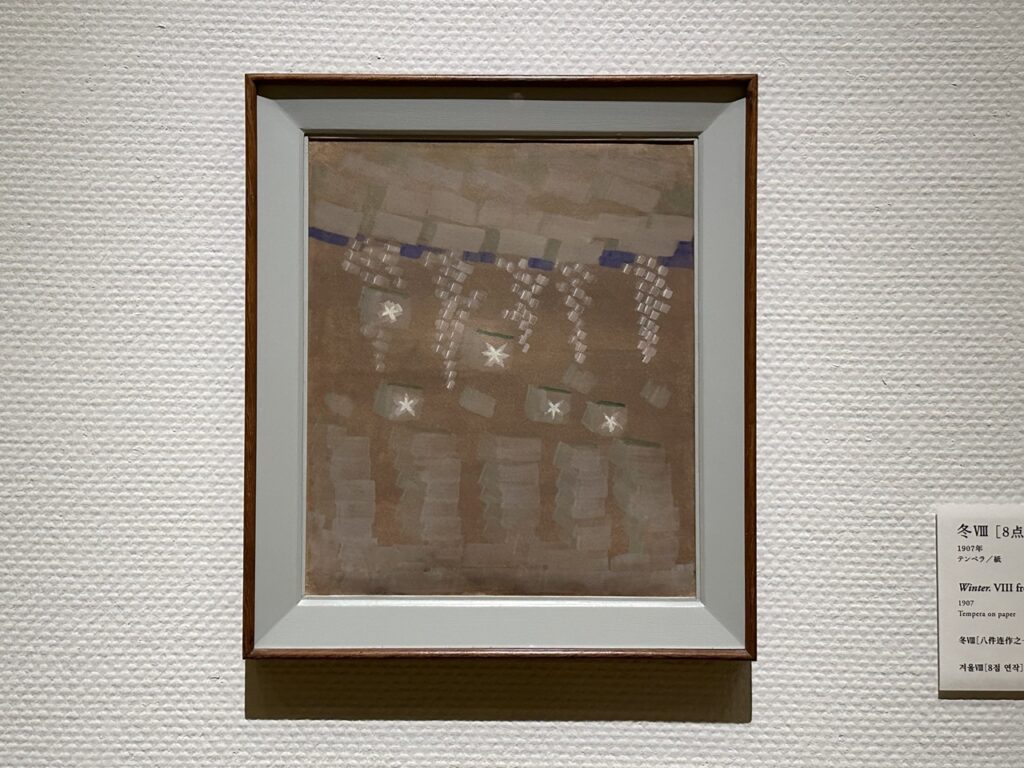
Chapter 1, “The Rhythm of Nature,” traces the depiction of nature as portrayed by Čiurlionis.
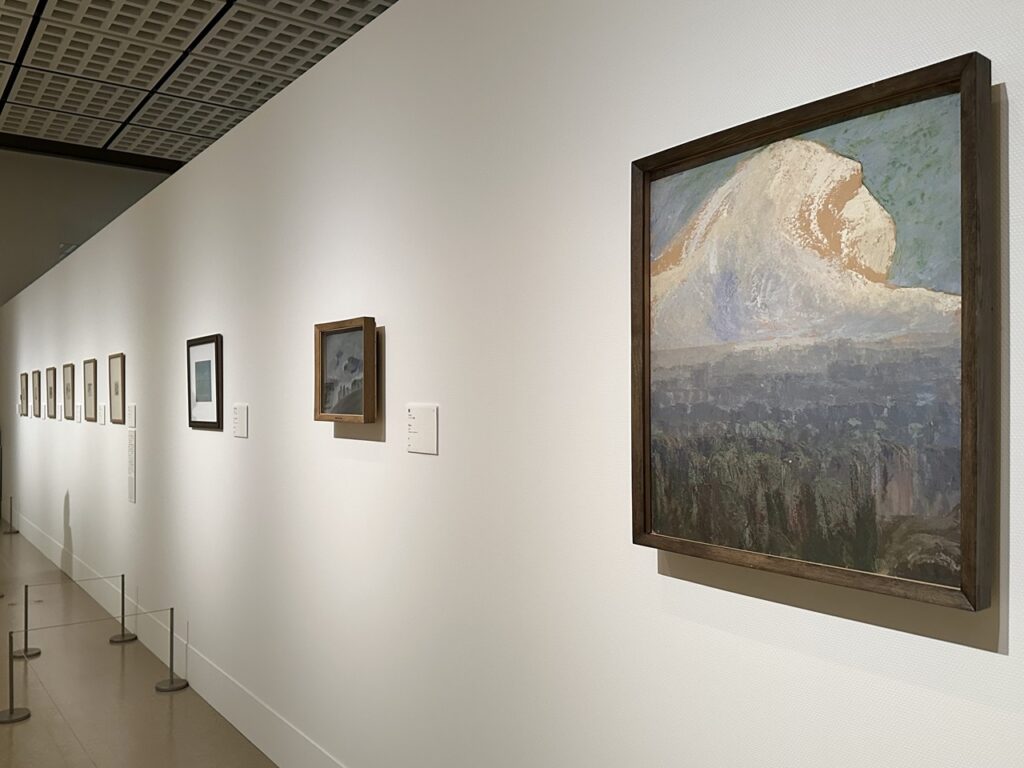
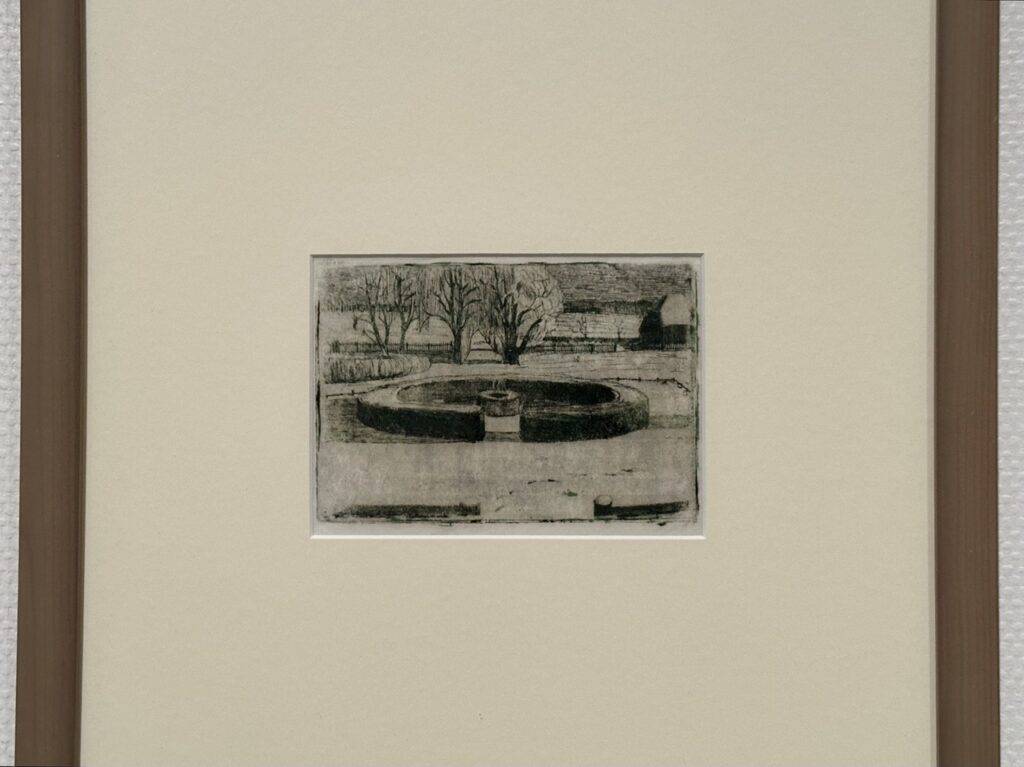
While based in Warsaw, Čiurlionis’s rich natural environment remained a source of inspiration for his art. However, his paintings rarely depicted realistic landscapes; his primary focus was on the dynamic changes of nature. He abstractly, and sometimes anthropomorphically, captured the rhythms and cyclical processes inherent in nature, imbuing them with lyricism and symbolism.
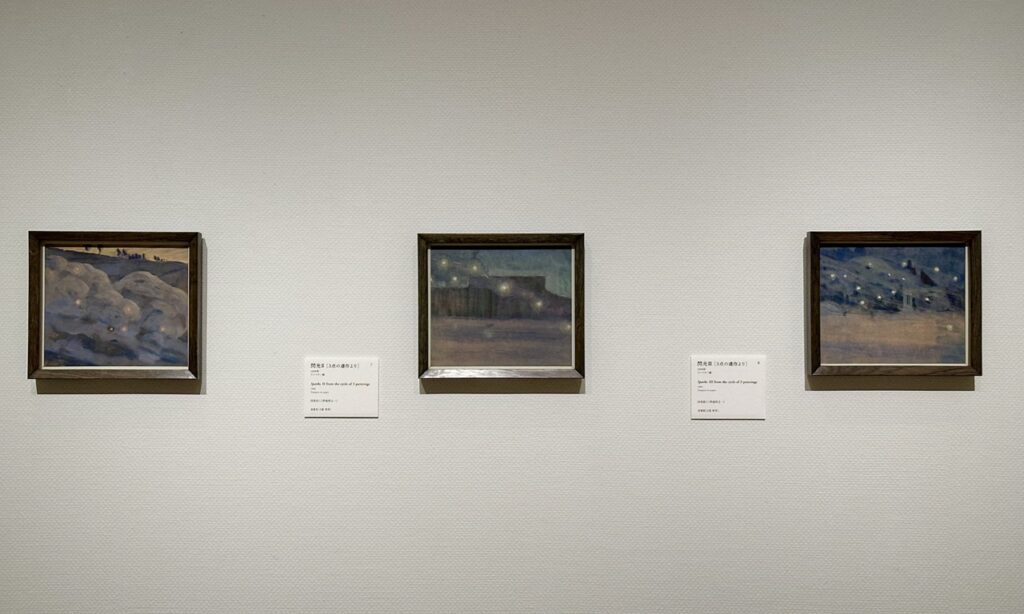
At first glance, the flash of light might evoke natural phenomena like the bioluminescence of fireflies. However, for Čiurlionis, the “gate” is a crucial motif, symbolizing the boundary between reality and fantasy, the visible and the invisible, or perhaps an entrance to a spiritual dimension or a passageway for the soul. Considering these points, it can also be interpreted as suggesting a process in which something fundamental, such as spirit or soul, undergoes transformation through the gate.
Chapter 2, “Symphonic Painting,” finally tackles the theme of Čiurlionis’s attempt to fuse painting and music.
Čiurlionis focused on this theme intensively and systematically between 1907 and 1909. In Europe at that time, a movement to fuse painting and music was spreading among painters, influenced by the ideas of Baudelaire, Wagner, and Nietzsche. However, while many painters were interested in synesthetic musical expression through color, Čiurlionis, from his unique perspective as a composer, applied the structure of music itself to painting. This is precisely why Čiurlionis occupies a unique position in the history of modern art.
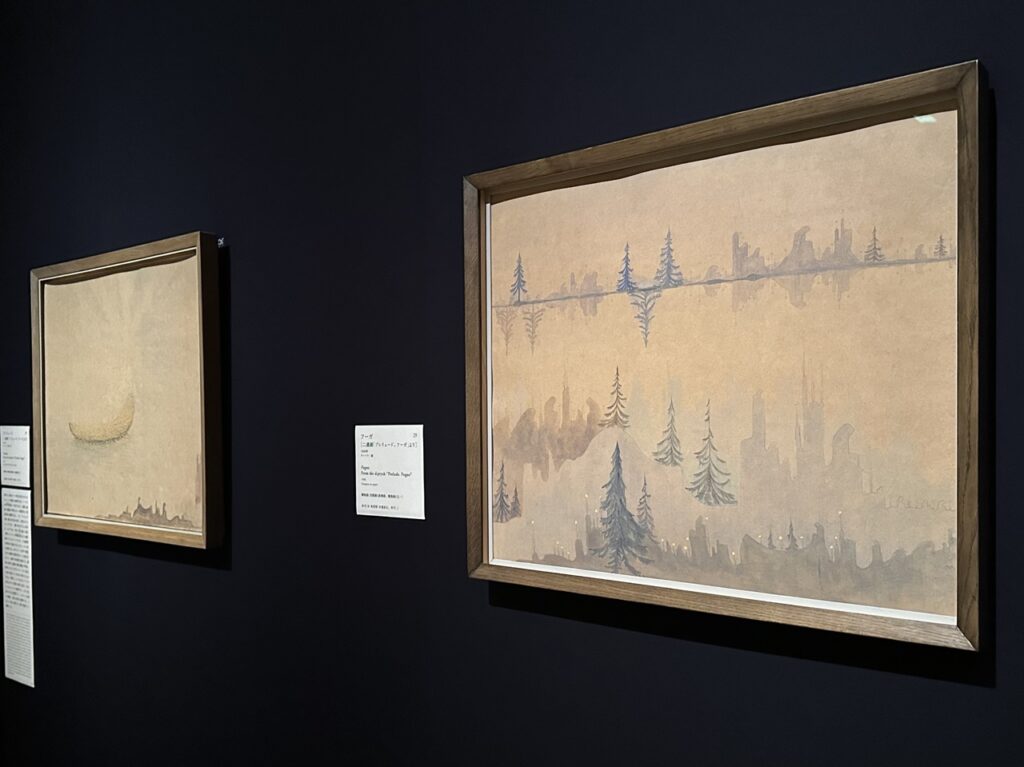
In “Prelude,” the golden ship floating in the center of the screen immediately catches the eye, but what is noteworthy is how the figure sitting with its head bowed in the lower right corner of the screen, the hand pointing upwards, and the tower-like silhouette continue into the lower part of the “Fugue.”
In the following “Fugue,” the fir tree takes center stage, in addition to the aforementioned motifs. What initially appears to be a tranquil lakeside scene is, upon closer inspection, noticing a mismatch between the image of the fir tree and its reflection on the water’s surface. Here, adhering to the structure of the fugue, each motif is repeated with subtle variations in form and color, evoking musicality through variations in scale and sparseness.
As seen in this work, Čiurlionis abandoned the traditional perspective-based representational space and constructed the image with multiple horizontally segmented layers. Then, much like counterpoint (a compositional technique such as fugue) in which multiple independent melodies are harmonized and progress simultaneously, he made each layer resonate, successfully visually representing the impression of polyphony.
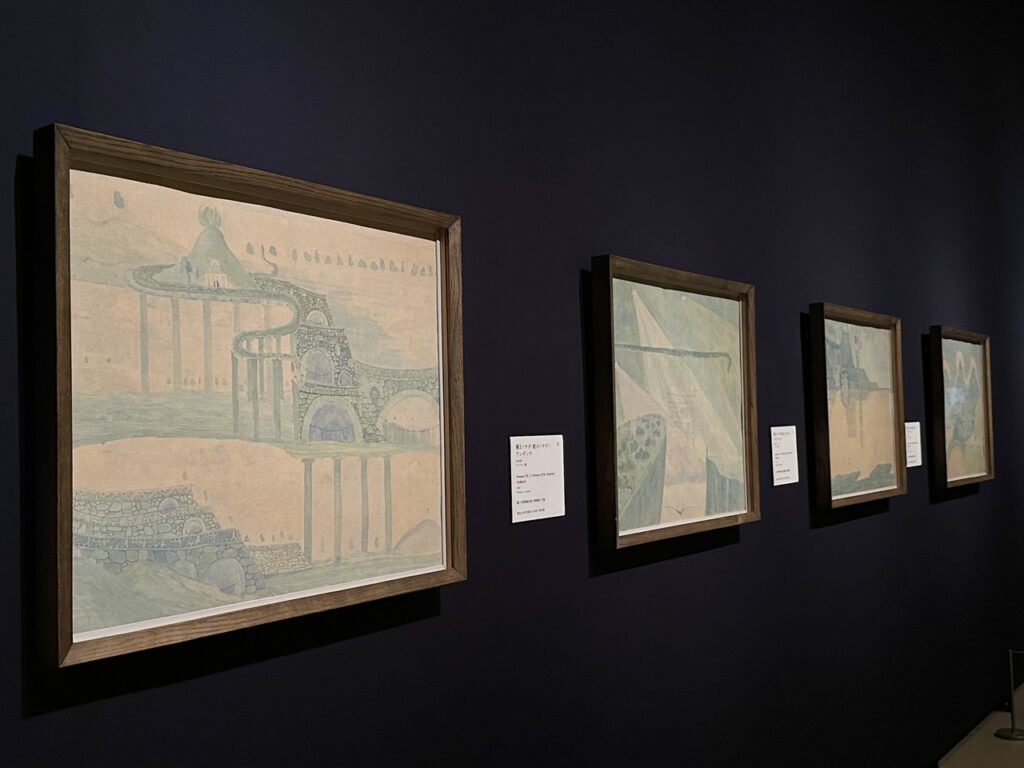
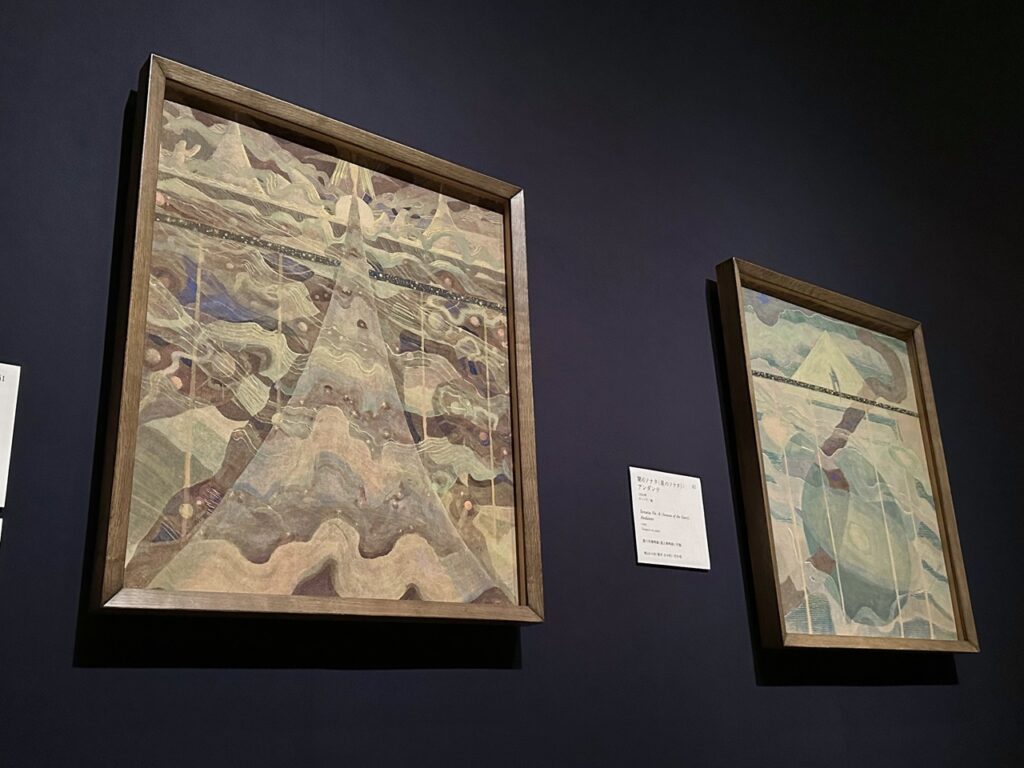
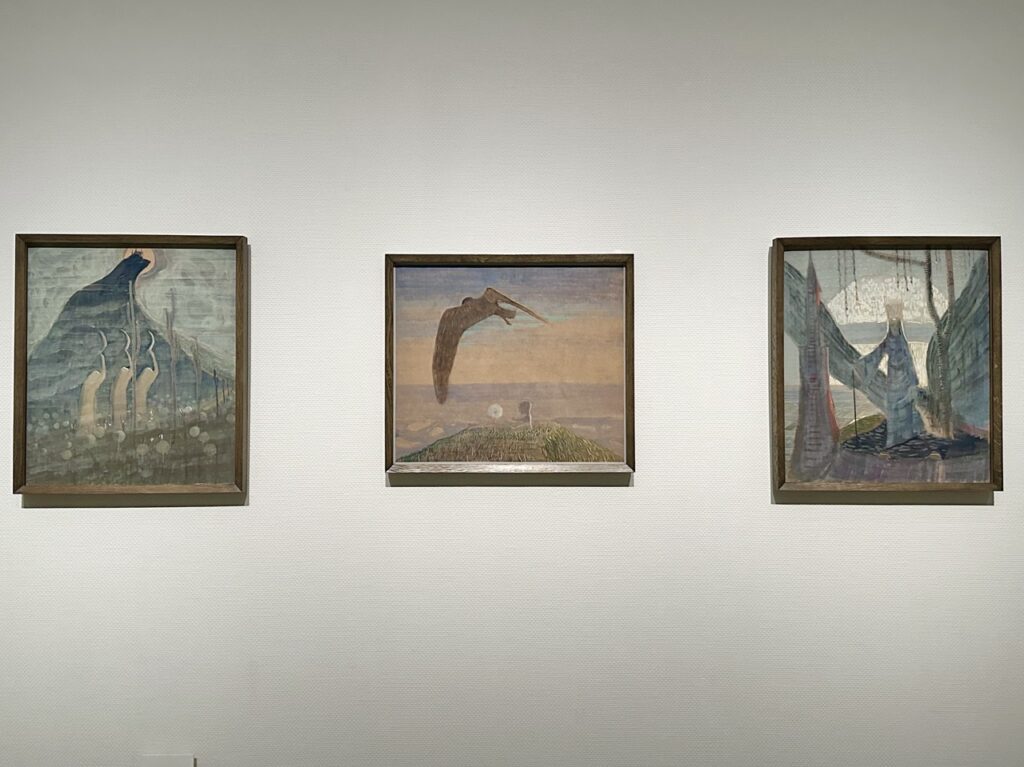
Furthermore, Čiurlionis introduced the sonata form of music into painting, creating seven series of works with more grand compositions throughout his life. This exhibition features three of these works: “Sonata No. 3 (Serpent Sonata),” “Sonata No. 5 (Sea Sonata),” and “Sonata No. 6 (Star Sonata)” (all from 1908). Each chapter of the series is given a title indicating the tempo, and “Sonata No. 5 (Sea Sonata)” is composed of three chapters: “Allegro,” “Andante,” and “Finale.”
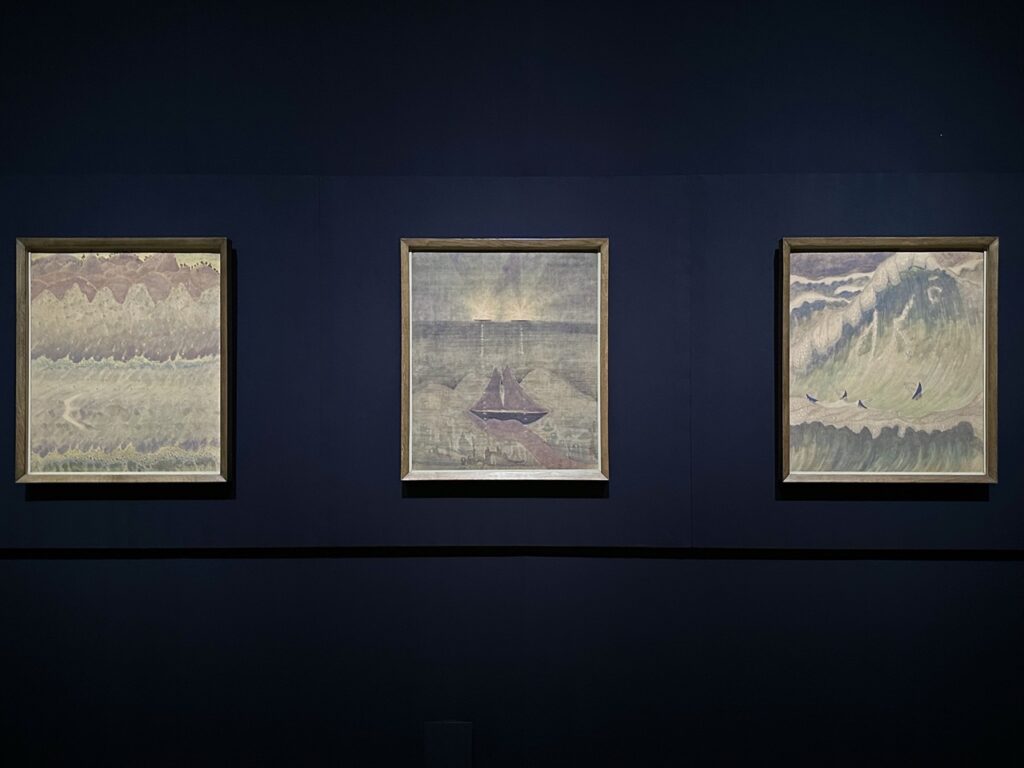
In the “Allegro,” composed of regular horizontal layers, the sea is perceived as a musical score with bouncing notes, and the waves, foam, and golden particles spreading along the shore create a lively rhythm. In the following “Andante,” the movement of the waves becomes more leisurely. In a tranquil atmosphere, the gaze sinks to an underwater kingdom where images from Lithuanian mythology overlap. And in the “Finale,” motifs such as foam and sailing ships converge with the exhilarating rhythm of rising waves, leading to a dramatic conclusion.
This work was conceived and created by Čiurlionis during a summer vacation with his fiancée, Sophia, at a resort on the Baltic Sea, and some believe its festive atmosphere is an expression of his personal happiness. Furthermore, the imagery of the great wave in the “Finale” has been noted as being influenced by Katsushika Hokusai’s “The Great Wave off Kanagawa” from his “Thirty-Six Views of Mount Fuji.” (※This work is currently on display in the concurrently running exhibition, “Hokusai: Thirty-Six Views of Mount Fuji – From the Inouchi Collection.”)
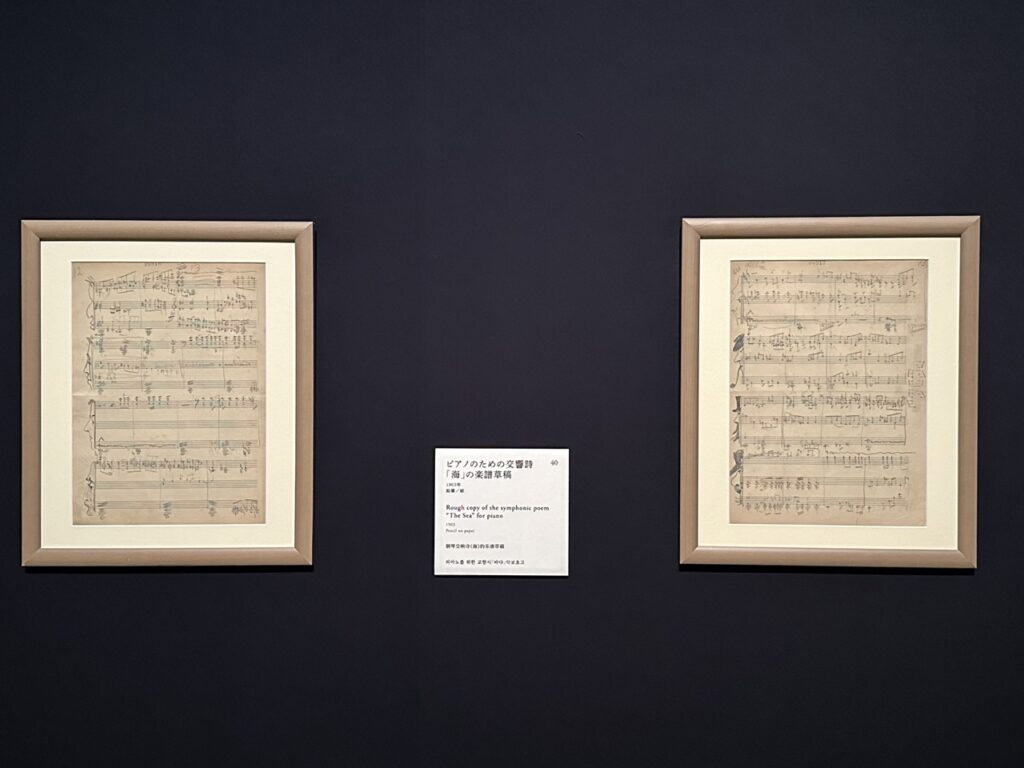
The sea is associated with images of eternity and the cycle of life, and the repetition of waves embodies musical rhythm, making it a motif that deeply resonates with Čiurlionis’s sensibility, and it was also treated as a theme in his symphonic poems and prose poems. In this chapter’s exhibition room, the symphonic poem for piano “La Mer” is played as background music, and the manuscript of the score for “La Mer” is also on display. You will be able to explore from multiple perspectives how Čiurlionis listened attentively to the presence of nature and “transcribed” its melodies into his works.
Chapter 3, “Fantasy Dedicated to Lithuania,” focuses on the Lithuanian national character while introducing works from Čiurlionis’s mature period.
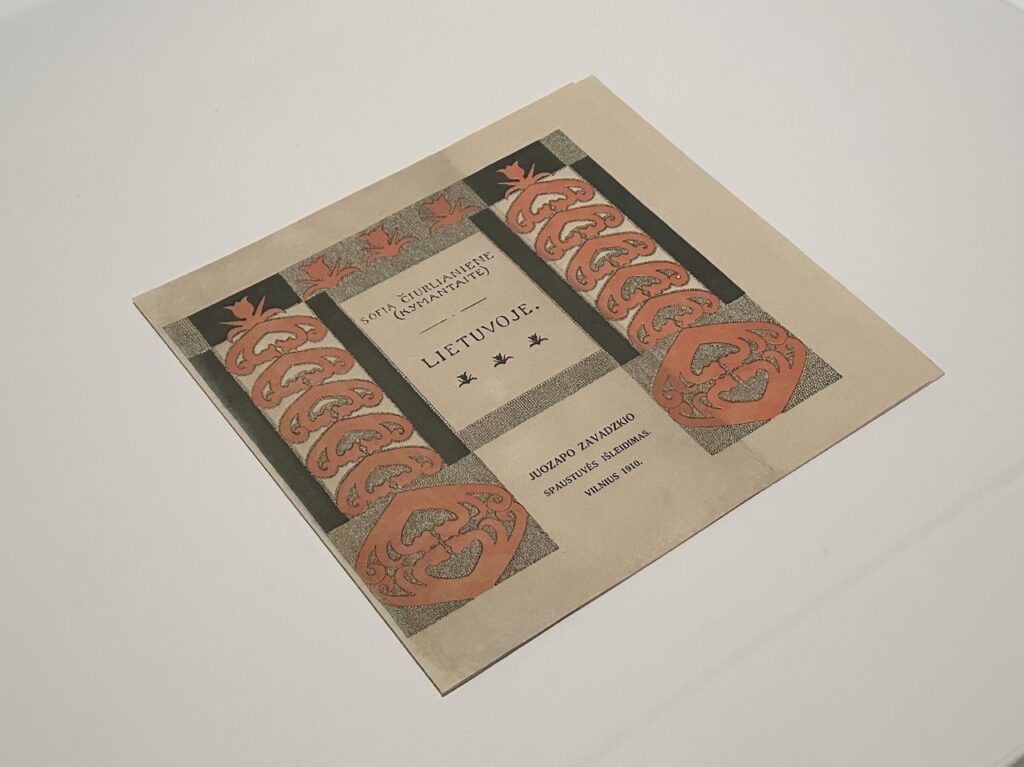
Following Russia’s defeat in the Russo-Japanese War of 1904-1905 and the First Russian Revolution, the national liberation movement rapidly gained momentum in Lithuania. Čiurlionis, as one of the leading figures in the country’s art world, also dedicated himself to the movement, creating essay collections that served as a spiritual manifesto for Lithuanian culture, as well as illustrations for collections of Lithuanian folk songs. At its core was the belief that a re-evaluation of local folklore, folk songs, and crafts—all aspects of national culture—was essential for the formation of a lost national identity and the construction of a distinctly Lithuanian artistic style.
On the other hand, national culture also served as a good source of inspiration for Čiurlionis’s own work. For example, the cross that appears in “The Lithuanian Cemetery” (1909) is one of the representative motifs of the country, embodying the nation’s desire for independence.
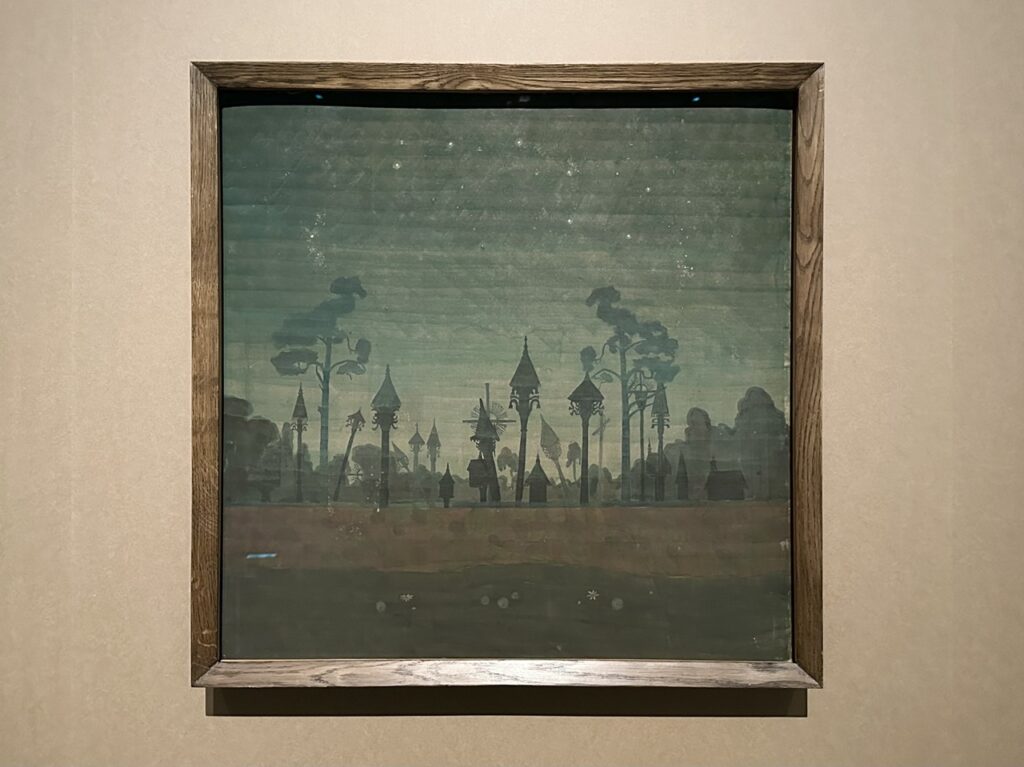
In this work, the sky, based on the translucent blue-green characteristic of tempera painting, shines with the Big Dipper, a guiding light for the soul, while the silhouettes of crosses are rhythmically arranged on the ground. These crosses are a fusion of Lithuania’s traditions of nature worship and ancestor worship with the symbols of Christianity, which was introduced as the state religion in the 14th century, and are original designs richly adorned with decorative motifs of plants, animals, and celestial bodies.
Gradually, the cross itself became a part of folk belief, and it was erected everywhere—in cemeteries, roadsides, and on farm grounds—as a means of prayer and commemoration in a broader sense, not only for mourning the dead, but also for safe travels and bountiful harvests. For this reason, it became a target of repression under the Russian Empire’s assimilation policies.
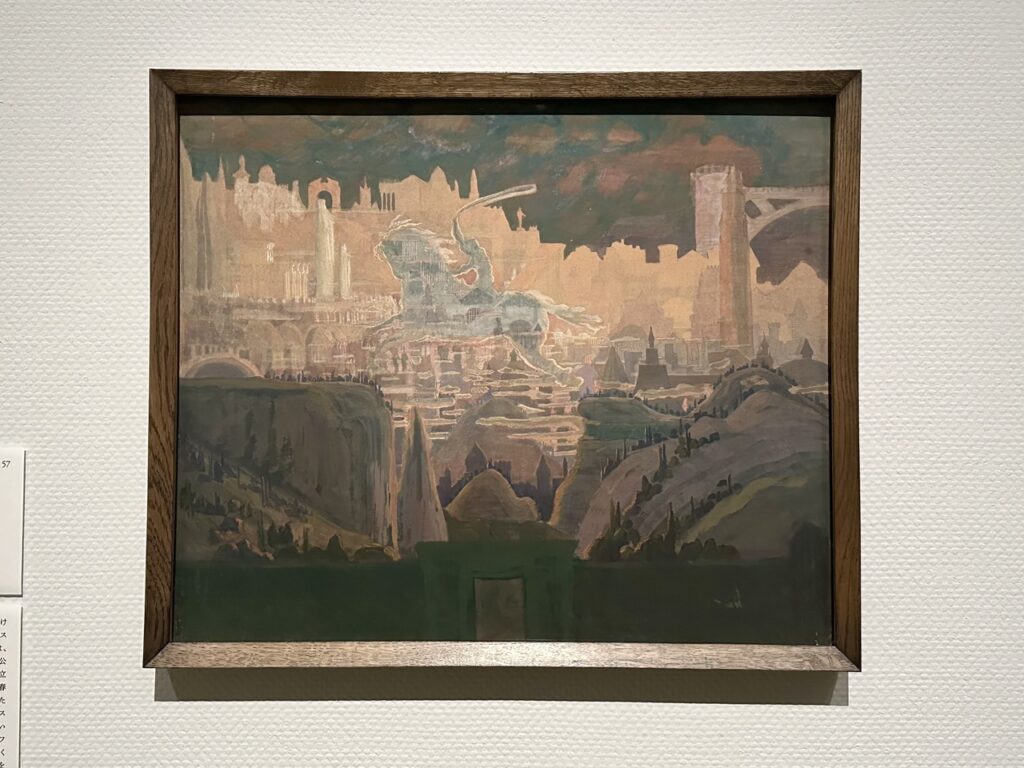
More solemnly proclaiming national revival is “Prelude (Prelude of the Knight)” (1909). Čiurlionis, who rarely depicts specific landscapes, has sprinkled elements reminiscent of Vilnius, the capital of Lithuania, into this city. The transparent knight (Vitis) bravely galloping above it is a symbol of national independence and glory, which was the national emblem of the Grand Duchy of Lithuania from the 14th to the end of the 18th century.
The magical world, kings and princesses, knights, journeys, and roads are typical elements of this genre, and “Fairy Tale (A Fairy Tale of Kings)” (1909) is a work with kings as its theme. Set in a forest shrouded in darkness, two kings gaze upon a shining dome containing the beautiful nature and rural landscapes of Lithuania. They embody the duality of the world, while also being guardians watching over small Lithuania from outside the world.
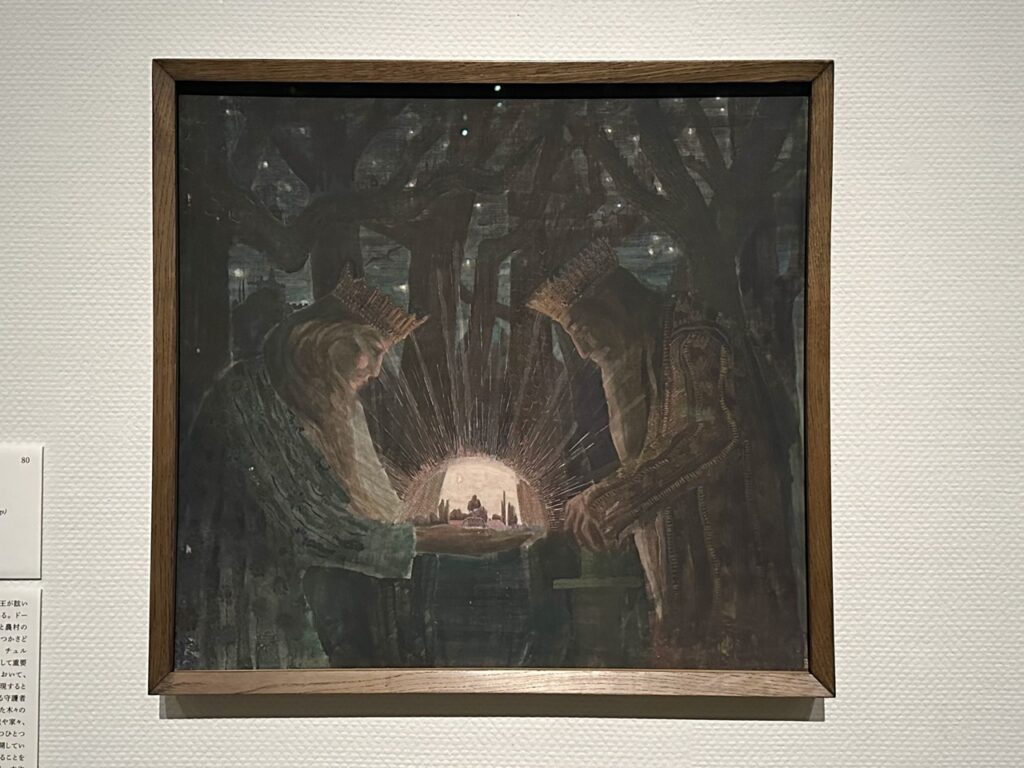
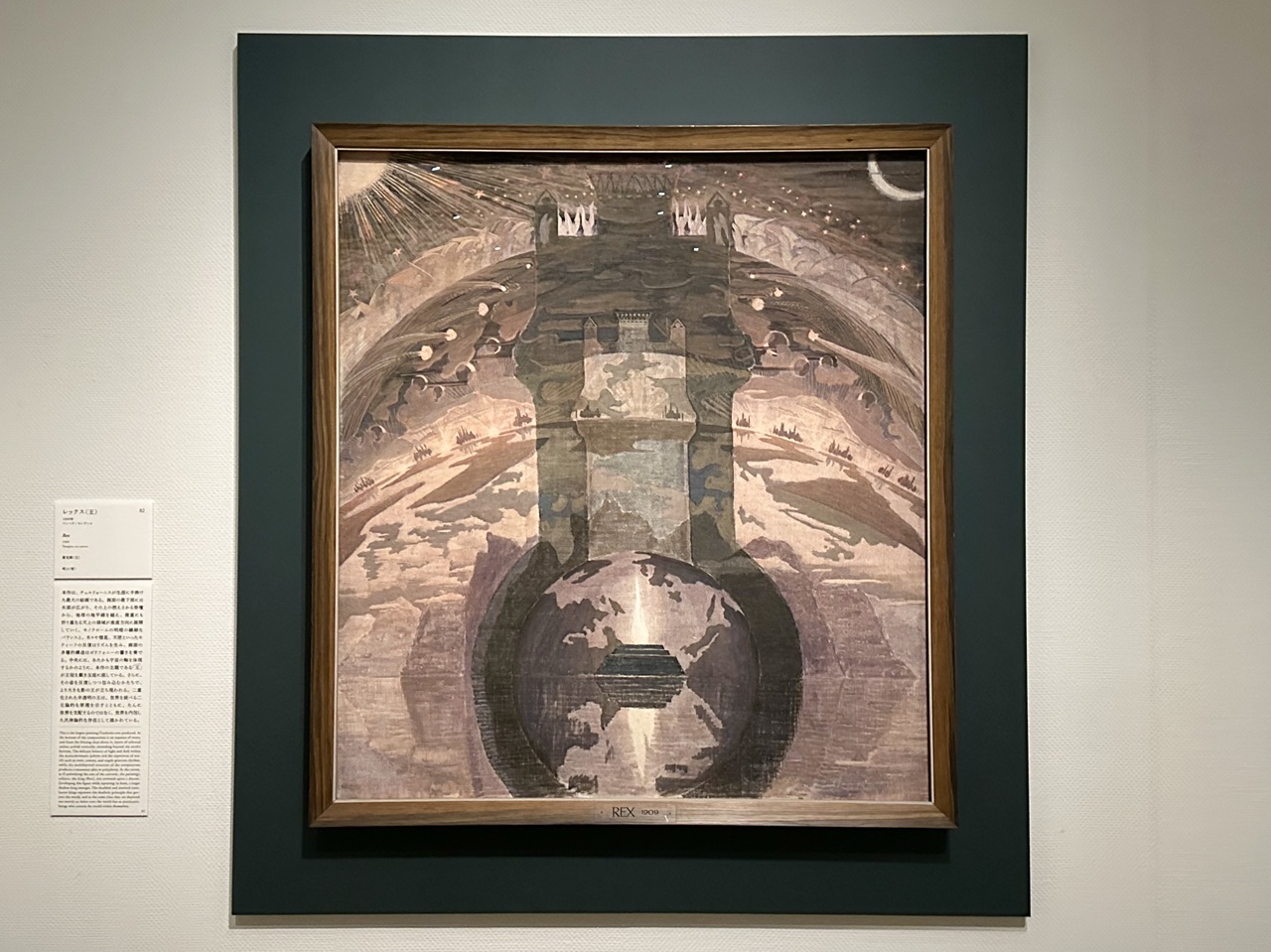
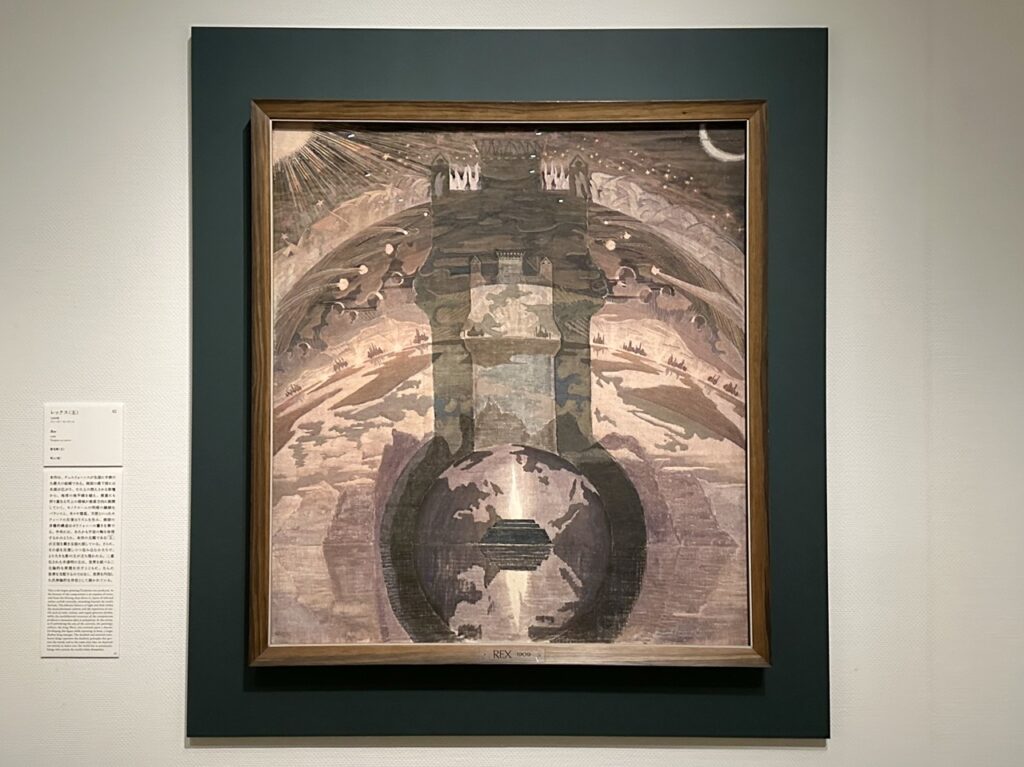
The “king” has consistently been one of Čiurlionis’s important themes from the early stages of his artistic career. The image of the king as a transcendent being who governs the world becomes definitive in the masterpiece “Rex (King)” that appears in the epilogue of this exhibition.
On the other hand, Čiurlionis was exposed to the international intellectual trends of the time, such as theosophy and astronomy, which deepened his reflections on the human spiritual world and the mysteries of the universe.
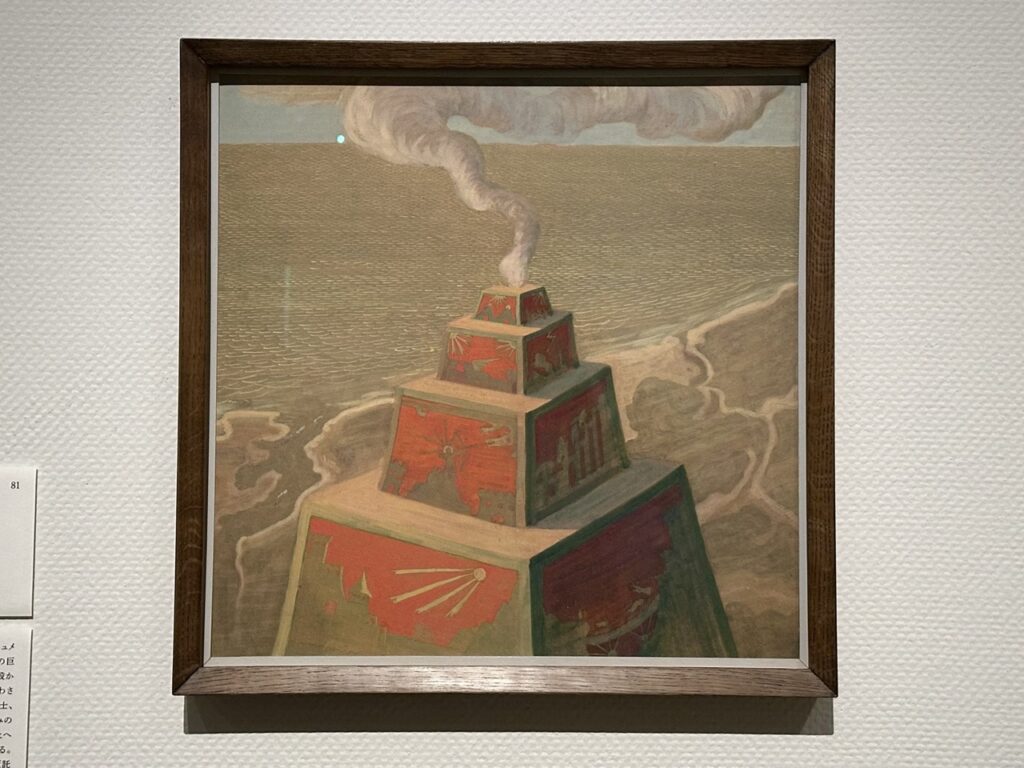
The Altarpiece (1909), being exhibited in Japan for the first time, is a masterpiece by Čiurlionis, imbued with a sense of cosmic vision and a unique spatial representation from a bird’s-eye view. Depicted on the sides of the gigantic, stepped altar are motifs such as knights and angels, all of which hold symbolic significance for Čiurlionis. Their intricate interplay creates the appearance of a magnificent epic poem, progressing from the lower to the upper levels. At the same time, the motif of the stairs itself symbolizes the various stages of the ascending human spirit, and the number of steps is thought to correspond to the theosophical theory that divides the structure of the universe and humanity into seven stages.
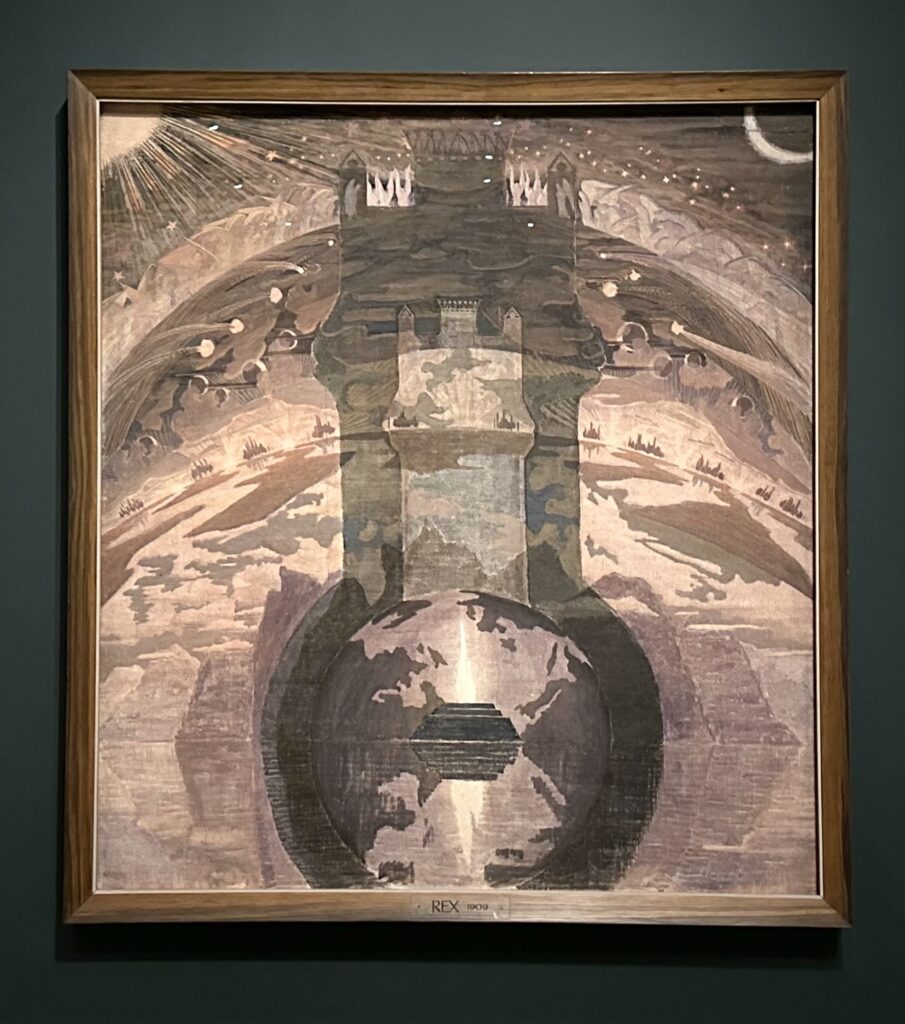
The exhibition concludes with the epilogue of “Rex (King)” (1909), a masterpiece that most comprehensively demonstrates Čiurlionis’s thought and formal explorations, and is also his largest painting. In a canvas colored with beautiful monochrome light and shadow, the four elements that constitute the world—fire, water, earth, and air—are condensed. Under a multifaceted structure reminiscent of a grand symphonic poem, countless motifs such as stars, angels, and trees are repeated, while a double-layered, translucent king sits atop the earth, seemingly piercing the universe vertically.
In this still largely mysterious work, Čiurlionis integrated the diverse ideas he had absorbed—including indigenous Lithuanian nature worship, Hinduism, Egyptian mythology, theosophy, astronomy, and natural science—into a single narrative system, creating a new story distinct from the Christian God. The two kings, while demonstrating dualistic principles, are depicted not merely as rulers of the world, but as pantheistic beings integrated with nature and the universe.
This work was painted during a period when Čiurlionis, seeking further advancement as a painter, expanded his activities to Saint Petersburg, and as he had hoped, it was highly praised by Alexander Benois, a leading figure in the Russian art world. However, Čiurlionis was unaware of this, and due to the grueling nature of his work and the mental stress, his physical and mental health gradually deteriorated. He passed away on April 10, 1911, at the young age of 35, from pneumonia.
Čiurlionis was a unique artist who fantastically depicted music and painting, Lithuanian national identity, and contemplations on the human psyche and the mysteries of the universe. Since 2000, exhibitions of his work have been held throughout Europe, and there is a growing momentum for re-evaluation of his original world. Please come and enjoy it at the venue.
Summary of the “Ciurlionis Exhibition: The Inner Star Chart”
| venue | National Museum of Western Art, Special Exhibition Room B2F (7-7 Ueno Park, Taito-ku, Tokyo) |
| Exhibition period | March 28, 2026 [Sat] – June 14, 2026 [Sun] |
| Closed days | Monday, May 7th [Thursday] (However, the museum will be open on May 4th [Monday, public holiday]) |
| Opening hours | 9:30 AM – 5:30 PM (until 8:00 PM on Fridays and Saturdays) *Last entry is 30 minutes before closing. |
| Admission fee (tax included) | General admission: 2,200 yen, University students: 1,300 yen, High school students: 1,000 yen, Junior high school students and younger: Free
*On the day of your visit only, you can use the same ticket to view both “Hokusai’s Thirty-Six Views of Mount Fuji: From the Inouchi Collection” and the permanent exhibition. *Tickets can be purchased at Etix or the ticket counter at the National Museum of Western Art. |
| Organizer | National Museum of Western Art, Yomiuri Shimbun, National Museum of Čiurlionis |
| Official website of the operator | https://2026ciurlionis.nmwa.go.jp/ |
*The information in this article is current as of the time of reporting. Please check the exhibition’s official website for the latest information.
