
Taito City Calligraphy Museum
The Taito City Calligraphy Museum, located in Negishi, Taito Ward, Tokyo, is a rare specialized museum in Japan dedicated solely to calligraphy. It boasts a collection of approximately 16,000 items of significant importance for the study of Chinese and Japanese calligraphy history. Beyond the ink writing on paper that many people imagine when they hear the word “calligraphy,” the museum’s appeal lies in its ability to trace the history of Chinese writing and characters through diverse written materials, such as “oracle bone scriptures,” the oldest existing Chinese characters inscribed on turtle shells and bones, and “stone scriptures,” Confucian classics inscribed on stone.
The Calligraphy Museum is currently holding a special exhibition, “Nakamura Fusetsu 160th Anniversary Special Feature,” to commemorate the 160th anniversary of the birth of its founder, Nakamura (1866-1943), who was both a Western-style painter and a calligrapher. The exhibition showcases works and materials from throughout his life. (The exhibition runs until July 12th, 2026.)
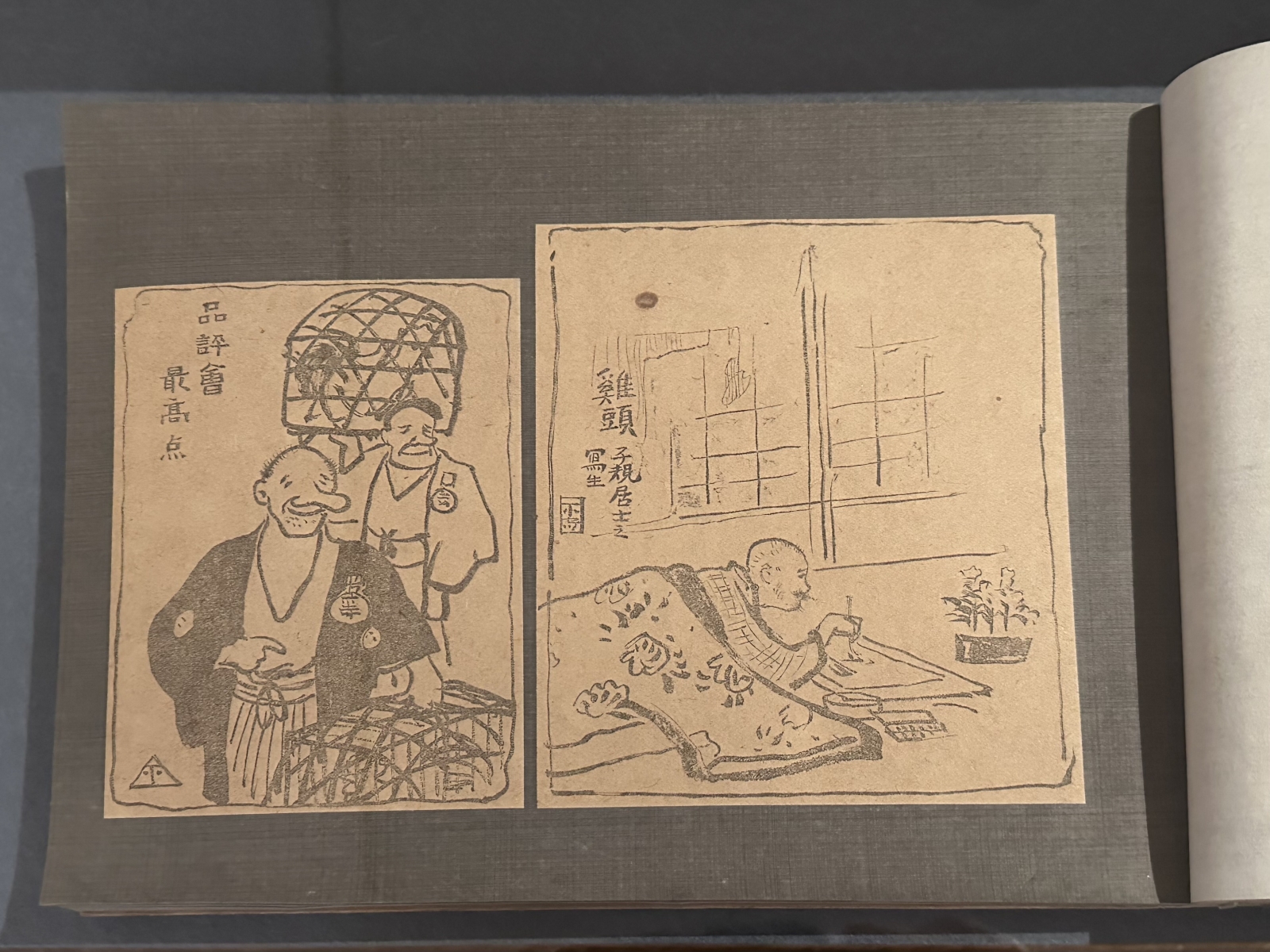
Unlike typical museum exhibits, this exhibition features a large number of oil paintings, watercolors, and newspaper illustrations, making it an accessible exhibition even for art fans who might feel that calligraphy is difficult or intimidating.
This time, we were given a tour of the exhibition by Mr. Nobuhiro Nakamura, the chief researcher at the museum.
*There will be changes to the exhibits during the exhibition period. See the list of exhibits here .
First half of the exhibition: April 4th (Sat) – May 24th (Sun)
Late exhibition: May 26th (Tuesday) – July 12th (Sunday)
*All featured works are from the collection of the Taito City Calligraphy Museum.
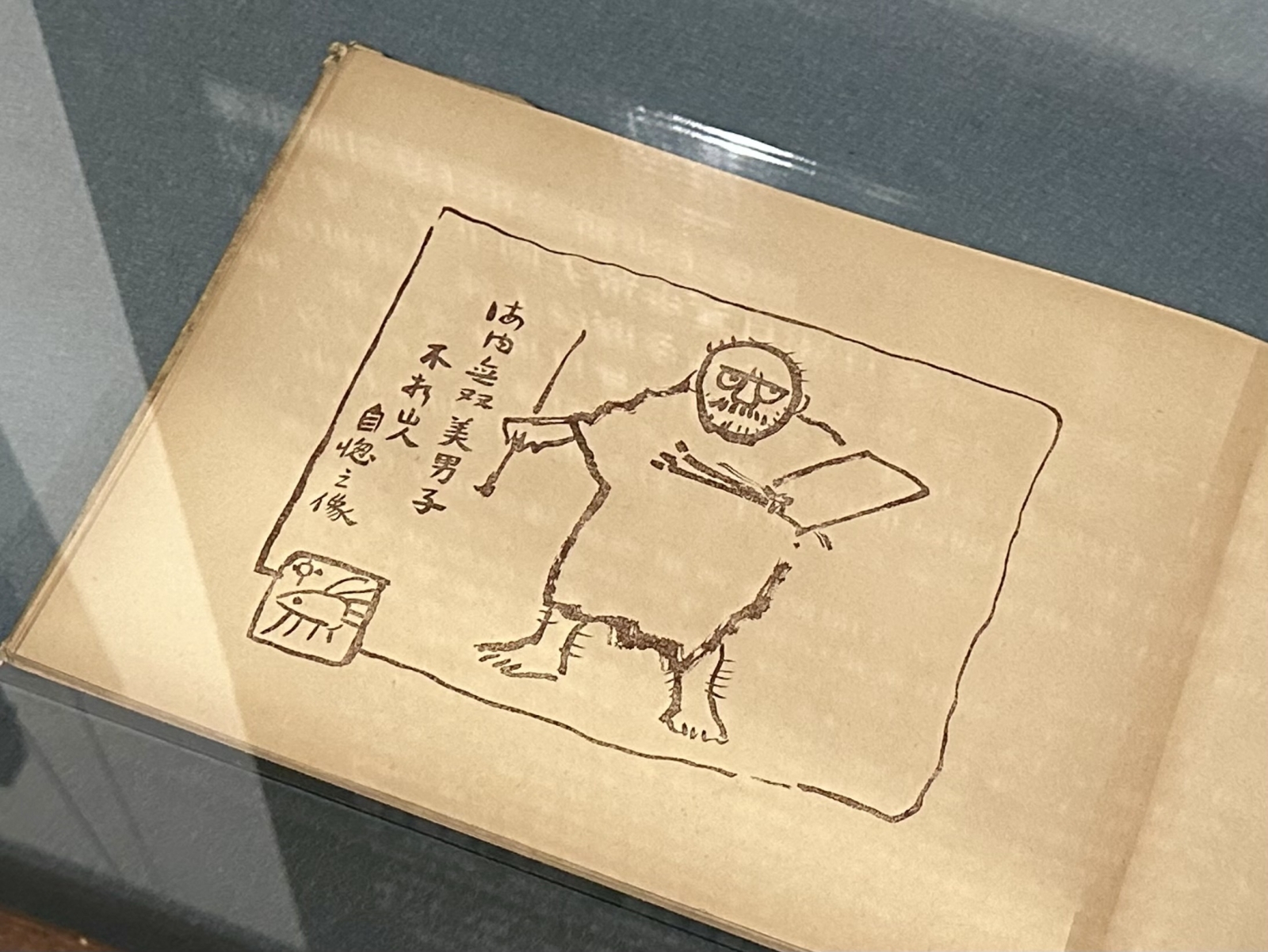
Nakamura Fusetsu (formerly Nakamura Sekitaro), famous for creating the sign lettering for “Shinjuku Nakamuraya,” was a figure who left a significant mark on both the Western-style painting and calligraphy worlds throughout the Meiji, Taisho, and Showa periods.
Born in Kyobashi, Edo in 1866, Fusetsu lost his job as an official of the shogunate during the turmoil of the Meiji Restoration when he was five years old. Relying on his mother’s connections, he moved to Nagano, where he spent his boyhood working as an apprentice in a kimono shop and as a confectioner, while studying Chinese classics, Nanga painting, and calligraphy in his free time. Aspiring to become a mathematician, he became an elementary school teacher at the age of 19, teaching arithmetic and drawing, but he soon realized that language proficiency was essential to learning more advanced mathematics. For Fusetsu, who had a hearing impairment, this was not an easy path, and he decided to seriously pursue his second-choice dream: painting.
“Based on these experiences, I decided to use the name ‘Fuzetsu’ (meaning ‘unwavering’ or ‘unsettled’) to express my determination that I would never be discouraged or lose heart again,” says Nakamura.
In 1887, at the age of 23, he moved to Tokyo and, relying on a relative, lodged in a vacant room at the villa of Takahashi Korekiyo, who would later become Prime Minister. He enrolled in the art school “Fudosha,” run by the Western-style painter Koyama Shotaro, and received painting instruction there for over a decade.
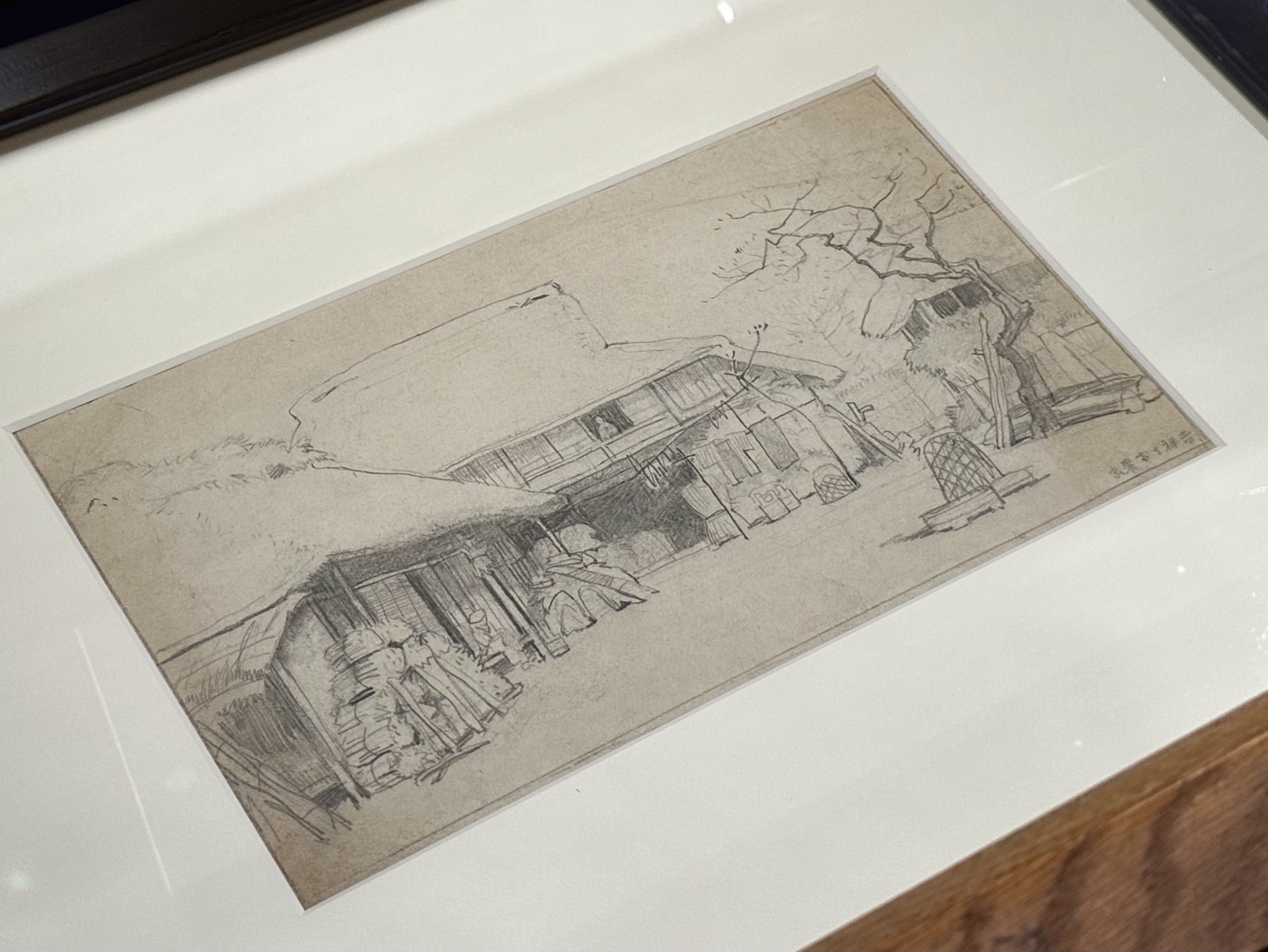
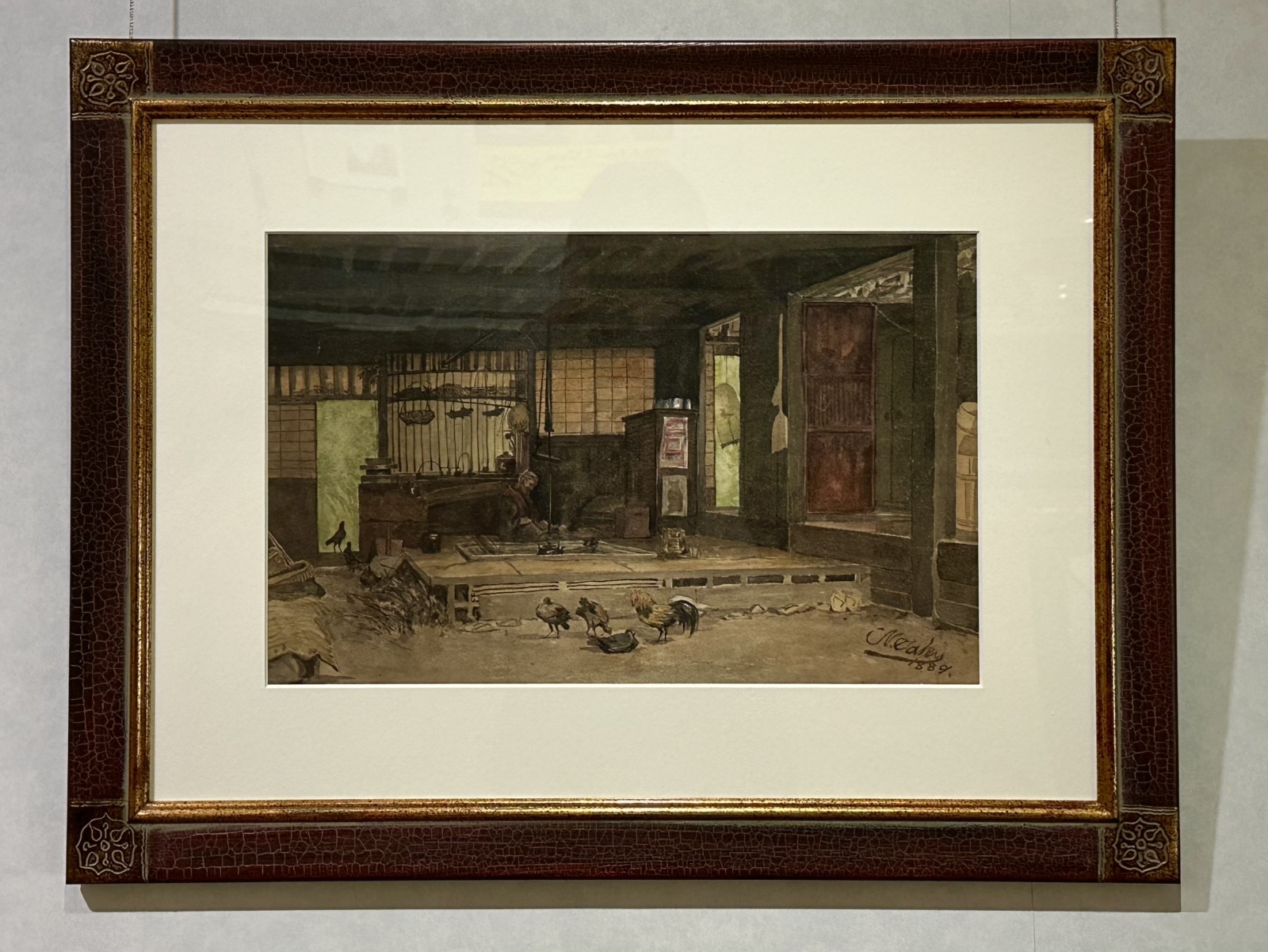
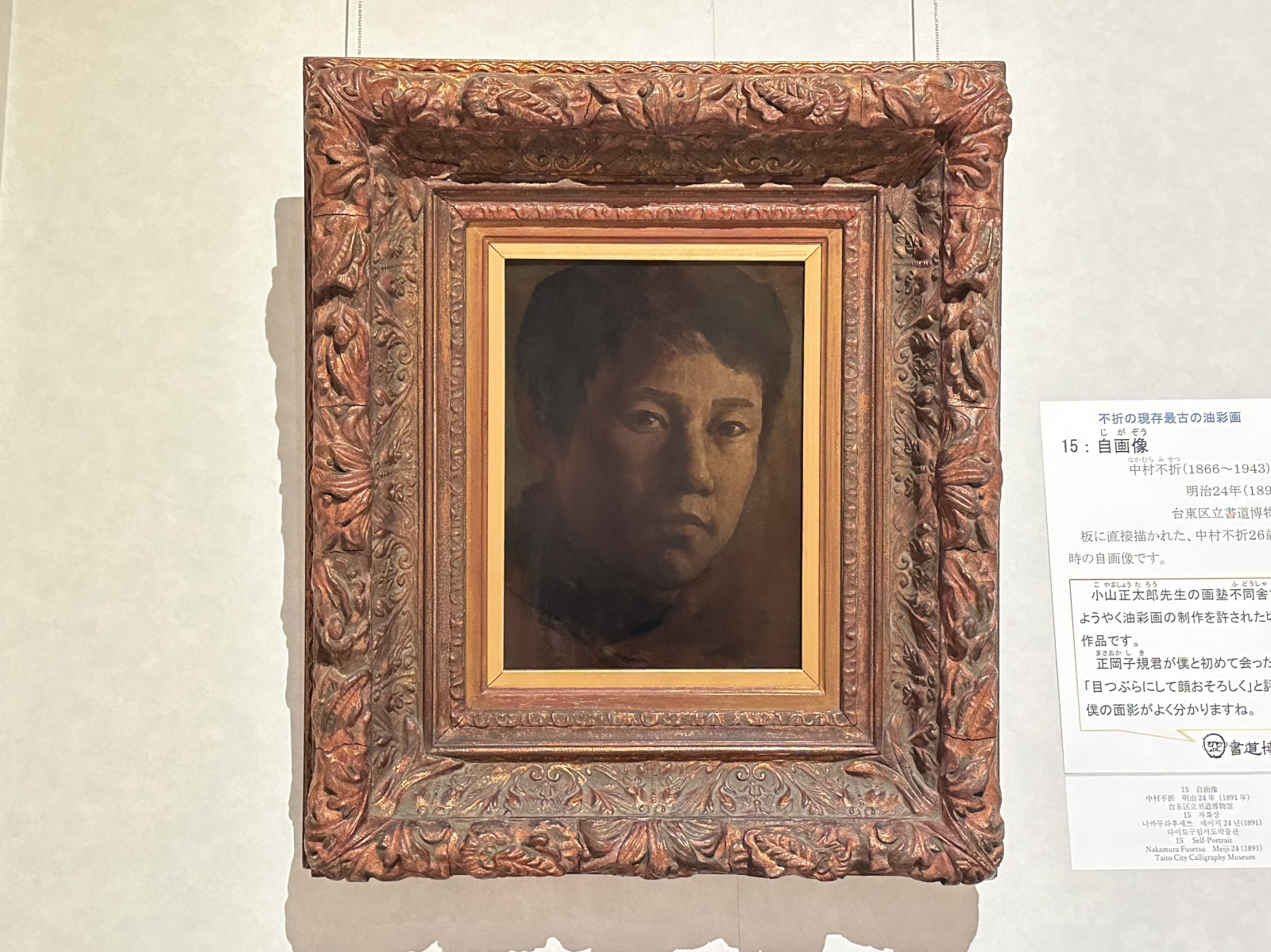
The exhibition room on the first floor begins with a collection of works created during his time as a student at the art school, including sketches and watercolors of landscapes using the one-point perspective technique of Western painting, and his first surviving oil painting, “Self-Portrait.” The art school’s educational policy emphasized thorough drawing, and students were only allowed to paint watercolors and then oil paintings after they had fully mastered pencil drawing. Therefore, Fusetsu and other students would travel from Sendagi, where the Fudōsha art school was located, to suburbs such as Kichijōji, spending their days sketching landscapes and receiving critiques.
Amidst the tide of nationalism, Fusetsu struggled to make a living as a Western-style painter. A major turning point came in 1894, when he was 29 years old. He was selected to be the illustrator for the newspaper “Ko-Nippon,” edited by Masaoka Shiki, a haiku poet and journalist. This caught the attention of literary giants and haiku poets, and gradually he began to receive requests for illustrations and book designs for books and magazines.
“At the time, the Nippon Shimbun, the newspaper company to which Shiki belonged, was frequently suspended from publication for publishing articles that severely criticized the government’s diplomatic stance and Westernization policies. To mitigate the losses incurred during these suspensions, they planned to create ‘Ko-Nihon,’ an illustrated newspaper for families. Shiki asked his friend, the painter Asai Chu, to find an illustrator who was skilled in that field, and Asai Chu introduced him to Fusetsu, with whom he had a relationship at the Fudōsha publishing house. Not only was Fusetsu highly skilled at drawing, but he could also draw lines that were easy for the woodblock carvers to handle, with effective use of omission and emphasis, and he had a strong ability to compose pictures. Shiki recognized Fusetsu’s talent at a glance. Fusetsu was skilled at both drawing and writing, and he was also very reliable as he always met deadlines,” says Nakamura.
Being close in age, Shiki and Fusetsu became inseparable friends, and the following year, in 1895, they traveled to China as war correspondents (and painters) during the First Sino-Japanese War. However, when they arrived, a ceasefire was declared, leaving them without work. Fusetsu accepted Shiki’s invitation and spent about four months traveling around China and the Korean Peninsula, sketching along the way.
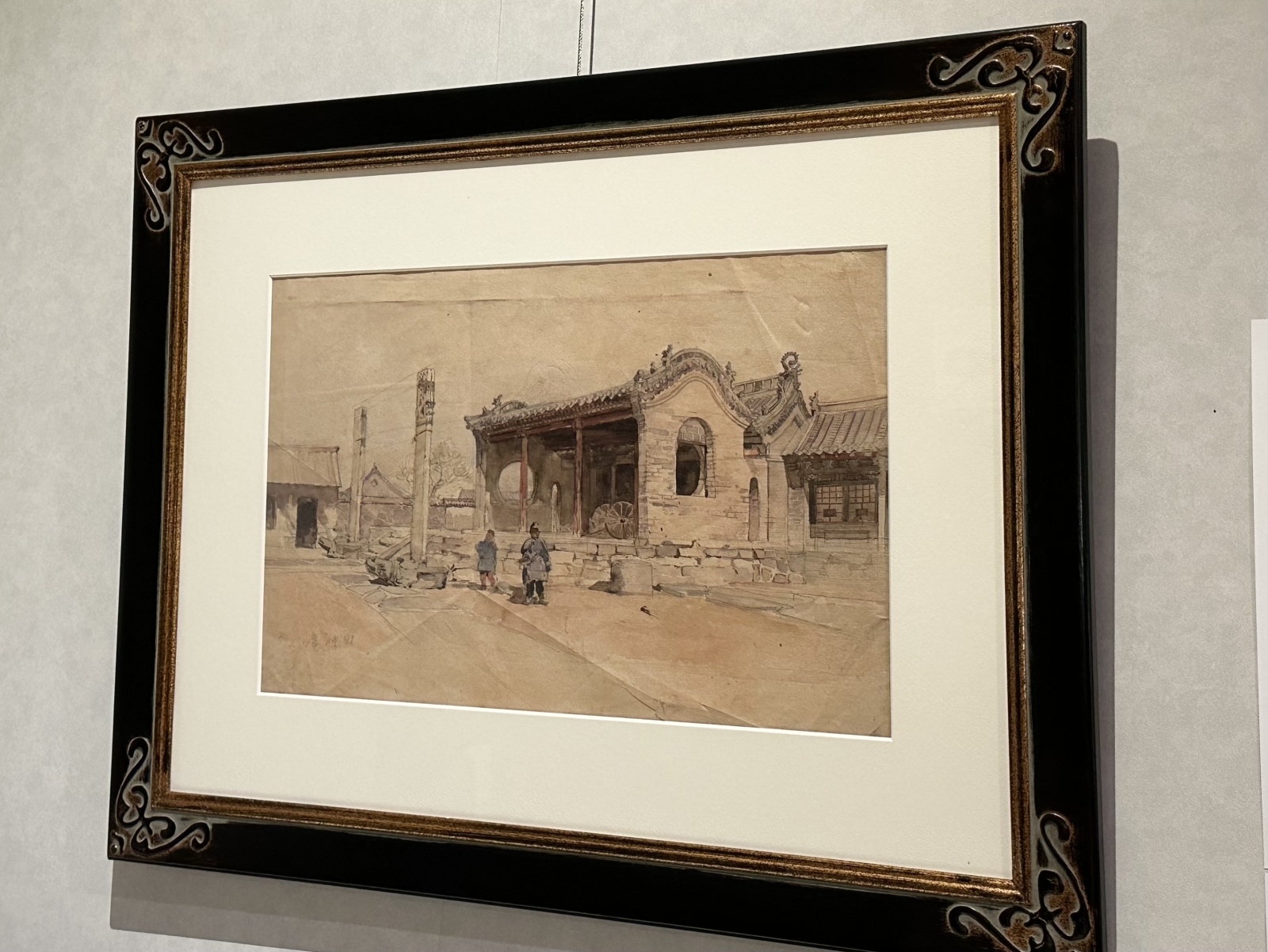
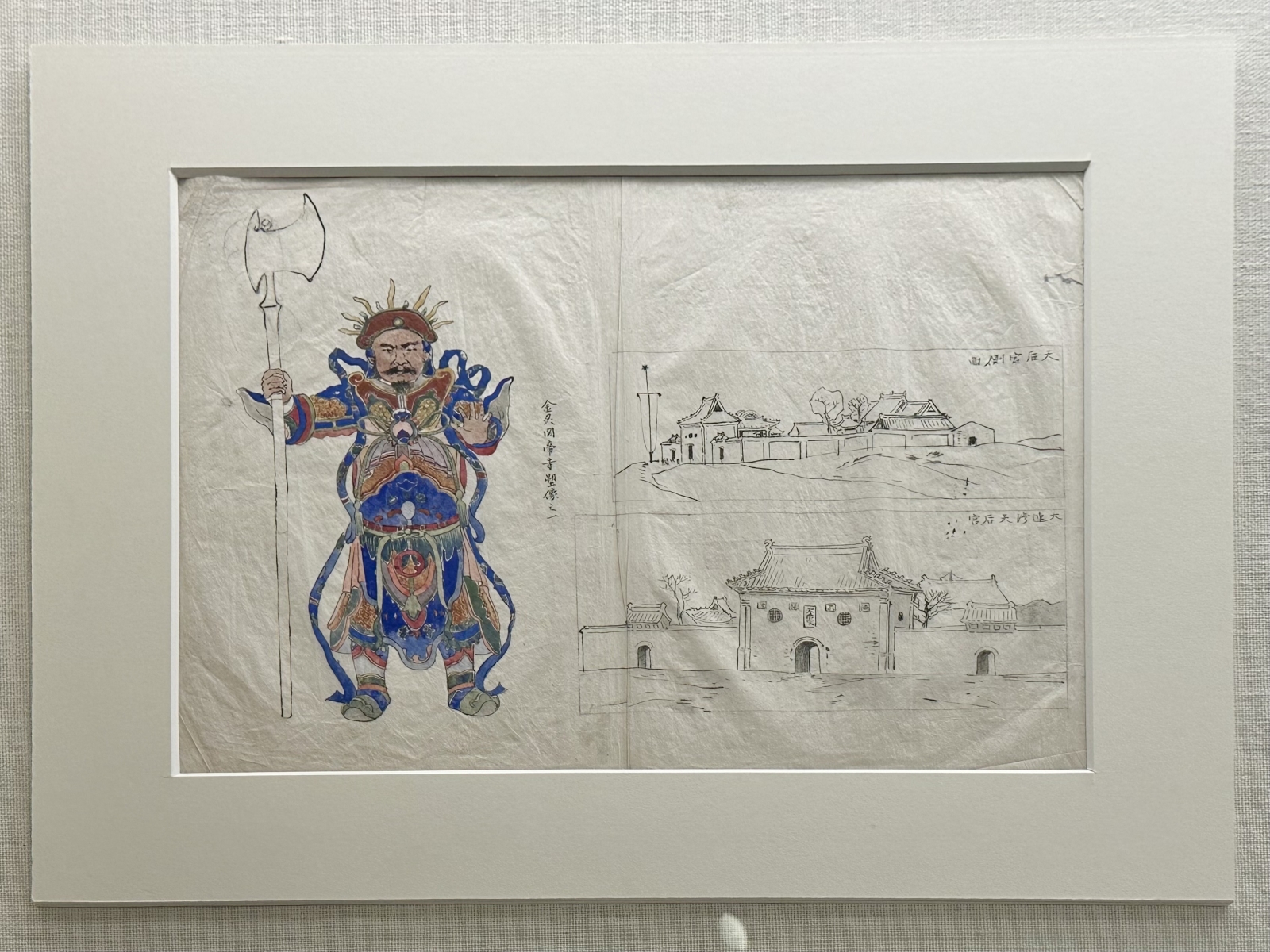
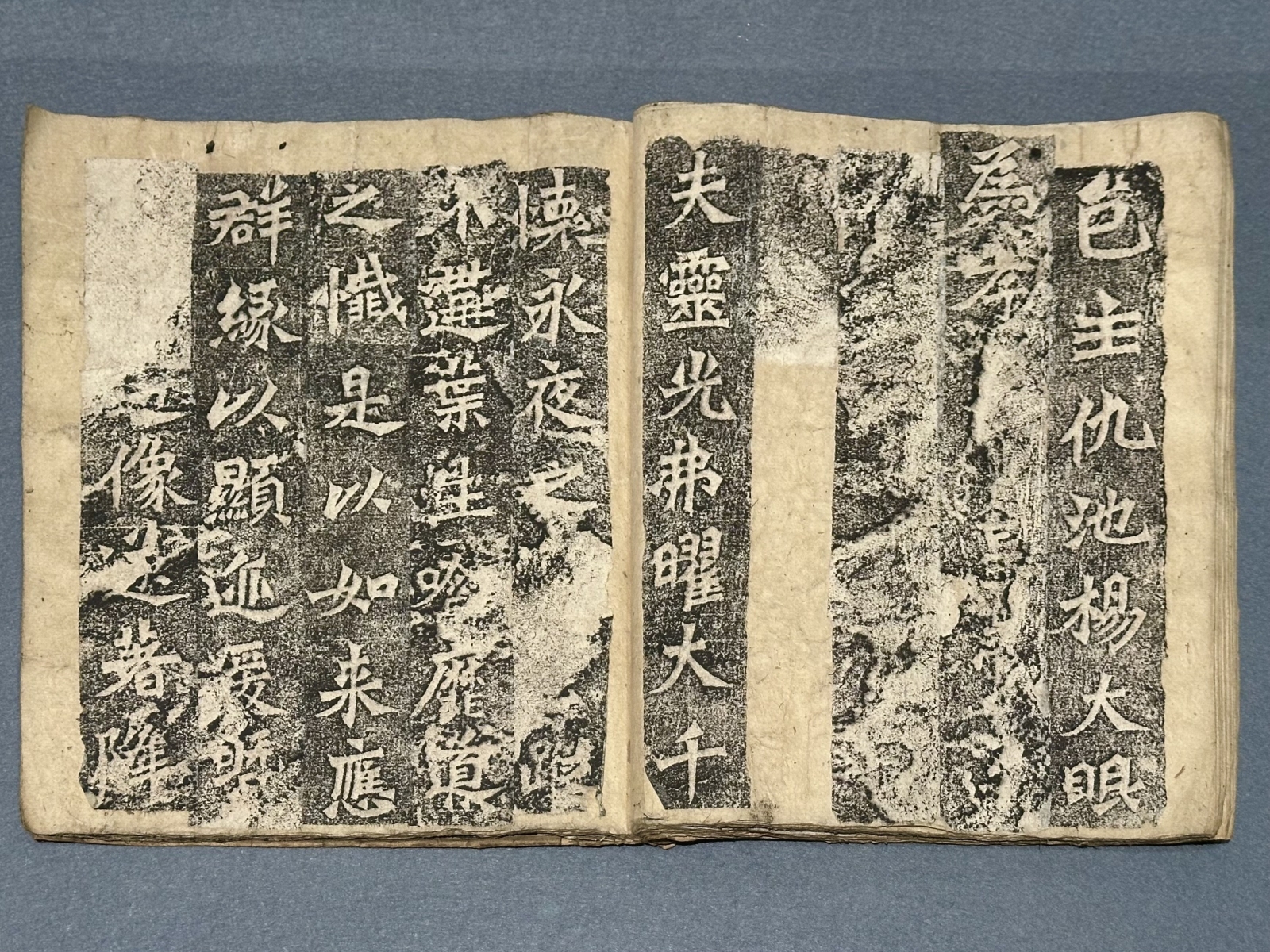
Upon his first encounter with continental culture, Fusetsu became deeply engrossed in the allure of calligraphy. While conducting research, he encountered valuable archaeological materials, including rubbings (copies of characters inscribed on stone monuments, etc., made with paper and ink; used as models for copying calligraphy). After returning to Japan, he spent his personal fortune collecting materials from used bookstores and antique shops, building the collection that now forms the basis of the Calligraphy Museum.
The first half of the second-floor exhibition room traces the development of Fusetsu’s career as a Western-style painter.
Seeking to further advance his career as a painter, Fusetsu went to Paris to study in 1901 (Meiji 34) at the age of 36. He studied under Raphael Collin, a French academic painter who had mentored Kuroda Seiki, and then under the historical painter Jean-Paul Laurens, honing his skills for about four years.
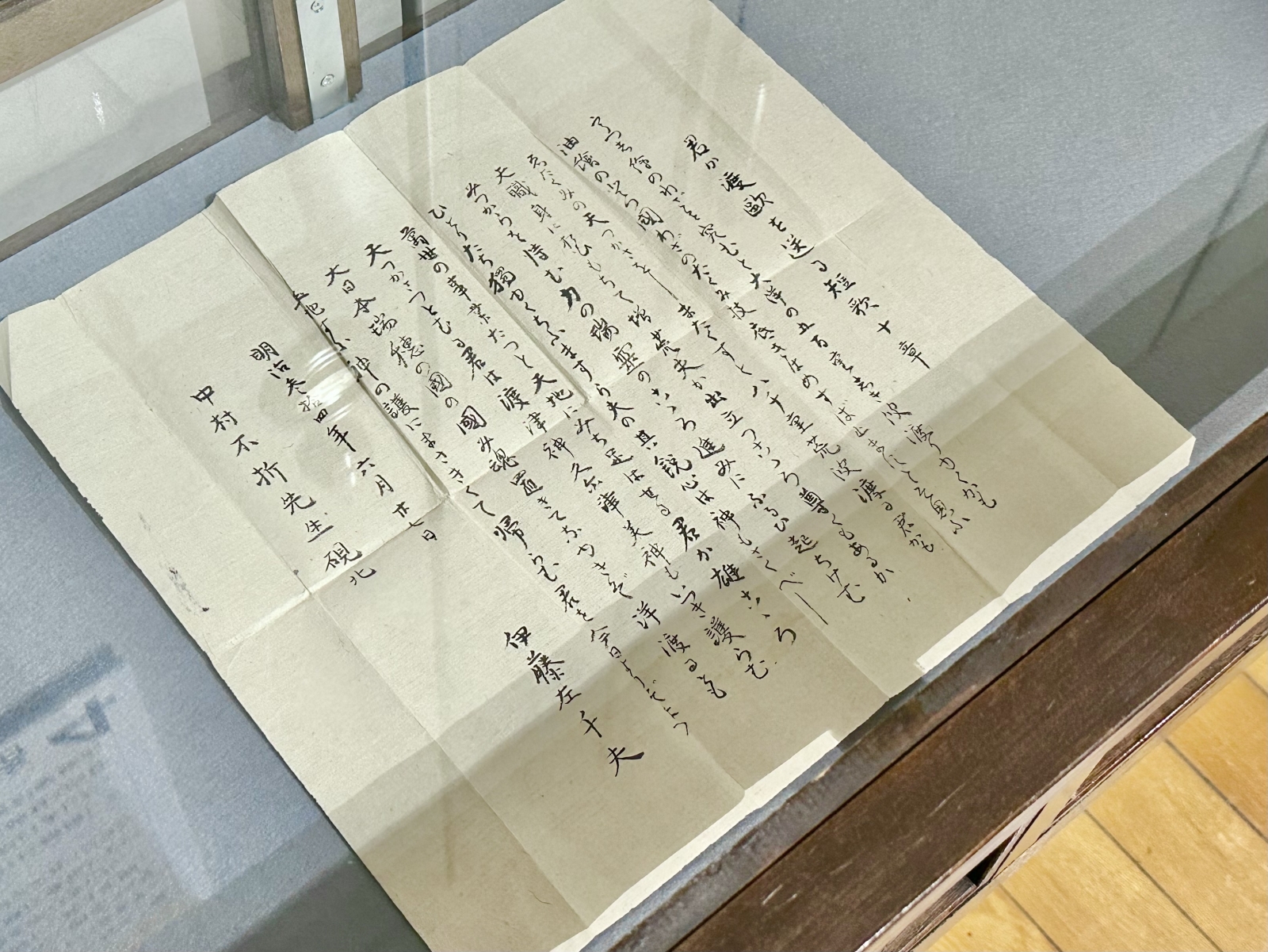
“Back then, studying abroad typically involved either government or zaibatsu (financial conglomerates) assistance, or selling artwork in America, where Japonism was popular, to raise funds before heading to France, the birthplace of Japonism. However, Fusetsu, who had struggled financially since childhood, was independent and frugal, so he diligently saved the income he earned from newspaper illustrations and other sources, and, very unusually for the time, managed to raise a large sum of money for his studies abroad on his own before his departure. Furthermore, the year before he left, he bought a house with an atelier outright and gave his wife and children a substantial amount of money for living expenses before he departed. In response to Fusetsu’s extraordinary determination, Ito Sachio (a tanka poet and novelist) presented him with ‘Ten Tanka Poems to Send You Off to Europe,’ filled with deep friendship and wishes for his success. Be sure to check out that ‘overwhelmingly passionate’ message,” says Nakamura.
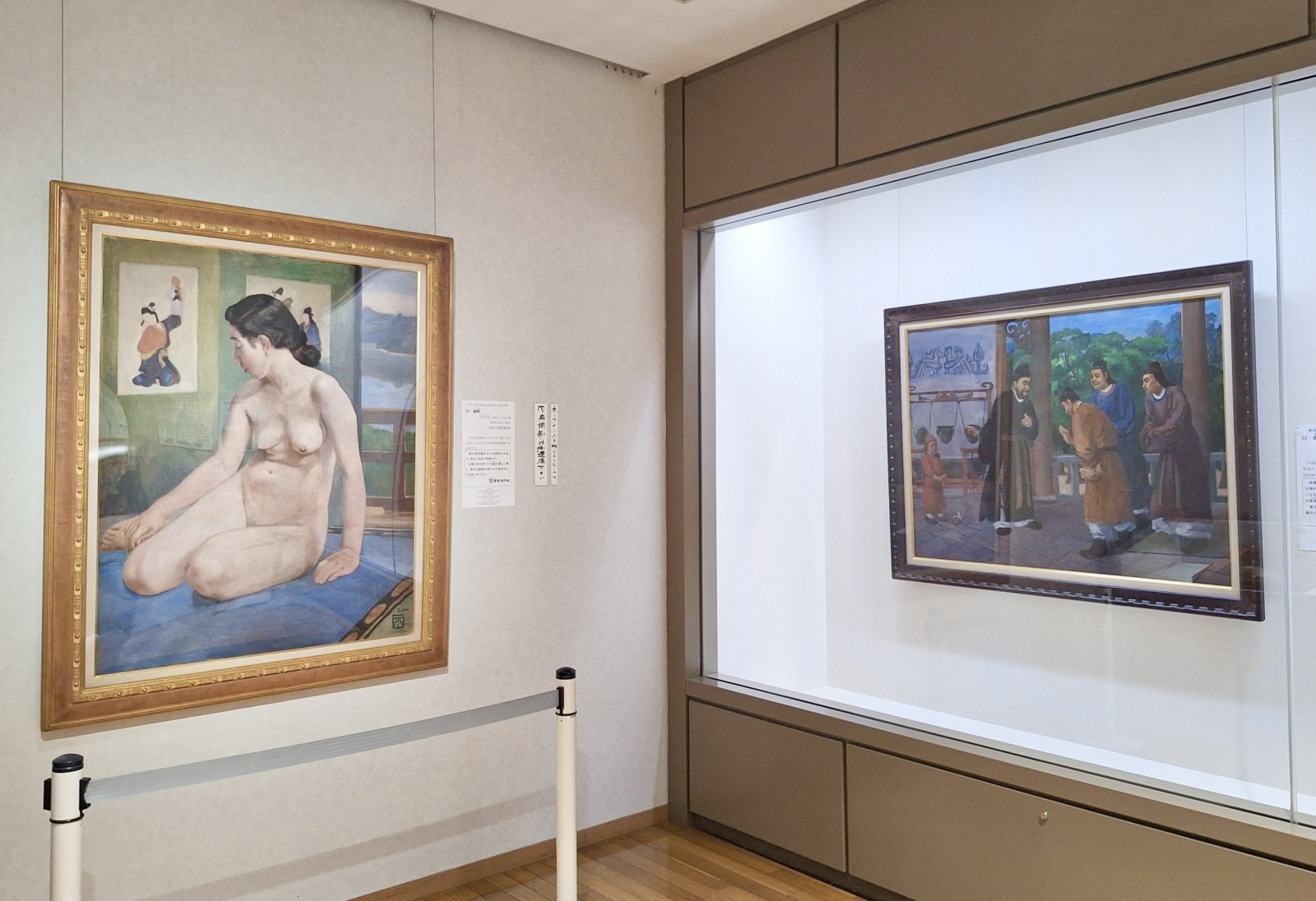
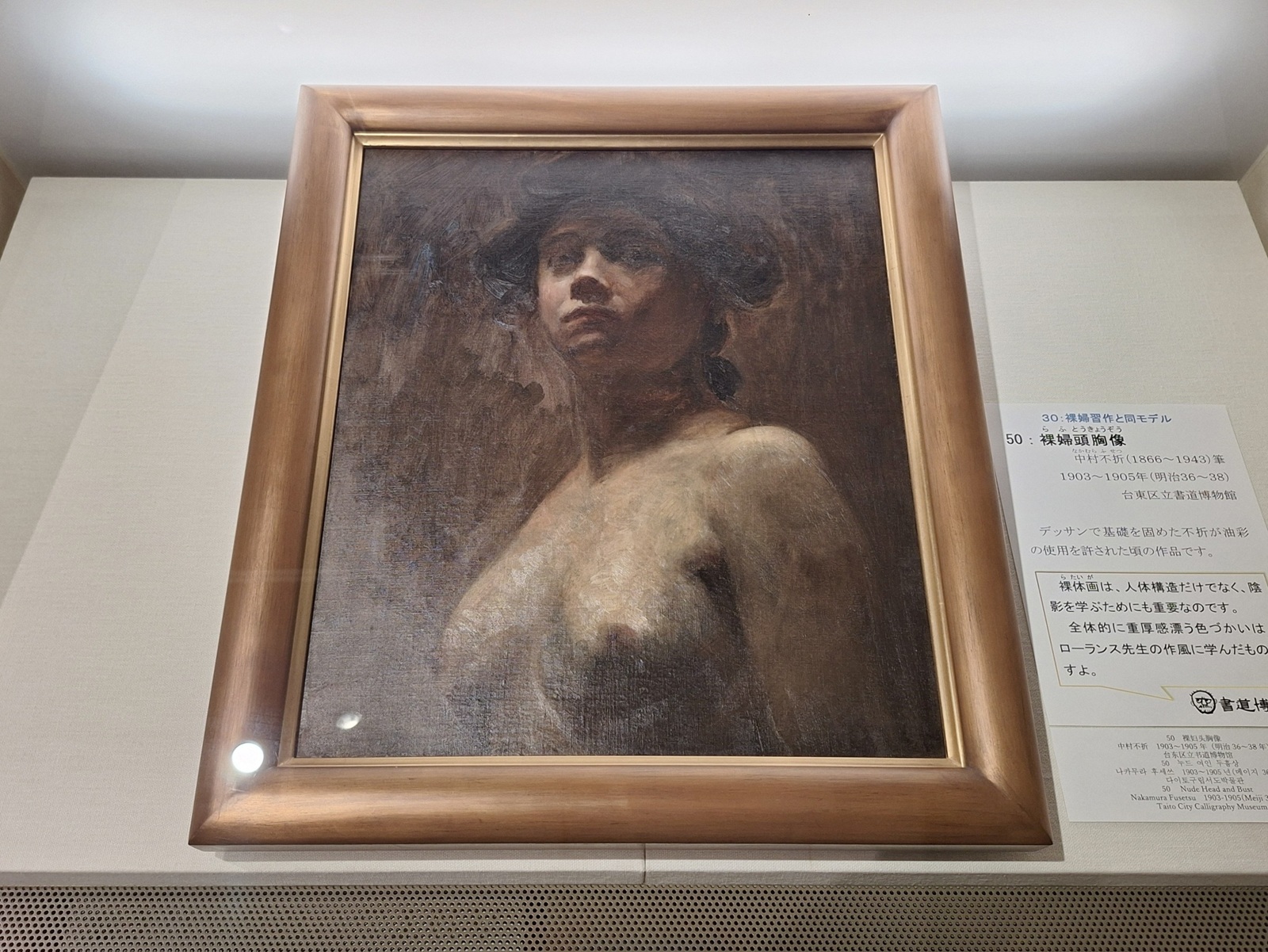
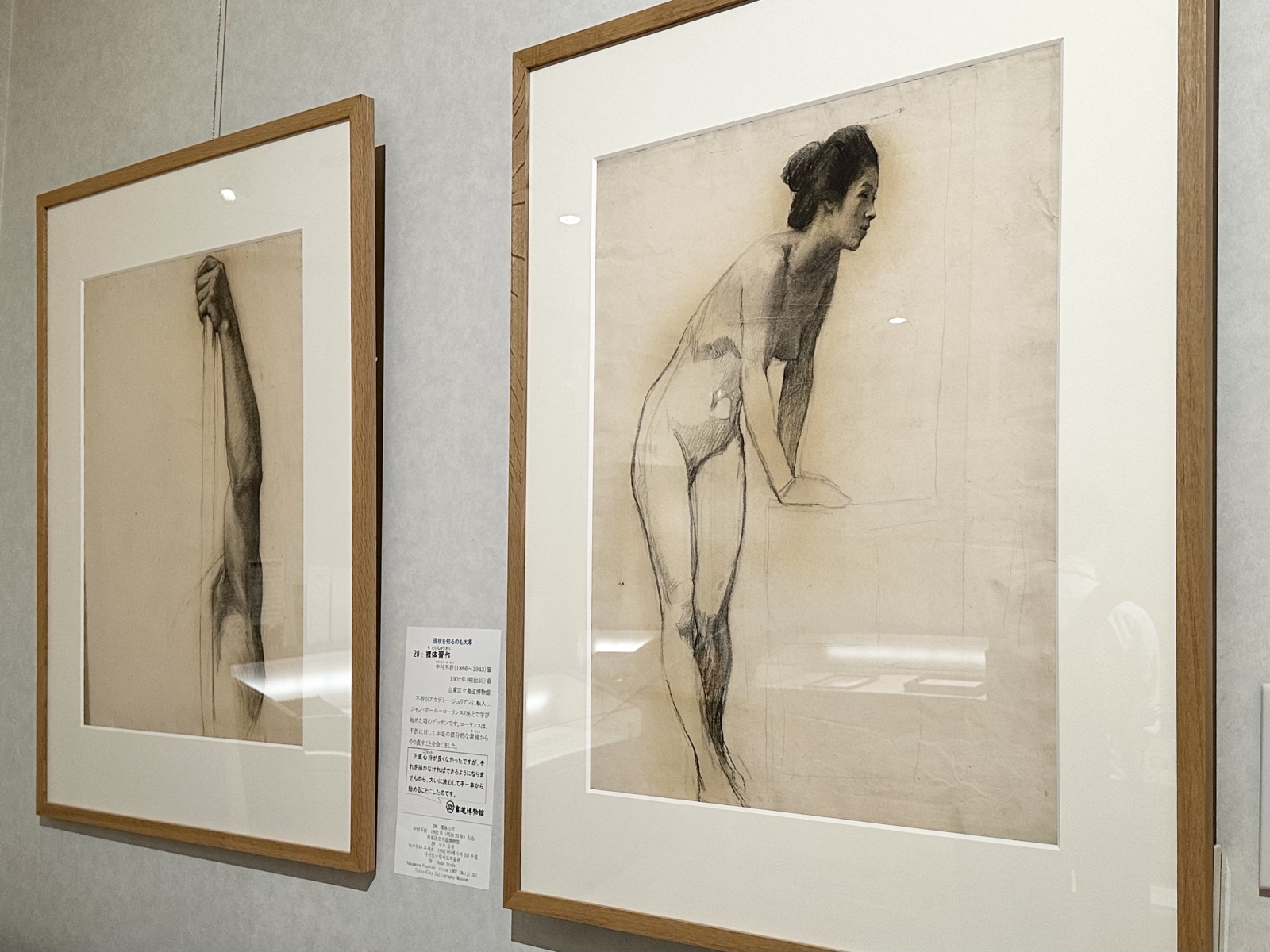
In the exhibition held during her studies in Paris, four nude studies stand out.
Although Fusetsu had honed his sketching skills at Fudōsha, as evidenced by his early nude studies abroad, where hands and toes are vaguely depicted, it was difficult to say that he had received sufficient training in depicting the human body. Laurence saw these drawings and determined that Fusetsu had not yet reached the stage of drawing the whole body. She began rigorous instruction, starting with partial sketches of hands and feet, and within a few months, Fusetsu had mastered the precise techniques of depicting the human body.
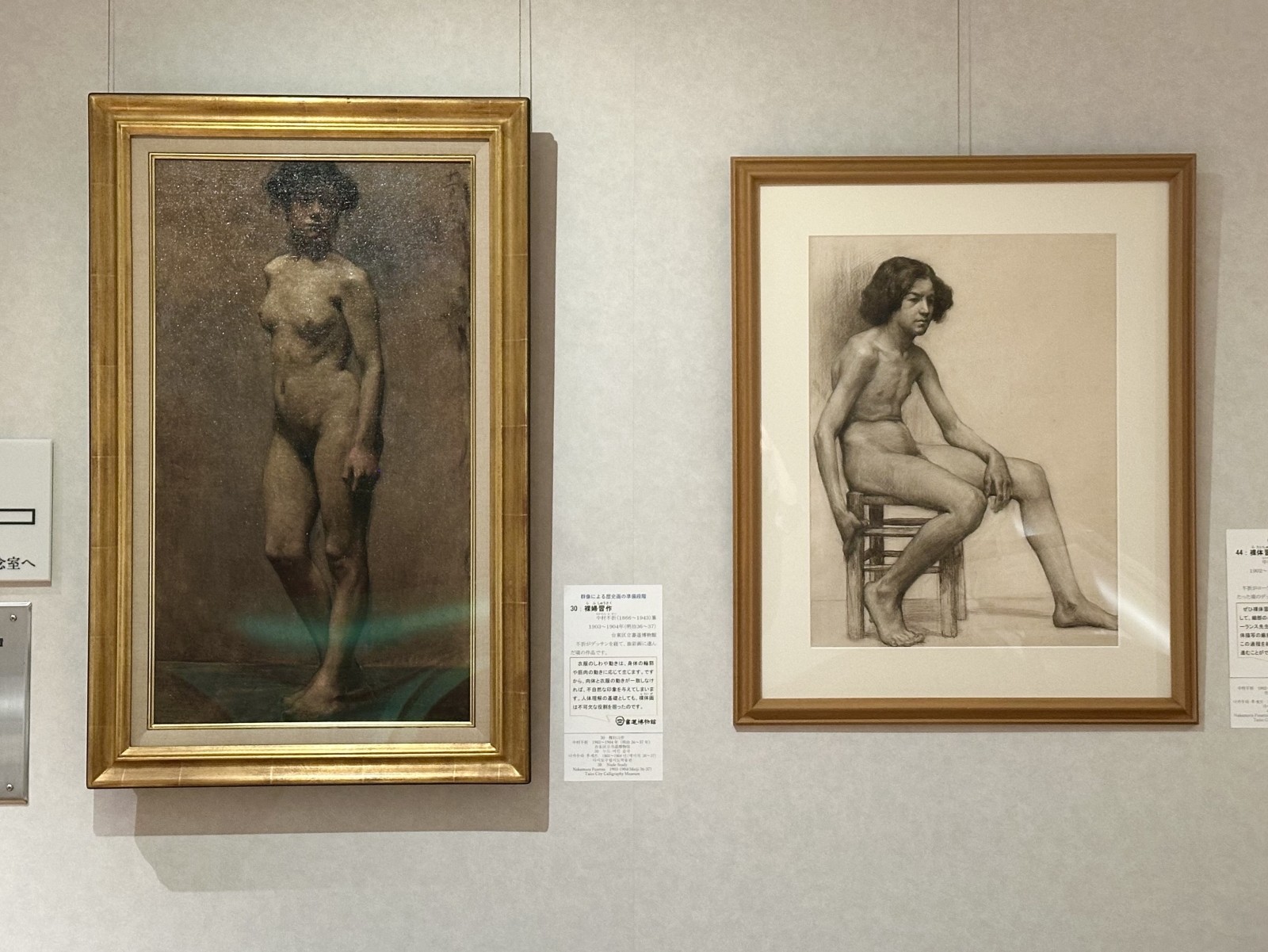
“Around 1900, new movements such as Impressionism had already emerged, but in academic art education, traditional historical paintings dealing with religion and mythology still held the top spot in the hierarchy. To tackle historical paintings with groups of people, one had to differentiate the skeletal structure and skin texture of men and women of all ages, otherwise the painting would lack persuasiveness. Therefore, it was necessary to thoroughly study nudes as a foundation. My tireless efforts paid off, and two years later I had developed enough skill to be selected as 10th out of 200 people in a competition at the art school,” (Nakamura).
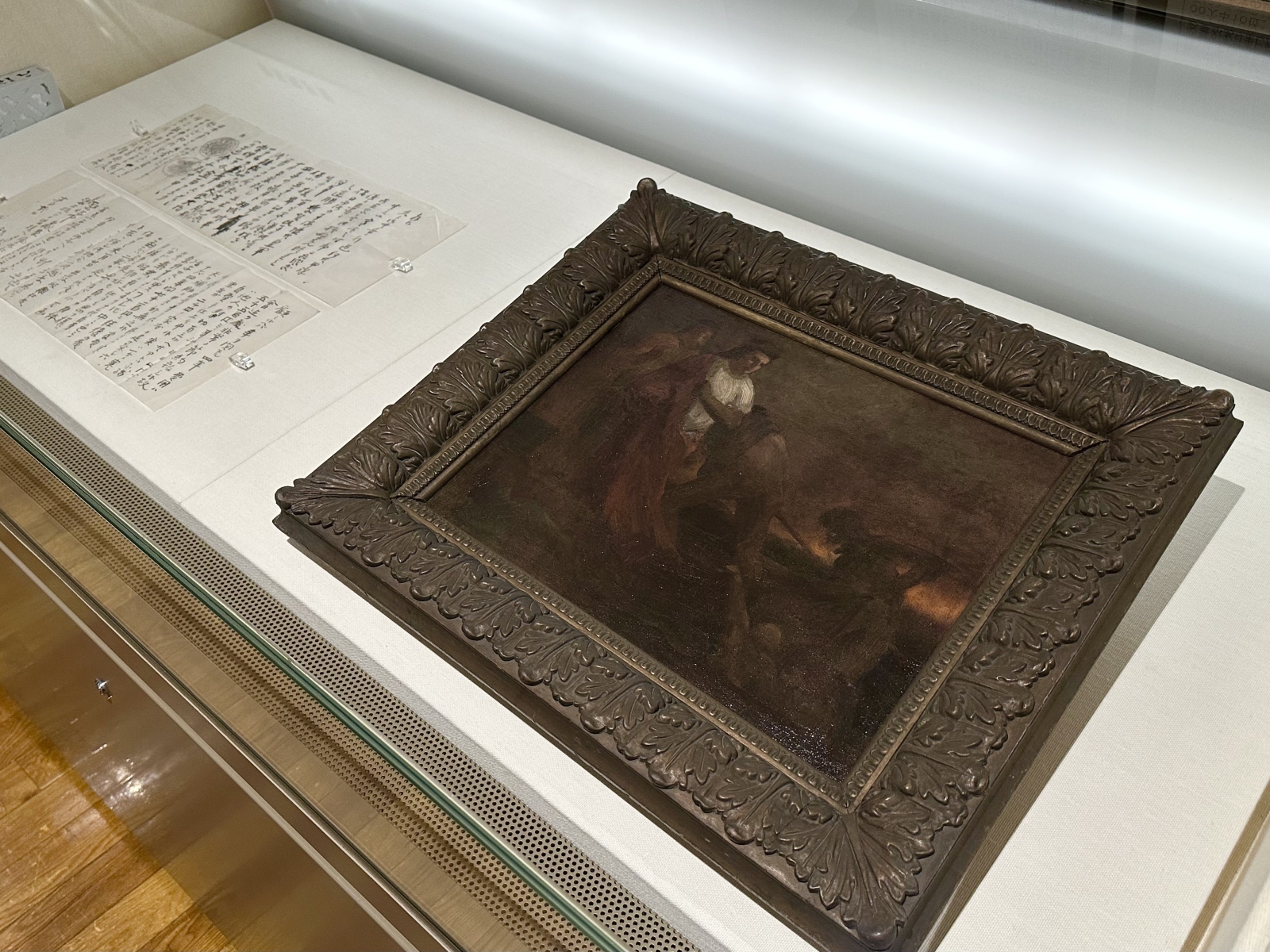
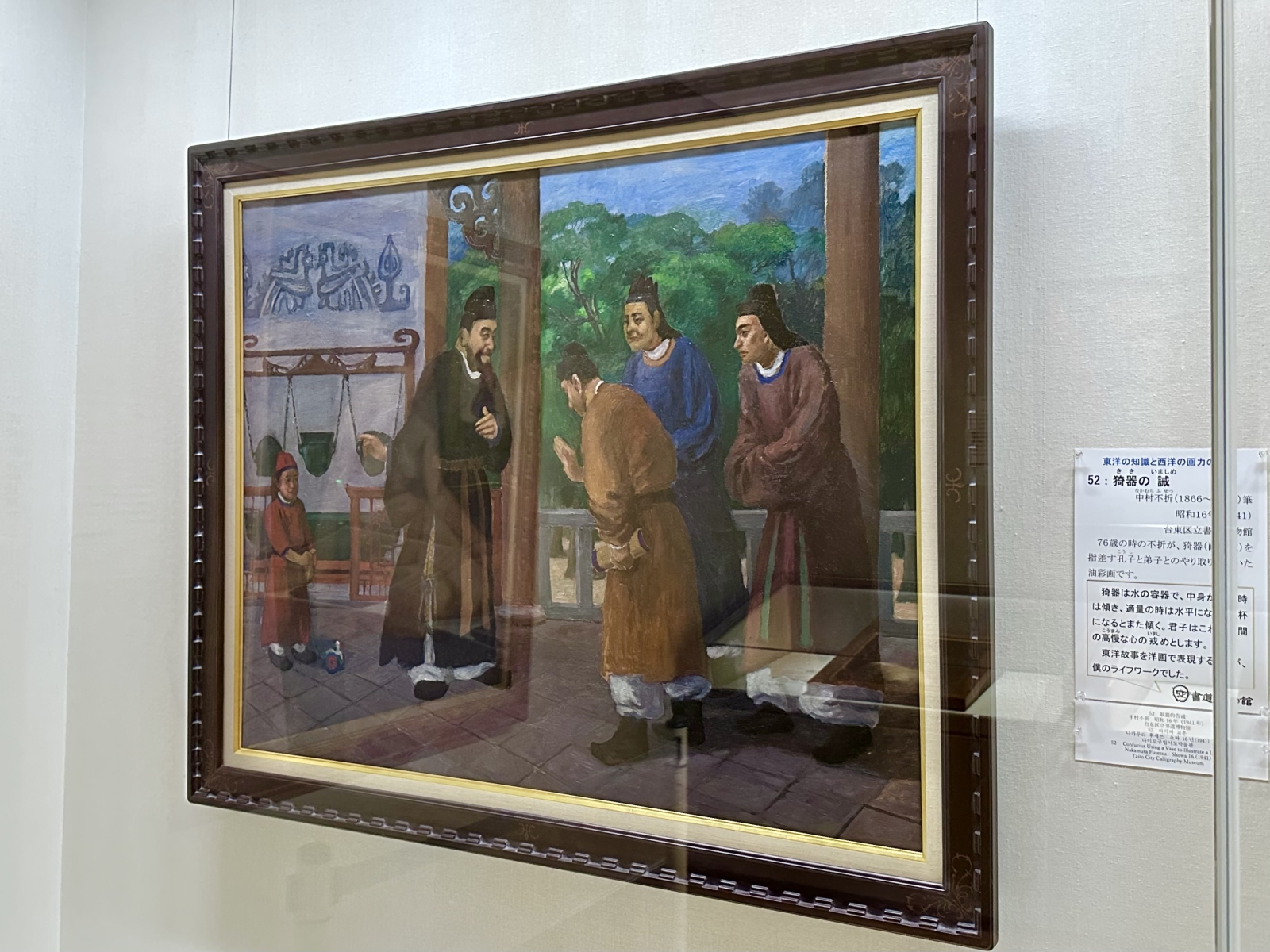
After returning to Japan in 1905 at the age of 40, Fusetsu became a leading figure in the Western-style painting world, serving as a member of the Pacific Painting Association and the Imperial Academy of Fine Arts, and as a judge for the Ministry of Education’s art exhibitions. He also dedicated himself to nurturing future generations of artists as the first principal of the Pacific Painting Association Research Institute (later the Pacific Art School). In his own work, he made historical painting, which he learned from Laurens, his life’s work, and he produced many Western-style paintings based on Oriental stories, utilizing the knowledge he had cultivated through his study of calligraphy.
His most representative work is the one created in his later years. Yi Qi’s Admonition This is the image. In the center of the screen is Confucius, pointing to the “Yi Qi,” a vessel that can overturn whether empty or full, but becomes level when filled halfway with water. This piece depicts a story from the Spring and Autumn period of China, in which a wise ruler teaches his disciples not to become arrogant by seeking more than their capabilities allow, but to use moderation as a cautionary tale.
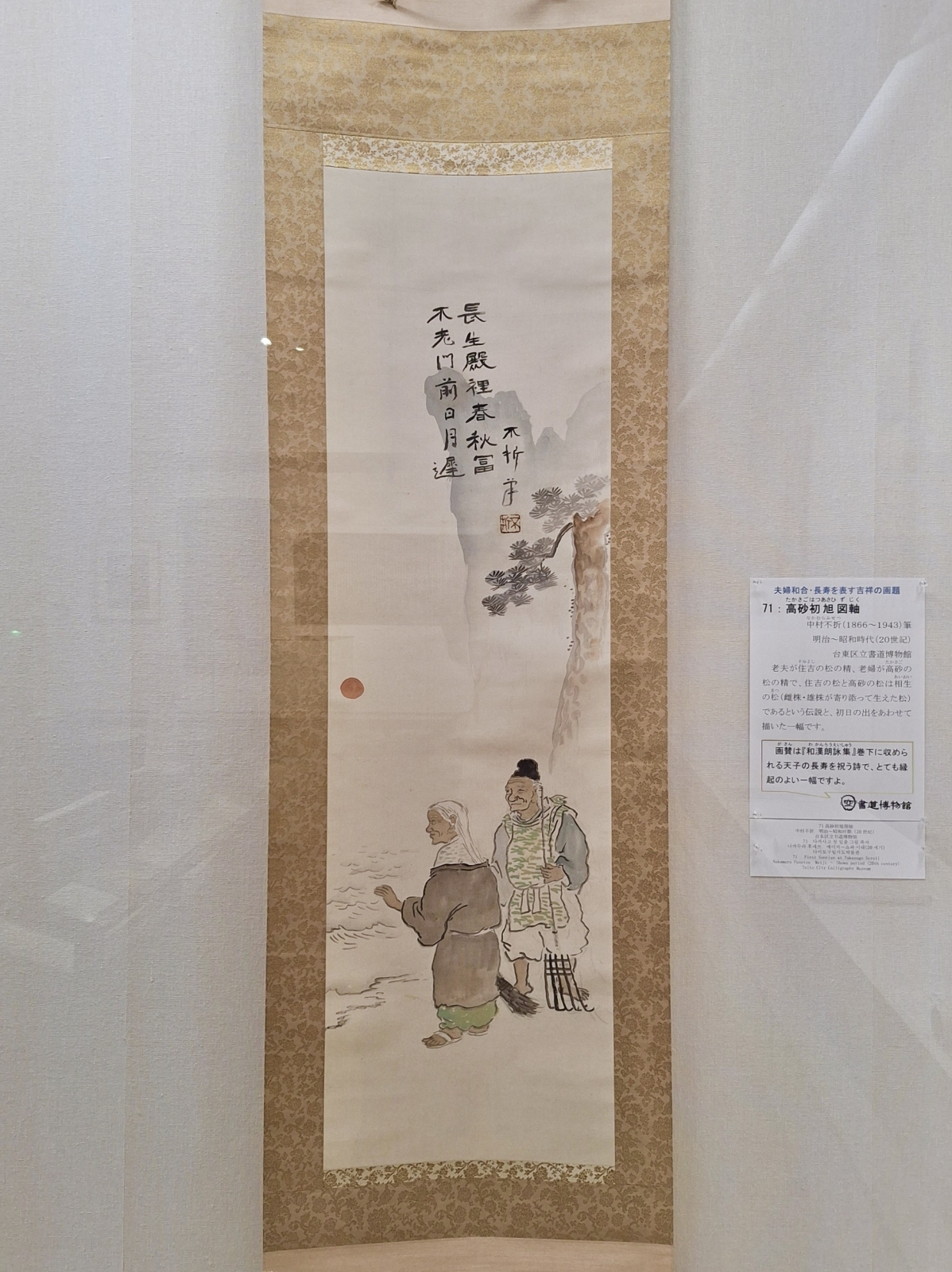
The latter half of the second-floor exhibition room focuses on calligraphy, Japanese paintings, newspaper illustrations, and interactions with literary giants.
In 1908, at the age of 43, Fusetsu suffered a nervous breakdown due to his busy schedule and was ordered by his doctor to stop all work. While staying at Isobe Onsen in Gunma Prefecture for recuperation, he worked on “Ryūminjō,” a collection of 20 poems by Su Zhe, a literati of the Northern Song dynasty. This work, written as a pastime during his recovery, unexpectedly became a turning point. The haiku poet Kawahigashi Hekigoto saw the work and strongly recommended that it be published. Following the advice that “making changes would diminish the spirit of the work,” Fusetsu published it as his debut work, leaving the mistakes as they were. As a result, the work attracted attention for its bold and free calligraphic style that was not bound by rules, and it became a sensation as the so-called “Fusetsu style.”
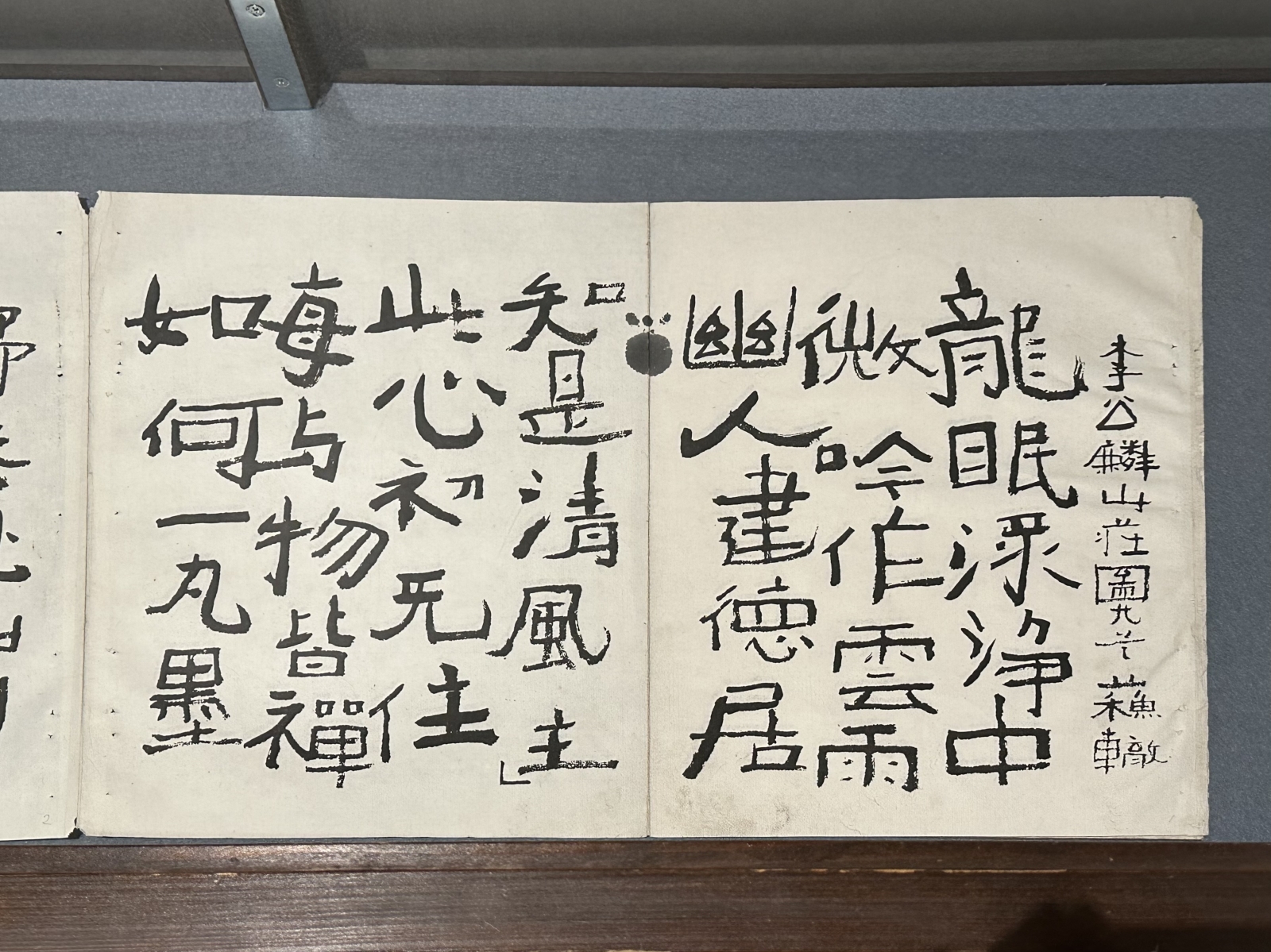
Compared to the weighty and powerful “Ryūmon Nijūhin” and other calligraphic works from the Nanboku-chō period that Fusetsu diligently studied, the writing style of “Ryūminjō” is quite different. Those unfamiliar with calligraphy may be puzzled, but Nakamura points out that this is “a sensibility typical of the Japanese, which places importance on form.”
“Japanese people tend to try to imitate a model when one is next to them. On the continent, form is not generally emphasized. The result is a unique style of calligraphy that comes from absorbing and exhaling the aura of the model. This is also a difference between Western and Eastern art; the West pursues realism in what is visible, while the East tries to express what is invisible. For this reason, the literati who led the political culture of ancient China valued poetry, which gives form to words that emerge from the heart, and calligraphy, which records those words in writing, above all else,” (Nakamura).
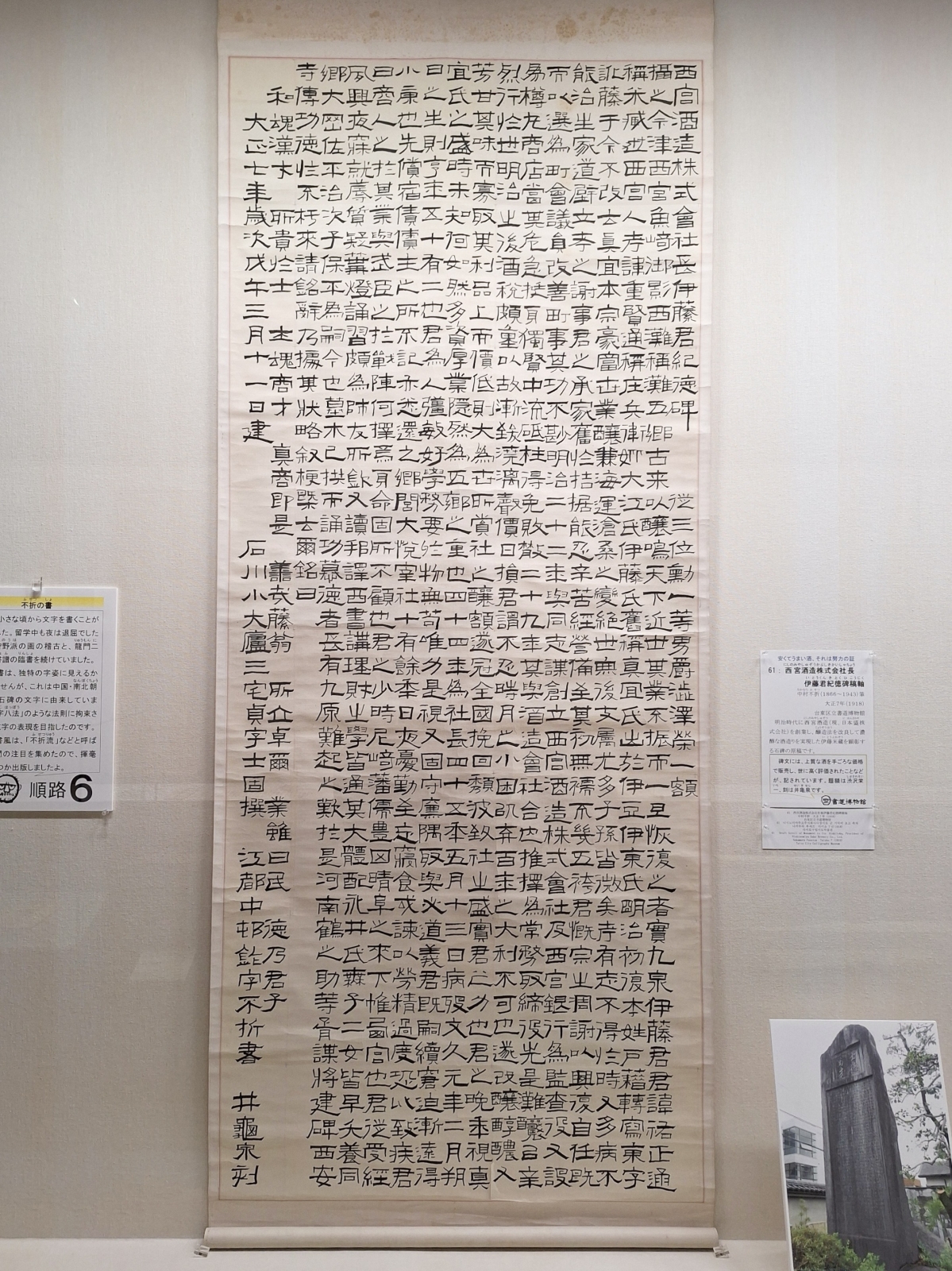
Another characteristic is that he does not fix the form of the characters within a single work, but rather embraces the mixing of various typefaces and letterforms. In fact, in the manuscript for the stone monument “Nishinomiya Sake Brewery Co., Ltd. President Ito Noriyoshi Monument Scroll,” which consists of more than 700 characters, the same characters appear many times, but almost no two are the same in form. The sheer variety of variations, such as the variant character where the “eight” part of the character “醸” is changed to “□□” or “△△,” reveals Fusetsu’s deep knowledge of calligraphy. Although expressions such as blurring and smudging are suppressed because the work is intended to be carved as a stone monument, the fact that individuality is not lost is a strength of Fusetsu’s style.
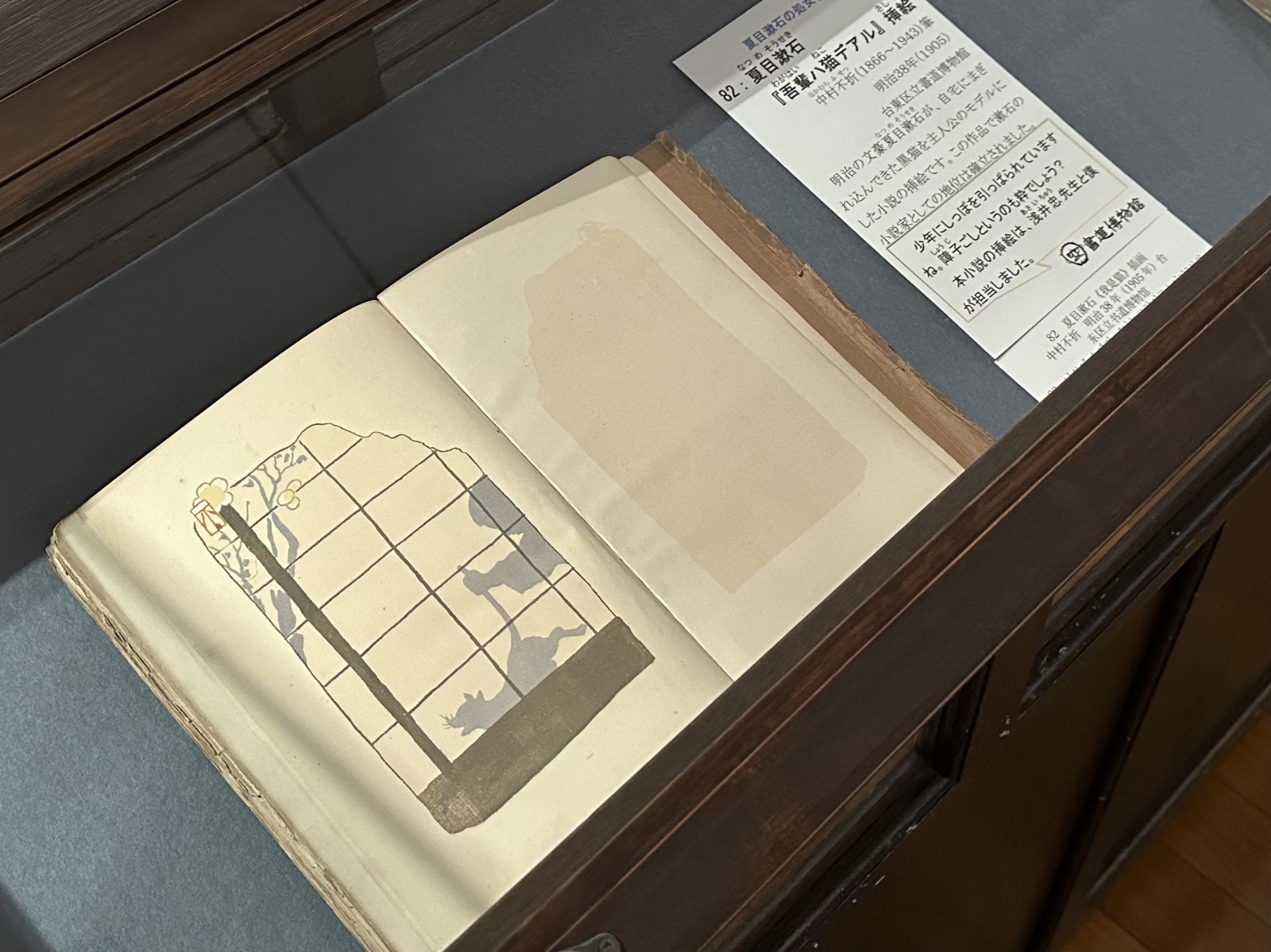
The documents illustrating his relationships with prominent Meiji-era writers are also extremely interesting. When Fusetsu, who had just returned from studying abroad, illustrated Natsume Soseki’s “I Am a Cat,” the first edition sold out in just 20 days, proving to be incredibly popular. Following the success of his debut novel, Soseki sent Fusetsu a polite letter of thanks.
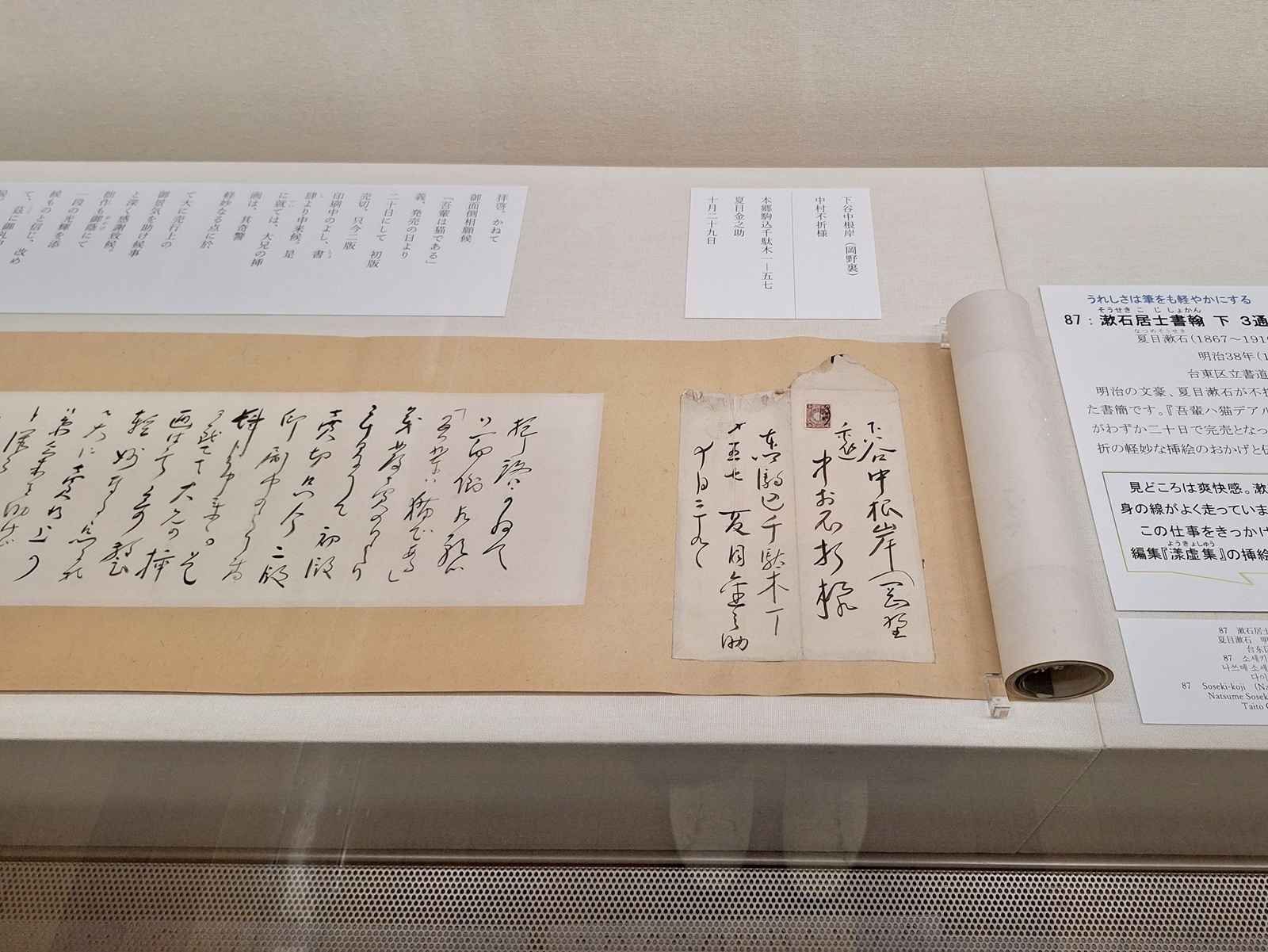
“Soseki’s usual handwriting has a rather rough, textured quality, but this thank-you letter is written in beautifully crisp characters. He must have been very happy that it sold out,” (Nakamura).
Mori Ogai was deeply devoted to Fusetsu’s calligraphy. On his deathbed, Ogai left a will requesting that his tombstone be inscribed with only his real name, “Mori Ogai’s Tombstone” (森森太郎墓), in Fusetsu’s calligraphy, rather than any titles such as “Mori Ogai” or “Army Surgeon.” He passed away in 1922. The tombstone inscribed by Fusetsu, who fulfilled this request, can still be seen today at Zenrinji Temple in Mitaka City, Tokyo.
However, when plans were made to publish Ogai’s complete works after his death, a debate arose regarding the title. Opinions were divided on whether to title it “The Complete Works of Mori Ogai,” respecting Ogai’s preference for not using the pen name “Mori Ogai” in his later years, or “The Complete Works of Ogai,” considering his name recognition. A letter from Yosano Tekkan, who belonged to the latter faction, greatly influenced the decision.
“Yosano Tekkan had already asked Fusetsu, who was unaware of the situation, to write the title ‘Ogai Complete Works.’ He created a situation where, since Fusetsu had already written it, there was no choice but to proceed as planned. As a result, the difficulties Fusetsu had with the calligraphy were taken into consideration, and a compromise was reached by adding ‘Written by Mori Taro’ next to the title,” (Nakamura).
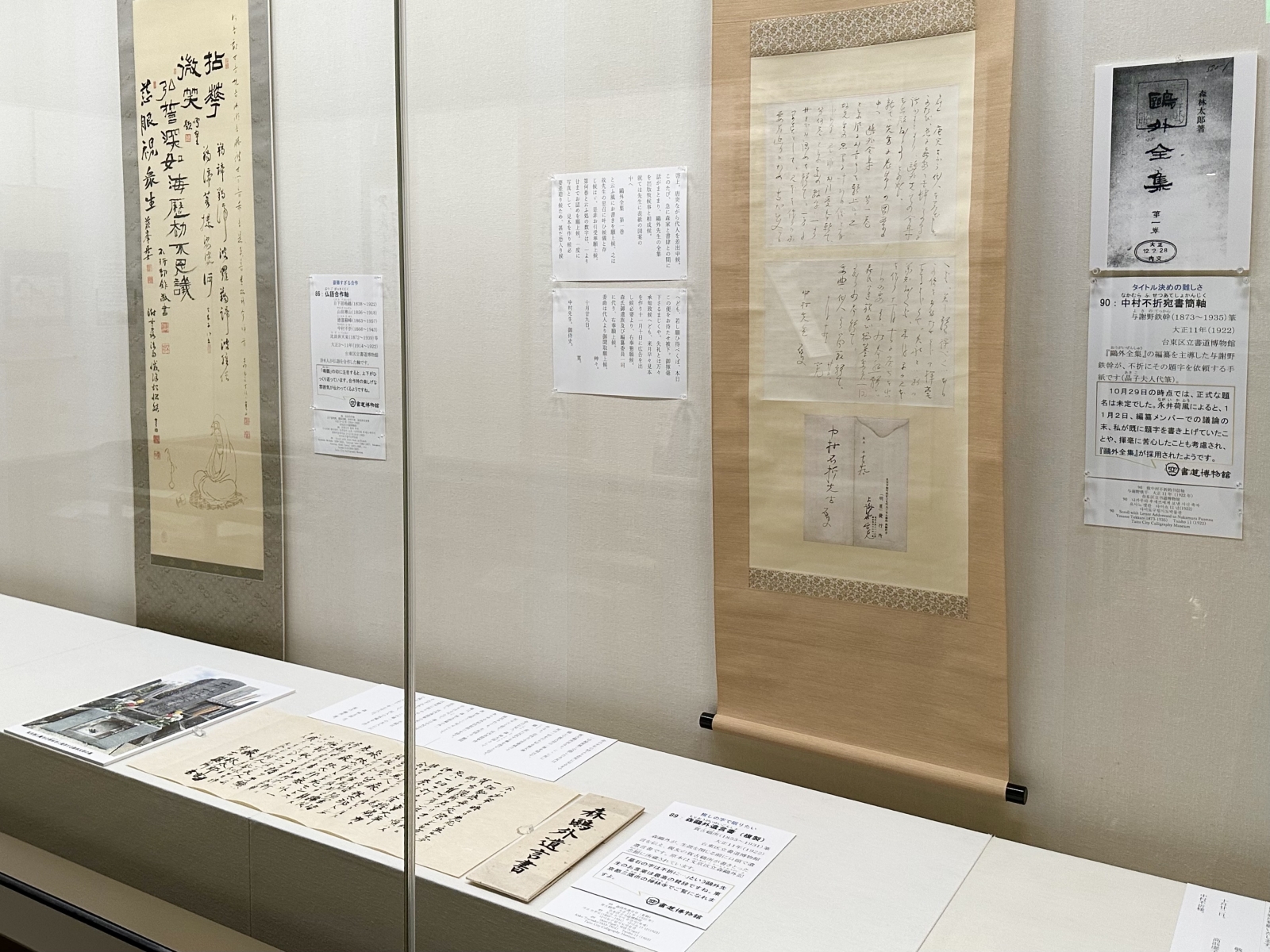
Fusetsu considered himself strictly a Western-style painter, and even said that “calligraphy is a pastime.” Perhaps it was precisely because of this that he was able to approach calligraphy as a pure expression unbound by formality, and his free-flowing calligraphic style attracted many people, including even the most discerning literary giants.
The later exhibition will focus even more deeply on the artist’s interactions with Masaoka Shiki. Please check the exibition list and be sure to visit.
■ Overview of the special exhibition “Fusetsu Nakamura: 160th Anniversary of His Birth”
| Exhibition period | Saturday, April 4, 2020 – Sunday, July 12, 2020
*Exhibits will be changed during the exhibition period. First half of the exhibition: April 4th (Sat) – May 24th (Sun) |
| venue | Taito City Calligraphy Museum |
| Opening hours | 9:30 AM to 4:30 PM (Last entry at 4:00 PM) |
| Closed days | Monday (or the following weekday if it falls on a public holiday) |
| Admission fee | General admission: 500 yen; Elementary, junior high, and high school students: 250 yen. *Please check the official website for details. |
| Official website | https://www.taitogeibun.net/shodou/ |
