Tokyo Metropolitan Art Museum
The British Museum is one of the world’s leading museums. From its collection of approximately 40,000 Japanese items, we will look at the Edo period. tomb The exhibition “Tokyo Metropolitan Art Museum 100th Anniversary Commemoration: The British Museum’s Collection of Japanese Art – A Flourishing Variety of Edo Paintings Across the Seas,” featuring approximately 200 selected works including wind paintings, hanging scrolls, picture scrolls, and ukiyo-e woodblock prints, is currently being held at the Tokyo Metropolitan Art Museum. The exhibition runs until October 18, 2026 (Sunday).
*Unless otherwise noted, all images are from the collection of the British Museum.
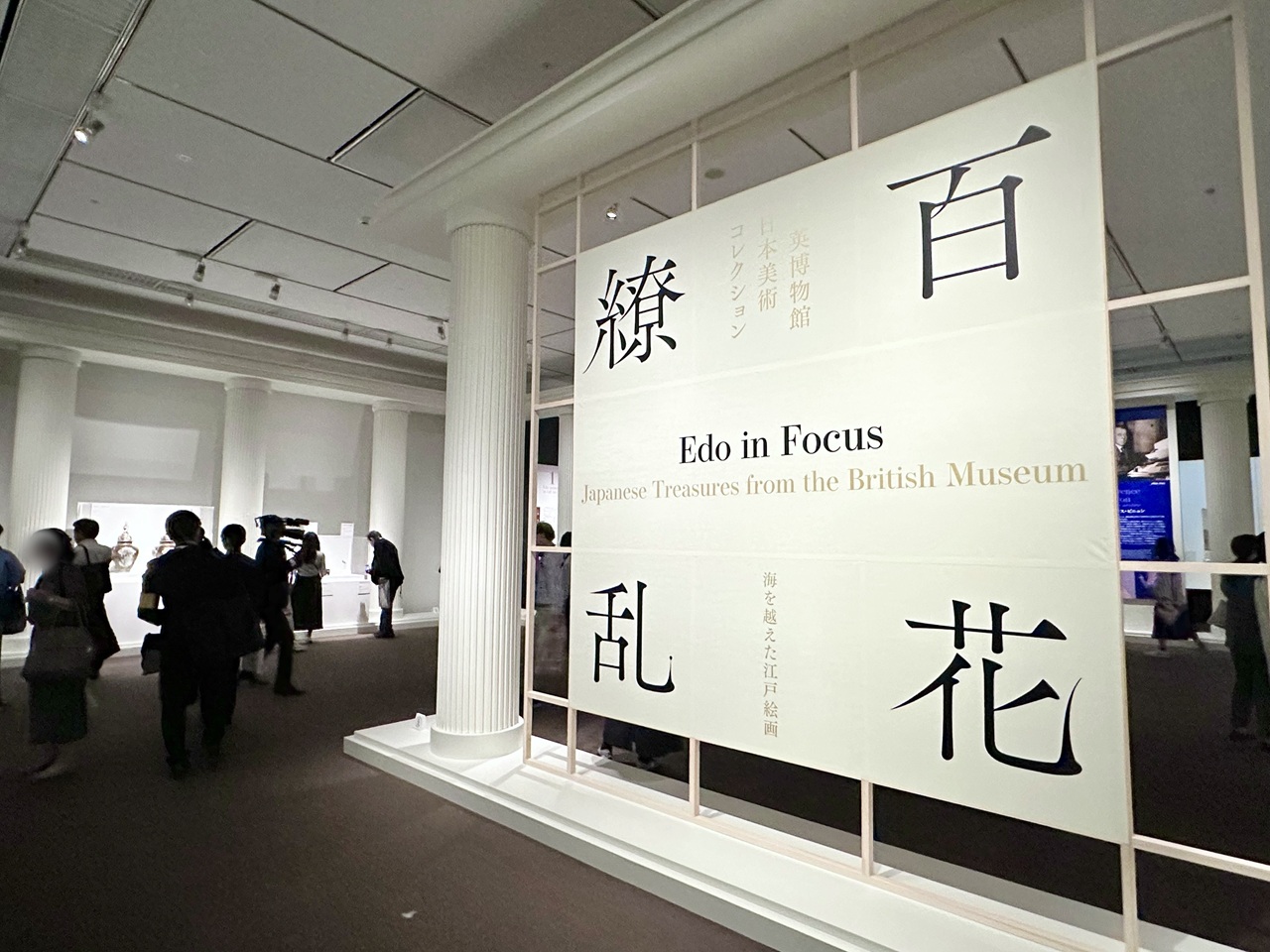
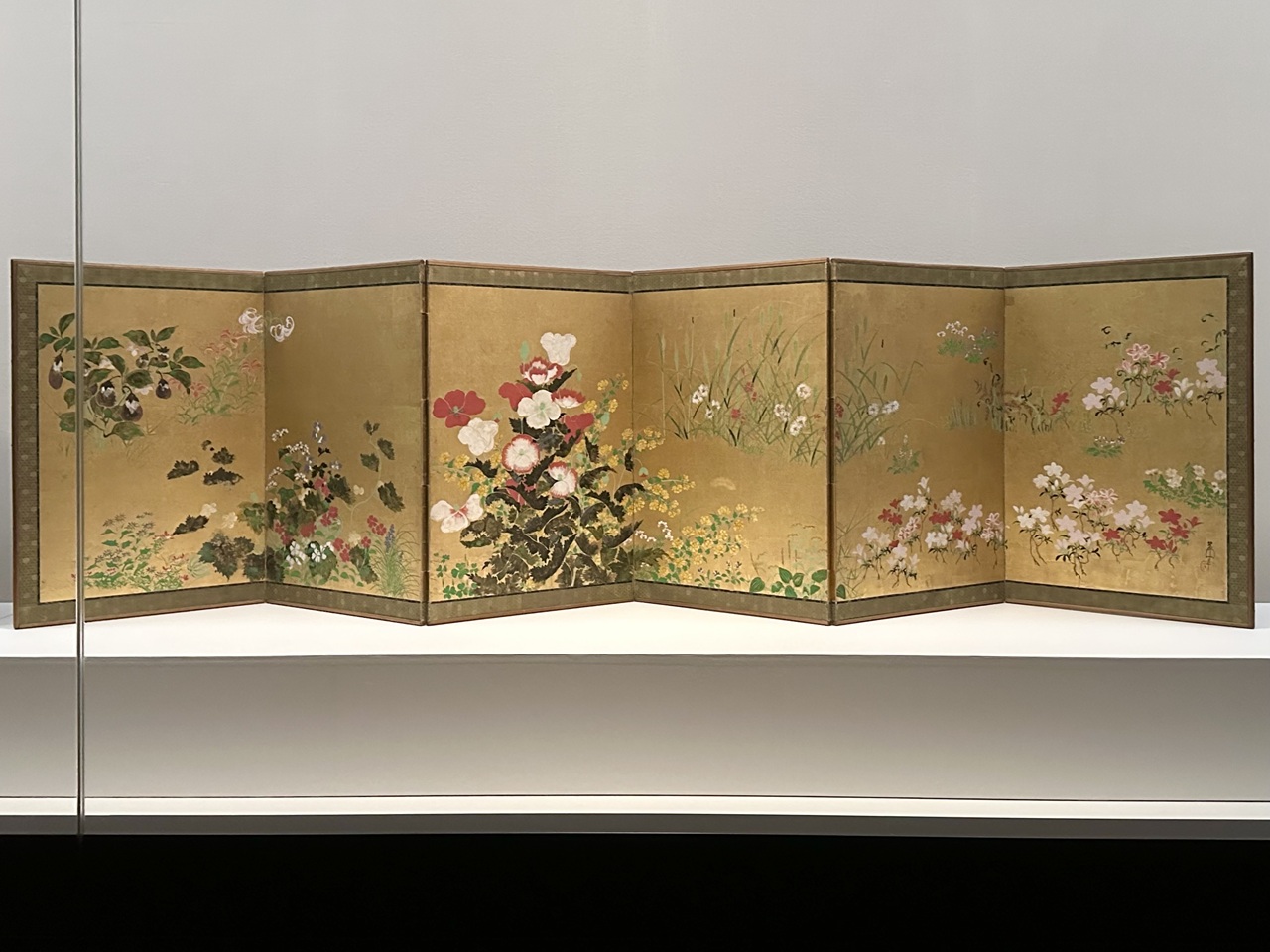
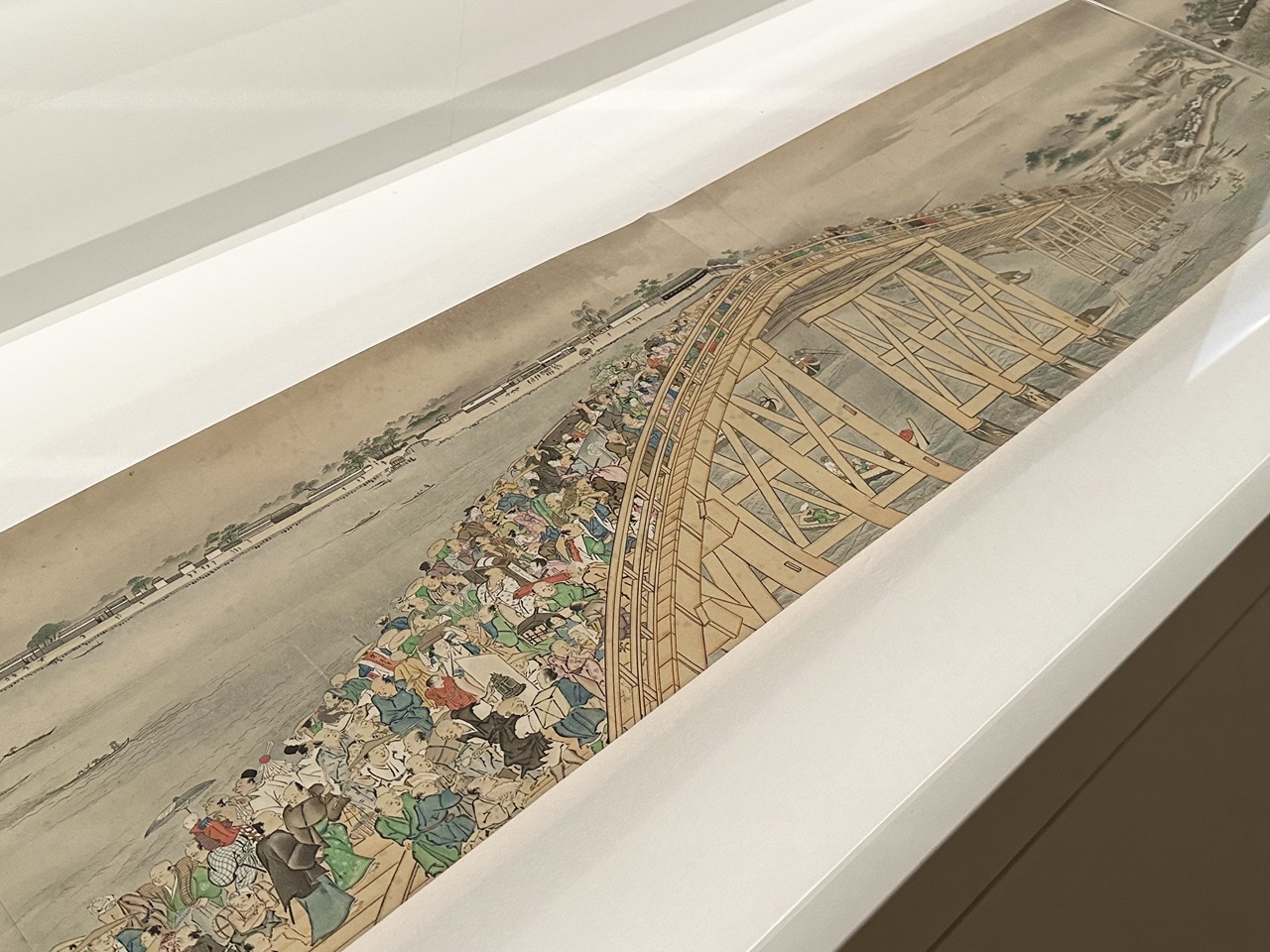
The beauty of Japan that has been passed down across seas and through the ages.
The British Museum in London was founded in 1753 as the world’s first national public museum. Boasting a collection of approximately 8 million items, it has eight departments, including those focusing on ancient Egypt, Asia, and Greece and Rome. Among these, its comprehensive and systematically collected collection of Japanese art is highly regarded as one of the best in the world in terms of both quantity and quality. This is due to the Japonisme movement that swept Europe in the late 19th century and the presence of collectors who were fascinated by Japanese culture.
The prologue first focuses on five key figures who laid the foundation for the collection: William Anderson, a surgeon who stayed in Japan as a foreign expert and collected paintings; William Gowland, who worked at the mint and collected bronze bells, haniwa (clay figures), and stone tools for the study of ancient tombs; and Augustus Wollaston Franks, a curator who appreciated their collections and worked hard to have them accepted into the British Museum.
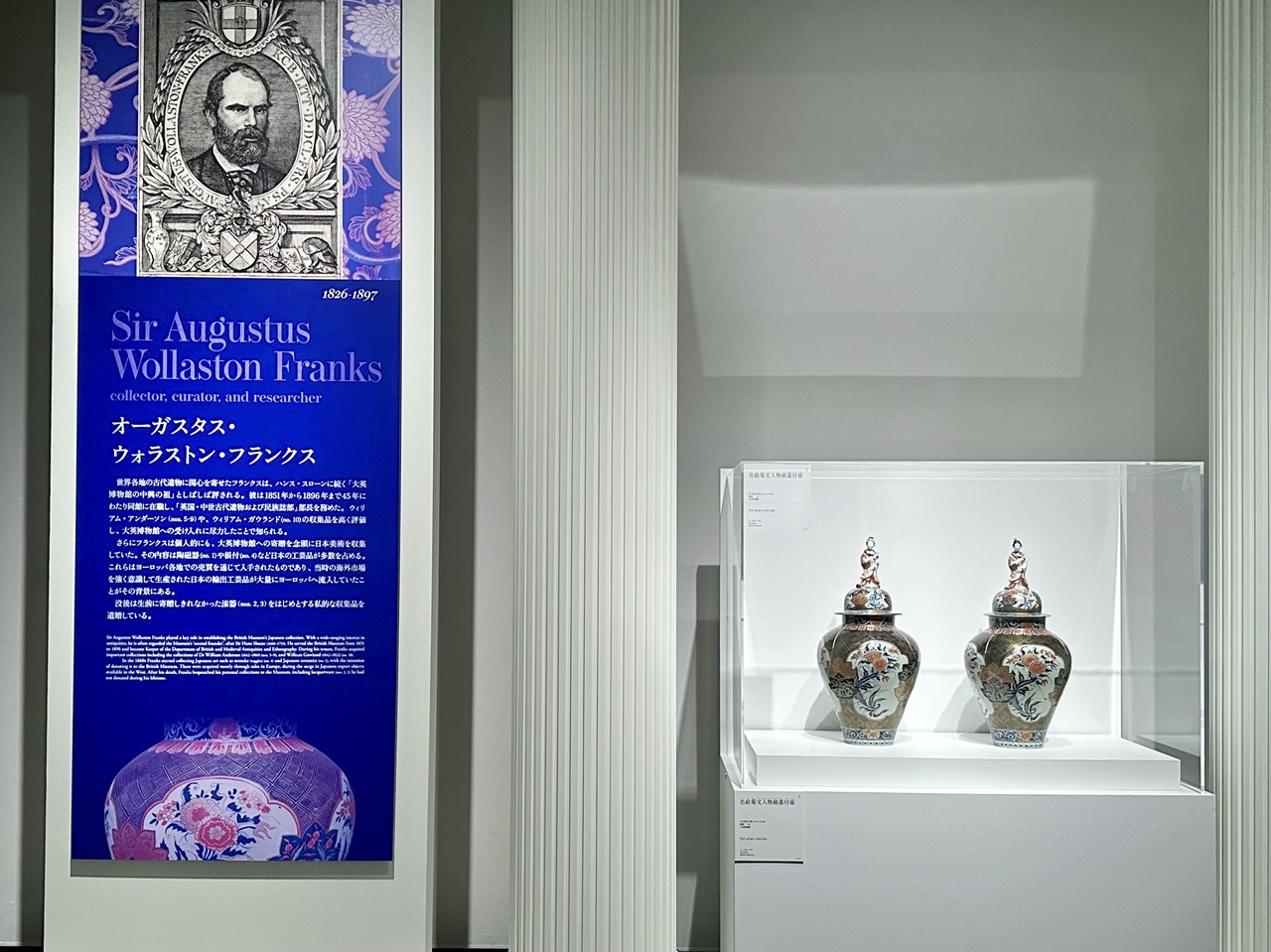
Their contributions, and the resulting exhibition of diverse genres of Japanese art, demonstrate that the collection is not merely an accumulation of items exported overseas, but rather a product of the foresight of people with a deep interest in and love for Japanese culture, and the accumulation of research activities that promoted understanding and dissemination.
Princess Akiko has been discovered. 《Horyu-ji Temple Golden Hall Mural, Wall No. 9, Replica》 First time returning home
The first chapter of the first half, “The Flourishing of Edo Painting,” introduces paintings, mainly from the Muromachi period to the Meiji period, in chronological order, focusing on Edo period paintings.
The opening scene depicts the area before it was destroyed in the 1949 fire. Horyuji Temple Main Hall Mural No. 9 This is Sakurai Koun’s “Horyu-ji Temple Golden Hall Mural, Wall No. 9 Replica,” a full-size reproduction of the “Miroku Pure Land Painting.” The original mural was created in the latter half of the 7th century, after Prince Shotoku built Horyu-ji Temple. In the center of the painting, Maitreya Bodhisattva is depicted seated on a lotus pedestal under a magnificent canopy, preserving traces of the original’s vibrant colors.
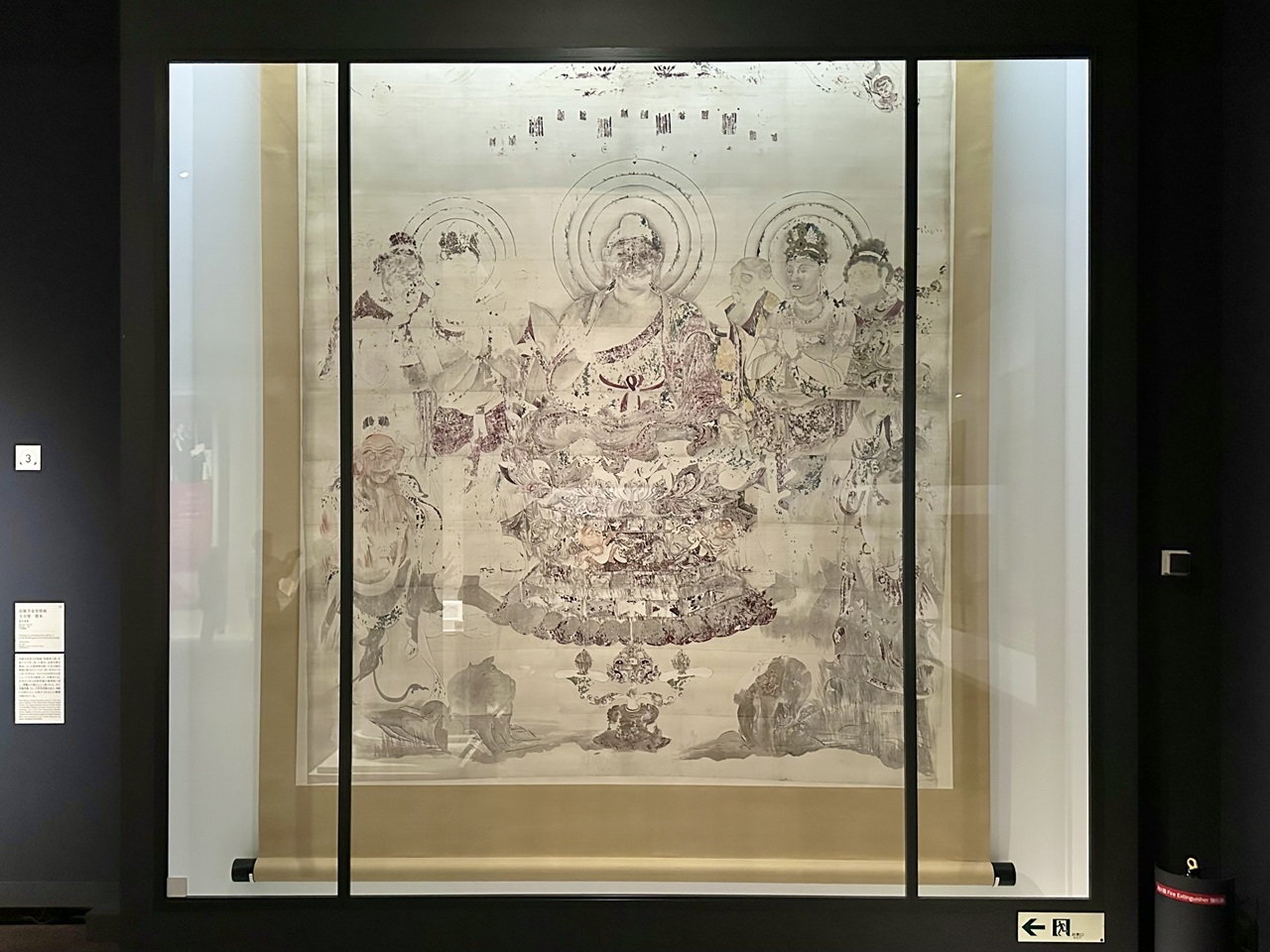
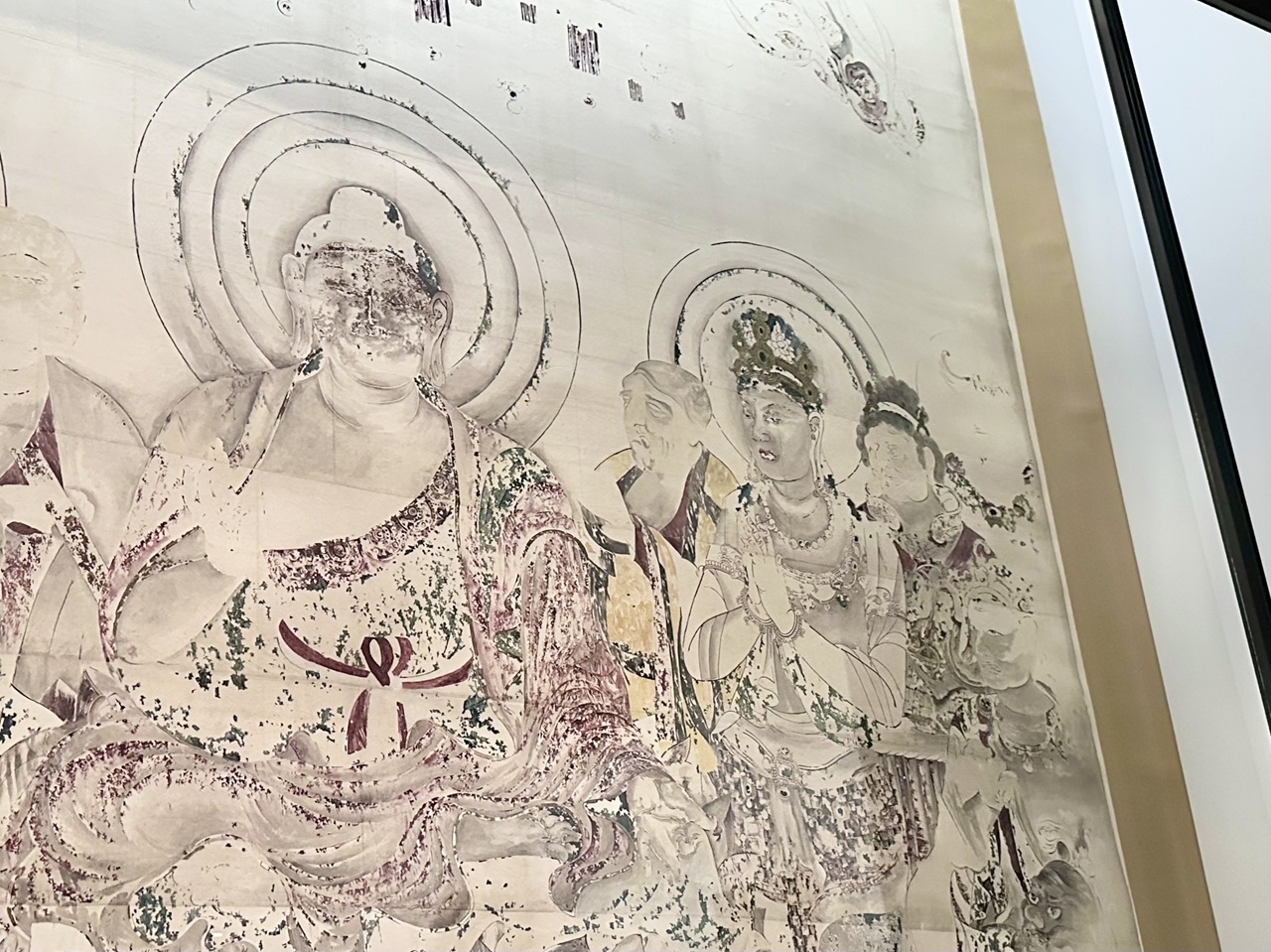
This work was discovered by chance in 2007 when Her Imperial Highness Princess Akiko was working as a curatorial volunteer at the British Museum and was conducting a catalog search of the collection. Subsequent research revealed that Ernest Satow, a British diplomat during the Meiji era who was impressed by the mural, commissioned the artist Koun, who was in the tradition of reviving Yamato-e painting, to create this work, which he then presented to Anderson. It is a valuable example, considered one of the earliest existing copies. After extensive restoration and new mounting, it has returned to Japan for the first time.
In a column by Her Imperial Highness Princess Akiko included in the catalog, it is revealed that the evaluation records of Kofude Ryōnin, an expert in antique calligraphy who was involved in the appraisal of Japanese art at the museum during the Meiji period, were an important clue in tracing the provenance of the works, giving a sense of the solid history of cultural exchange between Japan and Britain.
A reunion after approximately 150 years! The magnificent fusuma paintings of the Kano school, once divided between Japan, Britain, and America.
The highlight of this exhibition is a collection of fusuma paintings created between the late Momoyama period and the early Edo period, which are adorned with a variety of decorations such as gold and silver leaf and gold dust.
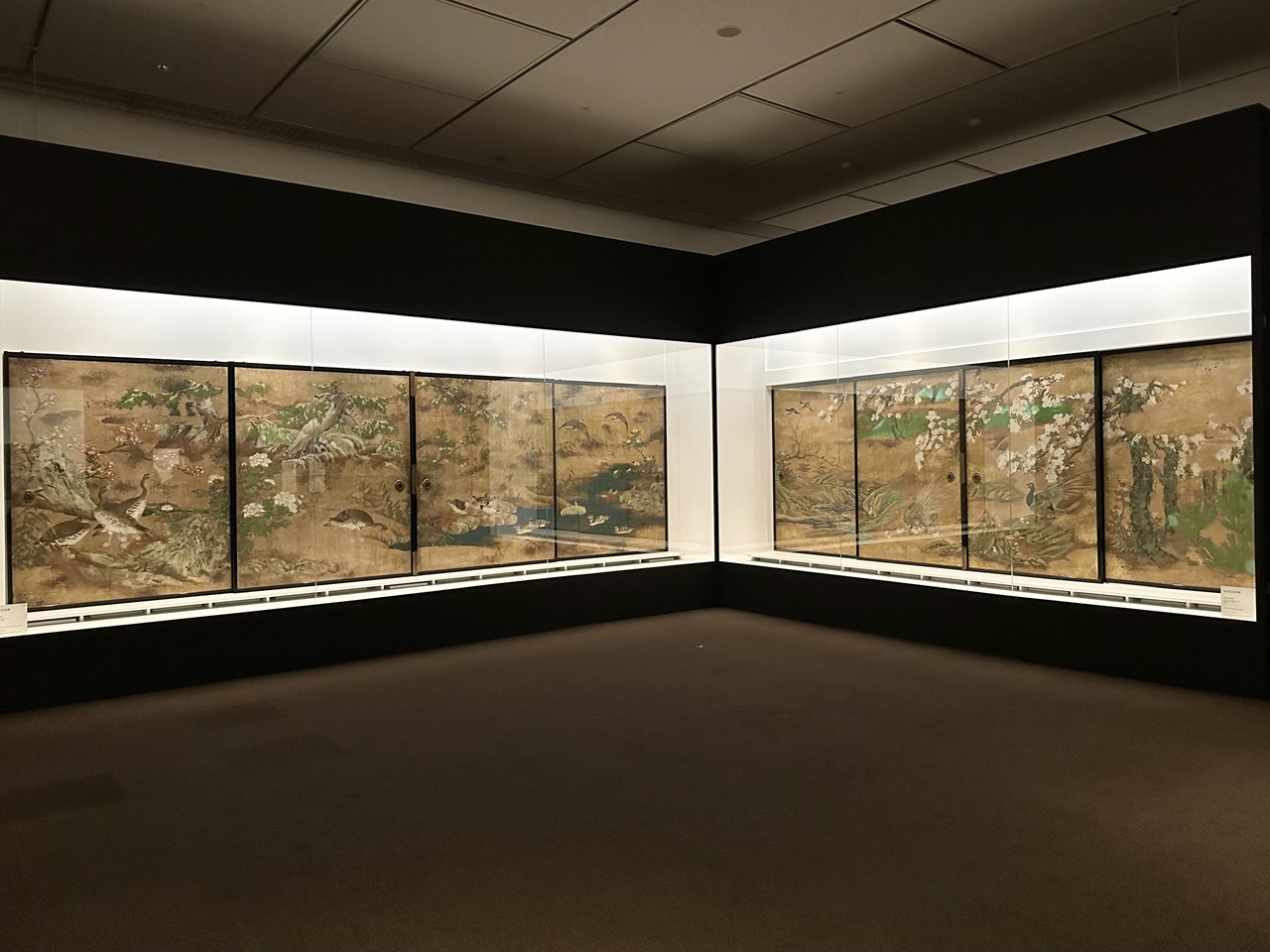
The “Autumn and Winter Flower and Bird Paintings on Fusuma Doors” in the British Museum and the “Spring Scene Flower and Bird Paintings on Fusuma Doors” in the Miyakoshi family, an old family in Nakadomari Town, Aomori Prefecture, have recently been identified through research as a pair of fusuma paintings created by Kano Sogan Shigenobu, a pupil of Kano Sohide, the younger brother of Kano Eitoku .
In addition to the two works, this exhibition will also feature special exhibits of the “Fujo (sliding door) depicting immortals in music, chess, calligraphy, and painting,” owned by the Seattle Art Museum in the United States, which once adorned the opposite side of the “Fujo depicting flowers and birds in autumn and winter,” and the “Fujo depicting customs and manners of famous places (Miho no Matsubara and Kiyomizu-dera Temple),” owned by the Miyakoshi family, which once adorned the opposite side of the “Fujo depicting flowers and birds in spring.” These works were brought from Myoraku-ji Temple (now Tanzan Shrine) in Tōnomine, Sakurai, Nara Prefecture, during the anti-Buddhist movement of the Meiji era. Sold, divided into separate collections After many twists and turns, four sets of temple treasures have been reunited for the first time in approximately 150 years.
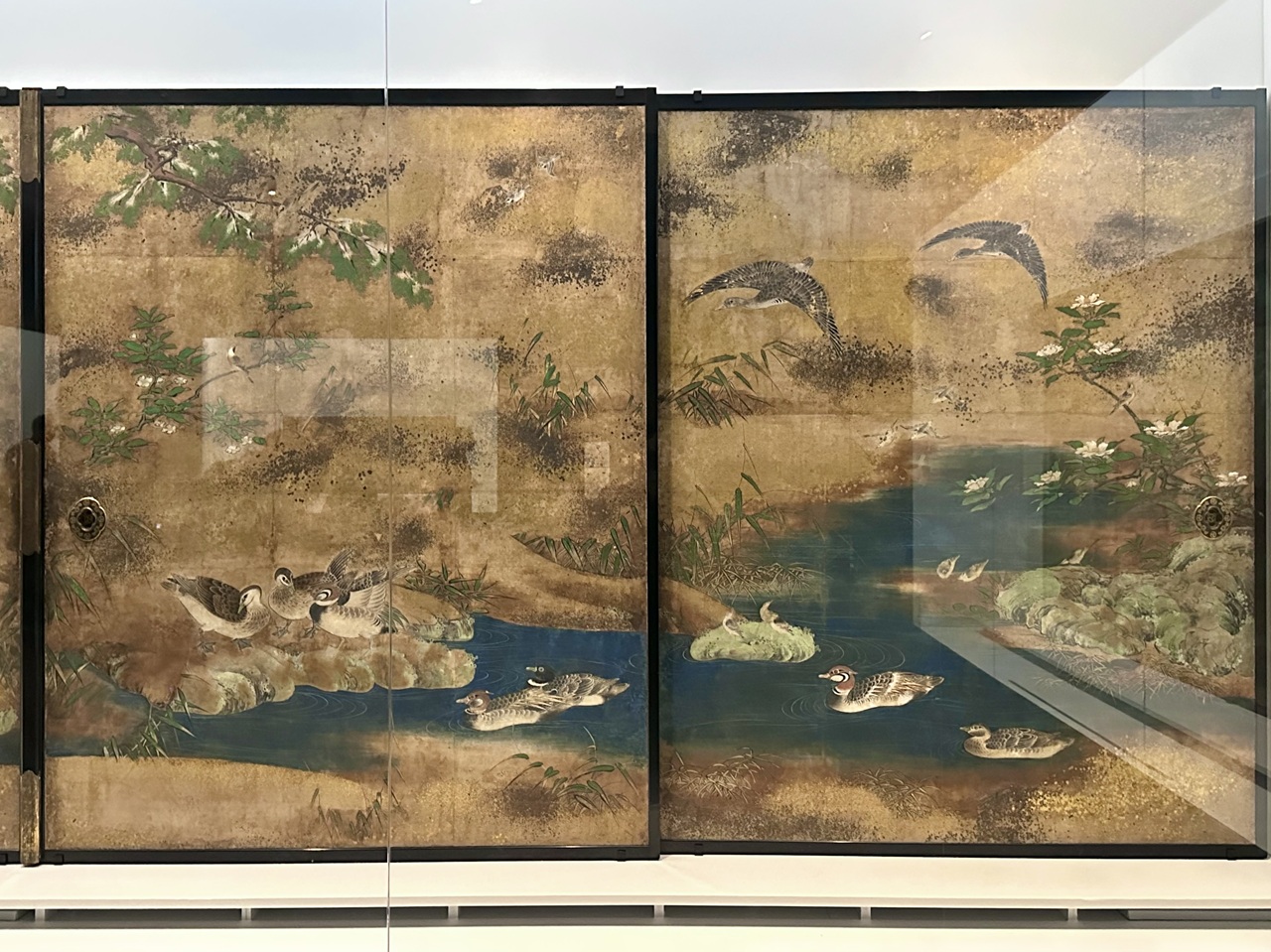
The “Autumn and Winter Flower and Bird Screen” depicts numerous waterfowl gracefully amidst the changing seasons from autumn to winter, with colorful maple leaves and snow-covered cypress trees. The following “Spring Scene Flower and Bird Screen” transitions from signs of spring, such as white plum branches, nightingales, and melting snow in a mountain stream, to a spring landscape of cherry blossoms in full bloom, with gold and silver leaf and gold dust adding a dreamlike atmosphere to the entire image. This transition of the seasons is one of the typical themes in Japanese art. It also embodies the symbolic meaning of a harmonious utopia.
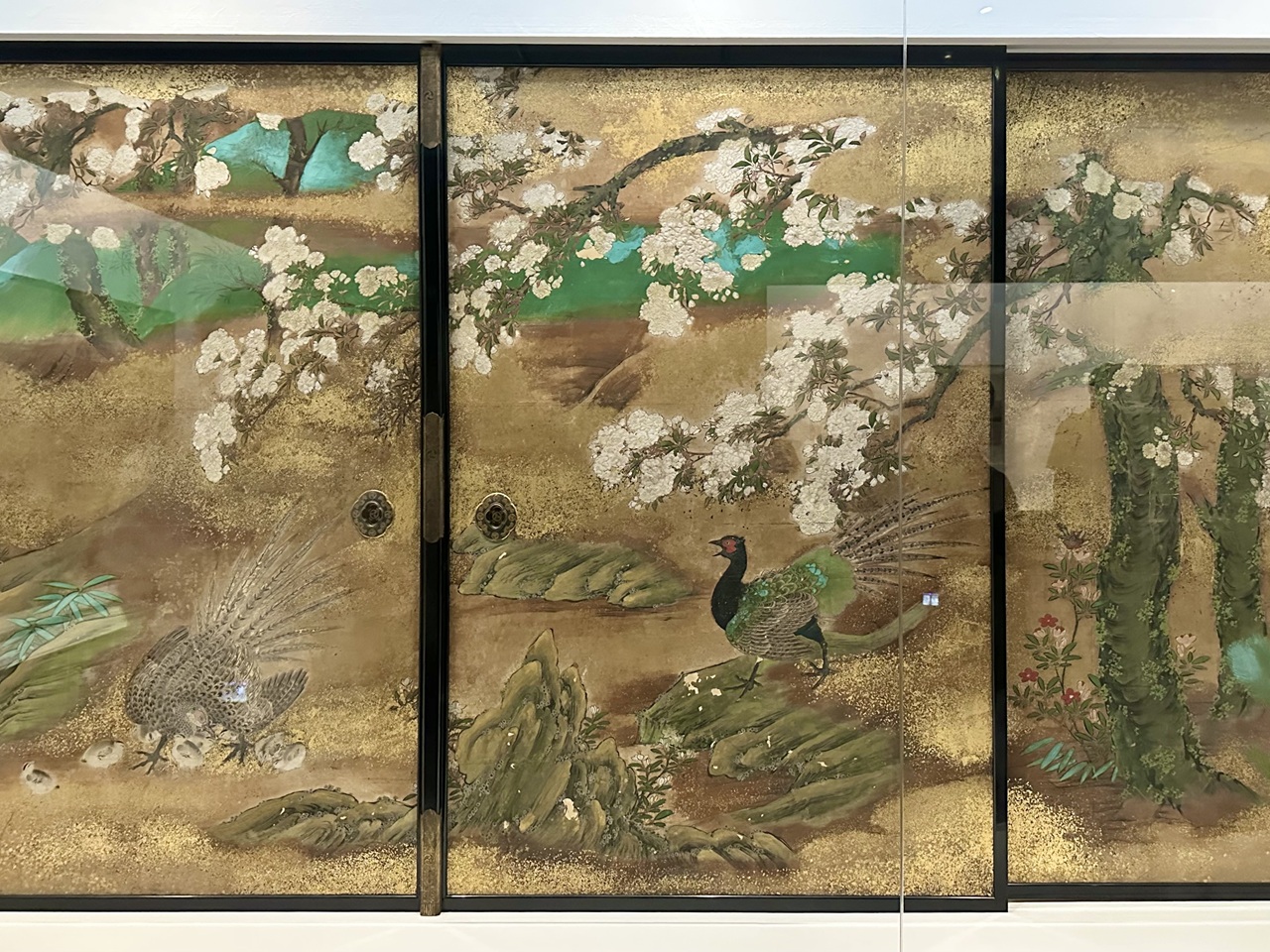
There are countless highlights, such as the deep ultramarine blue of the water, characteristic of the Kano school from the late Momoyama to early Edo periods, the exquisitely detailed depiction of the feathers of the pair of pheasants, and the mountain cherry blossoms enhanced with raised coloring for a sense of three-dimensionality. However, what deserves attention is the connection between the two paintings. The previously separated rocks and waterfront are now connected, and a continuity can be seen in the composition of the flying geese. Furthermore, the identical design of the handles enhances the sense of unity between the two works. This restoration of something that was incomplete into its proper state is sure to touch the hearts of all who see it.
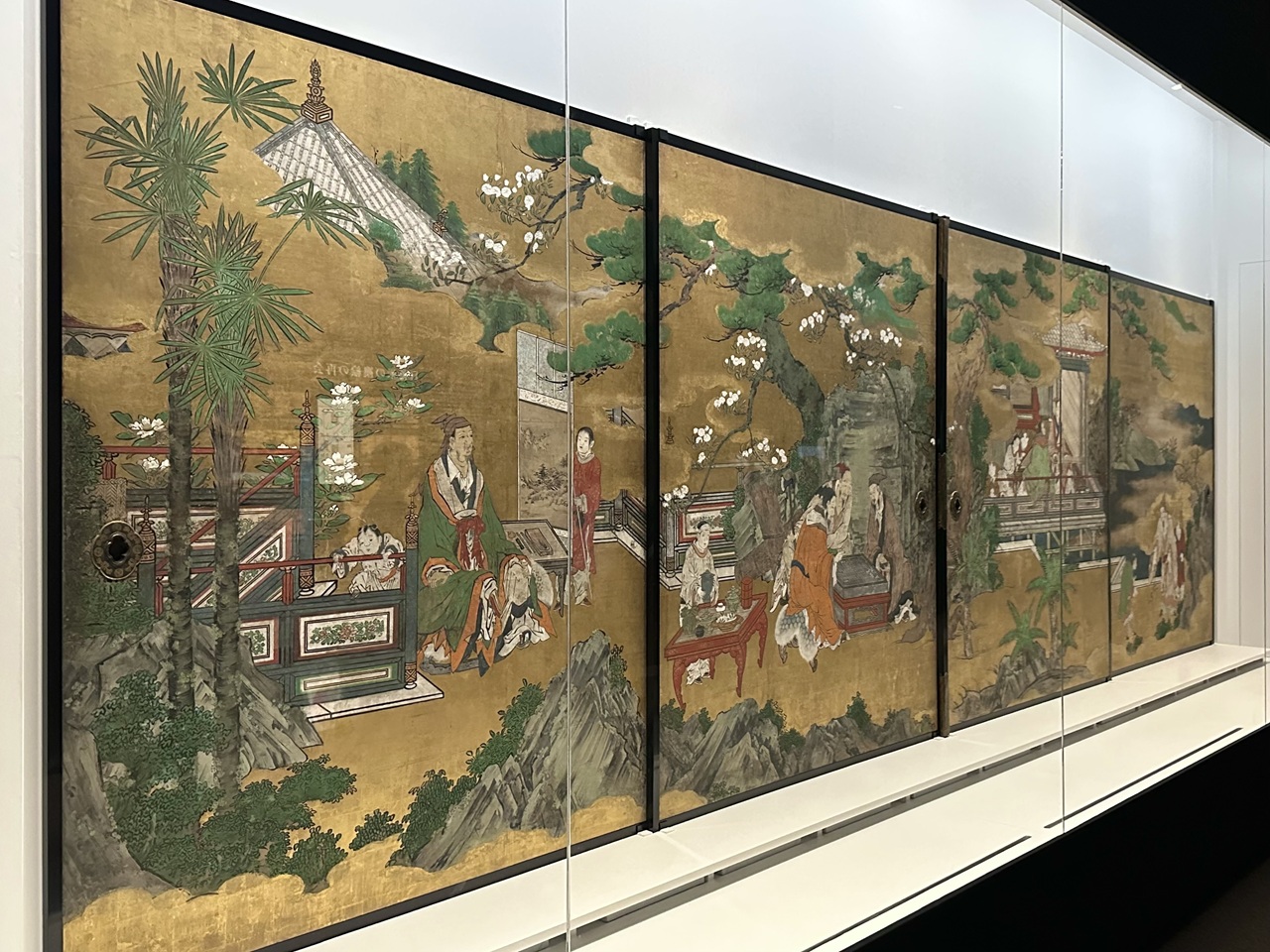
On the other hand, the “Zu Fusuma” (sliding door paintings depicting immortals and their acquaintances), which portrays the four arts highly valued by Chinese literati—koto, chess, calligraphy, and painting—makes lavish use of precious materials such as gold leaf, gold pigment, and verdigris, further enhancing its dignified appearance. Considering that these sliding door paintings were originally created to decorate the interior of the residence of the head of the Myorakuji Temple (the person in charge of the temple’s administration), who was appointed by order of Tokugawa Ieyasu, these works may also have served to demonstrate the dignity of the master of the residence.
The breathtaking detail and masterful brushwork of Maruyama Ōkyo’s “Tiger Painting” are truly awe-inspiring.
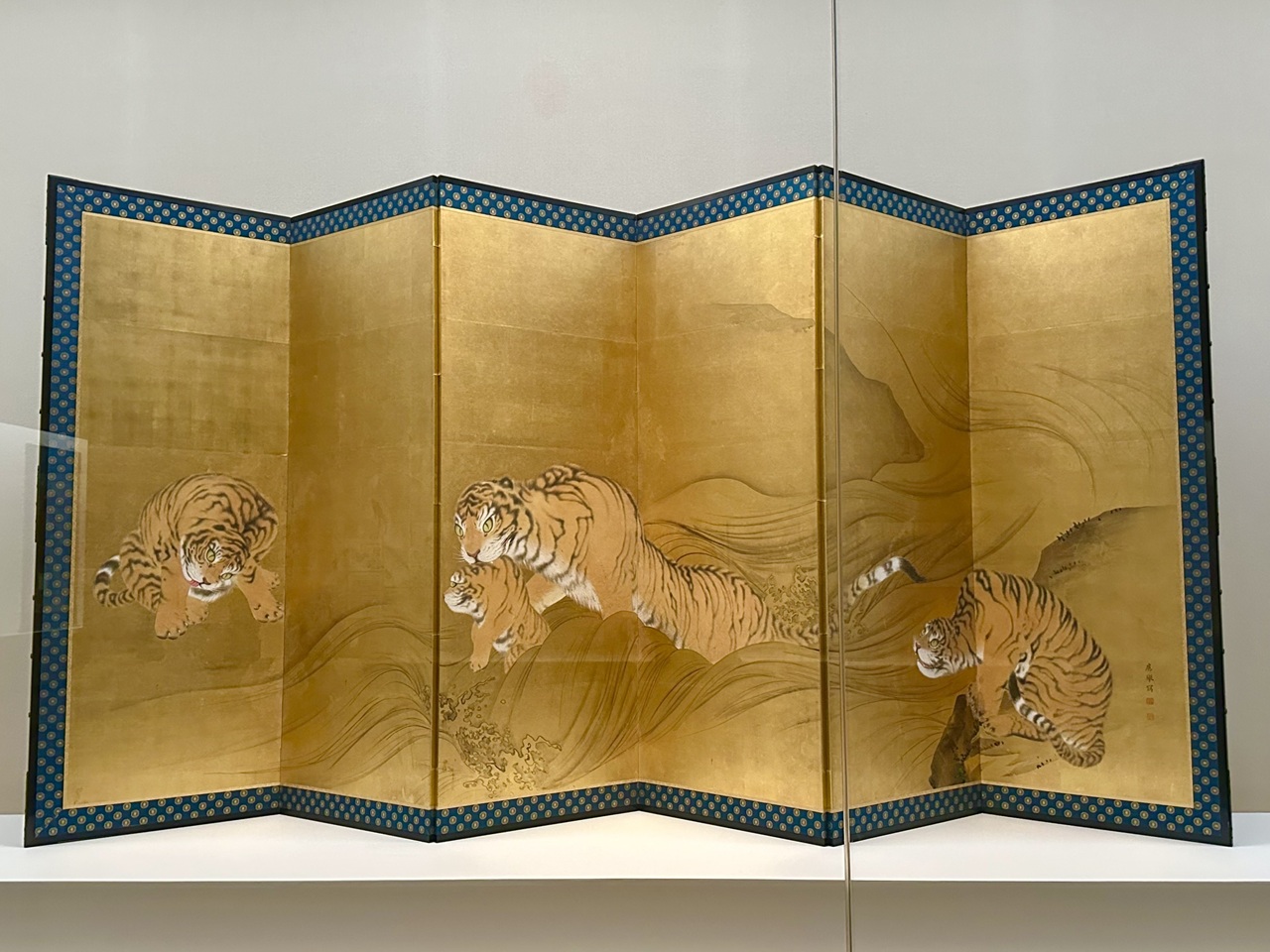
The collection of paintings from the mid-Edo period to the Meiji era is particularly extensive, and one of the highlights is the first-ever exhibition of Maruyama Okyo’s “Tiger Cub Crossing the Crossing” screen painting , which is returning to Japan for display.
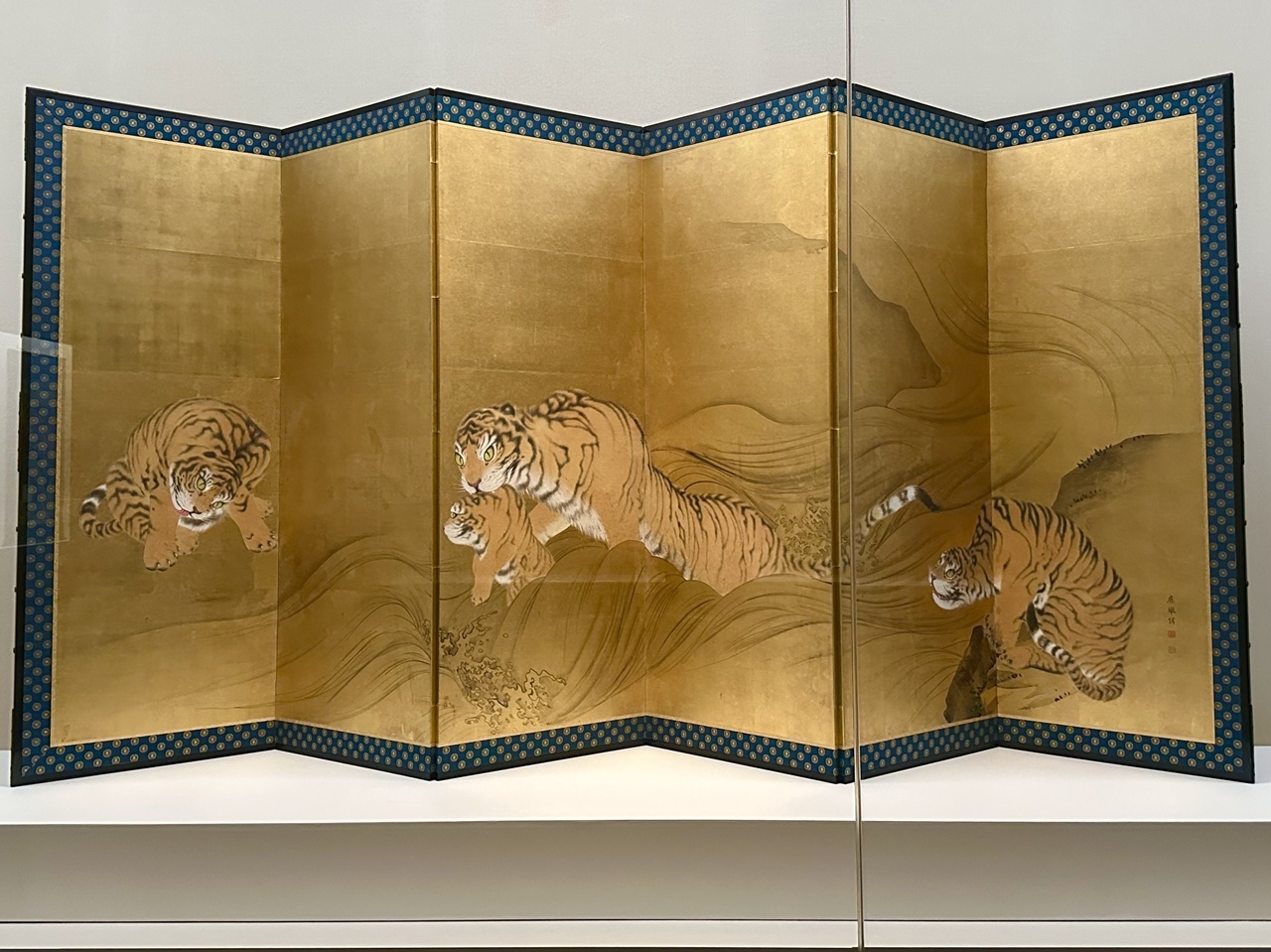
This work is a masterpiece representative of Okyo’s mid-career, based on a Chinese legend that says, “When a mother tiger gives birth to three cubs, one of them is a ferocious leopard that will eat the other cubs if left unattended.” As is typical of Okyo, who is known for his thorough realism, the fur of the mother tiger and her cubs is depicted with astonishing softness by carefully layering many thin brushstrokes.
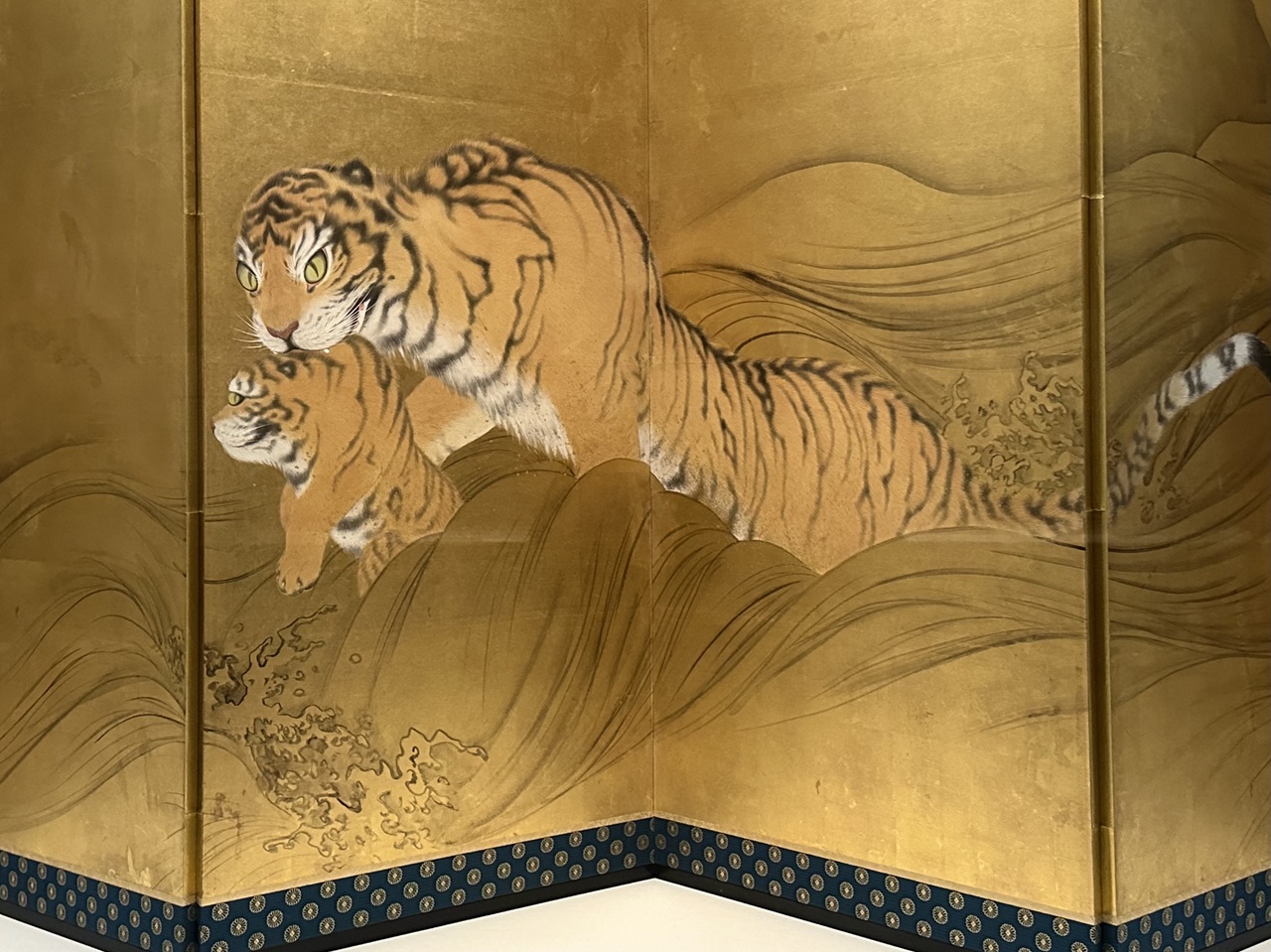
However, tigers did not exist in Japan at the time, and it is said that Okyo modeled the painting after a pet cat he had at home. As a result, the pupils are as narrow as a cat’s, and one of the charms of this work is that it gives a sense of familiarity despite being a ferocious beast. The river in which the mother tiger carries her cub is depicted entirely in gold, like a sea of clouds, suggesting that it was made for a wealthy patron.
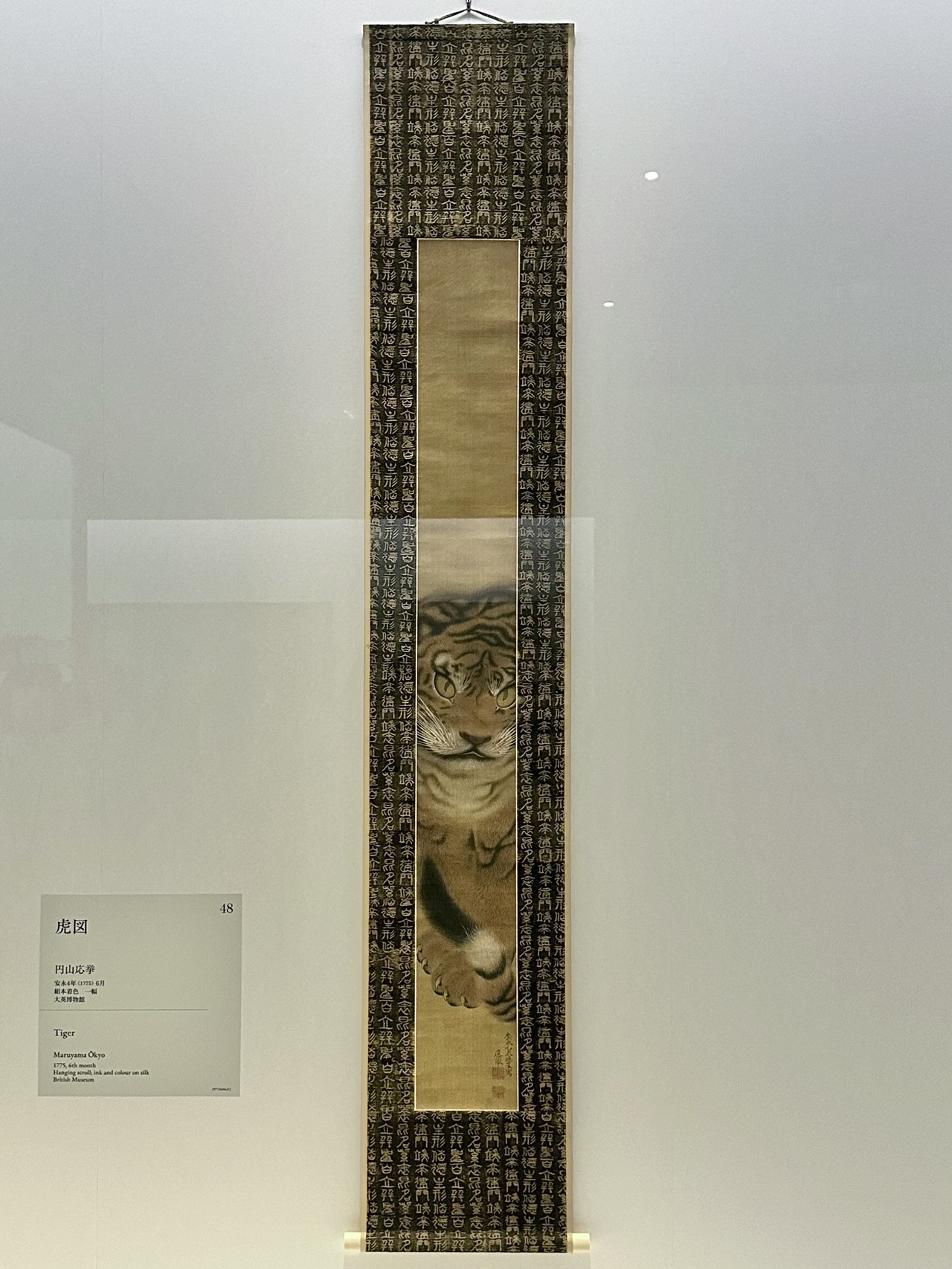
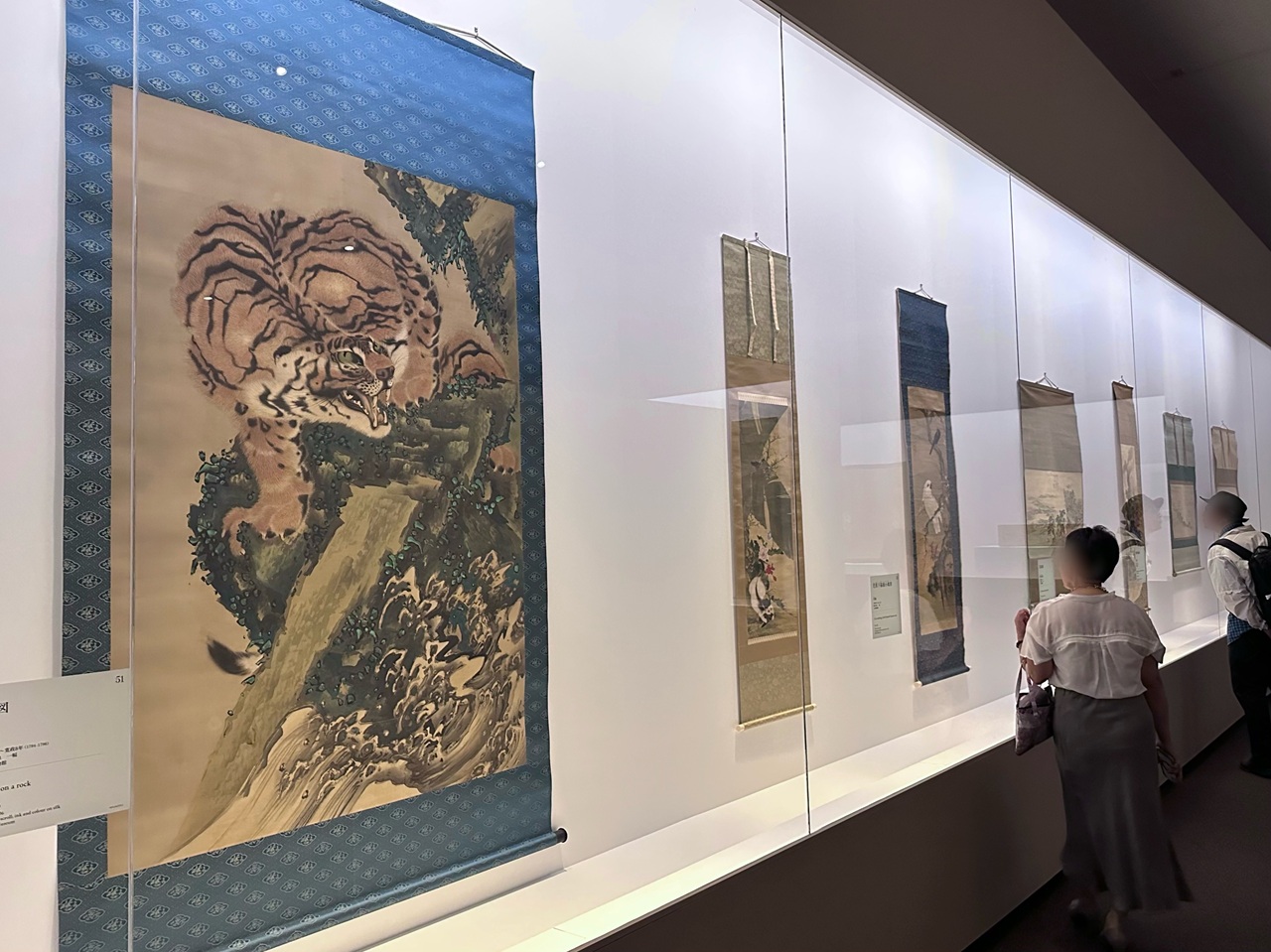
Okyo created numerous tiger paintings throughout his life, and this exhibition also features his hanging scroll painting of a tiger . This work shines with its masterful composition, boldly placing a tiger facing forward on a long, narrow canvas, creating a sense of tension as if one is confronting the ferocious beast from the shadows. When compared to the “Tiger Cub Crossing Screen,” the meticulousness of the brushwork, which can be described as obsessive, in depicting even each individual strand of fur, becomes even more apparent, and its beauty is so captivating that one loses track of time while gazing at it.
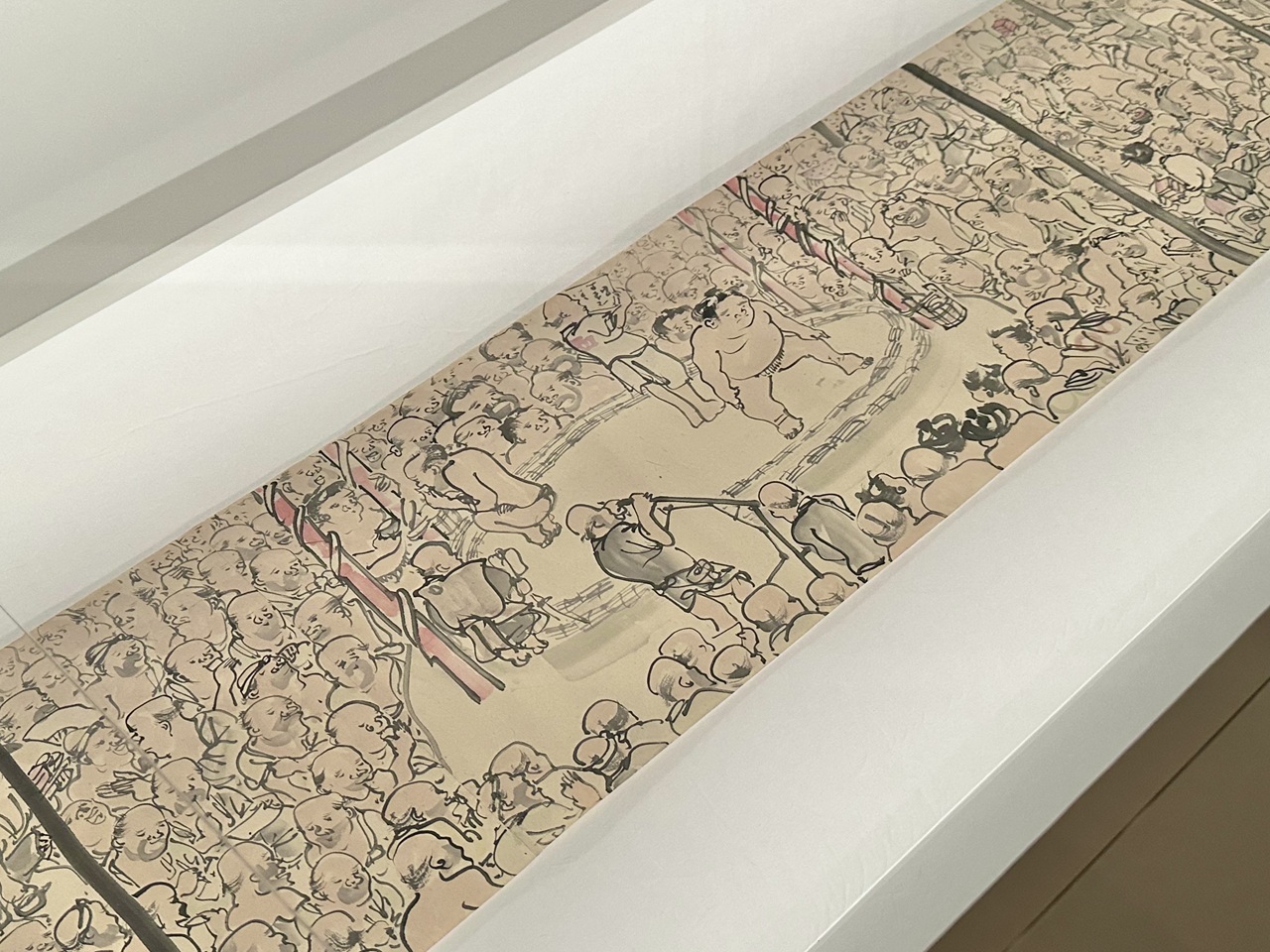
Another notable feature of the collection is that it includes many works that can be considered benchmark pieces by artists who have not been sufficiently researched or introduced in Japan. Examples include the “Kamogawa Bugi Zukan” scroll by Kawamura Bunpo , a painter of the Kishi school in the late Edo period, which uniquely depicts people enjoying sumo wrestling, and the “Mushi Gyoretsu- zu” by Nishiyama Hoen , a painter from Osaka, which shows anthropomorphic insects participating in a daimyo procession. Regardless of the artists’ fame, these unique works, collected through the collector’s discerning eye, may serve as an opportunity to rediscover the charm of Japanese painting.
Sharaku, Hokusai, Hiroshige—a collaboration of eight great ukiyo-e artists who enlivened Edo.
In the second chapter of the second half, “Ukiyo-e—A Kaleidoscope Reflecting the ‘Present’ of Edo,” we examine ukiyo-e works that capture the vibrant energy of Edo.
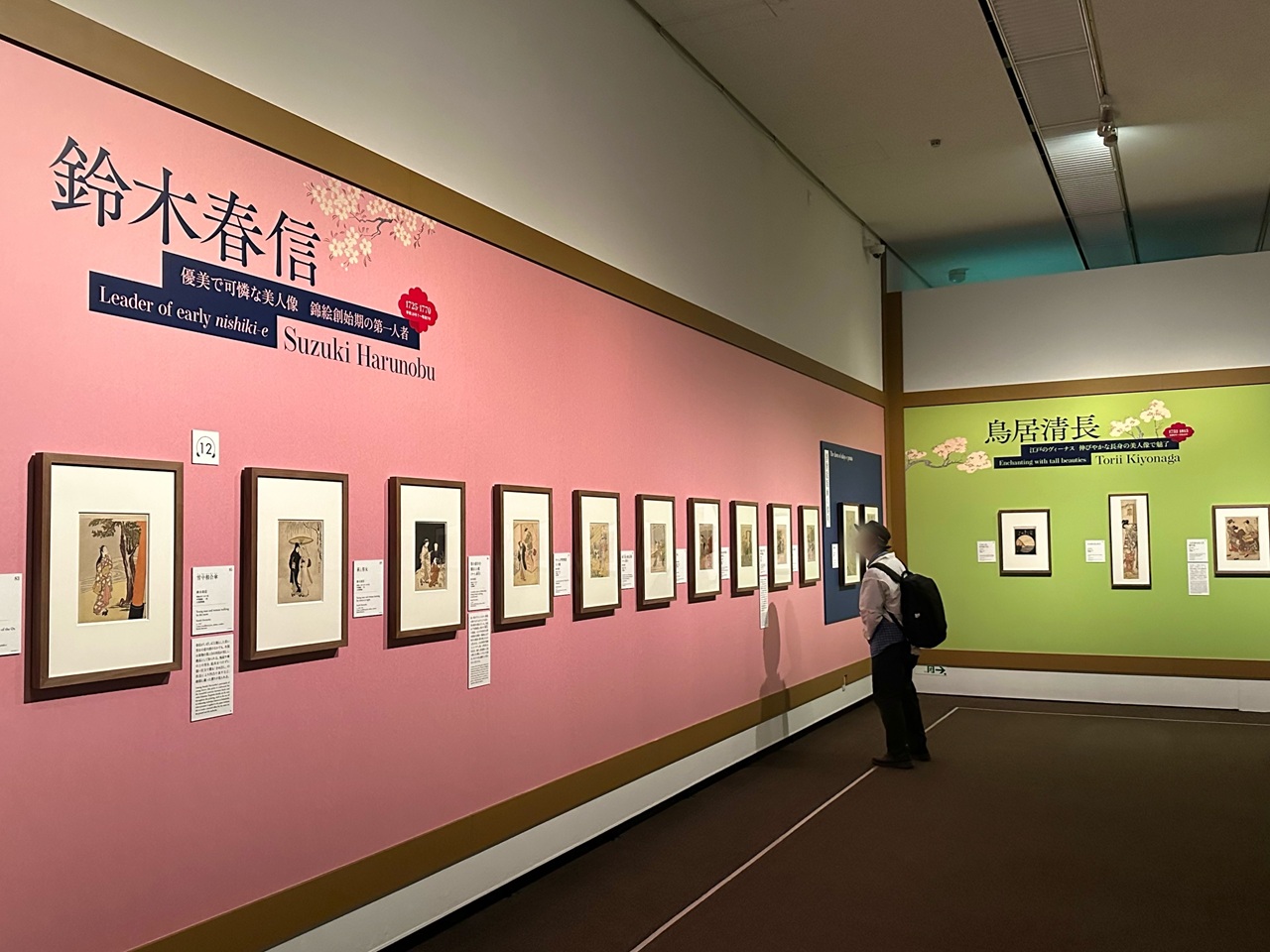
During the Edo period, Edo developed into a metropolis brimming with entertainment, and ukiyo-e prints flourished, quickly incorporating information on fashionable clothing, kabuki performances and actors, and tourist attractions that the public desired. While hand-painted works were primarily for the relatively wealthy, woodblock prints were mass-produced through a division of labor between artists, engravers, and printers, making them inexpensive and widely distributed. This fostered a unique publishing and appreciation culture, rare in the world, where people of all ages could easily buy and enjoy art.
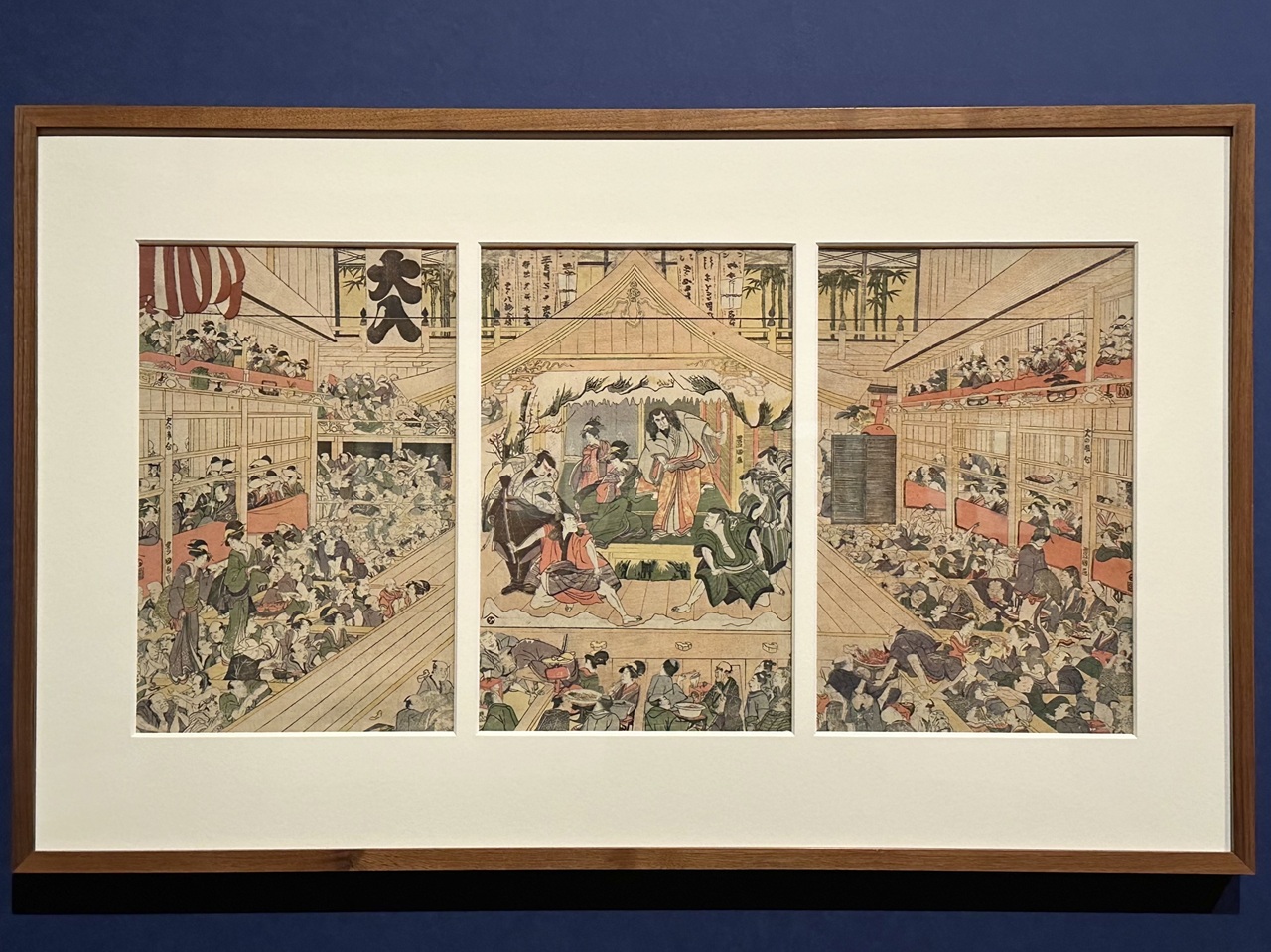
However, for the people of Edo, ukiyo-e woodblock prints were disposable items that were discarded once their popularity faded. It was Westerners who came to Japan during the Meiji era, such as Anderson and Ernest Satow, who recognized their value as works of art early on.
The exhibition showcases over 100 works by eight star artists from the golden age of ukiyo-e, including Suzuki Harunobu , Torii Kiyonaga, Kitagawa Utamaro, Toshusai Sharaku, Utagawa Toyokuni I, Katsushika Hokusai, Utagawa Hiroshige , and Utagawa Kuniyoshi, all featured in nishiki-e prints. Through a diverse range of works including portraits of beautiful women, actors, landscapes, and warriors, the exhibition conveys how ukiyo-e prints were a medium that reflected the “present” of Edo.
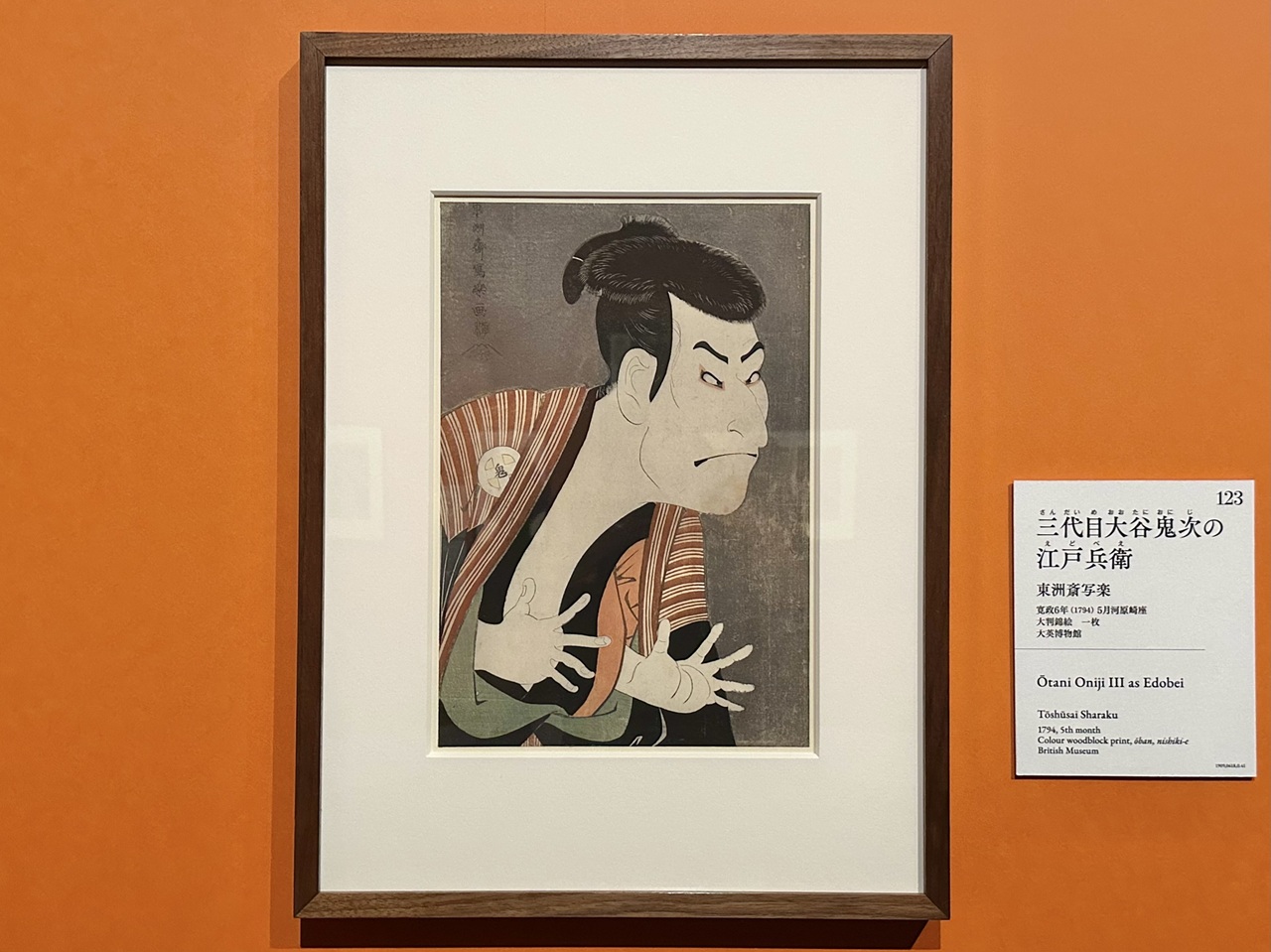
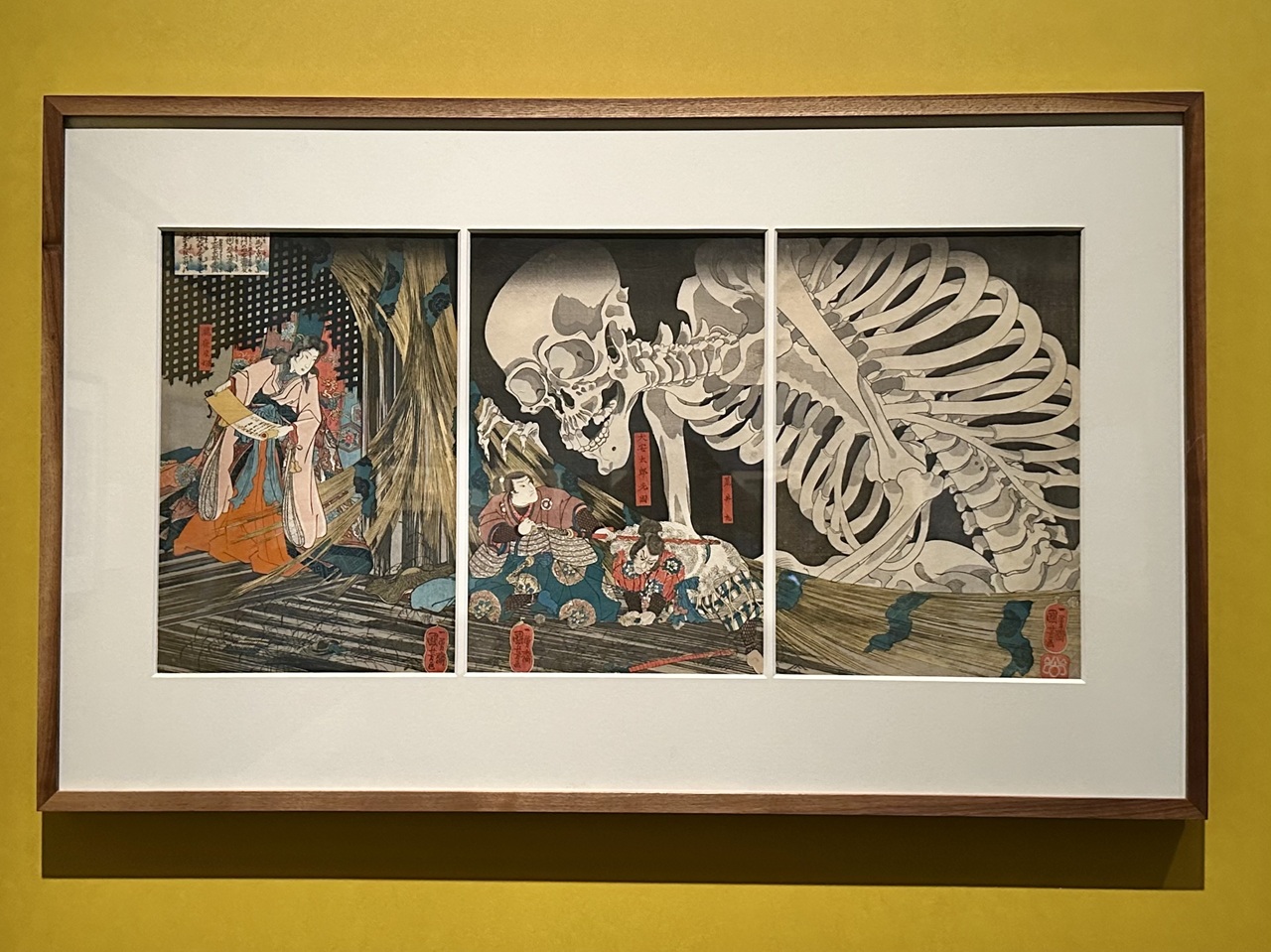
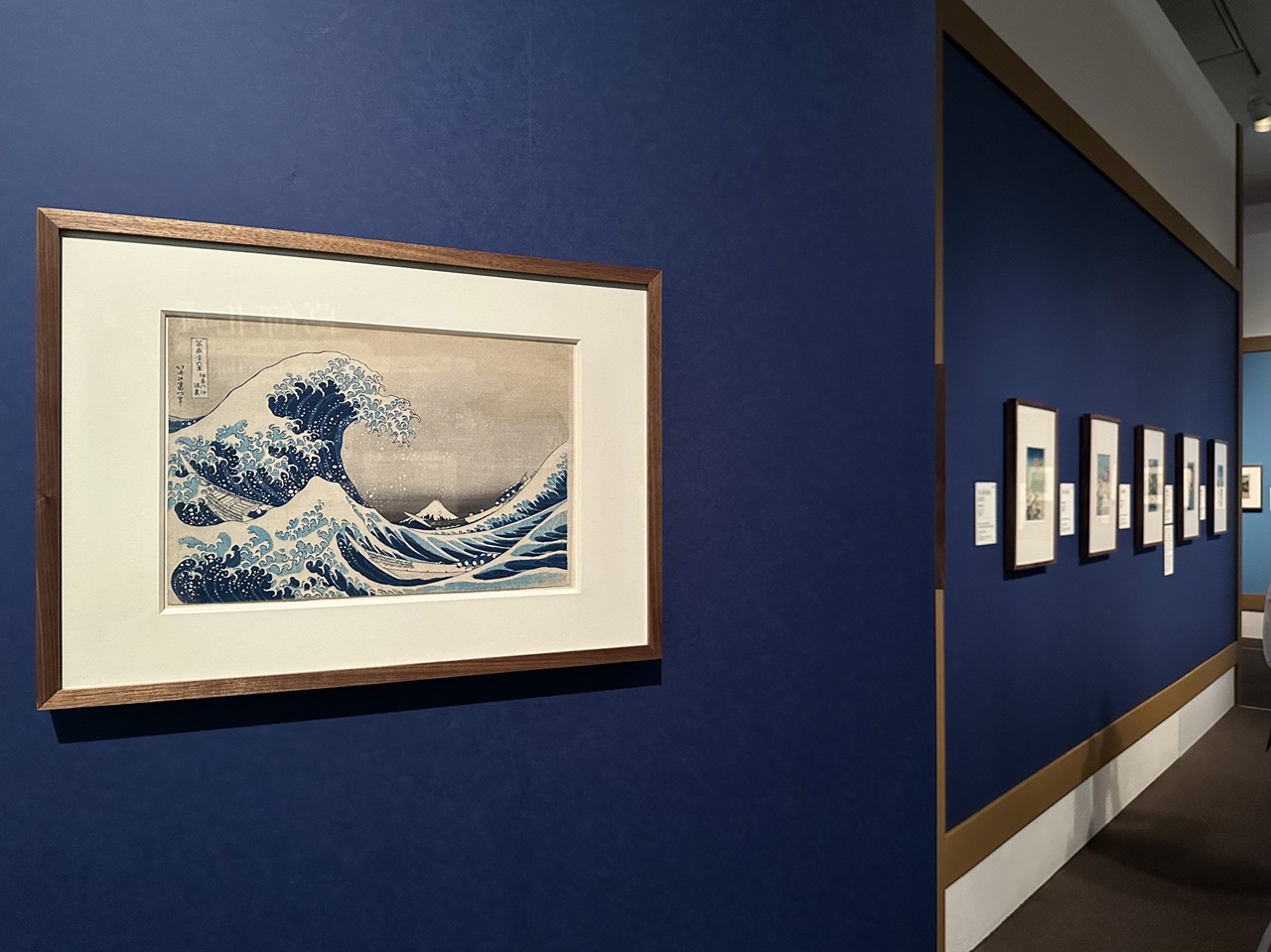
The exhibition features a plethora of masterpieces that everyone has seen at least once, such as Sharaku’s “Otani Oniji III as Edohei” and Kuniyoshi’s “The Old Imperial Palace of Soma . ” Hokusai’s “The Great Wave off Kanagawa” from “Thirty-Six Views of Mount Fuji,” known overseas as “The Great Wave,” is on display as a precious first printing that stands out for the beauty of its outlines and the vibrancy of its indigo color, and its state of preservation speaks to the high quality of the collection.
Hiroshige’s “Morning Scene at Nihonbashi, Part of the Fifty-Three Stations of the Tokaido,” which captures a daimyo procession at Nihonbashi Bridge head-on, is well-known as one of the representative prints of the “Fifty-Three Stations of the Tokaido” series. In this exhibition, “Morning Scene” is displayed alongside “Procession Beginning at Nihonbashi, Part of the Fifty-Three Stations of the Tokaido,” which is very similar to it. However, “Morning Scene” is actually the first edition, while “Procession Beginning” is a later edition with a changed design, a so-called “alternative print.”
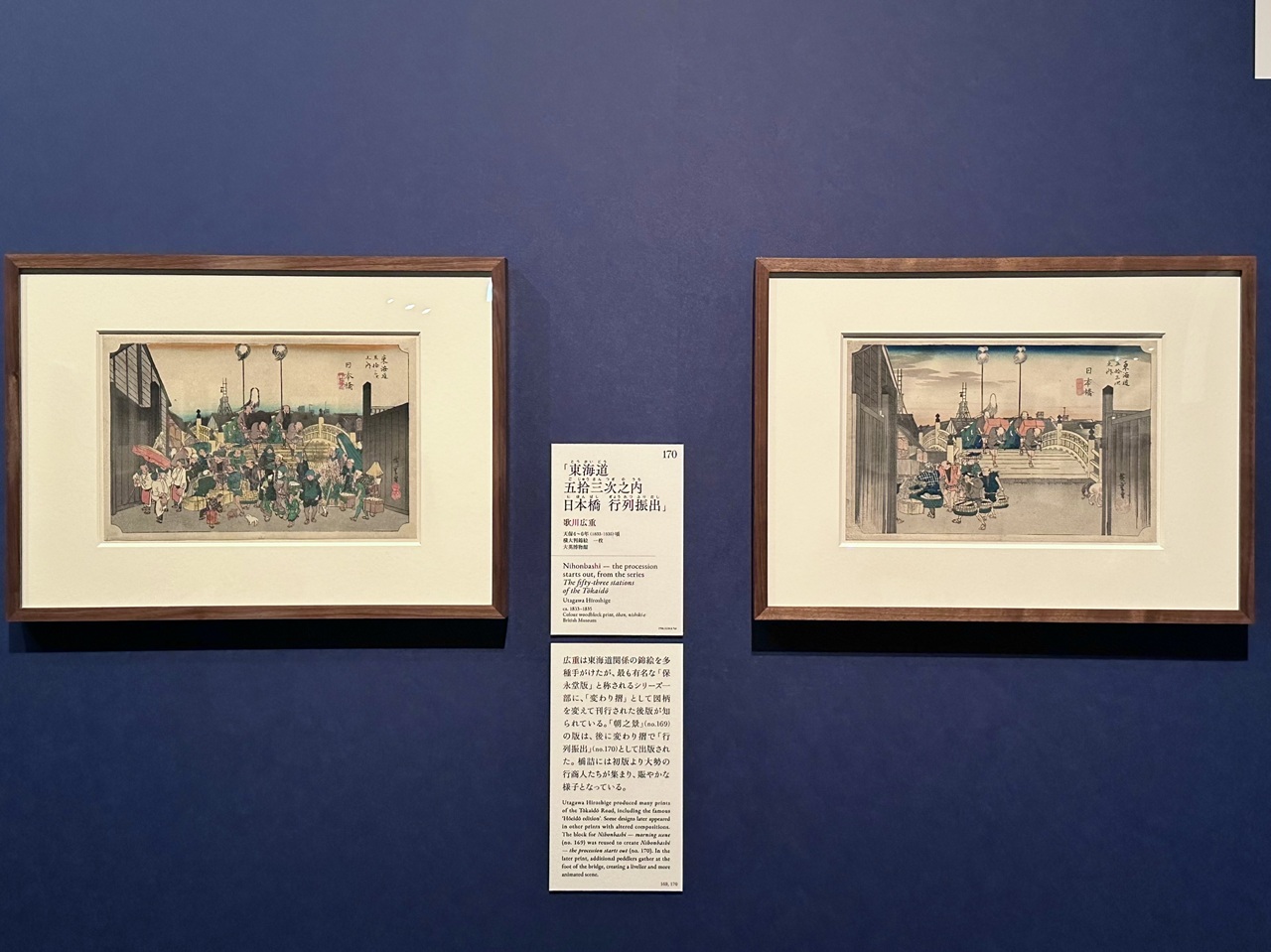
In ukiyo-e woodblock prints, variations in color schemes and printing techniques are not uncommon. However, these two works are noteworthy for their bold changes to key elements, such as altering the season from summer to spring and increasing the number of street vendors gathered at the bridge. Nihonbashi, the starting point of the Tokaido journey and the first in the series, is a crucial print that influences the overall impression of the series. The publisher may have tried to more impressively portray the bustling atmosphere of Nihonbashi when reprinting the series.
The exhibition also features powerful hand-painted ukiyo-e prints, including Utamaro’s masterpiece from his later years, “Courtesan Reading a Letter.”
This chapter also introduces works from the museum’s collection of over 200 hand-painted ukiyo-e prints, including Utamaro’s “Courtesan Reading a Letter” and Hokusai’s “Preliminary Drawings for the ‘Complete Picture Book of All Things’,” which were recently rediscovered, as well as works by Toribunsai Eishi, Kawanabe Kyōsai, Hishikawa Moronobu, and others.
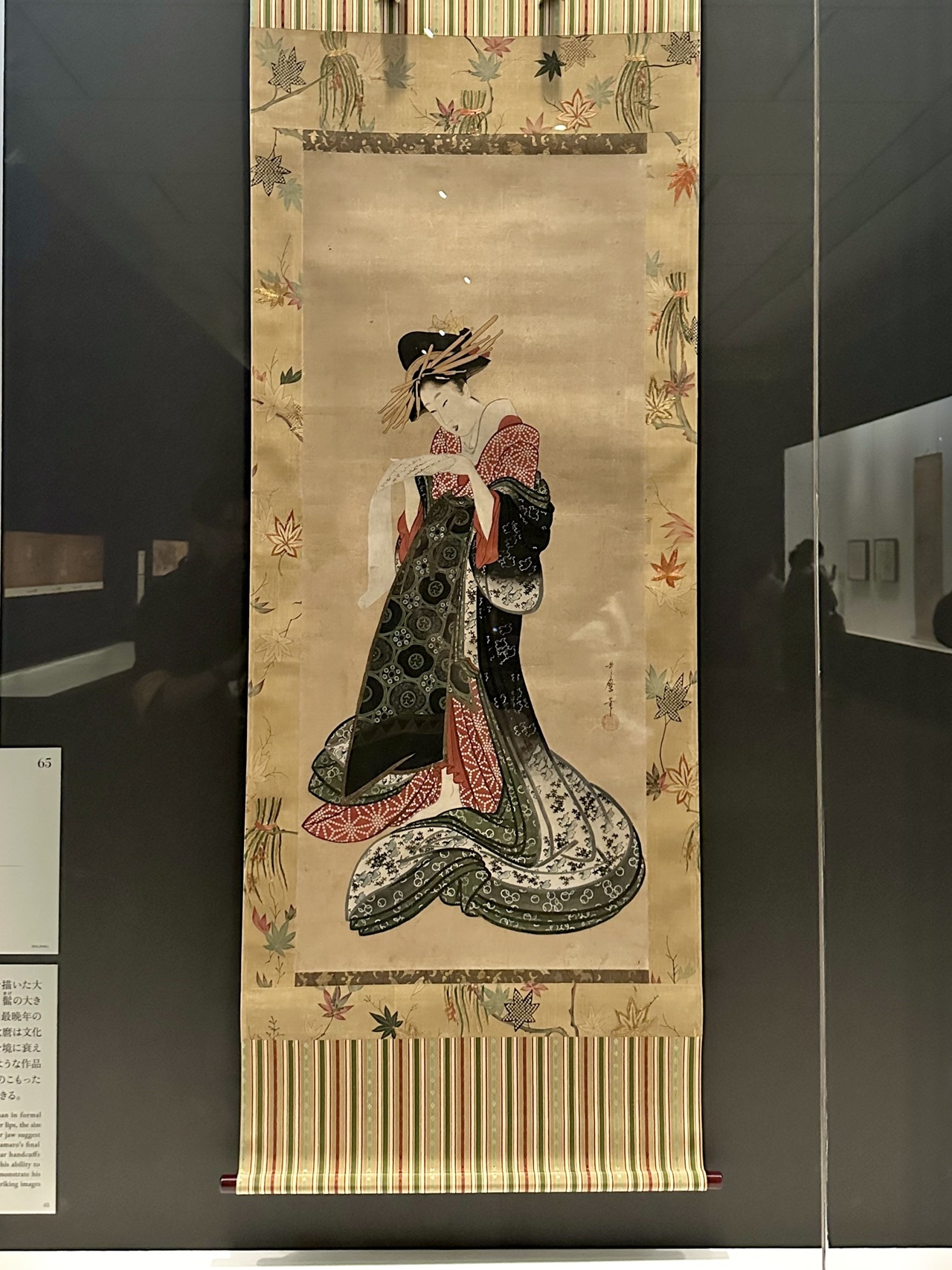
Only about 50 of Utamaro’s original paintings exist in the world. Among them, “Courtesan Reading a Letter” is It is one of the largest ones. Before it entered the British Museum, its existence was largely unknown. The painting depicts a courtesan in formal attire reading a letter, rendered in vibrant colors and delicate brushstrokes. It seems to be a private moment, as the way her jacket and kimono are loosely draped and the modest glimpse of her neck are incredibly alluring.
In his later years, Utamaro is said to have declined both physically and mentally after being sentenced to being shackled, and it is sometimes said that “there is nothing worth seeing” in his work. However, the lively expressions and meticulous depiction of clothing seen in this work suggest that his creative drive and undeniable artistic skill remained undiminished even amidst such adversity.
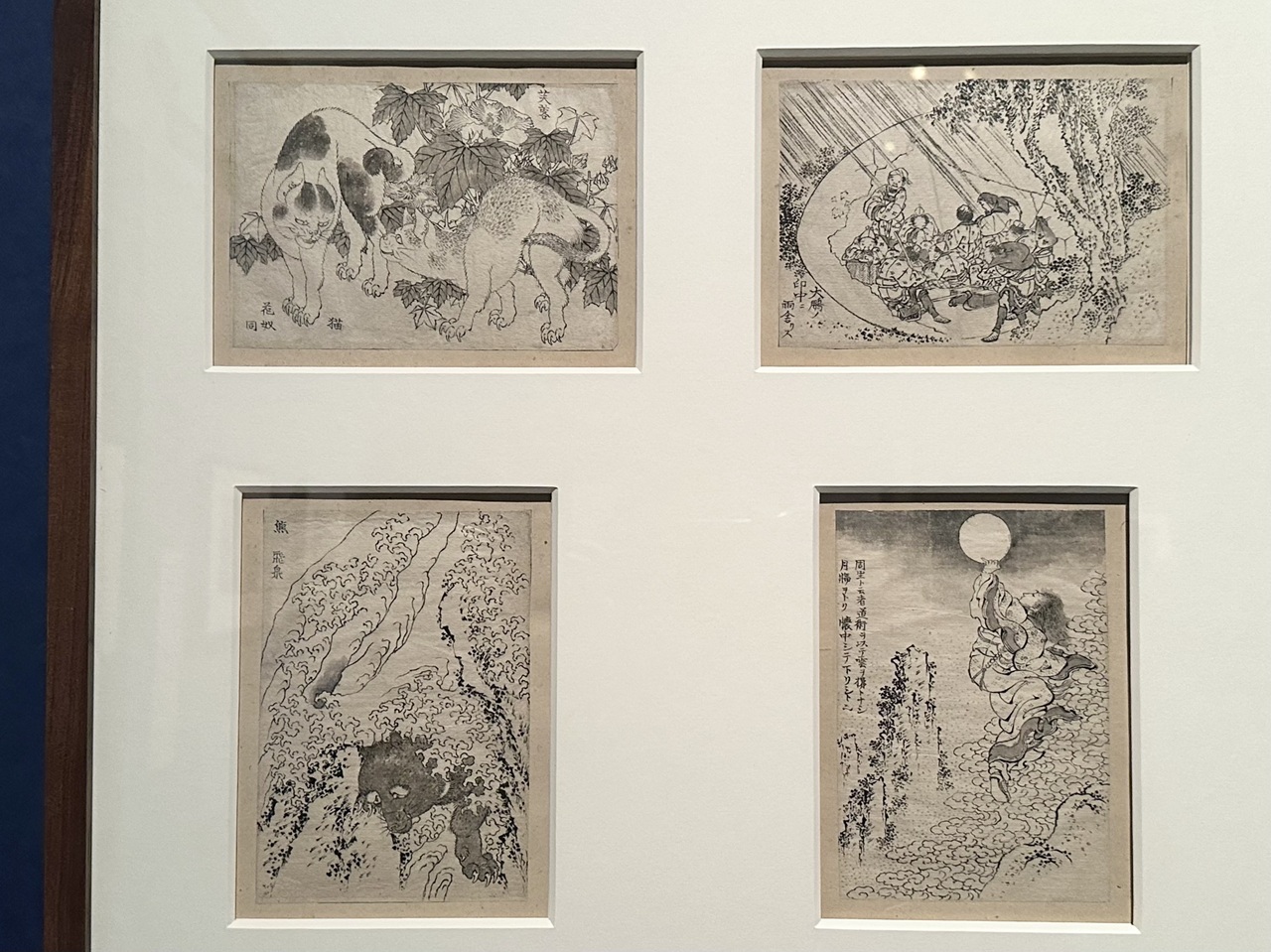
Hokusai’s “Illustrated Encyclopedia of All Things” consists of 103 preliminary drawings that miraculously survived because the publication of the illustrated encyclopedia never came to fruition, thus avoiding the hands of the engraver. What makes it unique is that, in addition to his usual subjects of flora, fauna, and various aspects of nature, he also tackled religious themes from ancient India and China, which were rarely covered in conventional encyclopedias.
These works, long considered missing, were acquired by the British Museum in 2020, making headlines worldwide. This time, eight of them are on display. In addition to their individual artistic merit, they are extremely important historical documents that reveal the kind of projects Hokusai was passionate about in his later years.
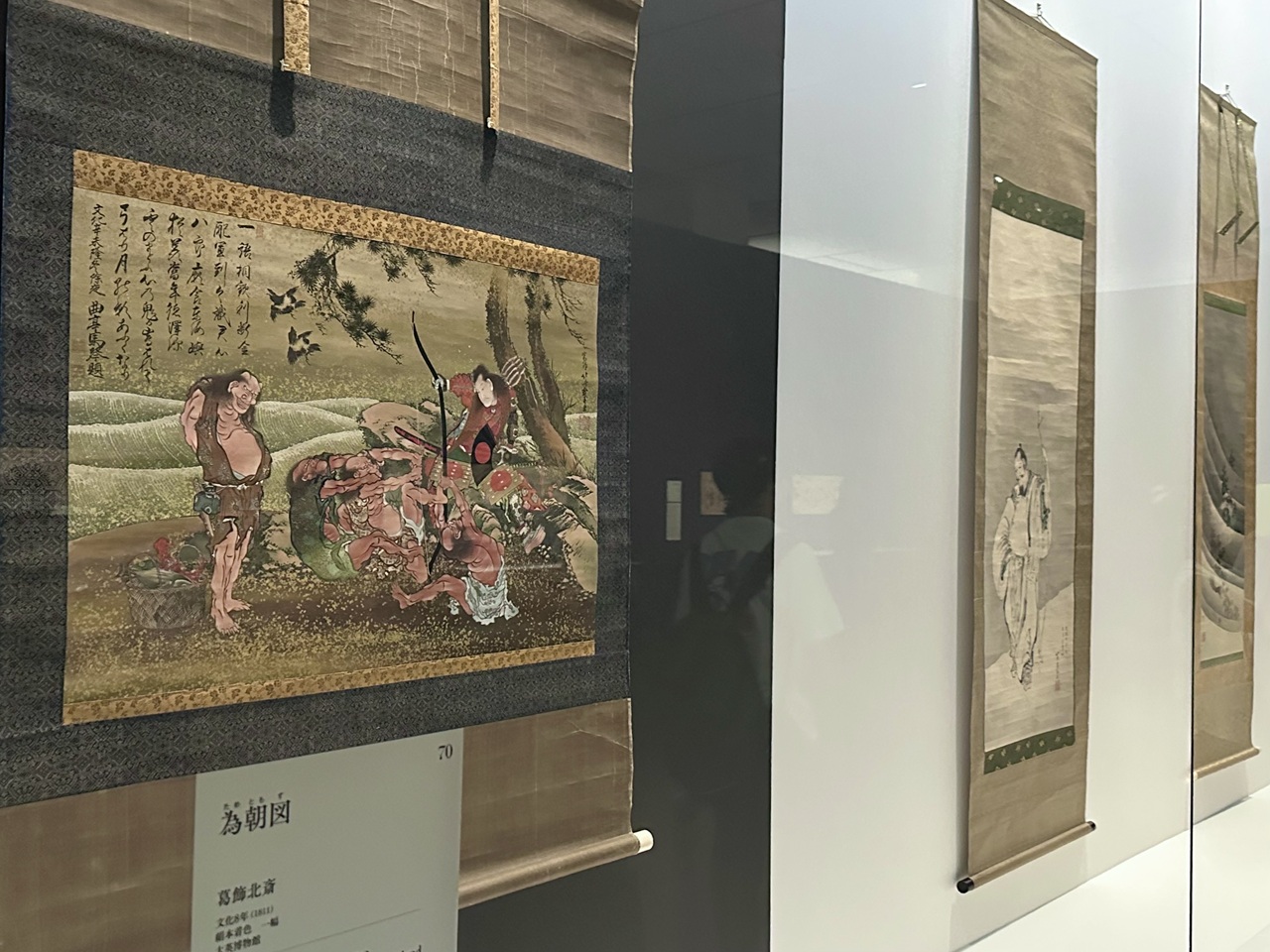
In addition, three original paintings by Hokusai are on display : “Tametomo,” “Uta Uranai,” and “Ducks on Flowing Water .” “Tametomo” is a large and impressive work commissioned by the publisher to celebrate the completion of the novel “Tsubaki Setsu Yumihari Tsuki,” written by Kyokutei Bakin and illustrated by Hokusai. Gold leaf, gold paint, and white pigment are used lavishly, resulting in a magnificent scroll befitting a celebratory painting. The dense world depicted in this work completely overturns the image of Hokusai, who is known for his clean and refined woodblock prints, and is sure to captivate the viewer.
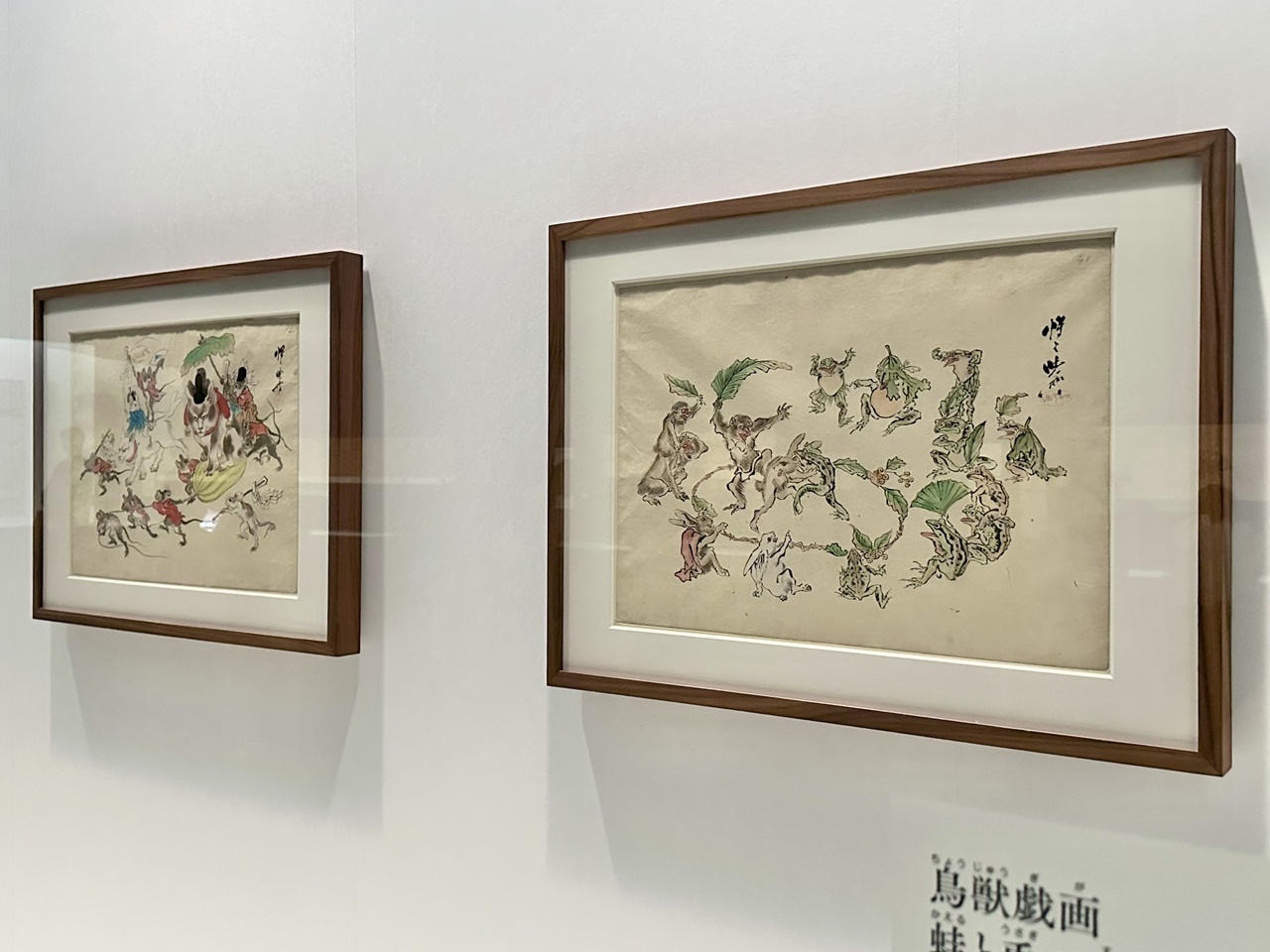
Kyōsai was a versatile artist who also excelled at improvisational caricatures, and he was popular among art lovers in Europe and America. “Choju-giga: Cat Riding a Melon Pulled by a Mouse” and “Choju-giga: Frog and Rabbit Sumo Wrestling” were both created at the request of Anderson. The latter is clearly based on the national treasure “Choju-jinbutsu-giga” (Scrolls of Frolicking Animals and Humans).
Kyōsai’s respect for the classics is evident in his response to a request from a British man who systematically collected Japanese art, using such classical subjects and deliberately stamping the work with the “Yamato-ga” seal. At the same time, it may also have served to indicate that he was an artist belonging to that lineage.
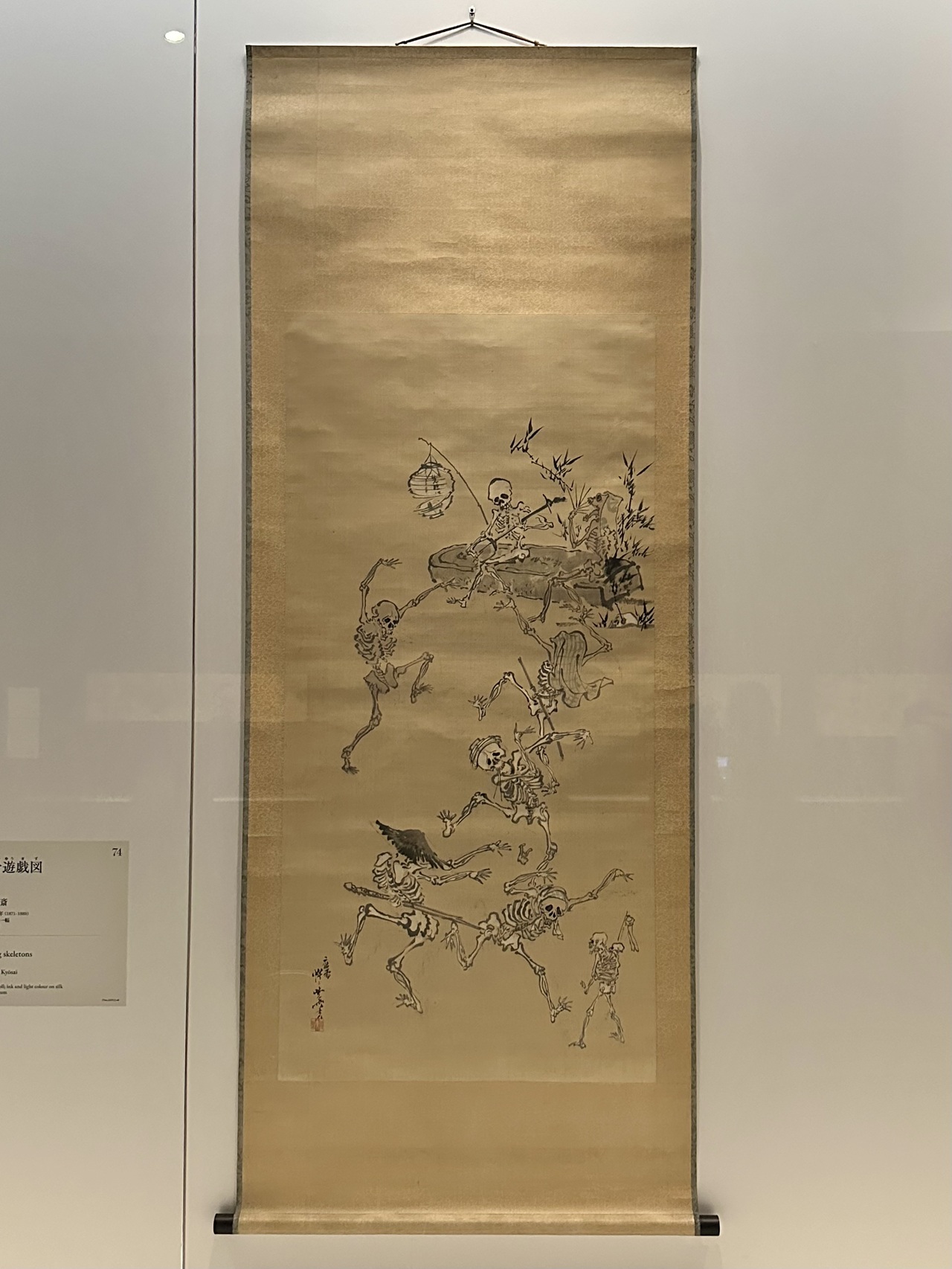
On the other hand, “Skeletons at Play,” depicting skeletons freed from their bodies dancing and making merry in a graveyard, is another work full of Kyōsai’s characteristic humor. This piece was formerly owned by the novelist Arthur Morrison. It is said that the depiction of the skeletons was based on anatomical materials given to him by the British architect Josiah Conder, whom he took on as a disciple. Conder later published a book explaining Kyōsai’s painting techniques based on his own Kyōsai collection. He contributed to spreading the appeal of Kyōsai, and by extension Japanese art, overseas, and this piece can also be said to be a work that succinctly tells the story of cultural exchange between Japan and Britain.
This exhibition allows you to experience the history of cultural exchange across the seas through masterpieces that have been passed down through the British Museum. While there is a touch of sadness that such a collection of works of such quality and scale is away from Japan, it is a homecoming that has been made possible only because it has been carefully preserved by people who love Japanese art. Don’t miss this opportunity to see them all together in Japan, and be sure to visit the venue.
Summary of “Tokyo Metropolitan Art Museum 100th Anniversary Commemorative Exhibition: The British Museum’s Collection of Japanese Art – A Flourishing Splendor: Edo Paintings Across the Seas”
| venue | Tokyo Metropolitan Art Museum (Ueno Park, Tokyo) Special Exhibition Room |
| Exhibition period | July 25, 2026 (Sat) – October 18, 2026 (Sun) |
| Opening hours | 9:30 AM – 5:30 PM *Open until 8:00 PM on Fridays* Last entry is 30 minutes before closing. |
| Closed days | Monday, October 13th (Tuesday) *However, the office will be open on September 21st (Monday, public holiday) and October 12th (Monday, public holiday). |
| Admission fee (tax included) | General admission: 2,300 yen, university/vocational school students: 1,300 yen, people 65 and over: 1,600 yen. *Free for those under 18 and high school students and younger. *For further details, please check the official ticket page . |
| Organizer | Tokyo Metropolitan Art Museum (Tokyo Metropolitan Foundation for History and Culture), British Museum, Asahi Shimbun, NHK, NHK Promotions |
| inquiry | 050-5541-8600 (Hello Dial) |
| Official website of the operator | https://daiei-ten2026.exhibit.jp |
*The information in this article is current as of the time of reporting. Please check the exhibition’s official website for the latest information.
